Understanding the Core Difference
At its simplest, vertical storage uses wall height - shelving that reaches toward the ceiling, pegboards, wall-mounted racks, or tall cabinets. Horizontal storage spreads across the floor plane - dressers, low bookshelves, under-bed bins, and wide credenzas.
Neither is universally superior. Each approach manages different constraints: vertical storage fights for floor area, while horizontal storage fights for reachability and visual order. The decision shifts depending on ceiling height, room function, who uses the space, and how frequently items need to be accessed.
Before committing to either strategy in any room, identify your two key constraints: how much floor area can you afford to give up and who needs to access what, and how often? Those two questions will steer most decisions correctly. For a broader framework on organizing room by room, see our complete home organization framework.
| Criterion | Vertical Storage | Horizontal Storage |
|---|---|---|
| Floor space used | Minimal - builds upward | Larger footprint required |
| Accessibility | Varies; upper zones need step stool | Easy; items at arm's reach |
| Visual impact | Can feel tall and dramatic | Keeps sightlines open, feels calm |
| Best ceiling height | 8 ft or higher works well | Any ceiling height |
| Ideal room type | Kitchen, office, garage, entryway | Living room, bedroom, kids' room |
| Safety considerations | Requires proper wall anchoring | Generally lower tip-over risk |
| Clutter tendency | Lower - items stacked out of sight | Surfaces attract clutter if unchecked |
Room-by-Room Guidance: Where Each Approach Works Best
Kitchen: Vertical storage shines here. Cabinet stacks that reach the ceiling, wall-mounted magnetic strips for utensils, and tall pantry pull-outs reclaim counter space. Reserve lower horizontal drawers and base cabinets for heavy cookware and daily items that need no lifting.
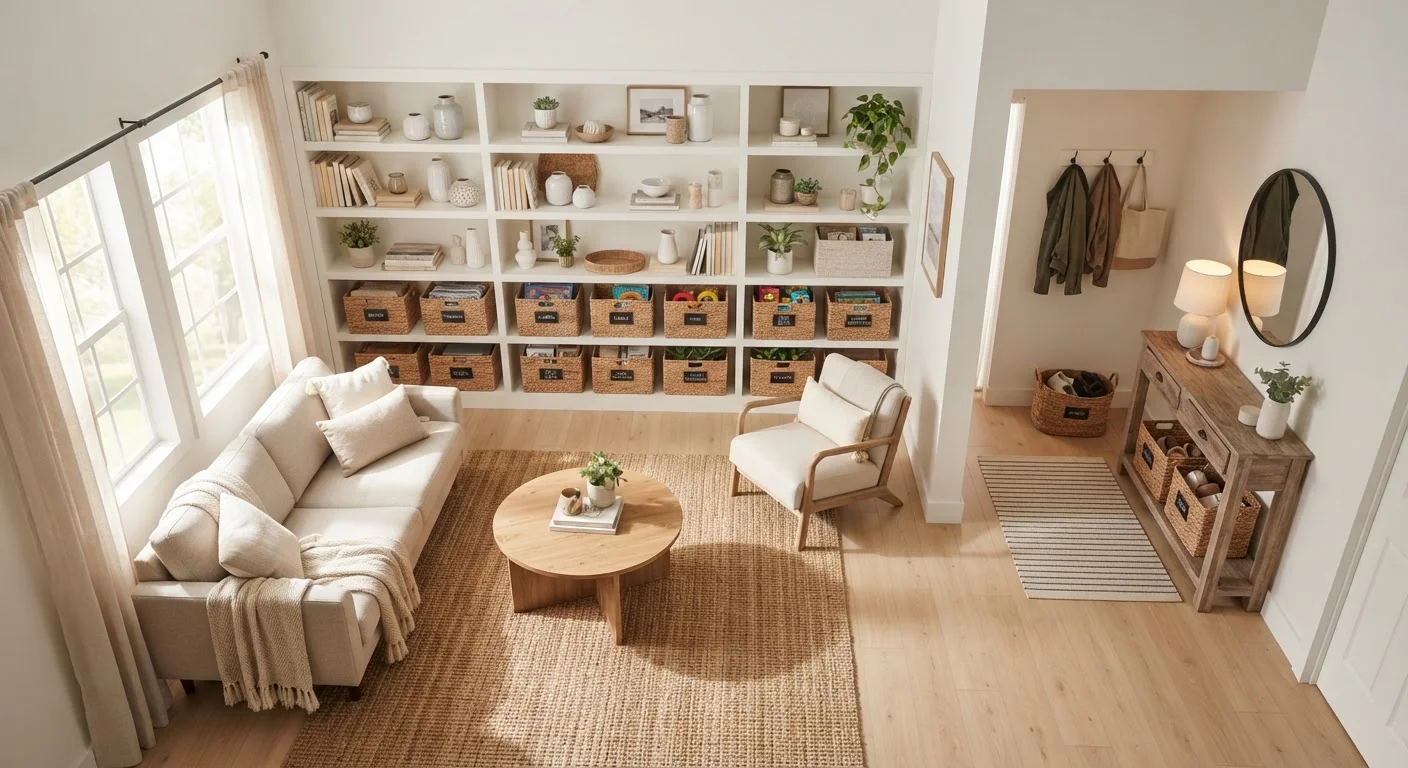
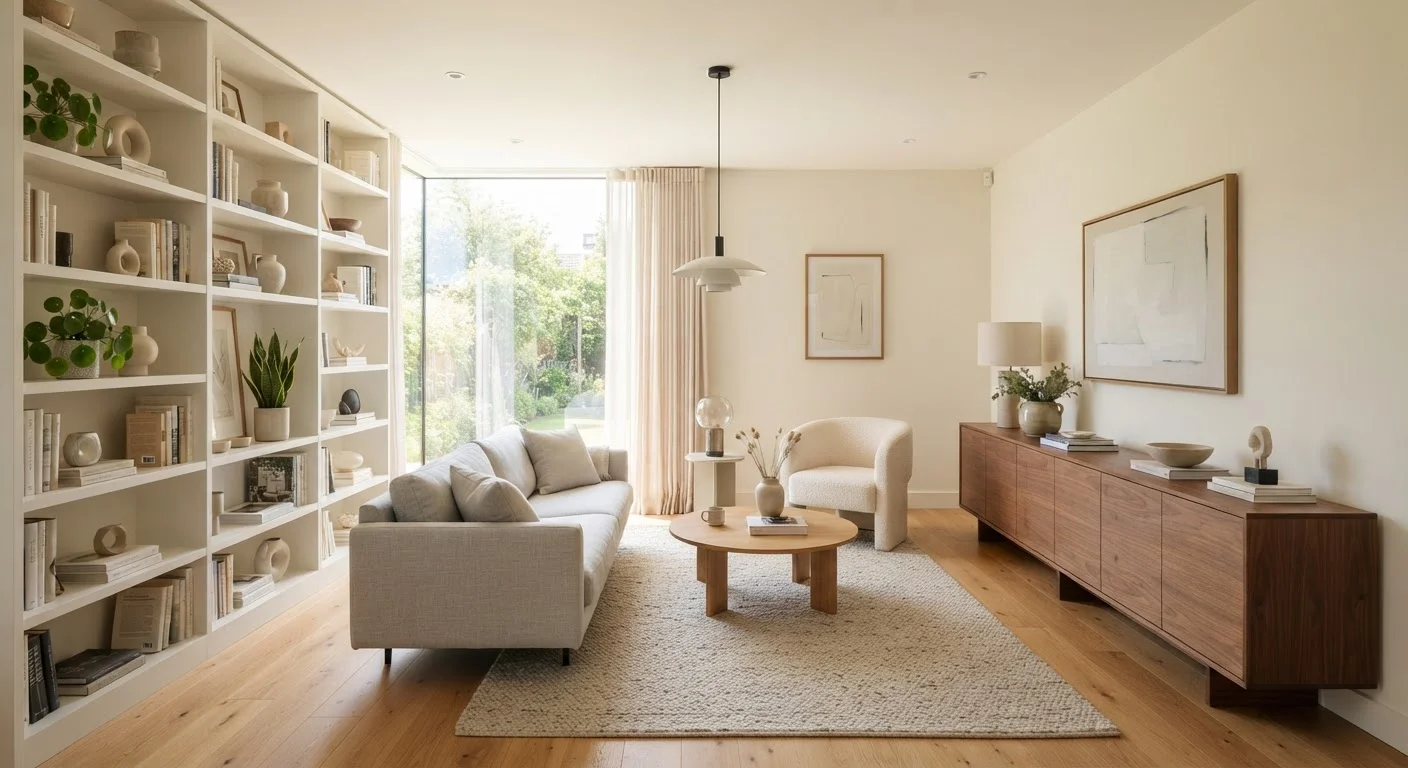
Living room: Horizontal storage keeps the room feeling open. A low media console or storage ottoman maintains clear sightlines, which makes the space feel larger. Vertical accent shelving on a single wall can hold books or décor without overwhelming the room.
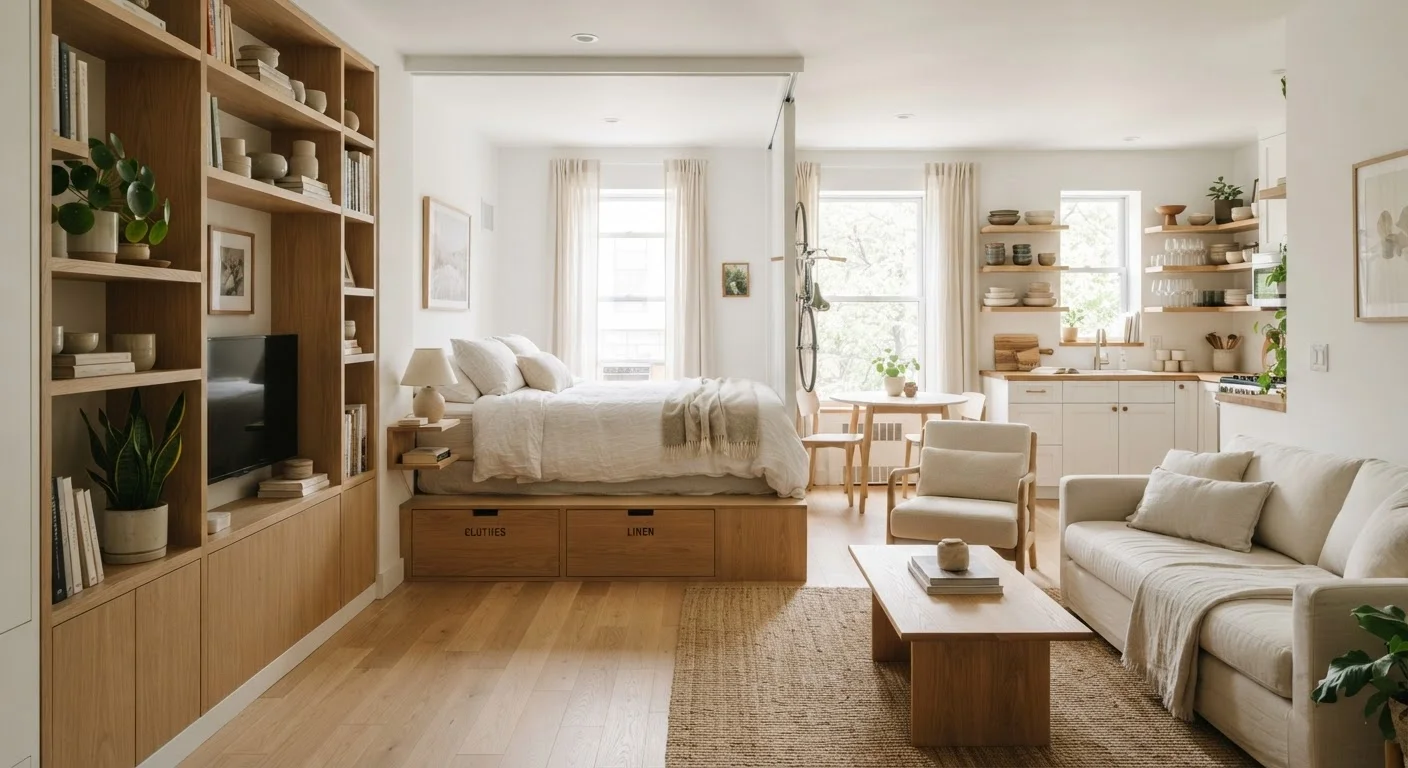
Bedroom: A hybrid tends to work well. A tall wardrobe or floor-to-ceiling closet organizer handles hanging clothes and seasonal items. Lower horizontal dressers keep daily clothing accessible without requiring a step stool. Under-bed storage adds capacity without consuming visual space at all.
Home office: Vertical is often the right call. Wall-mounted shelving above the desk keeps the desktop clear while keeping reference materials close. Horizontal filing drawers handle active documents at arm's reach.
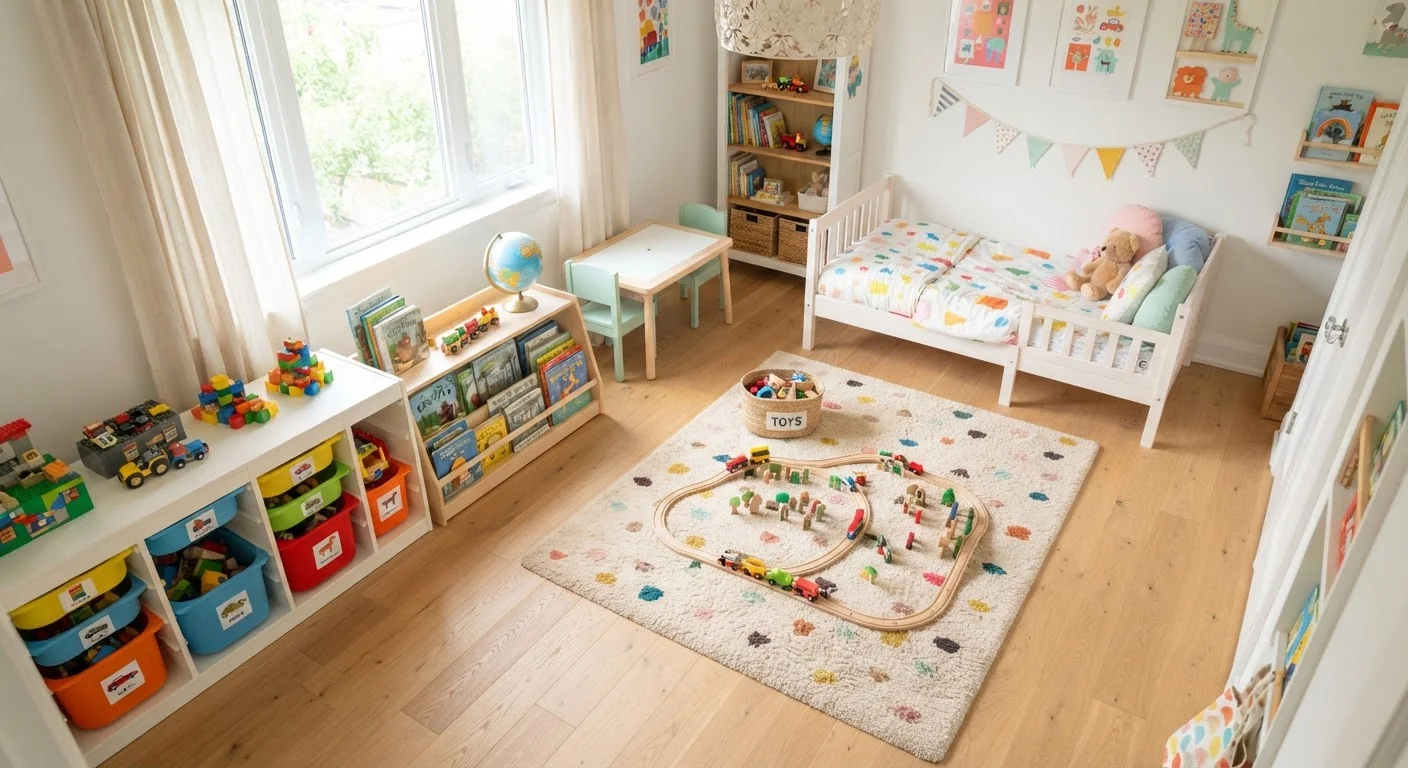
Children's rooms: Lean horizontal. Low bins, shallow shelves, and accessible toy storage allow children to manage their own belongings - an important factor for building independence. Our guide on kids' room organization systems covers age-appropriate approaches in detail.
Garage: Go vertical whenever possible. Wall-mounted systems and ceiling tracks turn unused upper space into genuine storage. Our garage organization guide walks through zone-based wall storage in depth.
~30%
Typical unused vertical wall space in average homes
Home organization professionals commonly estimate that most households use only the bottom third of available wall height for storage.
48 inches
Max recommended height for children's independent storage
Child development and safety guidelines generally suggest keeping kids' storage systems below 48 inches to promote safe, independent access.
Common Mistakes and How to Avoid Them
Overloading vertical storage with daily-use items. Storing things you reach for every day above shoulder height is a habit that erodes quickly. Reserve upper vertical zones for seasonal, rarely used, or archival items. Keep frequently accessed belongings at eye level or below.
Letting horizontal storage become a dumping surface. Flat, open horizontal surfaces attract clutter by default. If a credenza or dresser top keeps accumulating random items, introduce a tray or defined zone to contain what belongs there and signal that nothing else should land.
Ignoring structural limits. Heavy wall-mounted shelving must anchor into studs or masonry - drywall anchors alone are insufficient for meaningful loads. When in doubt about load capacity or mounting requirements, consult a qualified handyman or contractor before installation.
Forcing one approach throughout an entire home. Rigid all-vertical or all-horizontal thinking ignores the different demands of each room. A familiarity with core organization concepts - like prime real estate storage zones - helps you mix approaches purposefully rather than defaulting to one style everywhere.
If you share your home with others, storage orientation also affects usability for everyone. Low, labeled horizontal storage tends to support multi-person households better than tall systems that only some members can easily reach. Our article on organizing shared spaces addresses this dynamic directly.
A Note on Wall Mounting Safety
Wall-mounted vertical storage systems must be secured correctly to prevent tipping or collapse. Always locate wall studs before mounting heavy shelving - a stud finder is a worthwhile investment. For particularly heavy loads or older plaster walls, consulting a licensed contractor is the safest course of action. Local building codes may also apply to certain built-in storage installations.