Why Budgeting Myths Do Real Damage
Before most people ever write down a single number, they've already talked themselves out of budgeting. The culprit is usually a persistent misconception - a half-truth that feels logical enough to stick. These myths don't just delay action; they actively prevent people from building the financial stability that a budget can create.
This article addresses the most common ones head-on. If you've believed any of these, you're not alone - and you're not stuck. Understanding where the thinking goes wrong is the first step toward actually getting started. For a plain-language breakdown of the vocabulary you'll encounter along the way, see our budgeting terms reference guide.
Myth
I don't earn enough to need a budget. Budgeting is for people who have extra money to manage.
Fact
Budgeting is most valuable precisely when money is tight - it helps you control where every dollar goes.
This is one of the most common reasons people delay starting. The logic seems intuitive: if there's barely enough to cover the basics, what's there to plan? But budgeting isn't about managing surplus - it's about making intentional choices with whatever you have. When income is limited, unplanned spending does the most damage. A budget gives you visibility so you can prioritize what matters and catch leaks before they become crises. Even a simple written plan - income minus fixed expenses - is more useful than no plan at all.
Myth
You need a spreadsheet or special app to budget properly. If you're not tech-savvy, it won't work for you.
Fact
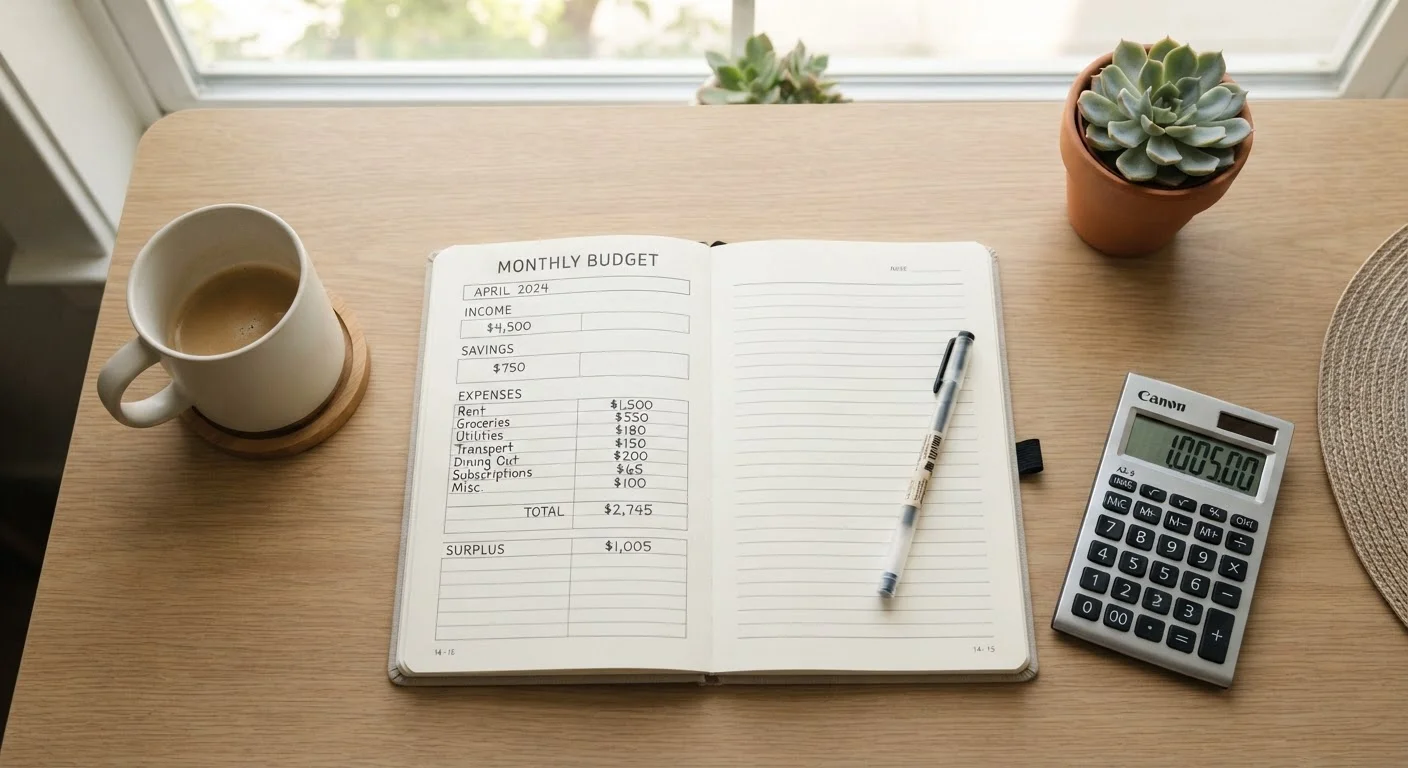
Pen and paper work just as well as any software. The tool matters far less than the habit.
Budgeting apps and spreadsheet templates can be helpful, but they're entirely optional. Plenty of people manage their money successfully with nothing more than a notebook and a consistent weekly check-in. The goal is awareness - knowing what's coming in, what's going out, and whether those two things are aligned. Any format that helps you track that information reliably is the right format for you. Don't let a preference for low-tech approaches become an excuse to avoid starting.
Myth
A budget means you can never spend on anything enjoyable. It's just a list of restrictions.
Fact
A well-built budget deliberately includes spending on things you enjoy - it just makes that spending intentional.
Treating a budget as a punishment is a sure way to abandon it quickly. In practice, budgeting frameworks like the 50/30/20 rule - where roughly 30% of take-home pay is allocated to personal wants - explicitly set aside room for discretionary spending. The difference is that you decide in advance what that spending looks like, rather than discovering after the fact that you overspent. Budgets don't eliminate enjoyment; they make it sustainable. If you want to compare different frameworks, see our overview of paying yourself first vs. traditional budgeting.
Myth
Budgeting only works if your income is the same every month. Freelancers and gig workers can't really do it.
Fact
Irregular income requires a different approach, but budgeting is entirely possible and especially worthwhile.
Variable-income earners often assume a traditional monthly budget won't apply to them - and they're partially right. A fixed-income template doesn't translate directly. But the solution isn't to skip budgeting; it's to use a baseline model, where you build your budget around a conservative estimate of your lowest typical monthly income and treat anything above that as planned overflow. This approach accounts for slow months without leaving good months unmanaged. The habit of tracking and planning still delivers the same core benefit: intentionality.
Myth
I'll start budgeting once things settle down - after the move, after the holidays, after the raise.
Fact
There is no ideal moment to start. Starting now, even imperfectly, produces better outcomes than waiting.
This myth is particularly seductive because it sounds responsible - like you're waiting until you can do it properly. But financial conditions rarely become simpler on their own. Waiting for stability that hasn't arrived yet means postponing the very tool that can help create it. An imperfect budget started today gives you real data about your spending. That data is worth far more than a theoretically perfect budget you never actually write. Similar thinking holds back savers too - our article on savings myths covers the same pattern from a different angle.
What Getting Started Actually Looks Like
Budgeting doesn't require perfection, a particular income level, or any specific tool. What it does require is a willingness to look honestly at what's coming in and what's going out. That's it. Even a rough first attempt gives you information you didn't have before - and information is the foundation of better decisions.
Don't Mistake Complexity for Effectiveness
A highly detailed budget with dozens of categories can feel productive while actually making it harder to stick to. Overly complicated systems often collapse within weeks because they demand too much maintenance. Start simple - three to five broad spending categories is enough to gain meaningful control. You can always add detail later once the habit is established.
If you've never built a budget before, our practical first budget guide walks through the core steps without assuming any prior experience. And if your income varies month to month, budgeting on an irregular income covers approaches designed specifically for that situation.
Once your budget is running, the next challenge is keeping it going. Most people don't quit because they made math errors - they quit for behavioral reasons. Our article on why budgets fail in the third month explains the patterns to watch for before they derail your progress.
This article is for general informational and educational purposes only and does not constitute personalized financial advice. For guidance tailored to your specific circumstances, consider consulting a qualified financial professional.