What Each Component Actually Does
Your vehicle's disc brake system relies on two primary wear components working in tandem: the brake pad and the brake rotor.
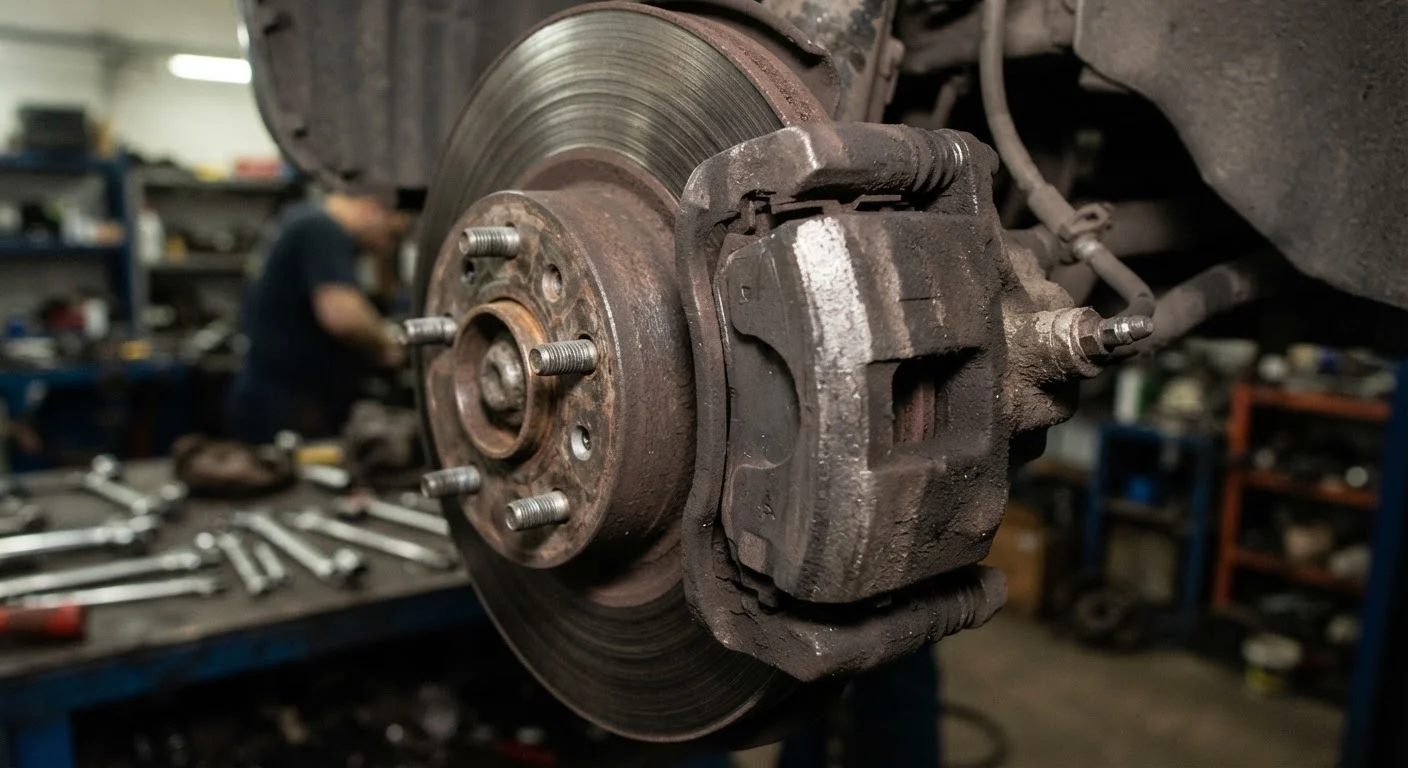
The rotor (also called a disc) is a flat, circular metal disc bolted to the wheel hub and spins with the wheel. When you press the brake pedal, hydraulic pressure forces the brake caliper to squeeze inward, clamping the brake pads against each side of the rotor. That friction converts your vehicle's kinetic energy into heat, slowing the car.
The brake pad is the sacrificial element in this equation. It's made from friction material - typically organic compounds, semi-metallic mixtures, or ceramic composites - bonded to a steel backing plate. Because pads are designed to absorb friction rather than the rotor, they wear down faster by design. Rotors are expected to outlast multiple sets of pads, though they are not indefinitely durable.
Understanding brake fluid's role in transmitting that pedal force is also worth knowing - our guide on car fluid maintenance covers brake fluid checks and change intervals.
How and Why Each Component Wears
Brake pads wear through continuous friction. Every stop removes a thin layer of friction material. City driving - with its frequent, repeated braking - wears pads significantly faster than highway driving. Aggressive braking, heavy loads (towing or hauling), and hilly terrain all accelerate pad wear. Most pads carry 30,000 to 70,000 miles of useful life, though that range varies widely by material type and driving style.
Rotors wear differently. Rather than grinding away uniformly, they develop:
- Surface grooves - caused by debris caught between a worn pad and the rotor, or by metal-on-metal contact from a fully depleted pad.
- Thickness variation - microscopic uneven wear creates spots thicker than others, which drivers feel as pedal pulsation.
- Thermal warping - repeated heat cycling from heavy braking can cause the disc to warp slightly out of flat.
- Rust and corrosion - surface rust is normal after sitting overnight, but deep pitting from extended inactivity can compromise rotor integrity.
Every rotor has a minimum thickness specification stamped or cast into the disc itself. Once a rotor wears to that number - through normal use or resurfacing - it must be replaced. Running a rotor below minimum spec reduces its ability to absorb and dissipate braking heat safely.
| Criterion | Brake Pads | Brake Rotors |
|---|---|---|
| Primary function | Friction material that clamps against rotor | Metal disc that rotates with the wheel |
| Typical lifespan | 30,000-70,000 miles | 50,000-80,000+ miles |
| Wear mechanism | Friction material gradually depletes | Surface grooves, warping, thinning over time |
| Key warning sign | Squealing, then grinding | Pedal pulsation, vibration, deep grooves |
| Replacement frequency | More frequent - every 1-3 rotor changes | Less frequent - outlasts multiple pad sets |
| Can be reused if worn? | No - consumable, must be replaced | Sometimes resurfaced if above minimum thickness |
| Risk if ignored | Metal-on-metal contact damages rotors | Braking instability, reduced stopping power |
Warning Signs and When to Act
Both components give clear warnings before they become dangerous. Knowing which sound or sensation to associate with which component helps you communicate accurately with a mechanic and avoid unnecessary repairs.
~30%
Brake jobs driven by rotor replacement
Industry estimates suggest roughly one in three brake service visits involves rotor replacement in addition to pads, often due to delayed pad service.
70,000 mi
Upper end of typical pad lifespan
Ceramic pads on vehicles driven primarily on highways can reach this mileage, while city drivers may need replacement closer to 30,000 miles.
1-2 mm
Minimum pad thickness threshold
Most manufacturers specify replacement when friction material reaches approximately 2-3 mm; at 1 mm, the wear indicator is typically already sounding.
Brake Pad Warning Signs
- Squealing or squeaking: The built-in wear indicator tab is touching the rotor. Pads need inspection soon.
- Grinding: Friction material is gone. Immediate service needed - rotor damage is likely occurring.
- Reduced responsiveness: Increased pedal travel before braking engages can signal heavily worn pads or a brake fluid issue.
Rotor Warning Signs
- Pedal pulsation or shudder: Thickness variation or warping. The rotor surface is no longer uniform.
- Visible deep grooves: Grooves deep enough to catch a fingernail indicate rotor surface damage.
- Vehicle pulling when braking: May indicate uneven rotor wear or a sticking caliper - both require professional evaluation.
- Vibration through the steering wheel: Front rotors in particular can transmit warping vibration through the steering column.
A general rule: don't ignore brake noises for more than a few days. What starts as a pad replacement can become a rotor replacement - and sometimes caliper damage - if wear goes unaddressed.
Replacement: Together or Separately?
Pads can be replaced independently of rotors, provided the rotors still have adequate thickness and a smooth surface. However, when rotors are replaced, new pads should always go on at the same time. Fitting new pads to a grooved or uneven rotor means the fresh friction material won't seat evenly, accelerating wear and reducing braking efficiency.
Brakes are also typically serviced in axle pairs - front-left and front-right together, rear-left and rear-right together. Replacing only one side creates uneven braking force, which can cause pulling and instability during hard stops.
Resurfacing (also called turning) rotors - cutting the disc surface smooth on a lathe - used to be standard practice. It's still viable when a rotor has adequate thickness remaining and surface issues like minor grooving. However, given the relatively modest cost difference between resurfacing and a new rotor, many shops now recommend outright replacement for rotors that are approaching minimum thickness, as resurfacing reduces thickness further.
Brake system work involves safety-critical components. While pad inspection is something mechanically inclined owners can learn, actual replacement - and any rotor work - should be performed by or verified by a qualified mechanic, particularly if you're unfamiliar with torque specifications, brake bleeding, or caliper service.