Why Different Habits Derail Even the Best Systems
Most organization breakdowns in shared homes aren't about laziness - they're about mismatched defaults. One person's "I'll deal with it later" is another's source of daily stress. Before rearranging a single shelf, it helps to understand that people genuinely differ in how they process clutter, prioritize tidiness, and notice mess.
The goal isn't to make everyone identical. It's to design systems that require the least amount of effort to follow correctly - for everyone in the household. That means lowering the barrier to "putting things away" so much that it becomes the path of least resistance, not a chore requiring willpower.
If you're working from scratch or want a broader framework to complement this approach, the room-by-room organization framework is a useful companion resource. And if ingrained myths about organization are holding the household back, it's worth reading about common organization myths before investing in new systems.
Start With One Room, Not the Whole House
Attempting a household-wide overhaul at once tends to create conflict and burnout, especially when habits differ. Pick the room that causes the most daily friction and build a working system there first. A visible success in one space builds the goodwill and momentum needed for the rest of the home.
Step-by-Step: Building Systems Everyone Can Live With
The steps below move from conversation to physical setup, because sustainable shared organization requires both. Skipping the discussion phase often means the physical system gets ignored or undone within weeks.
Hold a low-stakes household conversation
Before touching anything, bring everyone together for a brief, non-accusatory conversation. The goal is to surface each person's actual priorities - not to assign blame. Ask two questions: What bothers you most about the current setup? and What would make your daily routine easier?
Keep notes. Common priorities often include: a clear kitchen counter in the morning, a reliable spot for keys, or knowing where shared supplies live. These become the anchors for your system.
Identify the real friction points, not the aesthetic ones
Walk through each shared room and note where items consistently pile up or go missing. These spots - often called "drop zones" in organization practice - reveal where habits are strongest. Rather than fighting those habits, you'll design around them.
Distinguish between functional clutter (items in active use with no good home) and decisional clutter (items that haven't been put away because a decision hasn't been made). They need different solutions. For more on core organizing concepts, see the home organizer glossary.
Create personal zones within shared spaces
Assign each household member a defined "landing spot" in key rooms: a drawer in the kitchen, a shelf section in the bathroom, a hook by the door. This prevents shared surfaces from becoming everyone's default dumping ground.
Personal zones communicate ownership clearly. When something doesn't have an owner, it tends to become everyone's - and everyone's responsibility to deal with means no one does.
Design storage for the lowest-effort path
For every shared storage system, ask: can this be used correctly in under three seconds? Open bins, wide shelves, and broad categories outperform intricate, labeled-to-the-millimeter systems in shared households. The more steps required to "put something away," the more likely it ends up on a counter instead.
If space is limited, explore compact storage solutions that maximize available room without adding complexity.
Agree on a reset rhythm, not a perfection standard
Instead of expecting constant tidiness, agree on a shared "reset" moment - perhaps each evening before bed, or once before the weekend. During reset time, everyone returns items to their zones. This shifts the standard from "always tidy" to "reliably tidy at agreed times," which is far more achievable across different habits.
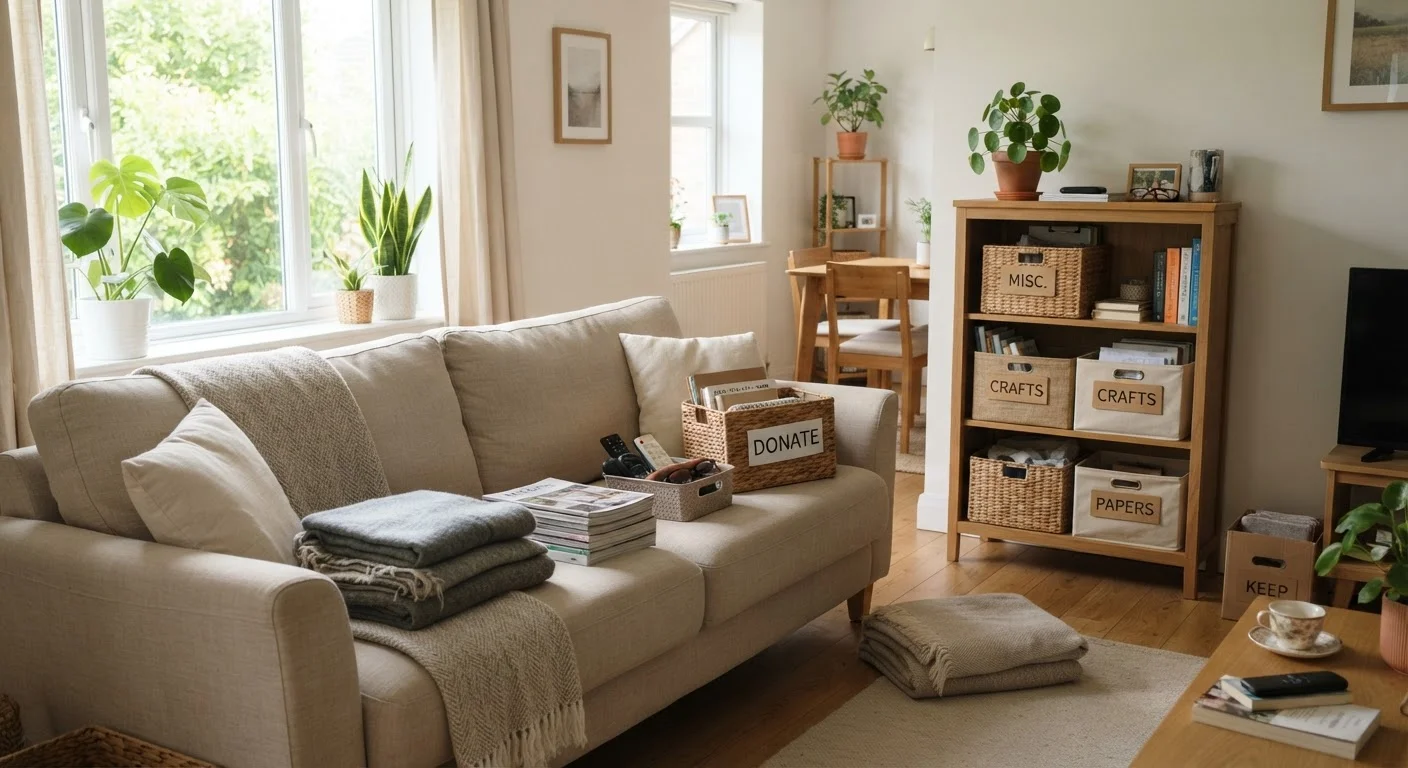
Pair this with the one-in-one-out rule to prevent gradual accumulation from undoing your system.
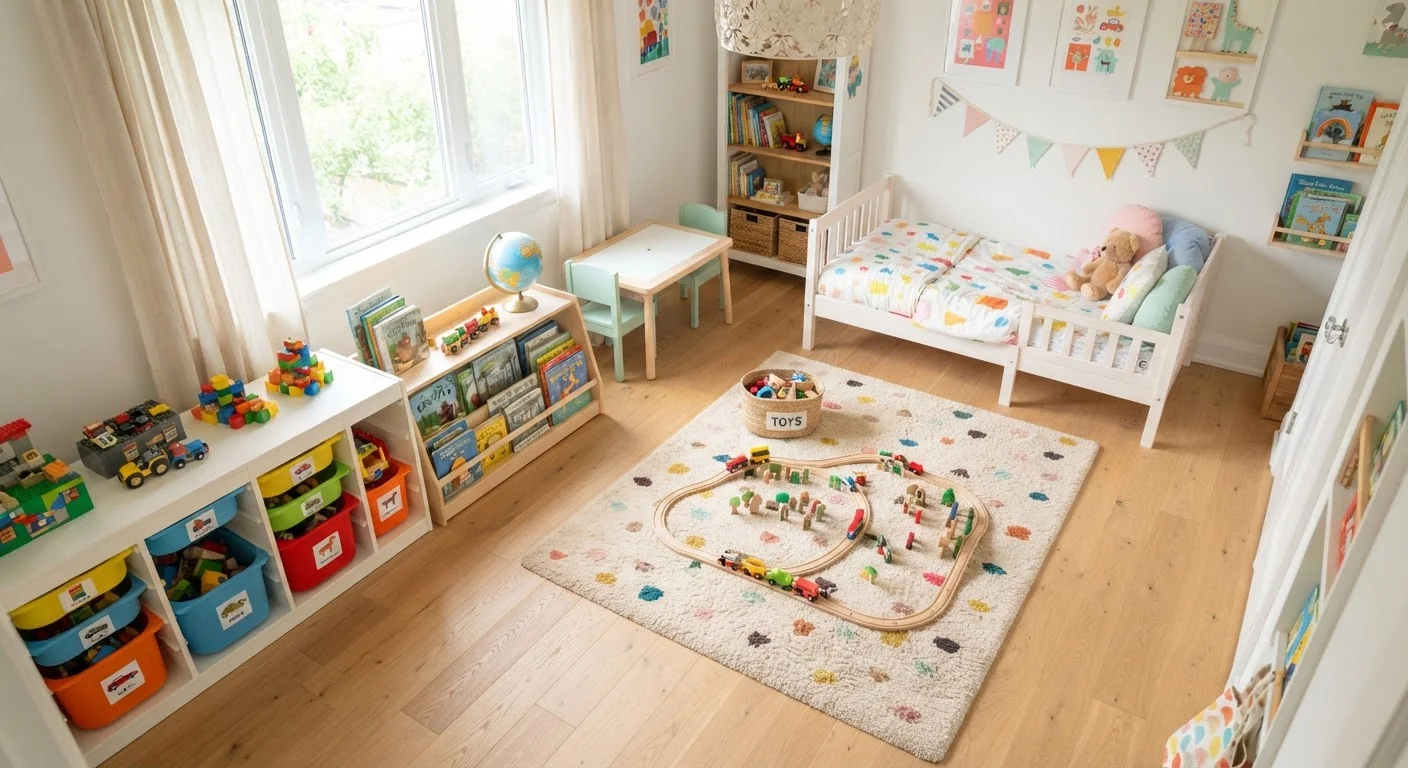
For households with children, note that kids have their own relationship with organization. The guide to children's room organization covers age-appropriate systems that reduce parental nagging. And once your systems are set up, daily habits that prevent clutter creep will help everyone maintain them without a weekly overhaul.
Room-by-Room Flashpoints and Practical Fixes
Kitchen and Pantry
Countertops are the most contested surface in shared homes. Assign each household member one defined counter zone if needed, and establish a "clear by end of evening" expectation rather than an "always clear" rule. Use labels strategically in the pantry - they eliminate the "where does this go?" excuse that keeps items from being put away.
Living and Common Areas
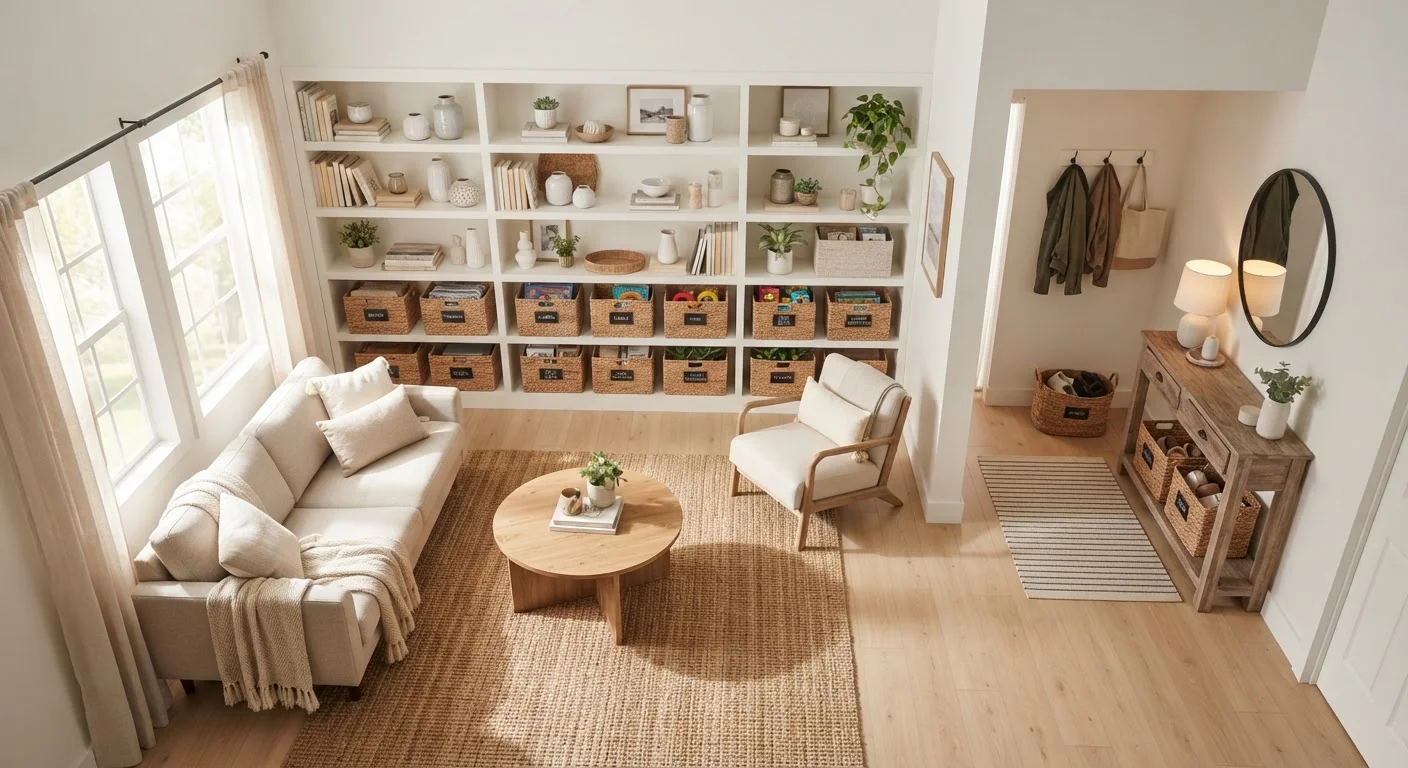
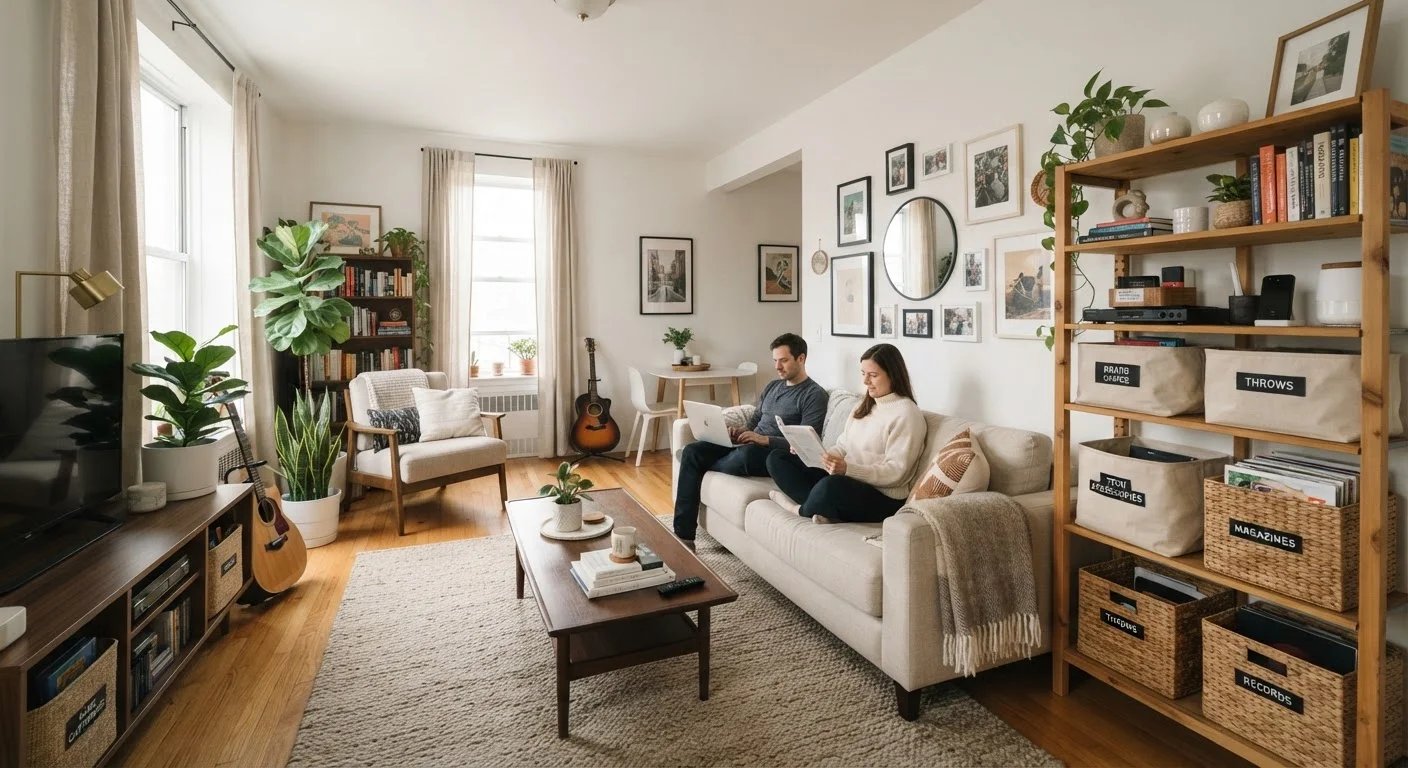
Shared seating areas accumulate items from everyone. A simple fix: one lidded basket or tray per person for their personal belongings. This creates ownership without requiring constant surveillance. When storage space is tight, vertical storage options can free up floor and surface area without a renovation.
Entryways
Shoes, bags, and mail are the most common entryway offenders. A hook, shelf, or dedicated bin for each person - clearly designated - prevents the pile-up that frustrates everyone. Keep the system simple: if it requires more than one step to use correctly, it will be abandoned.
Avoid Over-Engineering Shared Systems
Highly specific, complicated organization setups often work well for one person - usually the one who designed them - and fall apart quickly for everyone else. If a system requires a manual to follow, it won't survive regular household use. Simplicity and flexibility consistently outperform precision in shared living environments.