Why a Room-by-Room Framework Works
Attempting to organize an entire home in a single weekend is one of the most common reasons people give up on organization altogether. The room-by-room approach works because it breaks an overwhelming project into manageable units, each with a clear beginning and end. Progress in one room builds momentum and teaches you what works before you move to the next.
Before starting, it helps to understand what organization actually means for your household. What 'organized' really means differs from one home to the next - a functional system for a family of five looks nothing like one for a single professional. Familiarizing yourself with core organizing concepts like prime real estate storage and dead zones will help you make smarter decisions in every room.
The framework below moves roughly from high-traffic entry points inward, then addresses specialized spaces. Adapt the sequence to your household's biggest pain points.
Start With Your Highest-Friction Room
Rather than starting at room one and working in order, identify which room causes the most daily frustration and begin there. A successful first project builds confidence and demonstrates that the process works, making the next room easier to tackle.
Entryways and Mudrooms
The entryway is the first and last place every person in your household passes through - making it the highest-impact room to organize first. Clutter here signals disorder before anyone reaches the rest of the home.
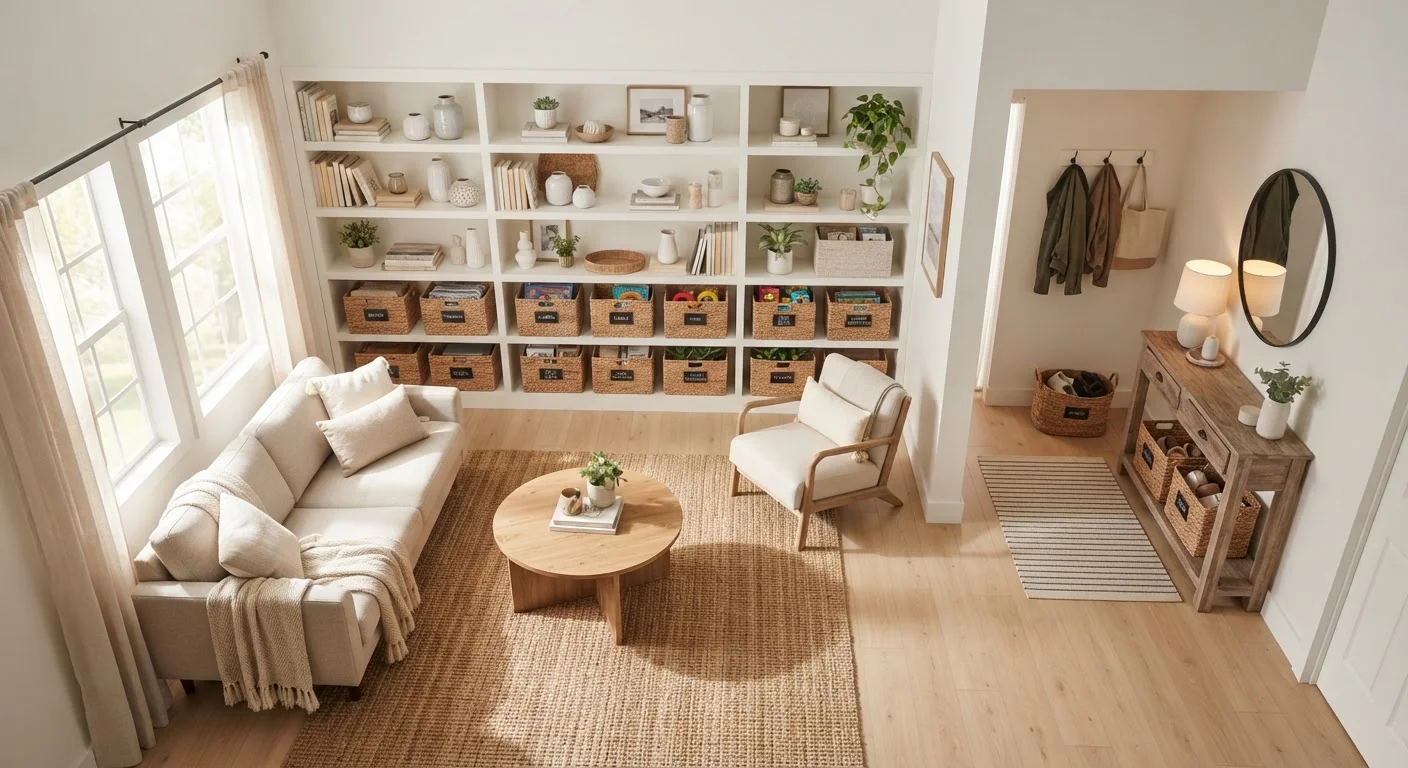
Focus on four functions: landing spot for bags, hooks for outerwear, storage for shoes, and a drop zone for keys and mail. Each function needs a dedicated, intuitive home. Hooks at multiple heights accommodate adults and children alike. A shallow tray or wall-mounted shelf near the door keeps keys and small items from disappearing into bags or countertops.
Limit shoe storage to the pairs in active rotation - seasonal or occasional shoes belong in closets. If your entryway doubles as a mudroom, add a bench with under-seat storage and label any bins so every household member can return items without thinking.
When setting up an entryway, test the system by having each household member walk through their actual arrival routine - keys in hand, shoes on, bags full. Gaps in the system reveal themselves immediately and cost nothing to fix at that stage.
Designing for actual behavior rather than ideal behavior is the difference between a system that sticks and one that collapses within a week. Observing real routines at the design stage prevents costly rework.
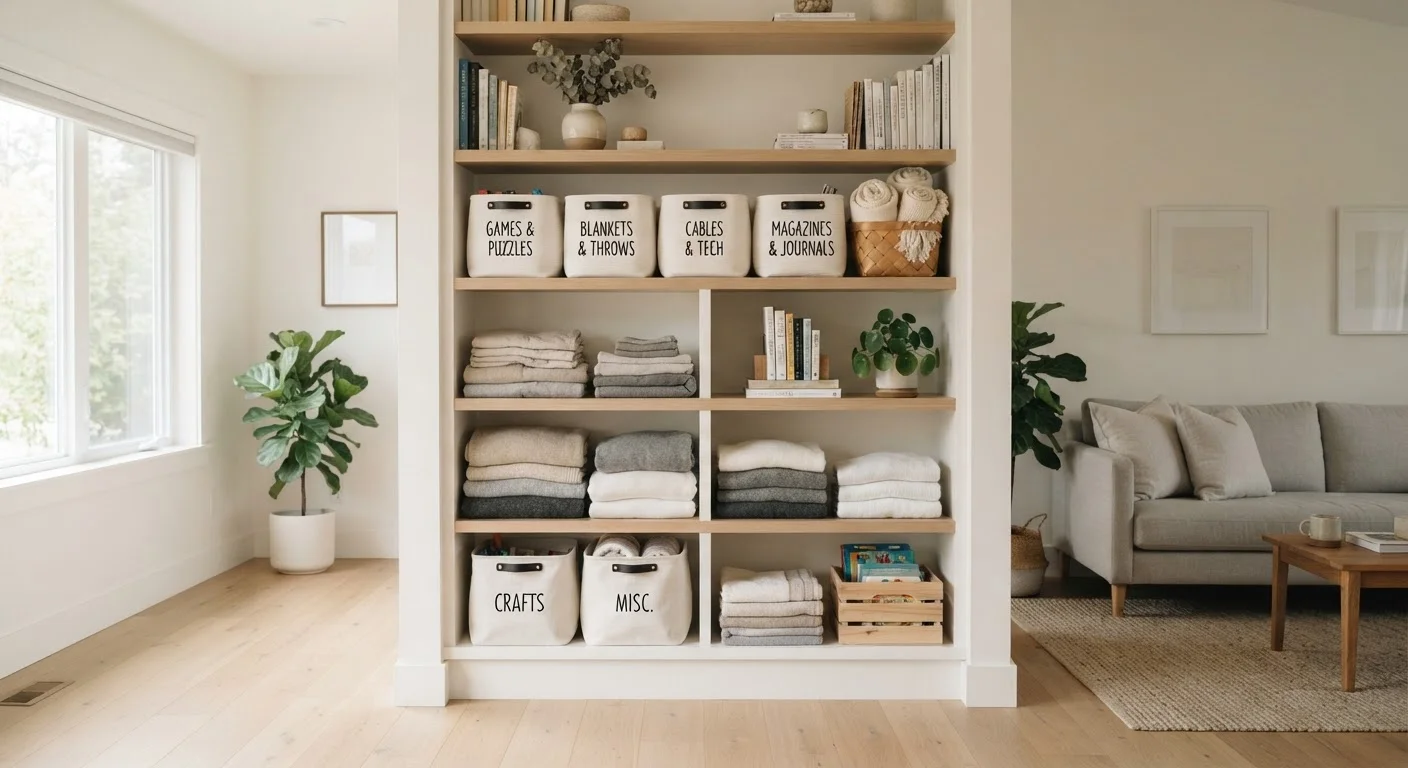
Label storage containers from the front edge, not the top. In most storage configurations, you approach a shelf at eye level - a label on the front face is readable without crouching or pulling the container out.
Labeling is only effective if the labels are consistently readable in context. Labels that require repositioning containers to read will stop being used, undermining the whole system.
When reorganizing a closet, return items to the space in the order you'll actually use them throughout a typical week - not in the order that looks most symmetrical.
Closets that prioritize visual appeal over practical sequence require extra physical searching during rushed morning routines, which is when organization systems most often break down.
Kitchens and Pantries
Kitchens accumulate disorder quickly because they serve multiple overlapping functions: cooking, eating, homework, mail sorting, and more. The first step is to define what actually belongs in this room and relocate everything else.
Organize cabinets by frequency of use. Items you reach for daily - everyday dishes, cooking oils, a favorite skillet - belong in prime real estate: between counter height and eye level, within arm's reach of where you use them. Seasonal or rarely used items move to high shelves or lower cabinets.
Pantry organization follows the same logic. Group foods by category, keep newer purchases behind older ones to reduce waste, and use uniform containers for dry goods only if you'll actually maintain the system. Transparent bins work well for snack items or baking supplies that get grabbed quickly.
Drawer dividers prevent the chaos of mixed utensils. Assign one drawer to tools used at the stove, another to everyday cutlery. A junk drawer is acceptable - but give it a physical boundary (one drawer only) and clear it out every few months.
Living Rooms and Shared Spaces
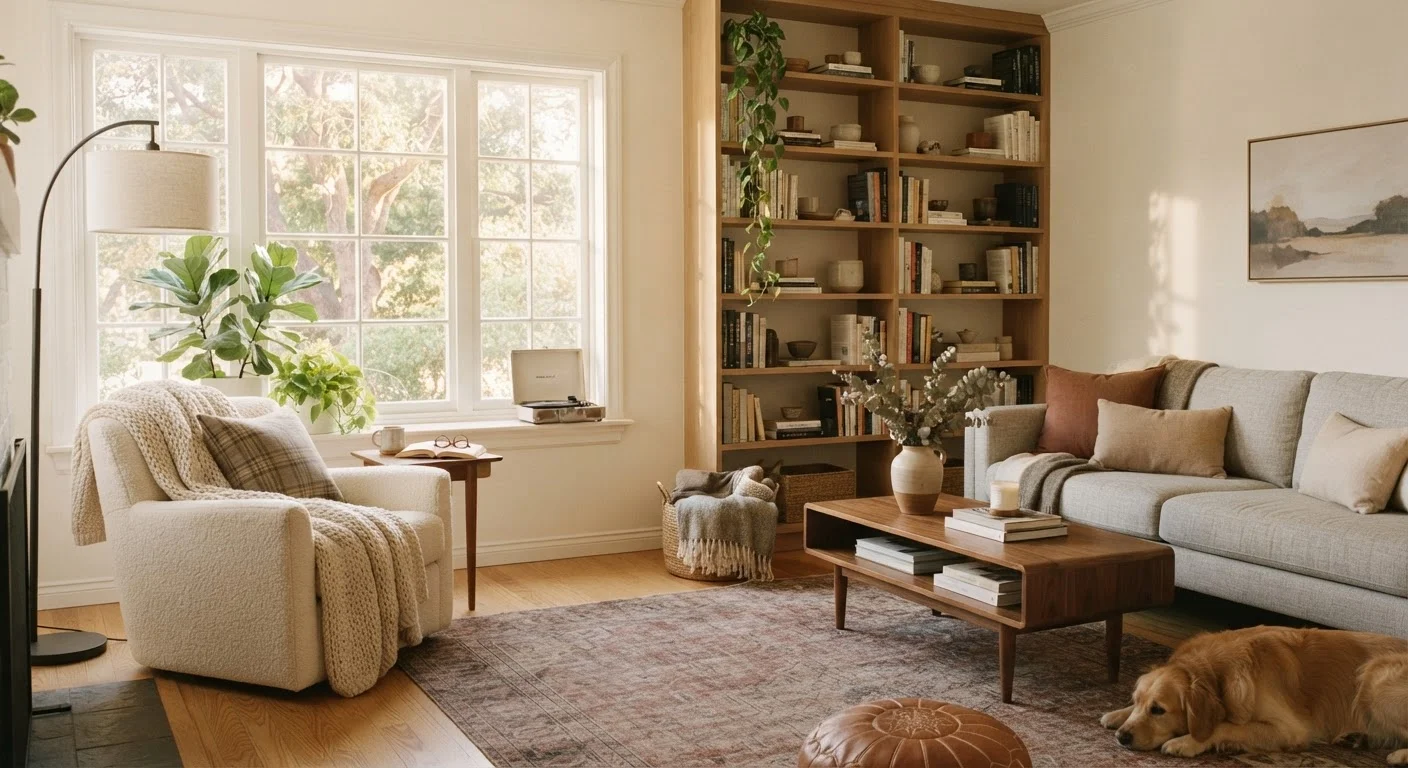
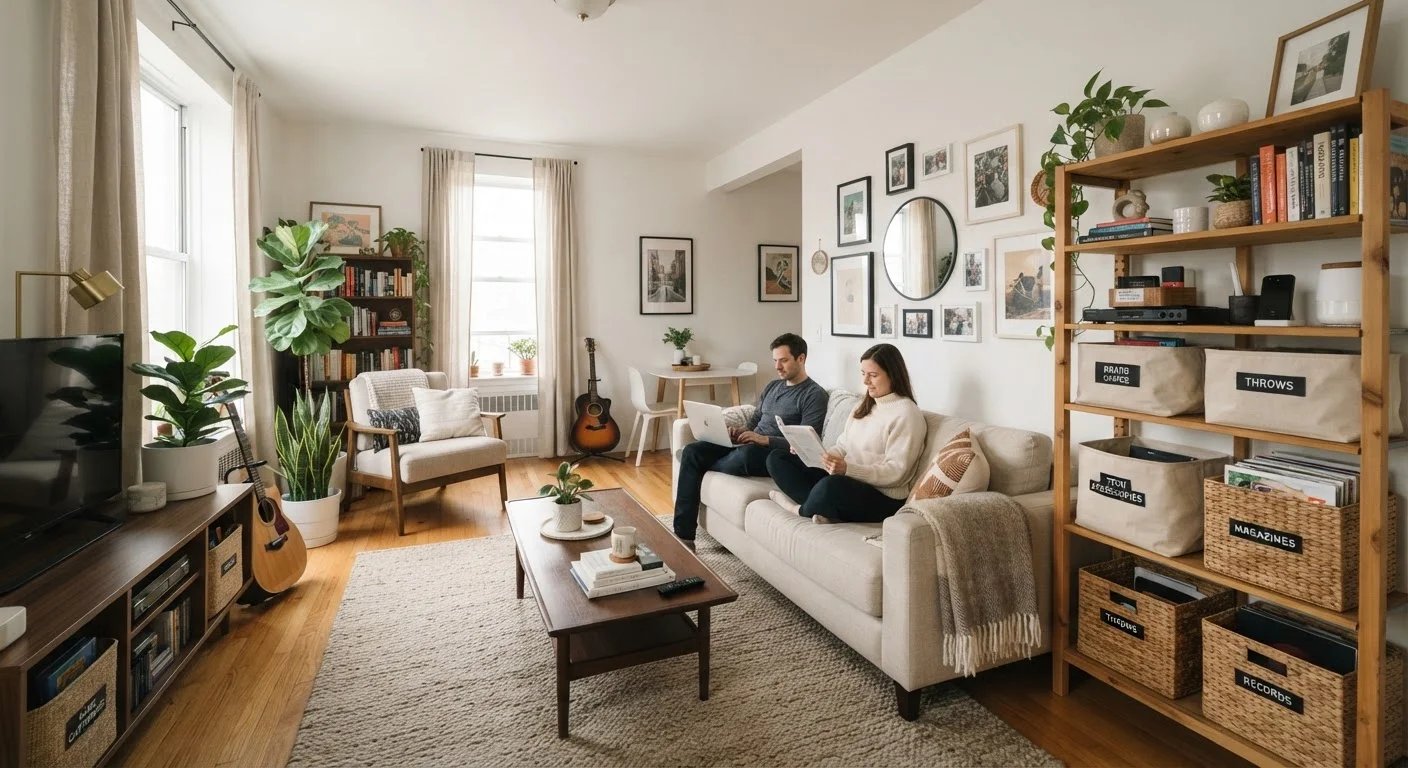
Living rooms are where organization systems most often fail because multiple people with different habits share the space. The goal isn't a showroom - it's a room that resets easily after normal use.
Every item that lives in a living room needs a designated home. Remotes go in one spot. Throws get folded onto one arm of the couch or into a single basket. Books and magazines get one shelf or tray. When the number of items exceeds the designated container, something leaves before something new arrives.
If you share your home with others who have different tidiness standards, organizing shared spaces requires creating systems that work with everyone's habits, not just yours. Baskets with lids, for instance, let family members toss items inside without folding - the space still looks tidy from across the room.
25%
Homeowners who can't park in their own garage
Surveys of American homeowners consistently find that roughly one in four cannot use their garage for a vehicle due to stored items - illustrating how easily storage areas become dumping grounds without a clear system.
~1 hr
Weekly time lost to household disorganization
Research on household productivity suggests that the average adult loses meaningful time each week searching for misplaced items - a problem that structured organization systems directly address.
80%
Items in a home used only rarely
Professional organizers commonly observe that the large majority of household possessions are used infrequently or not at all, which is why the sorting step before organizing is so foundational.
Bedrooms and Closets
Bedrooms should function as low-stimulation spaces, which means storage here needs to be genuinely out of sight. Piles on chairs, overstuffed nightstands, and visible floor clutter all work against rest.
Start with the closet. Pull everything out, sort into keep, donate, and discard, then return only what you actually wear. Hanging items by category - then by color within each category - makes getting dressed faster and keeps the closet from reverting to chaos. Folding methods that stand items vertically in drawers (rather than stacking them flat) let you see everything at a glance without disturbing the whole drawer.
Nightstand surfaces should hold only sleep-adjacent items: a lamp, a book, water. Under-bed storage works well for seasonal items in flat, labeled bins - not as a dumping ground for miscellaneous overflow.
If you're working with limited square footage, small-space storage solutions can help you maximize closet and bedroom storage without adding bulk to the room.
Bathrooms
Bathrooms present a straightforward organization challenge: limited storage, high turnover of products, and shared use. Begin by removing everything expired, unused, or duplicated. Most households find they own far more personal care products than they use.
Store only what's used daily on the counter. Everything else - backup supplies, first aid items, less-frequent products - goes in drawers, the cabinet under the sink, or a linen closet. Group items by user or by routine (morning vs. evening) to reduce morning decision fatigue.
Under-sink storage benefits from a tiered shelf riser or small bins to prevent items from getting lost at the back. If you're considering a larger bathroom refresh alongside your organization efforts, see our bathroom remodel guide for scope and planning context.
Home Offices and Paperwork
Paper is the organizing challenge most households never fully solve. A functional home office system has three components: an inbox for new items, an action folder for things requiring a response, and a filing system for documents you need to keep.
Most paper that enters a home doesn't need to be kept - it needs to be processed and discarded. Create a weekly habit of clearing the inbox: act, file, or shred. For digital documents, a simple folder structure on your computer mirrors the same logic.
Desk surfaces should hold only active-project materials. Supplies stay in drawers. Reference materials go on a shelf. The more decisions a surface requires - where does this go? - the faster it accumulates clutter. Reduce decisions by giving every category of item exactly one home.
Garages and Storage Areas
Garages are where organization systems go to retire. They tend to accumulate items that don't have a home anywhere else in the house - which means organizing a garage starts with deciding what belongs there at all.
A zone-based approach works well: one area for lawn and garden tools, one for automotive supplies, one for sporting equipment, one for seasonal storage. Zones keep related items together and make it obvious when something is out of place. Wall-mounted systems - pegboards, slotted panels, shelving - dramatically increase usable storage without consuming floor space.
For a detailed breakdown of how to plan and execute this space, our garage organization guide covers zone layouts, wall systems, and accessibility logic in full.
Garage Electrical and Structural Work Requires a Pro
If your garage organization plans involve adding outlets, modifying electrical panels, or making structural changes to walls or ceilings, these tasks require permits and licensed contractors in most jurisdictions. Do not attempt electrical or structural modifications as DIY projects. Check your local building codes and verify permit requirements before beginning any work beyond storage installation.
Keeping Systems Alive Long-Term
The gap between organizing a space and keeping it organized comes down to maintenance habits, not willpower. Systems that require significant effort to maintain will eventually be abandoned.
The most durable organizing principle is reducing friction: items used together are stored together, items used most are easiest to reach, and putting something away takes no more effort than setting it down randomly. When a system consistently breaks down in the same spot, that's information - the system needs adjustment, not more discipline.
Build two kinds of maintenance into your routine: a brief daily reset (5-10 minutes to return things to their homes) and a seasonal review of each room (to remove what's no longer needed and adjust for changing use patterns). Neither requires a full reorganization - just regular small interventions.
Organization is a moving target in most households. As needs change, so should systems. A framework that was built for one season of life may need recalibrating in the next - and that's expected, not a failure.