Why Small-Space Storage Requires a Different Mindset
Living in an apartment or compact home means you can't simply add more rooms when clutter accumulates. Instead, you have to think more deliberately about every square foot you already have. The good news: limited square footage often forces smarter habits than larger homes ever do.
Before buying a single bin or shelf, spend time identifying where clutter naturally collects - the counter beside the door, the floor beside the bed, the corner of the living room. Those patterns tell you where your storage systems are missing. For a structured way to approach this room by room, see our complete home organization framework.
The core principle for small spaces: every object needs an assigned home, and that home should be as close as possible to where the object is actually used. With that foundation in place, the practical solutions below become far more effective.
Go Vertical with Wall-Mounted Shelving
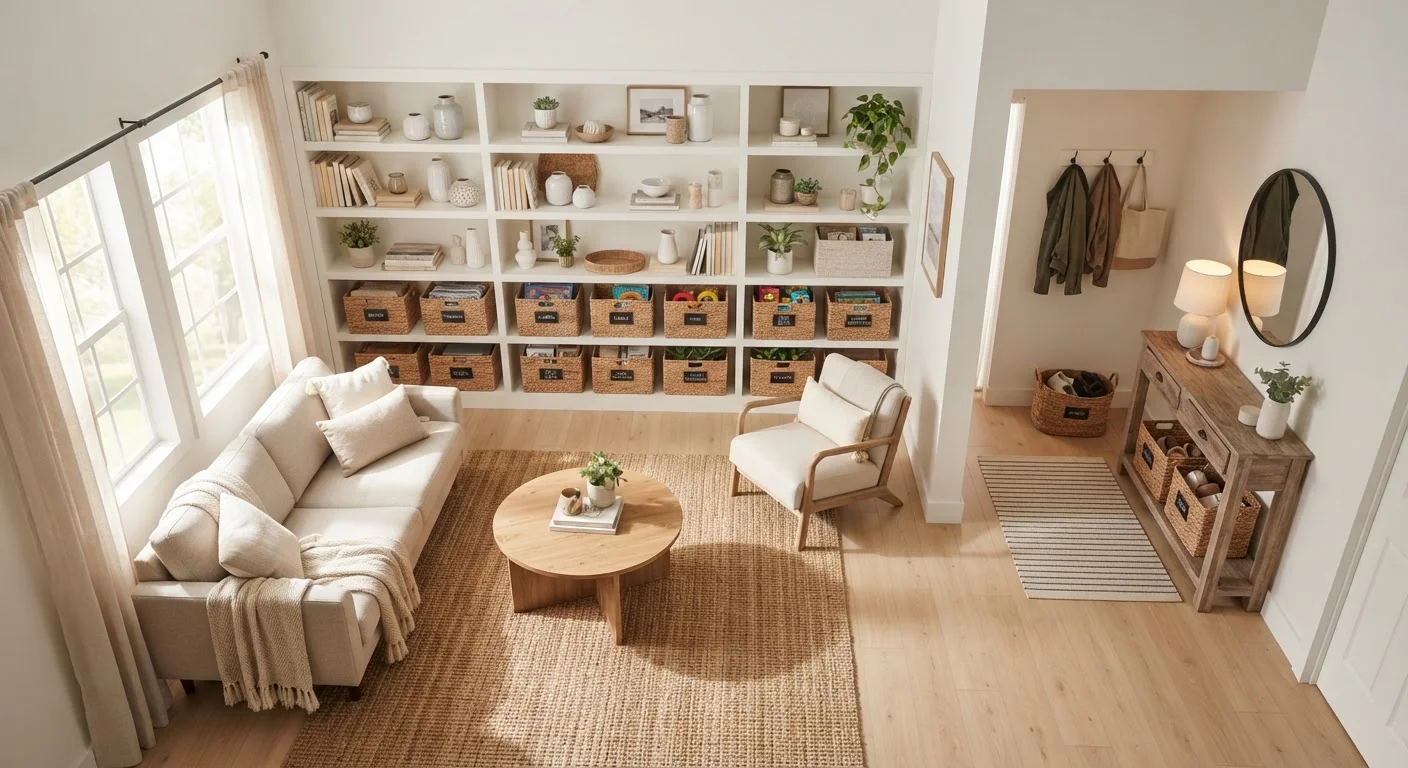
Floor space is scarce in small apartments, but vertical space is often completely ignored. Mounting shelves high on walls - especially in living rooms, kitchens, and bedrooms - creates significant storage without using any floor area. Consider floating shelves above a desk, a tall bookcase that reaches the ceiling, or a pegboard system in the kitchen for frequently used tools.
The key is to keep higher shelves for infrequently accessed items and reserve eye-level shelving for daily-use objects. For a deeper look at when to build up versus spread out, our article on vertical vs. horizontal storage strategies breaks down the tradeoffs room by room.
Vertical wall space is frequently unused - shelves that reach the ceiling can double your storage capacity.
Choose Multi-Functional Furniture
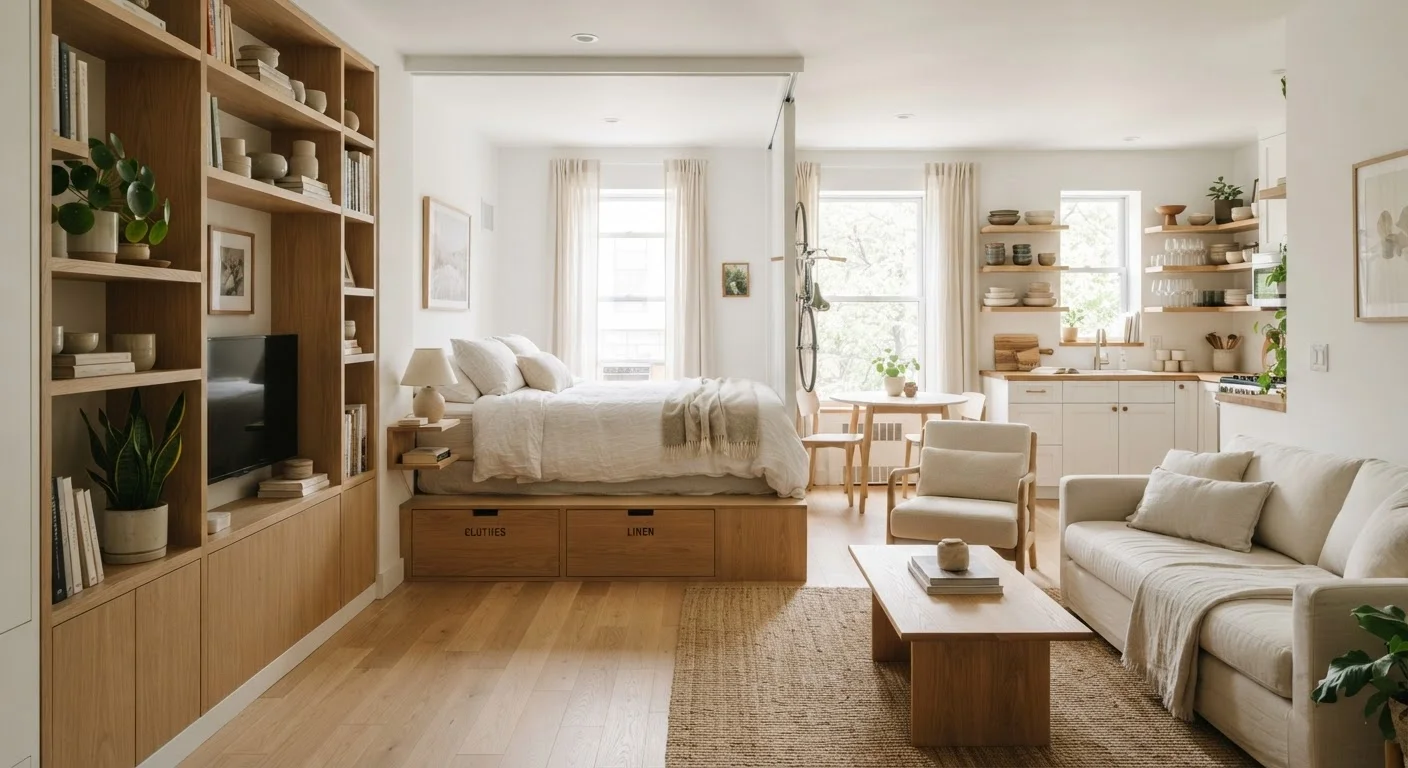
In compact spaces, every piece of furniture should ideally serve more than one purpose. Bed frames with built-in drawers eliminate the need for a separate dresser. Storage ottomans replace coffee tables while holding blankets or seasonal items. A dining bench with a hinged lid can store board games, linens, or craft supplies.
When selecting furniture, measure carefully and prioritize pieces with internal storage over decorative items. A well-chosen sofa with under-seat compartments, for instance, can absorb an entire category of belongings that would otherwise pile up on surfaces.
Multi-functional furniture does double duty - storage ottomans and drawer beds replace items you'd otherwise need separately.
Reclaim Hidden Dead Zones
Most apartments contain several overlooked storage areas that go completely unused. The space under the bed (when not using a storage frame) can hold flat rolling bins for seasonal clothing or extra linens. The tops of kitchen cabinets work for rarely used appliances or bulky bakeware. The back of every door - bathroom, bedroom, pantry - is a prime spot for over-the-door organizers holding shoes, cleaning supplies, or accessories.
Take a walk through your home specifically looking for these dead zones. Even identifying two or three can meaningfully reduce surface clutter. Understanding the concept of dead zones and other organizing terms is easier with a reference - our home organizer glossary covers the key vocabulary.
Under beds, above cabinets, and behind doors are three dead zones that together can absorb a surprising volume of belongings.
Create Defined Zones in Each Room
Open-plan apartments and studio layouts often struggle with clutter because there are no visual or physical boundaries between activity areas. Creating zones - even loosely defined ones using rugs, shelving units, or furniture arrangement - helps each area function more clearly and keeps items from migrating across the space.
In a studio, for example, a bookcase used as a room divider can simultaneously separate the sleeping area from the living area while providing storage on both sides. In a small bedroom, grouping all work-related items in one corner prevents them from spreading onto the bed or nightstand. Defined zones make it much easier to return items to their correct place after use.
Defined zones give every item a logical home, which makes maintaining order significantly easier over time.
Declutter Before You Organize
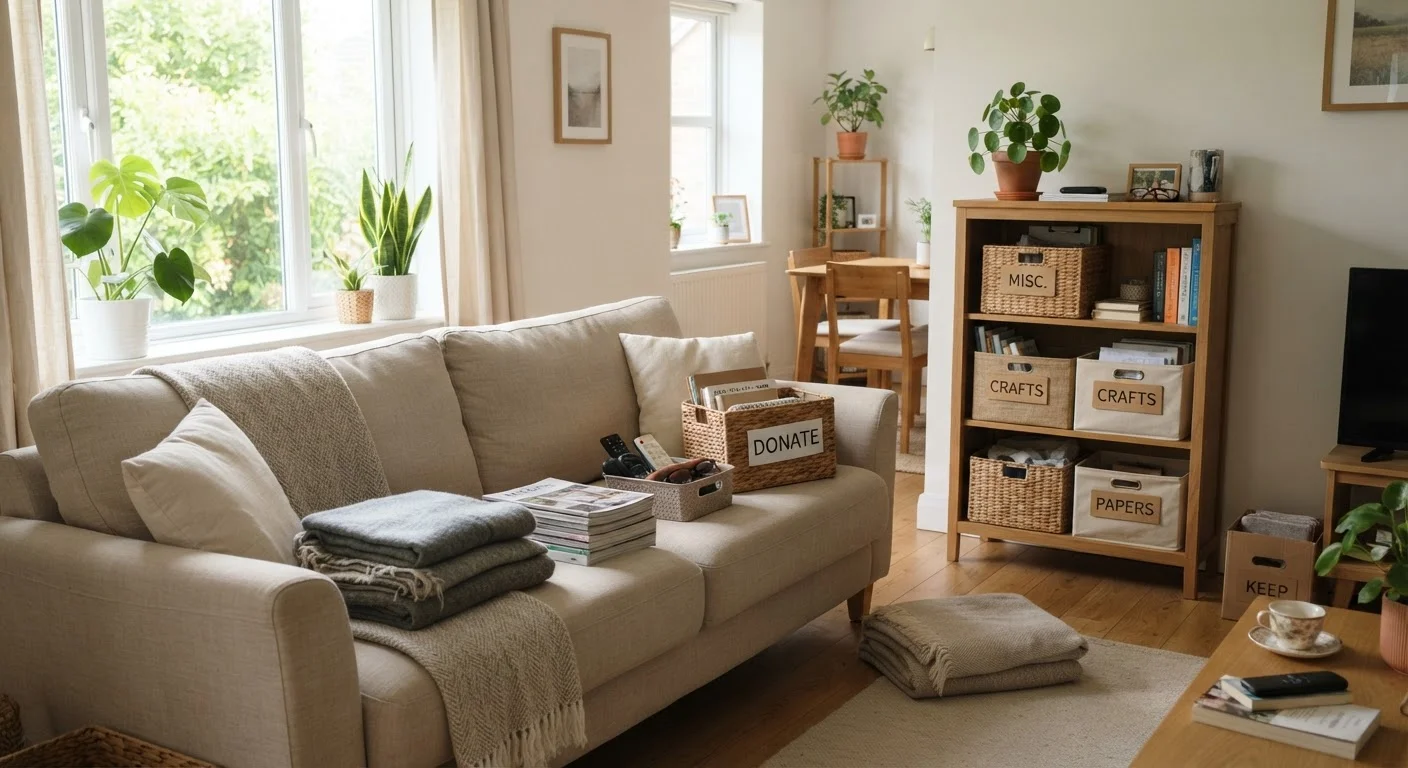
Adding storage to a cluttered space often just moves the problem rather than solving it. Before investing in any shelving, bins, or organizational products, go through each area and remove items you no longer use, need, or want. Donate, recycle, or responsibly dispose of them.
A good rule of thumb: if an item hasn't been used in over a year and holds no clear future purpose, it's a candidate for removal. Once you're working with only what you genuinely need, the right storage solutions become far more obvious - and you'll likely need far fewer of them than you expected.
Organizing before decluttering is one of the most common small-space mistakes - always reduce before you reorganize.
Use Consistent Containers and Labels
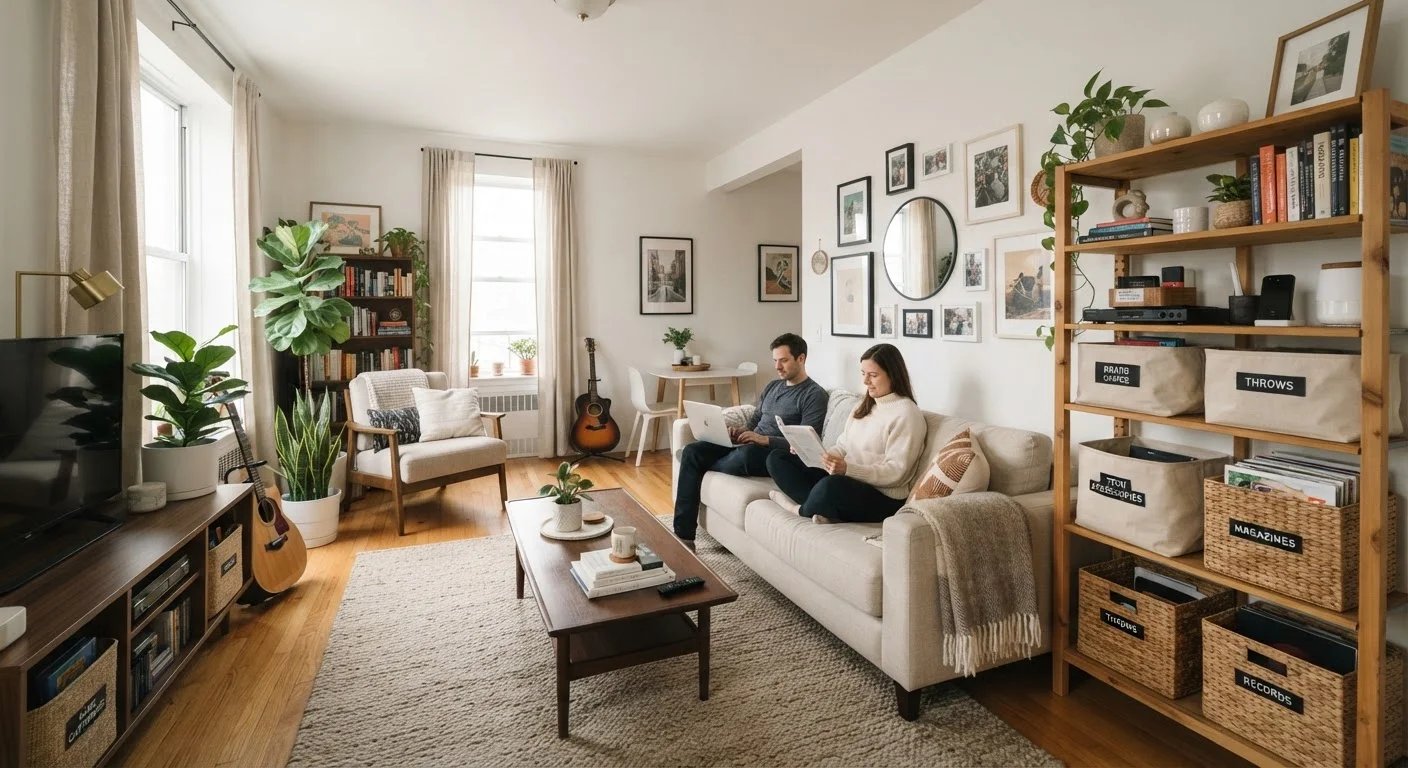
Visual consistency plays a larger role in perceived tidiness than most people realize. When containers, baskets, or bins are mismatched, a space can feel disorganized even when items are technically put away. Choosing a cohesive set of containers - even inexpensive ones - in complementary sizes and colors creates a sense of order that's easier to maintain.
Labels take it a step further by making systems intuitive for everyone in the household. Labeled bins mean items get returned to the right place rather than the nearest available spot. This is especially important in shared apartments where multiple people interact with the same storage systems.
Consistent containers and clear labels make storage systems intuitive for everyone, reducing the effort needed to maintain them.
Putting It All Together
Small-space storage works best as a system rather than a collection of individual fixes. When each room has clearly defined zones and every category of item has a dedicated spot, the effort required to maintain order drops dramatically. You're also less likely to over-buy storage products - one of the most common mistakes in compact homes. Our guide on organization myths to avoid explains why more bins aren't always the answer.
If you share your space with others, consistent systems matter even more. Explore our article on organizing shared spaces with different habits for strategies that work across households. Start with one room, build a system that functions without effort, then carry that logic through the rest of your home.
Start With One Room, Not the Whole Home
Trying to reorganize every room at once is overwhelming and rarely sustainable. Pick the one space that causes you the most daily frustration - often the kitchen or entryway - and apply these strategies there first. Once that room functions well, use the same logic in the next. Building momentum one room at a time leads to better long-term results than a single exhausting overhaul.