Why Organization Vocabulary Matters
Home organization has its own working language - a shorthand that professional organizers and experienced DIYers use to describe space, habits, and systems. When you understand what terms like prime real estate storage or decision fatigue actually mean, you stop guessing and start making deliberate choices about your home.
This glossary covers the core concepts you'll encounter whether you're reading an organization guide, working with a professional, or just trying to make sense of why a drawer keeps getting chaotic. Use it as a reference you return to whenever a term stops you cold.
For a structured approach to applying these concepts room by room, see our complete home organization framework. And if you've been assuming that "organized" simply means tidy, this article on what organized really means may shift your perspective.
Prime Real Estate Storage
The most accessible storage areas in any room - typically at eye level and within easy reach. These spaces should be reserved for the items you use most frequently, since accessibility directly affects whether a system gets used.
Dead Zone
Any storage area that is difficult to access, poorly lit, or awkwardly shaped - such as high shelves, deep corner cabinets, or under-stair spaces. Dead zones aren't wasted space; they're best suited for seasonal or rarely used items.
Drop Zone
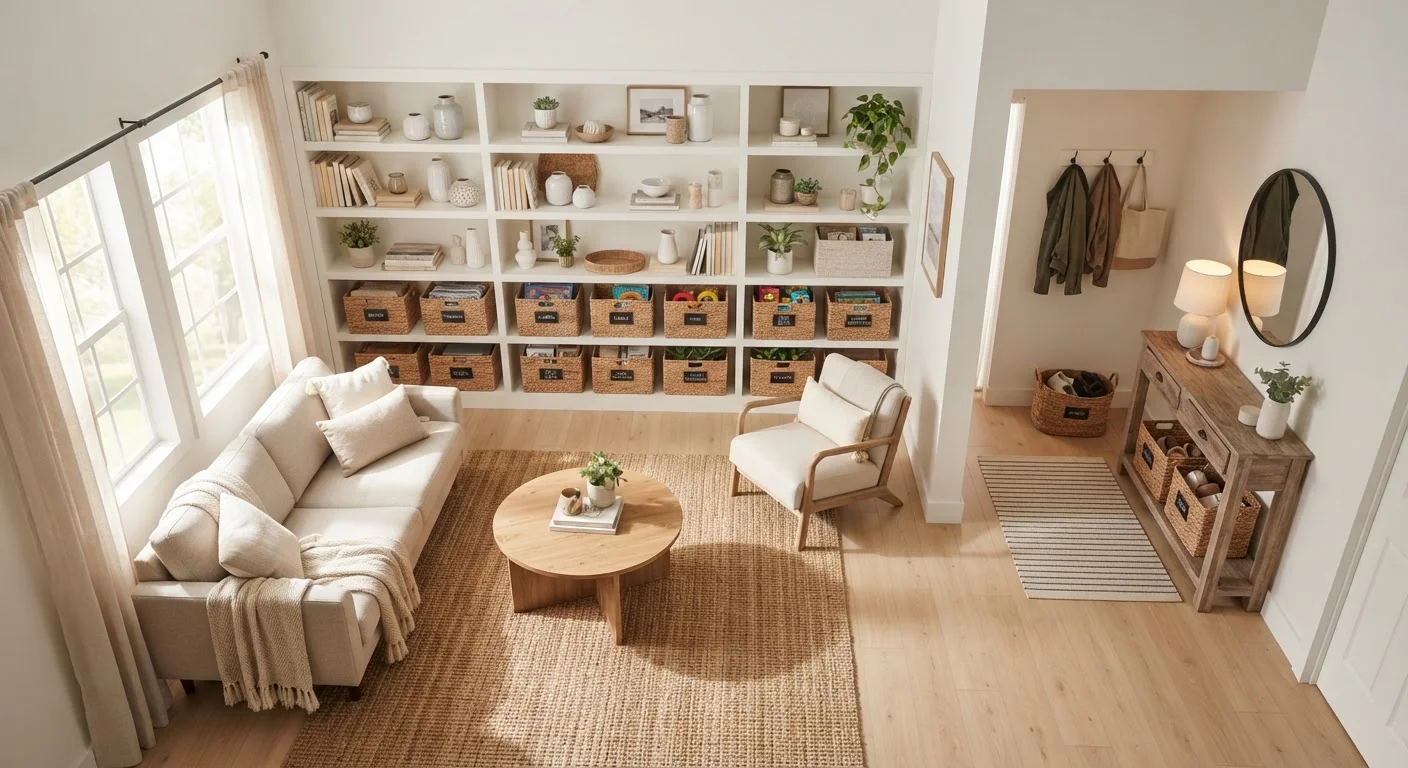
A designated landing spot - usually near an entryway - where daily-use items like keys, bags, and mail are deposited consistently. A well-designed drop zone prevents clutter from migrating deeper into the home.
Decision Fatigue
The mental drain that results from making too many small choices throughout the day. In organization, clutter contributes to decision fatigue because every misplaced item requires a micro-decision about where it belongs.
One-In, One-Out Rule
A maintenance principle stating that for every new item brought into a space, one existing item must leave. It prevents gradual accumulation without requiring periodic large-scale purges.
Category Creep
The gradual expansion of one type of item into zones designated for other things. For example, craft supplies slowly taking over a home office. Recognizing category creep is the first step in reversing it.
Designated Home
The specific, consistent location where an item is always stored when not in use. Giving every item a designated home is considered the single most effective habit for maintaining an organized space long term.
Reset
A brief, routine tidying session - often 5 to 15 minutes - that returns a space to its baseline organized state. Unlike a deep clean, a reset maintains an existing system rather than creating a new one.
Editing
The process of deciding what stays and what leaves a space before organizing it. Editing is always recommended before purchasing any storage products, since buying bins for items you don't need compounds the problem.
Container Principle
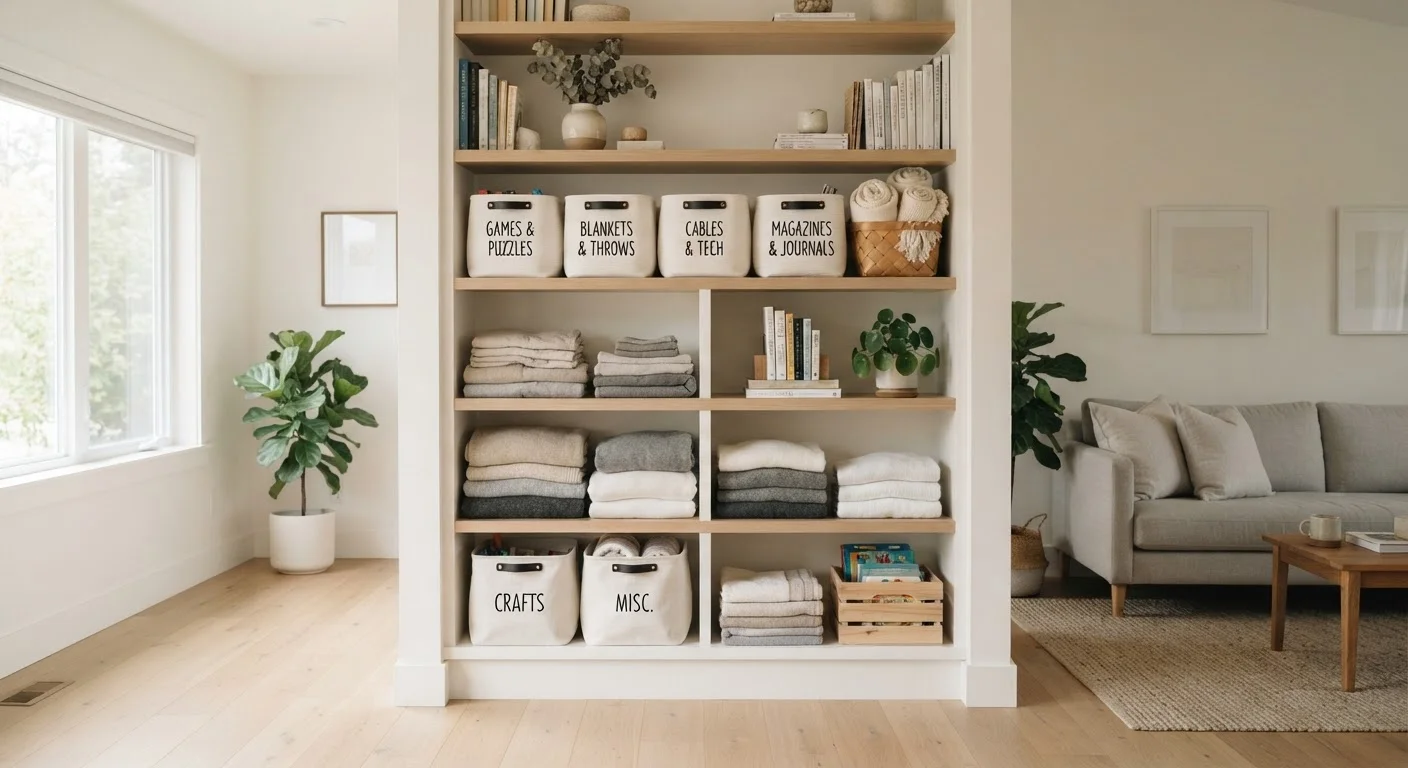
A space-management philosophy that treats every container - a shelf, drawer, or basket - as a fixed limit. When a container is full, something must be removed before anything new is added.
Friction
Any obstacle - physical or mental - that makes it harder to put something away correctly. High-friction systems (like lids that require two hands to remove) are frequently abandoned. Reducing friction is a key goal in system design.
Zone Organization
A method of organizing space by grouping related activities or item types into dedicated areas. Kitchen zones might include prep, cooking, and baking areas. Zones reduce the time spent searching and help maintain order naturally.
Putting the Terms Into Practice
Knowing these terms is most useful when you connect them to real decisions. Here are a few ways the vocabulary translates into action:
- Audit your prime real estate. In every room, identify the spaces within arm's reach or at eye level. Those zones should hold only the items you use most frequently - not overflow or sentimental storage.
- Name your dead zones. High shelves, deep cabinets, and awkward corners are classic dead zones. Rather than ignoring them, assign them intentional roles: seasonal items, rarely used tools, or archival storage.
- Reduce decision fatigue by creating homes. Every item that has a designated home is one fewer micro-decision you make each day. This is the foundation of any system that stays organized without constant maintenance.
- Apply the one-in, one-out rule. Before any new item enters a space, decide what leaves. This prevents category creep - the slow expansion of one type of item across multiple zones.
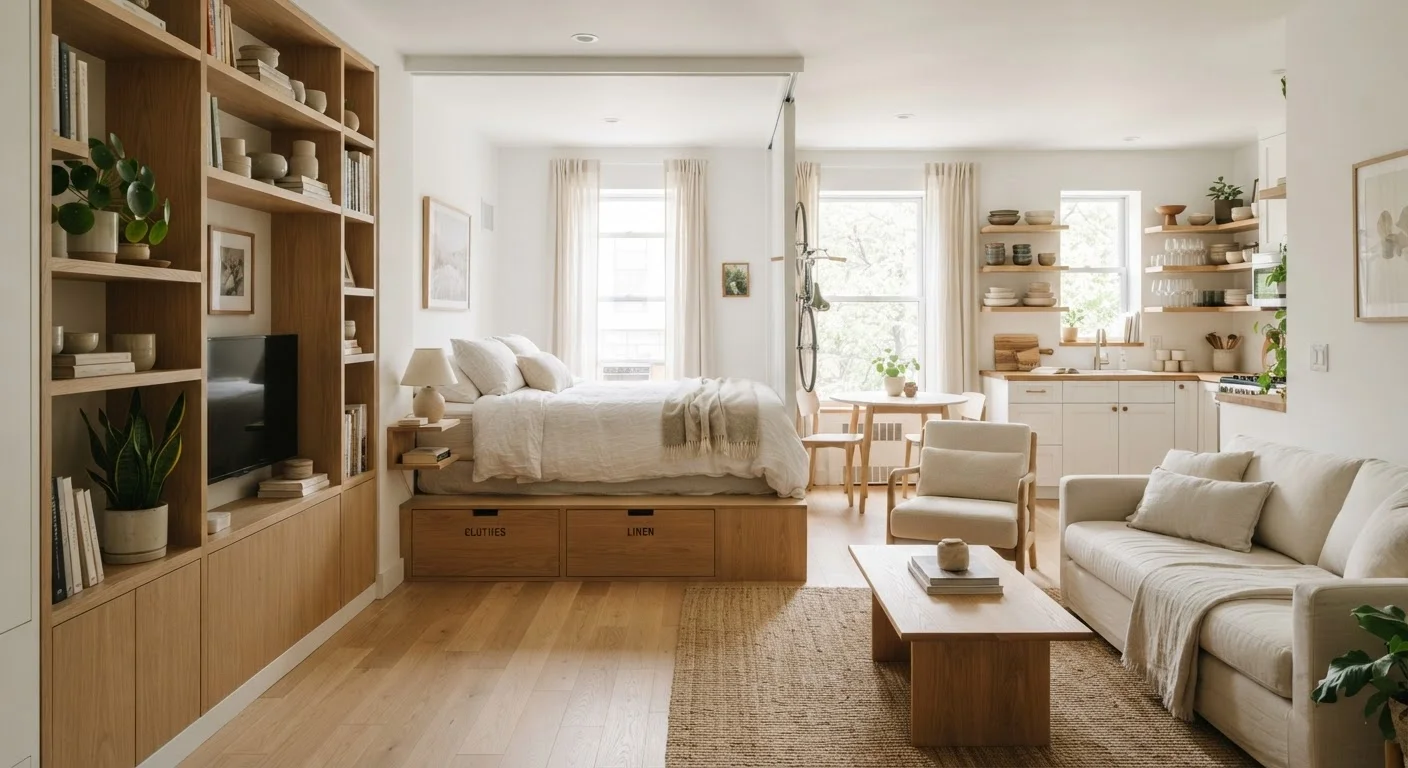
If your challenge is limited space, the same principles apply - they just require more precision. Our guide on small-space storage solutions walks through practical approaches for apartments and compact homes.
When multiple people share a space, terminology also helps establish shared expectations. Agreeing on what a "reset" means, or where the drop zone lives, reduces friction. See organizing shared spaces with different habits for strategies built around that reality.
Finally, be cautious about popular beliefs that sound logical but backfire - like buying more bins before editing your belongings. Common organization myths often make clutter worse rather than better.
| Most Overlooked Zone | The space between eye level and the floor (dead zone territory) |
| Recommended Reset Frequency | Daily for high-traffic areas; weekly for lower-traffic rooms |
| Editing First Rule | Always edit (remove unneeded items) before purchasing new storage |
| Key Drop Zone Items | Keys, bags, mail, shoes, and daily-use accessories |
| Prime Real Estate Locations | Eye-level shelves, top drawers, countertops within arm's reach |
| Zone Organization Benefit | Reduces search time and makes shared-space rules easier to follow |