
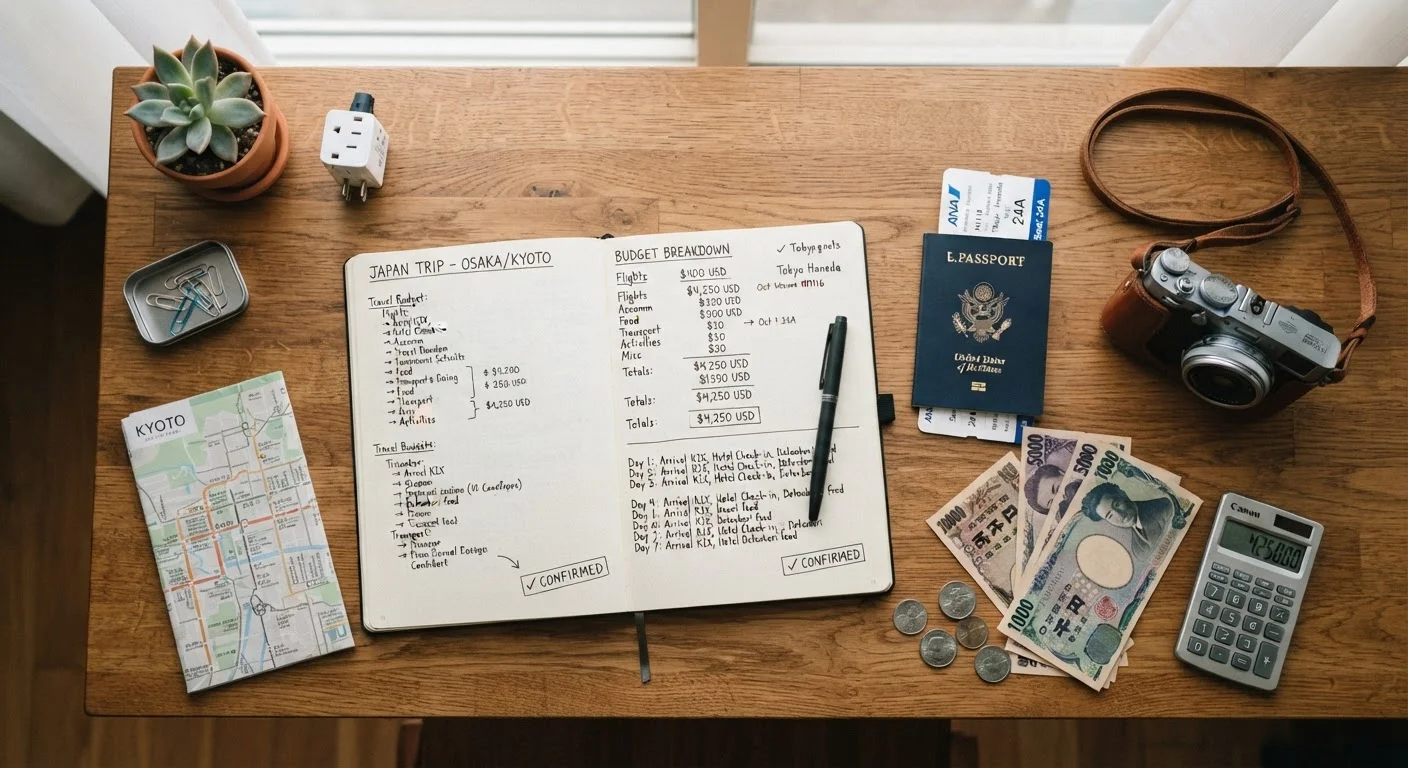
Why Travel Budgets Break Down Before the Trip Ends
Most travelers don't run out of money because they booked an expensive hotel - they run out because dozens of smaller, unconsidered costs accumulate faster than expected. The flight and accommodation totals feel concrete and final; everything else feels vague and easy to defer. That deferral is exactly where budgets fail.
Building an accurate travel budget requires treating it the same way you'd approach any serious financial estimate: systematically, by category, before you commit to anything. The trip planning timeline is a good reference for understanding when budget research should happen relative to booking. Done early, a complete budget can actually change which destination, dates, or accommodation type you choose - saving you from discovering the shortfall at the airport.
~20-30%
How much travelers typically underestimate trip costs
Travel financial advisors commonly cite this range as the gap between what travelers budget and what they actually spend, driven largely by overlooked ancillary expenses.
10-15%
Recommended contingency buffer for any trip budget
A widely cited travel planning guideline suggests reserving at least 10-15% of total estimated trip costs for unexpected expenses before finalizing bookings.
1-3%
Typical foreign transaction fee per card purchase abroad
Many standard U.S. bank and credit cards charge a foreign transaction fee in this range on every international purchase, which compounds significantly over a multi-week trip.
The Costs Travelers Consistently Overlook
The mistakes below aren't rare. They show up in nearly every under-budgeted trip, regardless of destination or traveler experience level. Understanding why each one happens makes it far easier to build a habit of catching them before departure.
Treating the flight and hotel total as the full trip cost.
Why it happens: Booking platforms make airfare and accommodation the most visible expenses, so travelers naturally anchor their budgets around those numbers.
Forgetting airport-to-hotel transfer costs at both ends of the trip.
Why it happens: Ground transportation feels like a minor detail compared to flights, so it gets pushed to the back of the planning process - or ignored entirely.
Ignoring baggage fees, seat selection charges, and other airline add-ons.
Why it happens: Budget airline pricing is designed to appear low upfront; ancillary fees are disclosed only later in the booking flow.
Underestimating food and drink costs, especially at tourist destinations.
Why it happens: Travelers often budget based on prices back home or on a best-case scenario of eating cheaply every day, without accounting for tourist-zone markups or the reality of a few splurge meals.
Missing visa fees, entry taxes, and tourism levies.
Why it happens: These fees are not part of the airline booking process and are easy to overlook during the excitement of planning.
Failing to account for foreign transaction fees and currency conversion costs.
Why it happens: These charges appear as small percentages and feel invisible until they accumulate across dozens of transactions.
Skipping a gratuity budget for destinations where tipping is customary.
Why it happens: Tipping norms vary widely by country and are rarely mentioned in destination guides, so travelers either over-tip out of habit or forget to budget for it at all.
Visa and Entry Fees Can Change Without Notice
Countries periodically update visa requirements, entry taxes, and e-visa fees - sometimes with little advance notice. A fee that was accurate when you read a travel blog six months ago may no longer apply. Always verify current requirements directly with the destination country's official immigration authority or the U.S. Department of State's travel information pages before departure.
Building a Budget That Actually Holds Up
Once you've accounted for the line items above, the final step is stress-testing your total. Add your full estimated spend across all categories - transport, accommodation, food, activities, fees, gratuities, and card costs - then apply your contingency buffer on top.
A Budget Without a Contingency Isn't a Budget
Unexpected costs - a missed connection, a medical visit, or a mandatory entry fee discovered at the border - are not rare exceptions; they are near-certainties over the course of enough trips. Travel financial planners commonly recommend setting aside 10-15% of your total estimated trip cost as a contingency reserve before you finalize any booking. Treat this as a non-negotiable line item, not an afterthought.
A well-structured trip itinerary also helps budget accuracy: when you know what activities you're planning each day, you can research their actual costs rather than guessing. See how to build a well-structured itinerary for guidance on day-by-day planning. Travelers who over-schedule also tend to overspend - if you're curious why, overpacked itineraries carry real costs beyond just stress. For on-the-ground logistics that feed directly into your budget, the travel logistics hub covers transportation and accommodation essentials in detail.
This article provides general travel planning information. Fees, visa requirements, and pricing referenced are subject to change; always verify current costs and entry requirements with official sources before traveling.