The Four Questions Every Project Decision Needs
Before picking up a tool or dialing a contractor, run every home project through four honest questions:
- Do I have the skill? Not the skill you could theoretically develop, but what you can reliably execute today.
- Do I have the right tools? Renting or purchasing specialty equipment often erases the savings.
- What happens if I get it wrong? A mismatched paint color is a nuisance. A misapplied electrical connection is a fire hazard.
- Does this require a permit or licensed trade? Many jurisdictions require licensed contractors for electrical, HVAC, structural, and plumbing work. Unpermitted work can complicate insurance claims and home sales.
Answering these questions honestly - rather than optimistically - is what separates a satisfying weekend project from an expensive fix-it call. If you're new to homeownership, our introduction to home improvement lays out a solid foundation for approaching projects with realistic expectations.
When Local Codes Decide for You
In many U.S. cities and counties, certain categories of work legally require a licensed contractor regardless of homeowner skill level. This includes most electrical panel and wiring work, gas line connections, HVAC installation, and structural modifications. Before starting any project that might fall into these categories, check with your local building department or municipal permit office. Requirements vary significantly by jurisdiction, and what's allowed owner-built in one county may require a licensed trade in the next.
Where DIY Genuinely Makes Sense
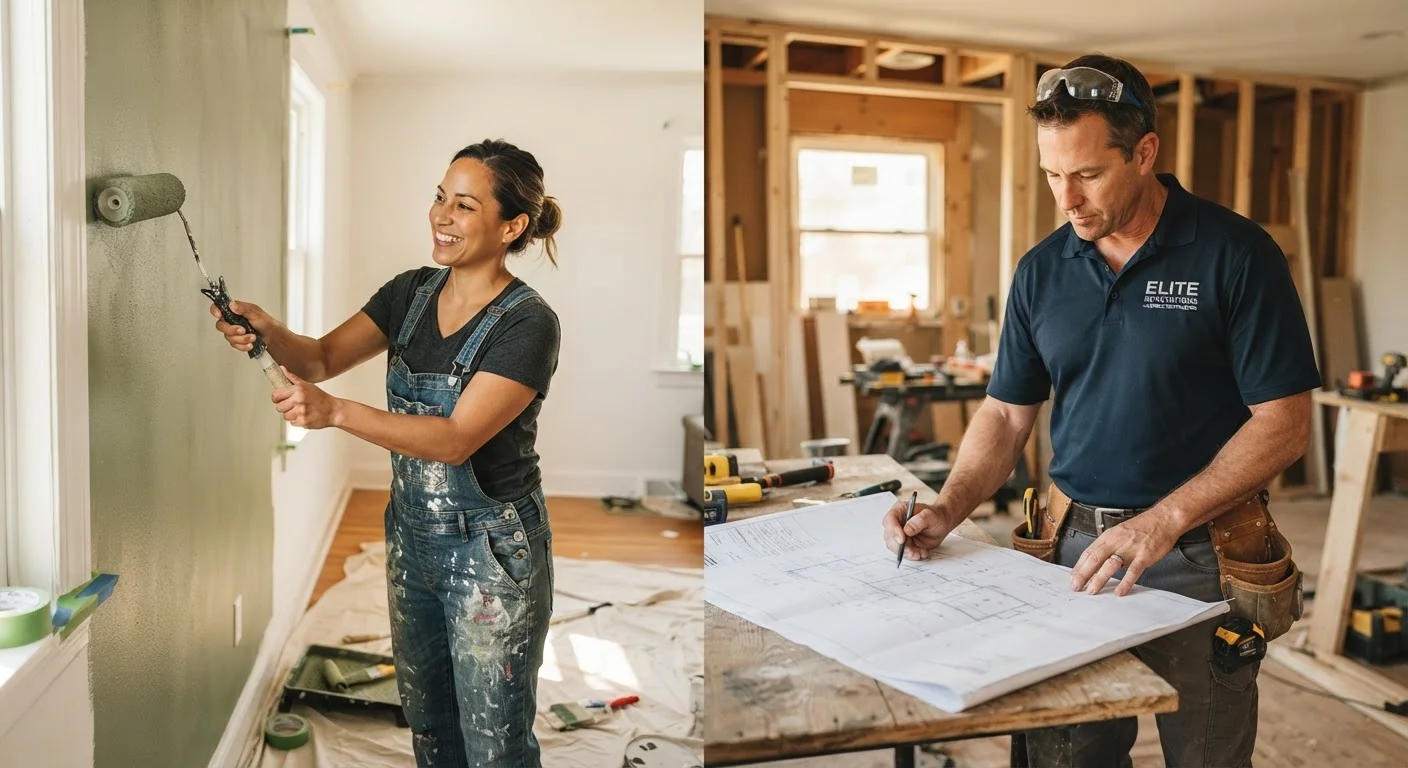
DIY earns its reputation in a well-defined category: cosmetic, low-voltage, and maintenance-level work where mistakes are correctable and skill requirements match a motivated beginner or intermediate homeowner.
Saves money on labor for straightforward tasks
Labor often makes up 40-60% of a project's total cost. For simple work like painting, caulking, or basic landscaping, doing it yourself can result in meaningful savings without requiring specialized knowledge.
Builds practical home maintenance skills
Each completed project expands your ability to assess, maintain, and improve your home. Homeowners who understand how their systems work are better equipped to catch problems early.
Flexible scheduling on your own timeline
DIY work can be done on weekends or evenings without coordinating contractor availability, which is particularly valuable for smaller projects that don't justify a service call.
Greater control over materials and quality
When you source materials yourself, you can prioritize quality without markup. You're also the one making choices about finishes and details, which matters in high-visibility areas like kitchens and bathrooms.
Strong DIY candidates include interior painting, caulking, patching drywall holes, installing outlet covers and light switches (with the breaker off), laying peel-and-stick tile, assembling flat-pack furniture, weatherstripping doors, and basic landscaping. These projects share a common profile: low consequence of error, no permit required, and tools that are inexpensive or already in most households.
For instance, painting a room yourself is one of the highest-return DIY tasks available - but the results depend heavily on preparation. What experienced painters do differently comes down to surface prep, not just brushwork.
When Hiring a Professional Is the Smarter Move
Some projects carry consequences - legal, financial, or physical - that make DIY genuinely risky rather than just challenging.
Mistakes can cost more than hiring out
Errors in tiling, drywall finishing, or trim work often require professional correction, which can exceed what the original job would have cost. The savings disappear quickly when rework enters the picture.
Specialty tools represent a hidden cost
Projects that seem simple may require tile saws, oscillating tools, or pipe wrenches you don't own. Purchasing or renting these tools narrows or eliminates the cost advantage of doing it yourself.
Regulated work carries legal and insurance risk
Unpermitted electrical, plumbing, or structural work can void homeowners insurance coverage and create disclosure obligations when you sell. Some jurisdictions require inspections even for work done by the homeowner.
Time investment is often underestimated
A project a professional completes in a day may take a homeowner an entire weekend - or several. Time has real value, and extended project timelines can disrupt daily life in ways that aren't obvious upfront.
Safety risks in hazardous project categories
Electrical wiring, gas appliances, and work at height carry injury risk that increases significantly without training. Even well-intentioned DIY in these categories can create dangerous conditions.
Electrical panel work, gas line connections, load-bearing wall removal, roof replacement, and main-line plumbing are the clearest examples. These tasks are regulated for good reason: errors can cause fires, structural failure, flooding, or gas leaks. Most jurisdictions require licensed contractors and inspections for this work, and skipping that step can void homeowner's insurance coverage or flag issues during a future home sale.
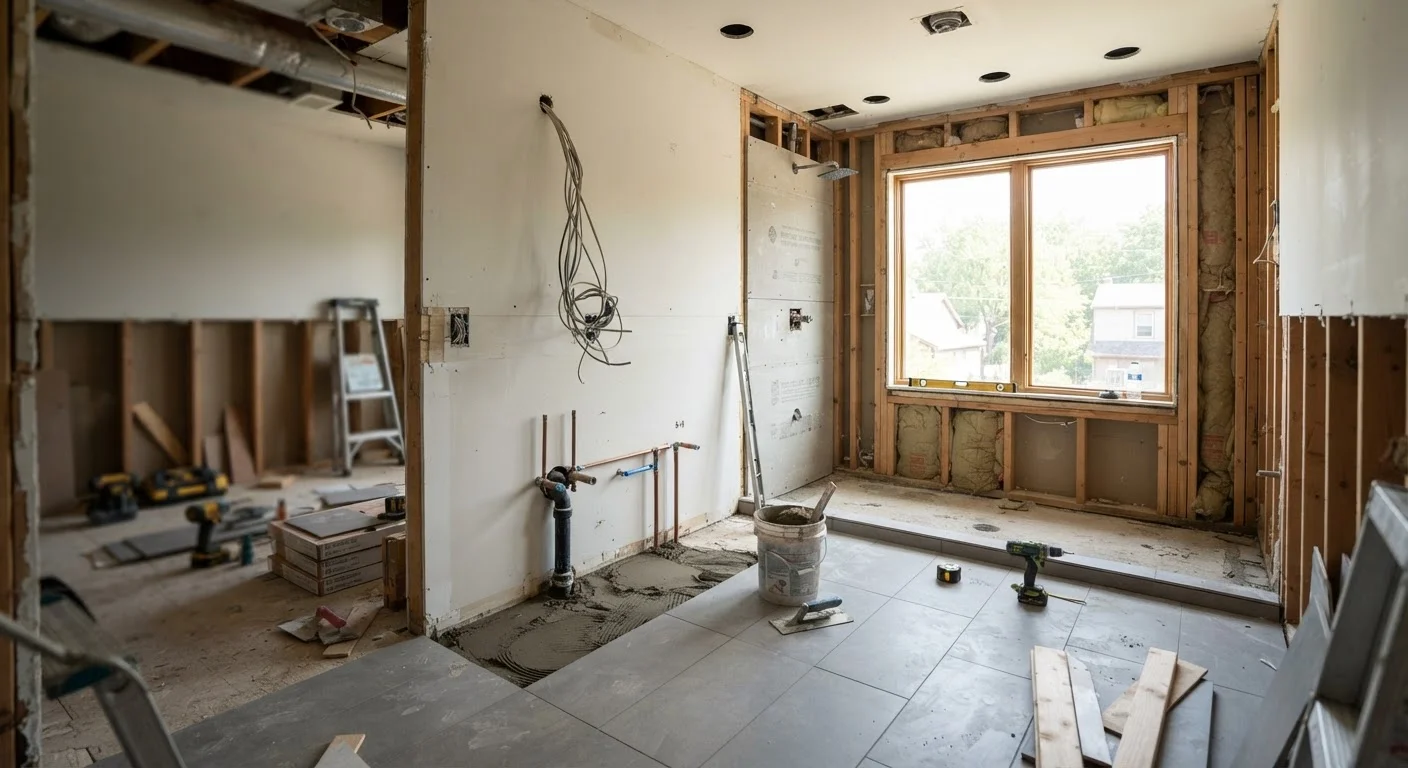
Larger remodels also tend to benefit from professional coordination. A full bathroom remodel, for example, typically involves multiple trades - plumbing, tile, electrical, and finish carpentry - sequenced in a specific order that an experienced contractor manages routinely.
~40-60%
Share of project cost typically attributed to labor
Industry estimates consistently place labor at roughly half of most home improvement project costs, making it the primary variable in DIY savings calculations.
Permit required
Common trigger for licensed contractor requirement
Most U.S. municipalities require permits - and licensed contractor sign-off - for electrical panel work, HVAC installation, structural changes, and additions; verify requirements with your local building department.
The Hybrid Approach: Do What You Can, Hire What You Can't
The most cost-effective strategy for many homeowners isn't all-or-nothing. A hybrid approach - handling the prep, demolition, painting, or cleanup yourself while hiring licensed trades for the technical core - can meaningfully reduce a project's total cost without taking on unsafe tasks.
Consider a kitchen cabinet update. Homeowners who are comfortable with basic tools can handle removing old hardware, painting or refinishing cabinet faces, and reinstalling doors. The more complex decisions around refacing, replacing boxes, or rerouting plumbing for an island are where professional input pays off. Weighing your cabinet update options helps clarify which approach matches your scope and budget.
When negotiating with contractors, ask explicitly what work you're permitted to do yourself before or after their portion. Many will welcome homeowner-supplied demo or painting, which reduces their billable hours and your total invoice.
Building Your Personal DIY Framework Over Time
Every homeowner's capacity for DIY grows with experience - but starting beyond your current skill level is how projects stall, budgets blow out, and confidence takes a hit. Build deliberately: start with forgiving, low-stakes tasks and document what you complete. Over time, a track record of finished projects is more valuable than any optimistic self-assessment.
Keep a simple running list of what's been completed, what tools you own, and which jobs required a professional and why. This log becomes a reference for future decisions and is useful when getting contractor quotes - you can speak accurately about what's already done.
The goal isn't to DIY everything. It's to be honest about trade-offs, protective of your home's safety and value, and strategic about where your time and money go. That clarity - more than any skill - is what makes a homeowner effective.