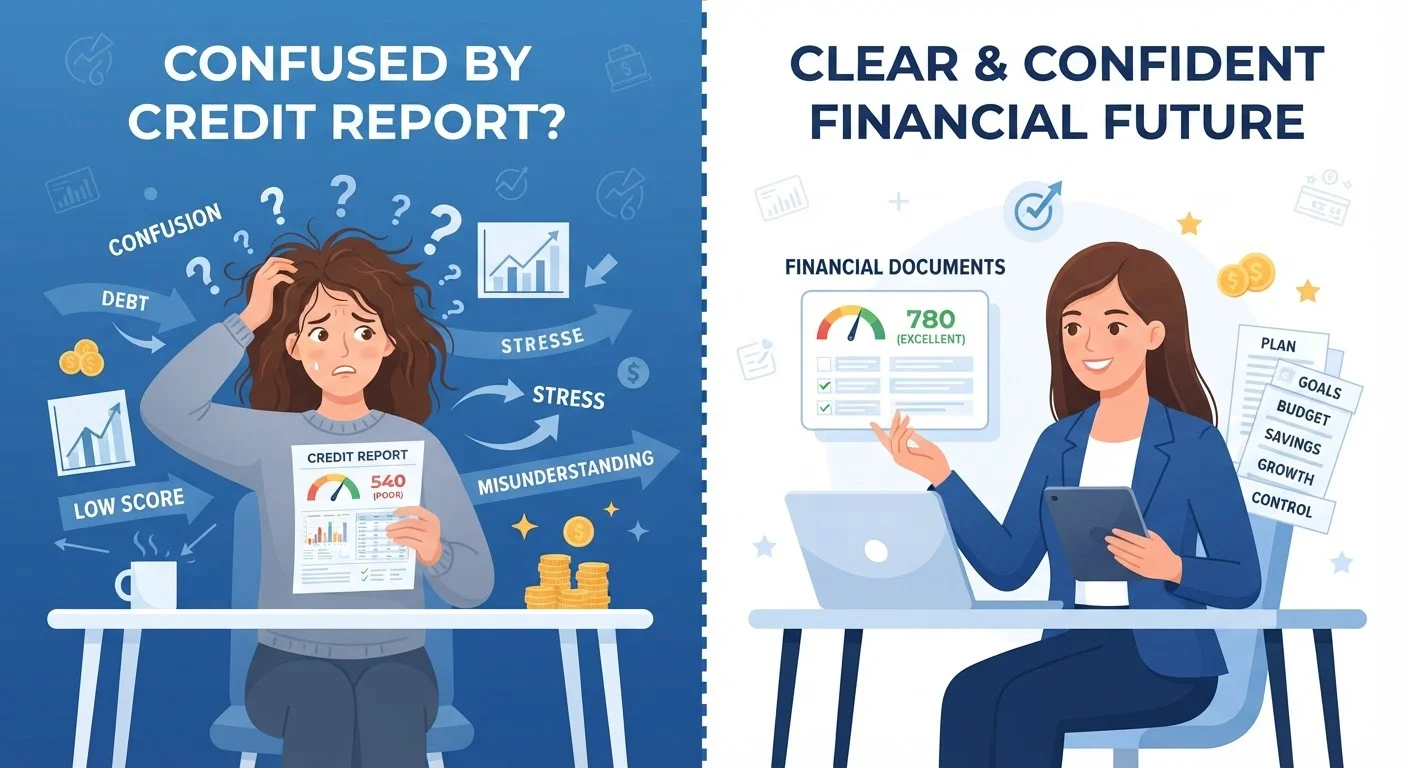

Why Credit Score Myths Stall Legitimate Buyers
Many first-time buyers sit on the sidelines for months - or years - operating under a set of assumptions about credit scores that simply do not hold up to scrutiny. These beliefs often come from well-meaning family members, outdated online forums, or a general confusion between personal credit cards and mortgage underwriting standards. The result is that buyers who could qualify for a home loan talk themselves out of even applying.
Understanding how mortgage lenders actually evaluate creditworthiness is one of the most practical steps a prospective buyer can take. Mortgage approval is not a pass/fail test based on a single number. It is a comprehensive assessment of financial risk - and many buyers are stronger candidates than they realize.
Myth
You need a credit score of 700 or higher to get approved for a mortgage.
Fact
Many loan programs accept scores considerably lower than 700, depending on the loan type and lender.
The 700 benchmark is widely repeated, but it does not reflect the full range of mortgage options available. FHA loans - backed by the Federal Housing Administration - can be available to borrowers with scores as low as 580 with a 3.5% down payment, or even lower with a larger down payment, depending on the lender's specific guidelines. VA and USDA loans, available to qualifying veterans and rural buyers respectively, may also carry more flexible credit requirements. Even conventional loans backed by Fannie Mae and Freddie Mac have baseline minimums around 620 for some products. Always compare options across loan types, and consult a licensed mortgage professional to understand what you may realistically qualify for based on your complete financial picture.
Myth
Shopping around for mortgage rates will seriously damage your credit score.
Fact
Multiple mortgage inquiries made within a focused shopping window are typically treated as a single inquiry by credit scoring models.
Credit scoring models like FICO and VantageScore are specifically designed to encourage rate shopping. When lenders pull your credit for a mortgage within a short period - commonly 14 to 45 days depending on the scoring model - those inquiries are generally grouped and counted as one. This means comparing offers from several lenders has a minimal impact on your score. Hard inquiries from mortgage applications do have a small, temporary effect, but the benefit of finding a lower interest rate far outweighs a brief dip of a few points. See our overview of common credit misconceptions for more on how inquiries actually work.
Myth
Paying off old collections accounts right before applying will significantly boost your mortgage approval odds.
Fact
Paying off old collections can sometimes have a limited or even counterproductive effect on certain scoring models, depending on the account's age.
This is a nuanced area where acting without guidance can backfire. Under older FICO models still used by many mortgage lenders, paying a collection account can actually reset the account's activity date, temporarily keeping it more prominent in your credit file. Newer scoring models handle this differently, but mortgage lenders frequently use legacy FICO versions. Before paying off any old debt ahead of a mortgage application, consult both a mortgage professional and a credit counselor. Strategic timing matters, and what seems like a logical step can complicate your loan file rather than clean it up.
Myth
Your credit score is the only thing lenders look at when deciding on mortgage approval.
Fact
Lenders evaluate your full financial profile, including debt-to-income ratio, employment history, assets, and down payment size.
A credit score is one input in a much larger underwriting picture. Lenders use it as a risk signal, but your debt-to-income (DTI) ratio - the share of your gross monthly income going toward debt payments - carries substantial weight. Most conventional programs prefer a DTI at or below 43%, though some programs allow higher ratios with compensating factors. Stable employment history, liquid reserves, and the size of your down payment all influence the lender's decision. A borrower with a 680 score, a 20% down payment, and two years of steady employment may be viewed more favorably than a borrower with a 730 score and a high DTI. See what first-time buyers often overlook for a broader look at the homebuying process.
Myth
Renting instead of buying is always the financially smarter move if your credit is below average.
Fact
The rent-versus-buy calculation depends on many variables; below-average credit does not automatically make renting the better long-term choice.
While a lower credit score typically means a higher mortgage interest rate, that does not mean buying is off the table or financially imprudent. Rent payments build no equity, whereas mortgage payments - even at a higher rate - contribute to ownership over time. Some buyers in this position choose to buy with the credit profile they have and refinance once their score improves. Others use the time renting to actively rebuild credit. Neither path is universally correct. The right decision depends on local market conditions, how long you plan to stay, your savings cushion, and your broader financial goals. Housing market myths can also distort this calculation - be cautious about assumptions on either side.
What to Do With This Information
Correcting these misconceptions is only half the battle. The next step is taking informed action. Before applying for a mortgage, pull your credit reports from all three bureaus - Equifax, Experian, and TransUnion - through AnnualCreditReport.com, the federally authorized source for free reports. Dispute any errors you find, since inaccurate information can suppress your score without cause.
Do Not Make Major Financial Moves Before Closing
Once you are in the mortgage process, avoid opening new credit accounts, making large purchases on credit, or changing jobs without consulting your lender. These actions can alter your debt-to-income ratio or trigger a re-underwriting review, potentially delaying or jeopardizing your approval - even after a conditional commitment has been issued.
Then talk to a licensed mortgage professional - ideally more than one - to understand which loan products fit your profile. Getting pre-approved rather than simply pre-qualified gives you a clearer, lender-verified picture of your buying power. Pre-approval involves a formal credit pull and document review, making it far more reliable than a soft estimate.
Credit myths do not just affect home purchases - they shape financial behavior across the board. For a broader look at how misunderstandings about credit can affect everyday decisions, the Debt & Credit resource hub covers score-building strategies, debt management, and more.
This article is for general informational purposes only and does not constitute financial, legal, or mortgage advice. Credit and mortgage eligibility depend on individual circumstances. Consult a licensed mortgage professional or financial adviser before making decisions about your home purchase.