What Each Filter Actually Does
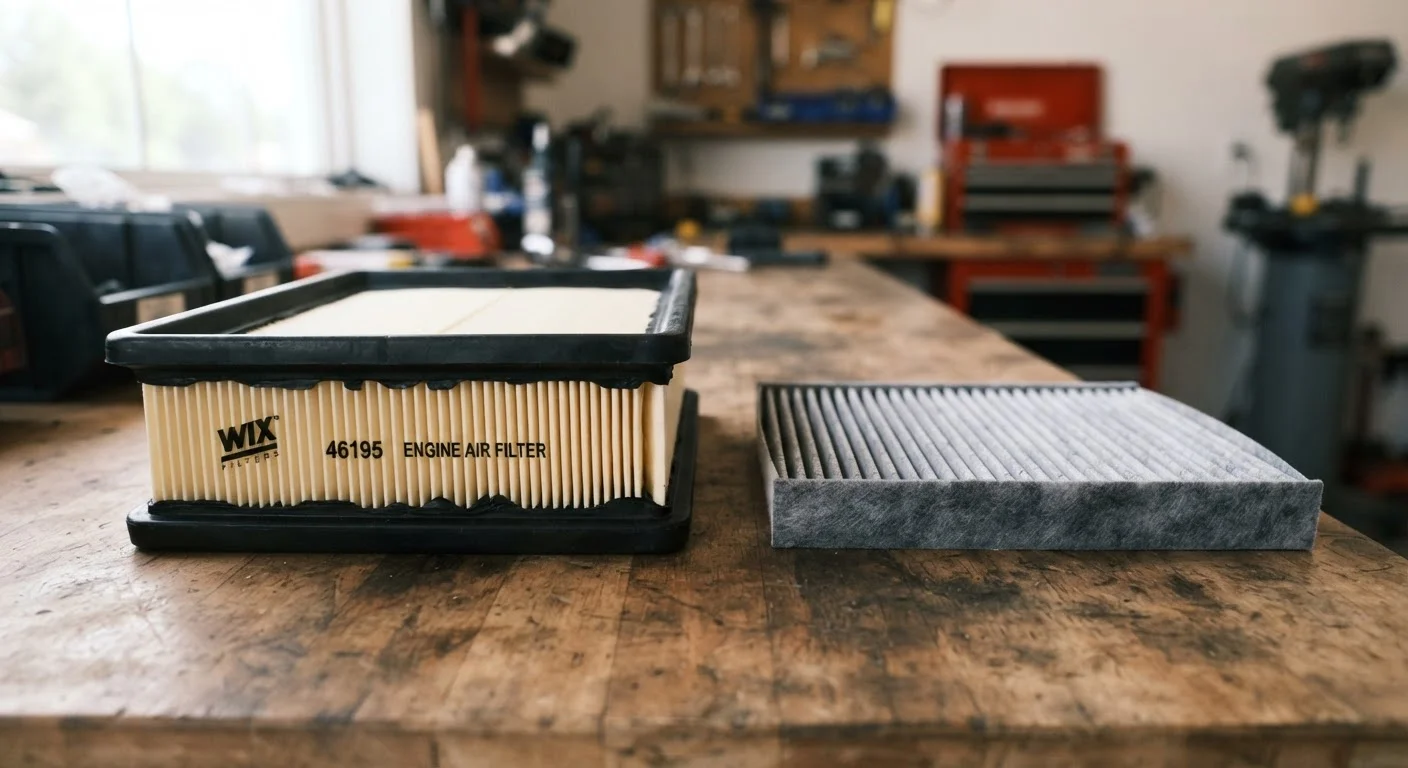
Despite sharing a name and a similar pleated-paper construction, the engine air filter and the cabin air filter operate in entirely separate systems with no overlap in function.
The engine air filter sits inside the air intake system, typically in a plastic housing connected to the throttle body. Every time your engine runs, it draws in large volumes of air to mix with fuel for combustion. The filter's job is to trap dust, sand, insects, and other debris before that air reaches the engine's cylinders, pistons, and valves. Abrasive particles that bypass the filter can accelerate wear on precision internal components over time.
The cabin air filter is part of an entirely different circuit - your vehicle's heating, ventilation, and air conditioning (HVAC) system. It filters the air that flows through your dashboard vents into the passenger compartment. It captures pollen, fine dust, mold spores, exhaust particulates, and sometimes odors, depending on whether it includes an activated carbon layer. It does nothing for the engine, and the engine air filter does nothing for your interior air quality.
| Criterion | Engine Air Filter | Cabin Air Filter |
|---|---|---|
| System served | Engine intake / combustion | HVAC / passenger compartment |
| What it filters | Dust, debris, insects | Pollen, particulates, odors |
| Typical location | Under-hood airbox | Behind glove box or under dash |
| Replacement interval | 15,000-30,000 miles | 12,000-15,000 miles |
| Key symptom when clogged | Reduced power, worse fuel economy | Weak airflow, musty smell in cabin |
| DIY difficulty | Easy - usually no tools needed | Easy to moderate - varies by vehicle |
Location, Replacement Intervals, and Warning Signs
Knowing where each filter lives makes inspection and replacement far less intimidating.
The engine air filter is usually found under the hood in a large plastic airbox. On most vehicles, popping the clips or removing a wing nut gives you direct access - no tools required. Visually, a filter that's turned from white or light gray to dark brown or black, or that's visibly caked with debris, is ready for replacement. Most manufacturers recommend swapping it every 15,000 to 30,000 miles, though dusty driving conditions shorten that interval noticeably.
The cabin air filter is commonly located behind the glove box, under the dashboard on the passenger side, or occasionally under the hood near the base of the windshield. Access varies more by make and model, but many cabin filters slot in and out without any tools at all. A collapsed shape, heavy gray or brown discoloration, or visible debris embedded in the pleats all signal it's time. The general guidance is replacement every 12,000 to 15,000 miles, or roughly once a year for average drivers.
Check Your Owner's Manual First
Manufacturer-recommended replacement intervals vary more than most drivers expect. Some vehicles with larger intake systems or more sophisticated filtration may have longer intervals; others in performance trims may call for shorter ones. Your owner's manual is the authoritative source for your specific vehicle - not general mileage rules of thumb.
Beyond mileage intervals, pay attention to symptoms. Engine hesitation, sluggish acceleration, or a decline in fuel efficiency can point to a restricted engine air filter. Weak airflow from your vents, musty or stale odors inside the car, or increased allergy symptoms during drives often indicate a saturated cabin filter.
DIY or Shop: What's Realistic for Each?
Both filters are considered basic maintenance items, and both are well within reach of most drivers who are comfortable doing simple tasks.
Replacing an engine air filter typically takes under ten minutes. The filter itself is a widely available part. The main caution: make sure the replacement filter matches the exact specification for your vehicle's make, model, and engine size. Installing the wrong size or failing to seat the airbox cover properly can allow unfiltered air into the engine - defeating the purpose entirely.
Cabin filter replacement is similarly straightforward on most vehicles, though glove box removal can occasionally require a few more steps depending on the design. Your owner's manual will show the exact location and procedure. If you're ever uncertain whether a task is within your skill level, having a qualified mechanic handle it during a routine service visit is a reasonable approach - both filters are typically fast to replace on a shop's lift.
One thing worth noting: neither filter is a wear-and-repair item the way brake pads or belts are. They are consumables. Delaying replacement doesn't just reduce performance - it can gradually shift the cost burden elsewhere, whether in fuel economy losses or HVAC blower motor strain.
25%
Potential fuel economy loss from a clogged engine filter
The U.S. Department of Energy has noted that a severely restricted air filter can reduce fuel economy on older carbureted engines; modern fuel-injected engines compensate differently but still see performance impacts.
2x
How much faster filters clog in dusty conditions
Driving frequently on unpaved or dusty roads can cut a filter's effective service life roughly in half compared to typical highway or urban driving, according to general automotive maintenance guidance.