Why Organization Myths Are Hard to Shake
Home organization advice is everywhere - social media, television, lifestyle blogs - and a lot of it looks convincing. The problem is that much of what gets repeated as wisdom is actually counterproductive. These myths persist because they feel logical on the surface, or because they mirror how we wish organizing worked: one big effort, one purchase, one perfect system.
The reality is more nuanced, and understanding where common beliefs go wrong is often the first step toward a home that actually functions better. Below, we address six of the most widespread misconceptions and replace each with a more grounded, workable perspective.
Myth
You need a big, free weekend to get your home organized. Without a long block of uninterrupted time, it's not worth starting.
Fact
Short, focused sessions of 15-30 minutes are often more effective and sustainable than marathon organizing days.
The "all or nothing" mindset is one of the most common reasons people never start. A dedicated weekend sounds appealing, but it frequently leads to burnout, half-finished projects, and piles that get shuffled rather than solved.
Consistent micro-sessions - one drawer today, one shelf tomorrow - build momentum without the overwhelm. If you're feeling stuck before you even begin, see our guide to starting without overwhelm for a practical approach.
Myth
More storage bins and containers will solve your clutter problem.
Fact
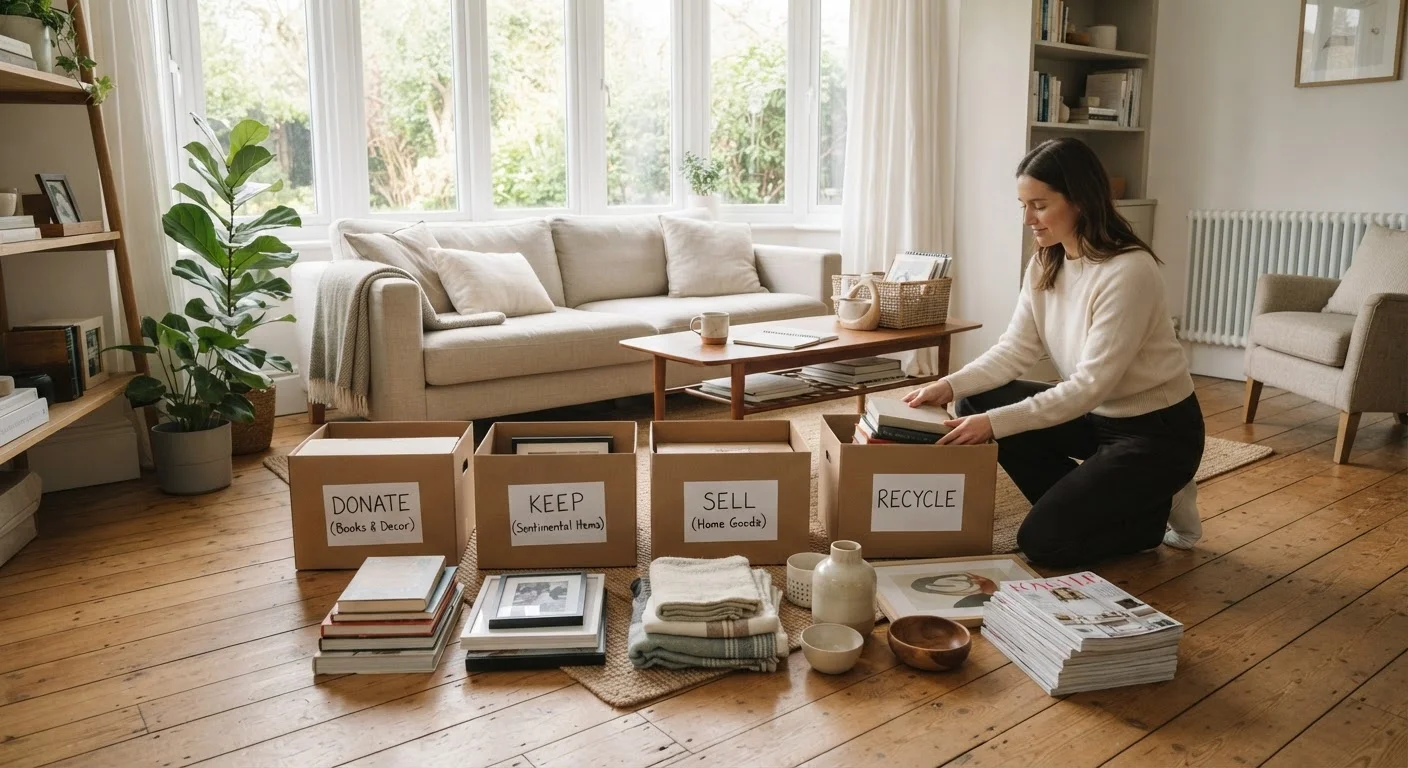
Buying storage before you declutter simply relocates clutter into containers - the underlying excess remains.
Storage products are a tool, not a solution. When you add bins to a space still full of items you don't use or need, you're organizing clutter rather than eliminating it. The first step is always to reduce - then contain what genuinely stays.
Once you've pared down, thoughtful storage choices make a real difference. For compact living situations, our article on small-space storage solutions shows how to store efficiently without over-buying.
Myth
An organized home looks picture-perfect at all times, like a magazine spread.
Fact
A truly organized home is functional and easy to reset, not necessarily flawless in appearance.
Chasing a magazine aesthetic sets an unrealistic standard that discourages real progress. Organization is about how your space works, not how it photographs. If you can find what you need quickly and reset a room in minutes, your system is succeeding.
For a grounded definition of what organization actually means in practice, our piece on what "organized" really means is worth reading before you set expectations.
Myth
Once you organize a space, it should stay that way without ongoing effort.
Fact
Organization requires regular maintenance - items accumulate naturally, and systems need periodic reassessment.
No organizational system is self-sustaining indefinitely. Life changes: kids grow, hobbies shift, households expand. A system that worked six months ago may quietly stop working, causing clutter to creep back in.
Building simple daily and weekly habits is what keeps a home organized long-term. Our article on the one-in-one-out rule and maintenance habits outlines realistic routines that prevent backsliding. Seasonal check-ins using a seasonal declutter checklist also help you stay ahead of accumulation.
Myth
Labeling everything is essential to staying organized.
Fact
Labels help in high-traffic or shared areas, but over-labeling wastes time and often gets abandoned quickly.
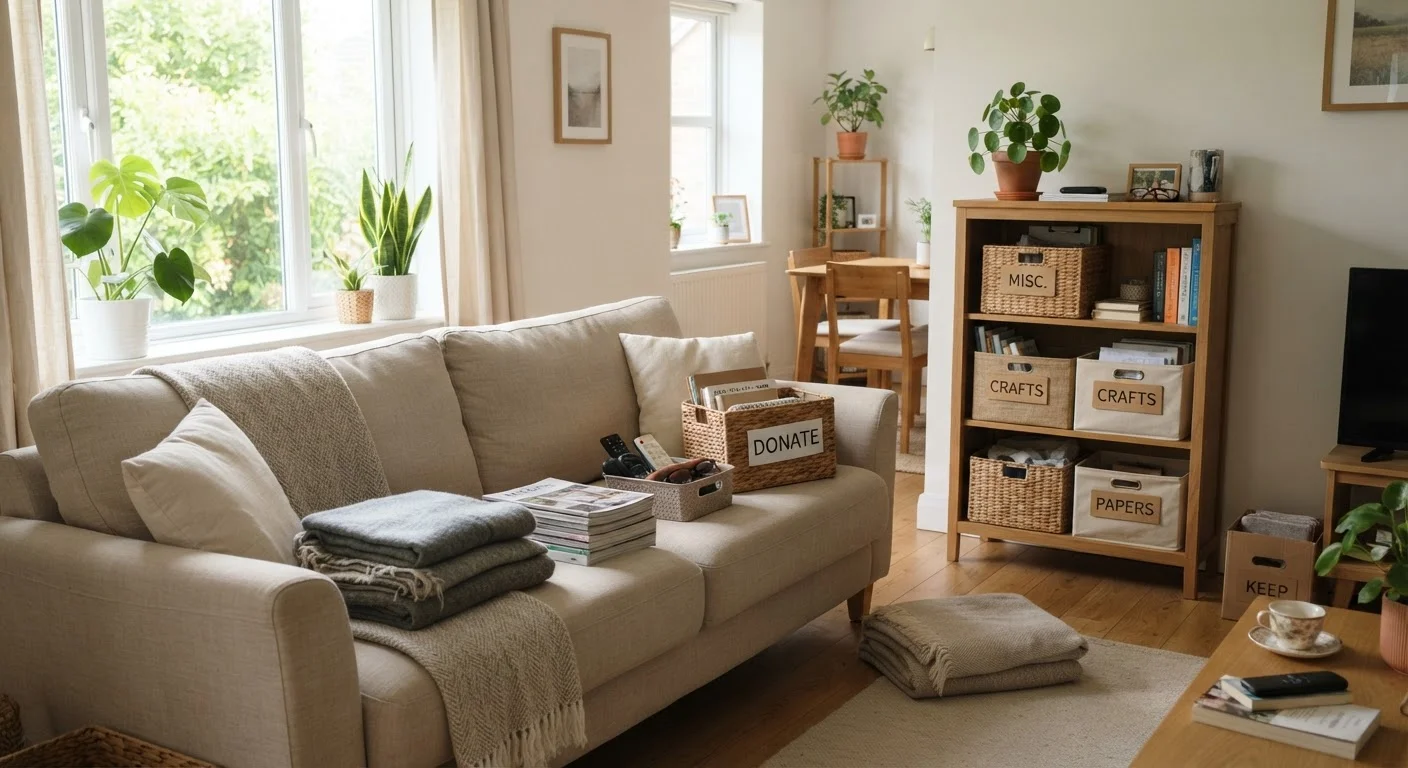
Labels are most effective in specific contexts - pantries, filing systems, kids' toy bins - where multiple people need to find and return items reliably. Applying labels to every surface in every room is time-consuming and rarely maintained. The effort-to-benefit ratio drops sharply when labeling becomes its own project.
Our guide on when labeling helps and when it's busywork helps you decide where labels genuinely earn their place.
Myth
You should organize one room completely before moving to another.
Fact
Organizing by category across multiple rooms is often faster and prevents duplicate items from going unnoticed.
When you tackle one room in isolation, you may reorganize around items that actually belong elsewhere - or keep multiples you didn't realize you had. Working by category (all paperwork, all tools, all seasonal items) gives you a complete view of what you own and where it logically belongs.
For a structured approach that applies this thinking across your whole home, our room-by-room organization framework walks through a method that balances both strategies effectively.
Building an Organization Approach That Actually Lasts
The myths above share a common thread: they frame organization as a one-time event requiring the right conditions or the right products. Effective organization is neither. It's an ongoing process built on realistic habits, honest editing of what you own, and systems sized to your actual life - not an idealized version of it.
Avoid Organizing Someone Else's Belongings Without Permission
When reorganizing shared spaces, resist the urge to discard or relocate items belonging to others without their input. Doing so frequently causes conflict and undermines trust in the shared system. Involve household members in decisions about their own possessions to create buy-in that actually sticks.
If you share your home with others, systems need to be built around everyone's habits, not just yours. Our article on organizing shared spaces with different standards offers strategies that reduce friction without requiring everyone to become equally tidy.
Specific rooms often have their own persistent disorganization patterns worth understanding separately. For instance, if your kitchen keeps falling apart days after you tidy it, the reason is usually the system, not your habits. The same logic applies to garages - our garage organization guide explains how zone-based layouts fix the root problem rather than mask it.
Start by challenging one belief from this list. Pick the myth that resonates most with your current struggle, apply the correction, and notice whether your approach shifts. Small changes in thinking consistently lead to more durable changes in habit.