Why Good Intentions Aren't Enough
Most kitchen organization advice focuses on what to buy or how to fold. Very little of it addresses the more fundamental question: why does the kitchen keep falling apart in the first place? The honest answer, in most cases, is that the system itself is broken-not the person trying to maintain it.
A kitchen that works is one where every item has a logical home, where that home is close to where the item gets used, and where putting things back requires roughly the same effort as leaving them out. When any of those conditions fail, mess accumulates by default. Understanding what's actually going wrong is the prerequisite to fixing it. For a broader view of how this applies across your home, see our room-by-room organization framework.
The System Is the Problem, Not You
If your kitchen returns to chaos within a few days of organizing, that's a signal the underlying system doesn't match how your household actually uses the space. No amount of willpower compensates for a layout that fights your natural habits. Identifying the structural flaw is the necessary first step before any reorganization effort.
The Most Common Kitchen Organization Mistakes
The mistakes below aren't about laziness or bad habits. They're structural errors that quietly undermine even the most motivated reorganization effort. Recognizing them in your own kitchen is the first step toward a setup that actually holds.
Organizing around an imagined version of how you cook rather than your actual habits.
Why it happens: People tend to set up kitchens based on an idealized routine-every appliance used regularly, every gadget earning its counter space-rather than observing what they realistically do week to week.
Storing things where there's space instead of where they make sense to use.
Why it happens: When cabinets fill up, it's tempting to put overflow wherever a gap exists rather than thinking through workflow and proximity to where the item is actually needed.
Buying organizing products before assessing what should stay in the kitchen.
Why it happens: Attractive storage solutions feel like progress and are easy to act on immediately, so many people shop before they sort. The result is organized clutter rather than reduced clutter.
Creating a system that only one person in the household understands or can follow.
Why it happens: The person who organizes often designs the system around their own logic, leaving other household members to guess-or give up-when putting things away.
Treating organization as a one-time event rather than an ongoing practice.
Why it happens: Big decluttering sessions feel productive and complete, which can create the impression that the work is done once the drawers look tidy.
Relying on visual tidiness as the measure of a working system.
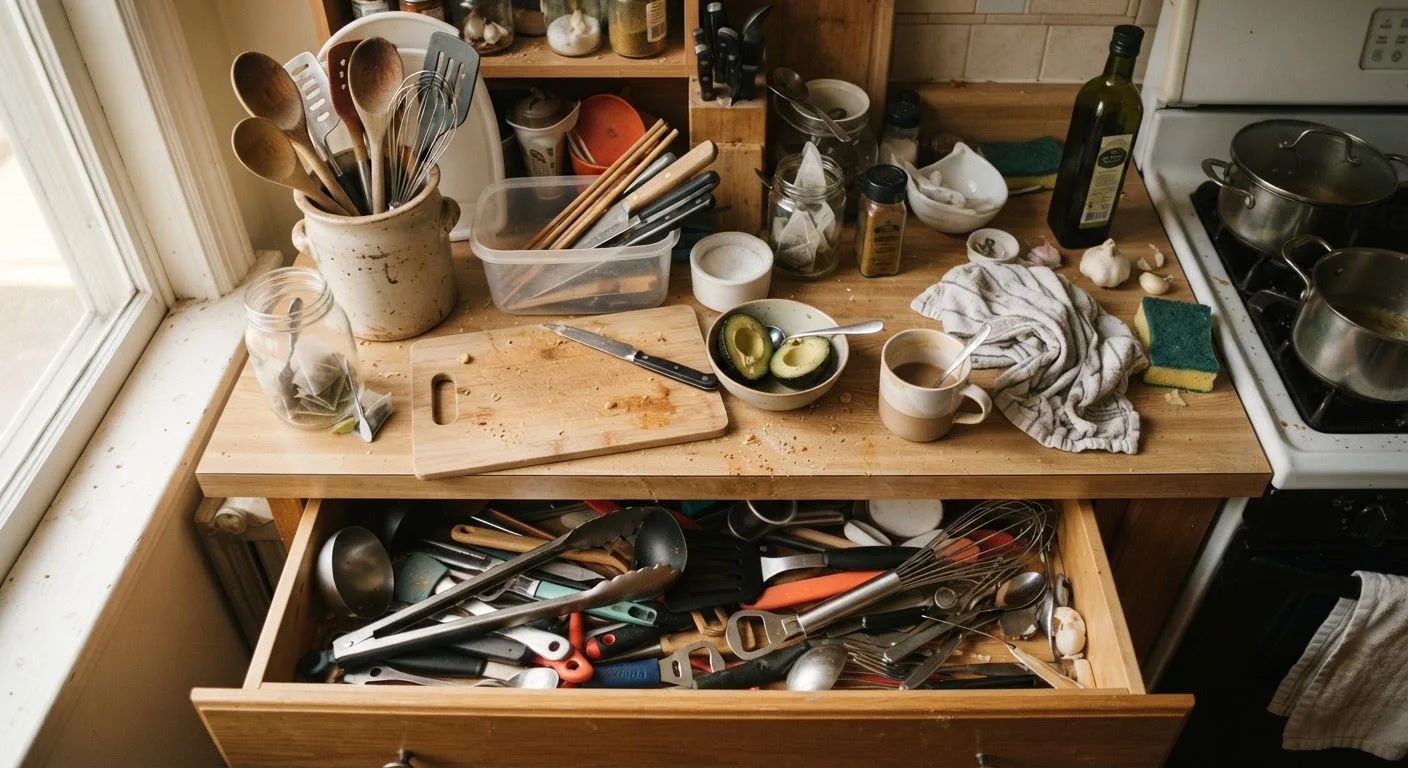
Why it happens: When a kitchen looks clean, it reads as organized-even if finding the vegetable peeler still requires opening four drawers.
It's also worth examining whether some of your assumptions about organization are working against you. Common organization myths often drive people toward solutions that make clutter worse rather than better.
Building a Kitchen System That Actually Holds
Once you've identified which mistakes are driving the disorganization in your kitchen, the path forward is more straightforward than a full weekend overhaul. Start by observing your actual workflow for a few days before moving anything. Note the natural landing spots-where items get put down, where things get abandoned mid-task-and design around those patterns rather than fighting them.
Don't Buy Storage Before You Declutter
Purchasing bins, dividers, and drawer organizers before removing what you don't need almost always results in organizing clutter rather than eliminating it. Measure your actual available space and finalize what stays before spending anything on containers. Skipping this sequence is one of the most common reasons kitchen organization projects fail within weeks.
Labeling is worth considering once zones are established, but it works best when applied selectively. Our guide on when labeling helps versus when it's busywork can help you decide where it adds value. And if you're also considering updates to the cabinets themselves, that's a separate decision covered in our overview of cabinet refacing, repainting, and replacement options.
A well-organized kitchen isn't one that looks pristine after an hour of effort-it's one that stays functional with minimal daily attention. That outcome comes from honest assessment of how the space is actually used, not from stricter discipline or more storage bins.
30%
Of kitchen items rarely or never used
Organization professionals commonly estimate that roughly a third of items stored in a typical kitchen are seldom or never used, contributing to overcrowded cabinets.
2-3 days
Before disorganization returns without a system
Home organization practitioners frequently observe that tidying without addressing the underlying structure results in the space reverting to clutter within just a few days.