Why Decluttering Feels So Hard to Start
Most people don't struggle with decluttering because they're lazy or disorganized. They struggle because the task feels enormous before it even begins. Looking at an overstuffed closet or a chaotic garage and trying to figure out where to start can trigger a kind of mental gridlock - you see the whole mountain at once instead of the next single step.
There's also an emotional dimension that's easy to underestimate. Objects carry memories, obligations, and identities. Deciding whether to keep something can feel like a small judgment about your past choices or your future self. That weight adds up quickly, and avoidance becomes the path of least resistance.
Understanding this isn't about excusing inaction - it's about addressing the actual obstacle. Once you recognize that the overwhelm itself is the problem (not a character flaw), you can design an approach that works around it. It's also worth knowing that some widely held beliefs about decluttering actually make the process harder, not easier. See our guide to common organization myths to clear up some of those before you begin.
Emotional attachment is normal
Feeling reluctant to let go of items is a common and well-documented experience - not a sign that you're doing decluttering wrong. If you find that emotional blocks are significantly affecting your ability to make progress or your overall wellbeing, speaking with a mental health professional can be a helpful complement to the practical steps in this guide.
The Right Mindset Before You Touch Anything
Before pulling a single item off a shelf, set realistic expectations. Decluttering an entire home in a single weekend is rarely sustainable - and the exhaustion that follows often causes people to abandon the effort entirely, sometimes leaving the house in a worse state than before.
Instead, give yourself permission to go slowly. A session of 20 to 30 minutes, focused on one small area, counts as genuine progress. The goal isn't perfection - it's forward movement. Celebrate finishing a drawer even if the rest of the kitchen is still a mess.
It also helps to define what you're aiming for. Not "a perfectly organized home" but something more specific and personal: I want to find things easily, or I want the living room to feel calm when I sit down. Concrete, personal goals give you a reference point for making decisions about what stays and what goes.
Where to Actually Begin: Your First 30 Minutes
Choose the smallest, most contained area you can find. A single kitchen drawer, the top of a nightstand, the shelf inside a bathroom cabinet - these are ideal starting points. Avoid high-stakes areas on your first session: the sentimental box under the bed, the filing cabinet full of old paperwork, the storage unit. Those require more emotional energy than you want to spend when you're just building momentum.
Set a timer for 25 to 30 minutes. Work only within that time window and within that one area. When the timer goes off, stop - even if you're not finished. This trains your brain to associate decluttering with manageable effort rather than an open-ended drain.
Use a bag or box, not just a pile
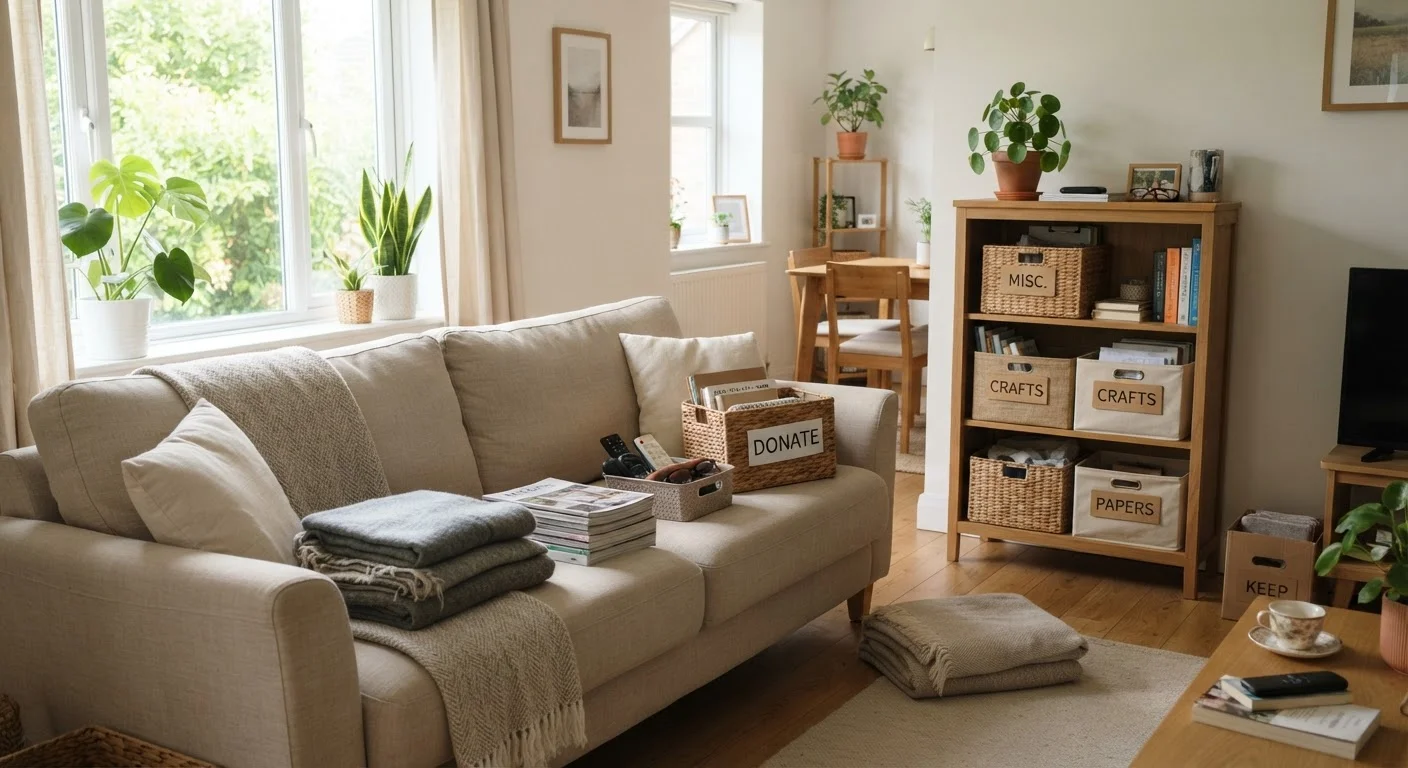
When sorting items to donate, place them directly into a bag or box you can carry out to your car immediately after the session. Leaving donation piles sitting around the house makes it easy to second-guess decisions and pull things back. Getting items out of your home quickly reinforces the progress you've made.
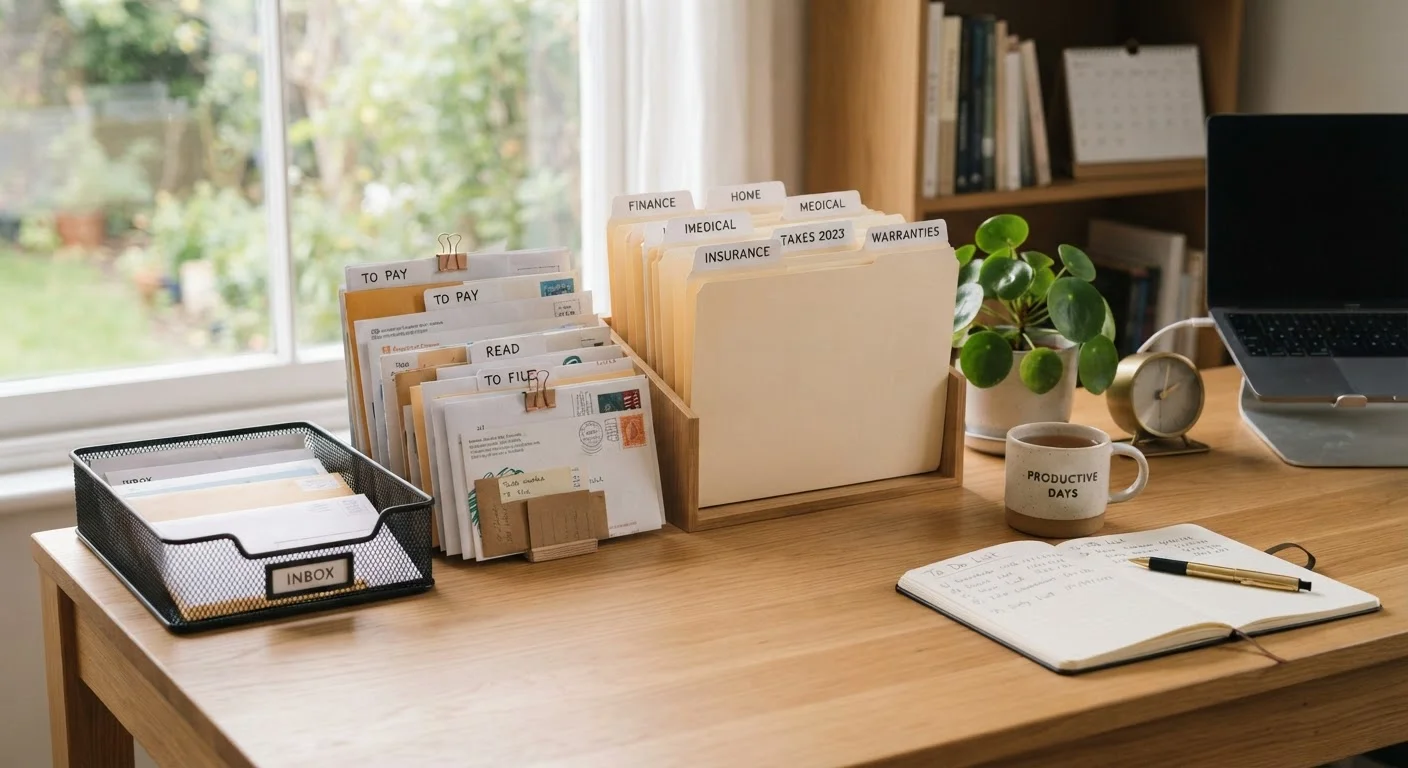
By the end of your first session, you should have one area that looks noticeably better. That visible result is what keeps you coming back. Paper clutter deserves a session of its own - our practical guide to managing paper walks through a step-by-step system for mail and documents.
A Simple Sorting Method That Works
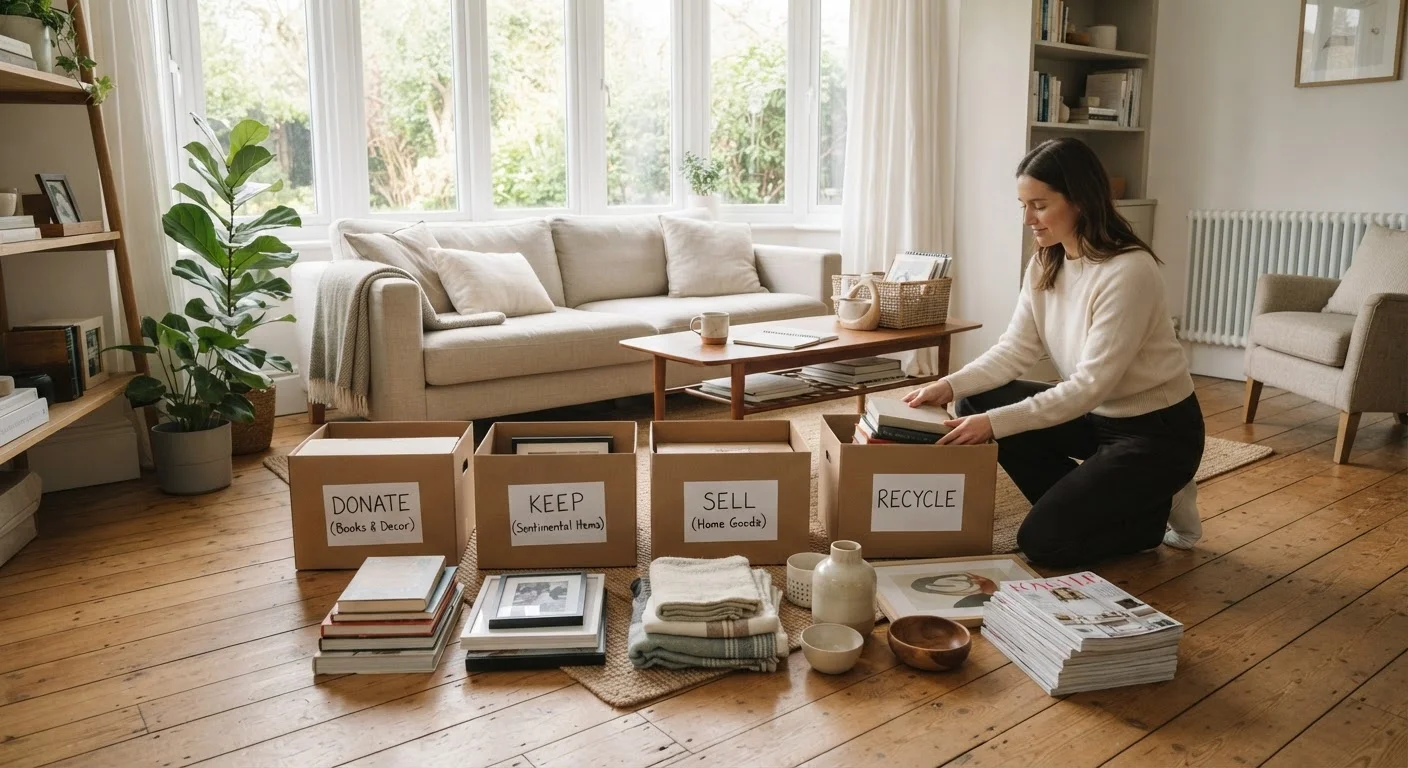
As you work through any area, sort items into four physical piles or boxes:
- Keep - things you use regularly or genuinely value
- Donate/rehome - items in good condition that someone else could use
- Trash/recycle - things that are broken, expired, or genuinely unusable
- Decide later - items you're unsure about, set aside with a date written on the box
The "decide later" category is important. Forcing a binary keep-or-toss decision on every single item leads to decision fatigue - the mental exhaustion that makes you stop mid-session and give up. Giving yourself a temporary holding zone keeps the process moving without requiring you to resolve every ambiguity at once.
Decision fatigue
The mental exhaustion that sets in after making too many choices in a row, causing the quality of decisions to decline. In decluttering, it often leads to stopping mid-session or defaulting to keeping everything.
Decide later box
A temporary holding container for items you're unsure about, labeled with a date. It keeps the sorting process moving without forcing every decision immediately.
One-in-one-out rule
A maintenance habit where one item leaves the home for every new item that enters, keeping the total volume of belongings stable over time.
Timed session
A focused work period with a set start and end time - typically 20 to 30 minutes - used to make decluttering feel manageable and to prevent burnout.
Contained area
A small, clearly defined space - like a single drawer, shelf, or cabinet - that can be fully addressed in one short session without spilling into adjacent areas.
Review your "decide later" box after 30 to 60 days. If you haven't needed or thought about those items, you have clear evidence that they don't belong in your daily life.
Moving Forward: Room by Room
Once you've completed a few small sessions and started building confidence, you're ready to think bigger. A room-by-room approach gives you a clear structure without requiring you to hold the whole house in your head at once.
Prioritize rooms based on how much you use them and how much the clutter affects your daily life. For most households, the kitchen, bedroom, and main living areas are where disorder causes the most friction - these are often worth tackling before less-used spaces like a guest room or basement.
For a detailed, structured framework covering each space in the home - from entryways and kitchens to garages and closets - see our room-by-room home organization guide. It picks up where this beginner's guide leaves off, with specific methods for each room type. If you share your home with others who have different tidiness standards, our guide to organizing shared spaces offers practical strategies for finding common ground.
Keeping Clutter from Coming Back
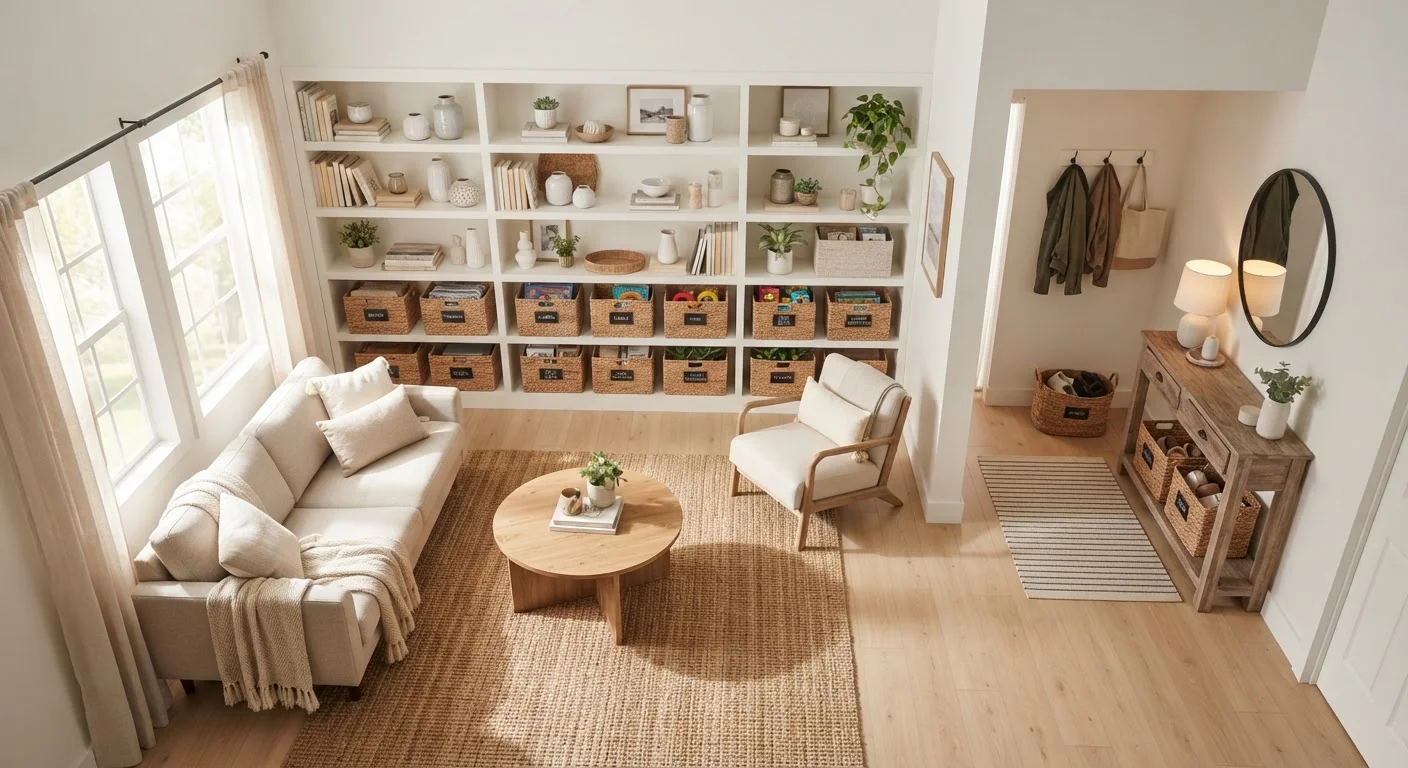
Decluttering once doesn't prevent clutter from returning - that requires building ongoing habits. The most effective ones are simple and low-friction: putting things away immediately after use, doing a brief nightly reset of shared surfaces, and being more intentional about what comes into the home in the first place.
One widely used habit is the one-in-one-out rule: whenever something new enters your home, something else leaves. This keeps overall volume stable without requiring periodic major overhauls. Our article on habits that prevent clutter from creeping back covers this and other routines in depth.
It also helps to reassess your spaces seasonally. Clothing, pantry goods, and stored items shift in relevance throughout the year, and a brief seasonal check keeps accumulation from quietly rebuilding. Our seasonal declutter checklist makes that process straightforward.