Why Soil Health Is the Foundation of a Great Lawn
Most lawn care conversations start above ground - which grass seed to choose, how often to water, whether to fertilize in spring or fall. But the single biggest variable in how your lawn performs is something you can't see: the soil beneath your feet.
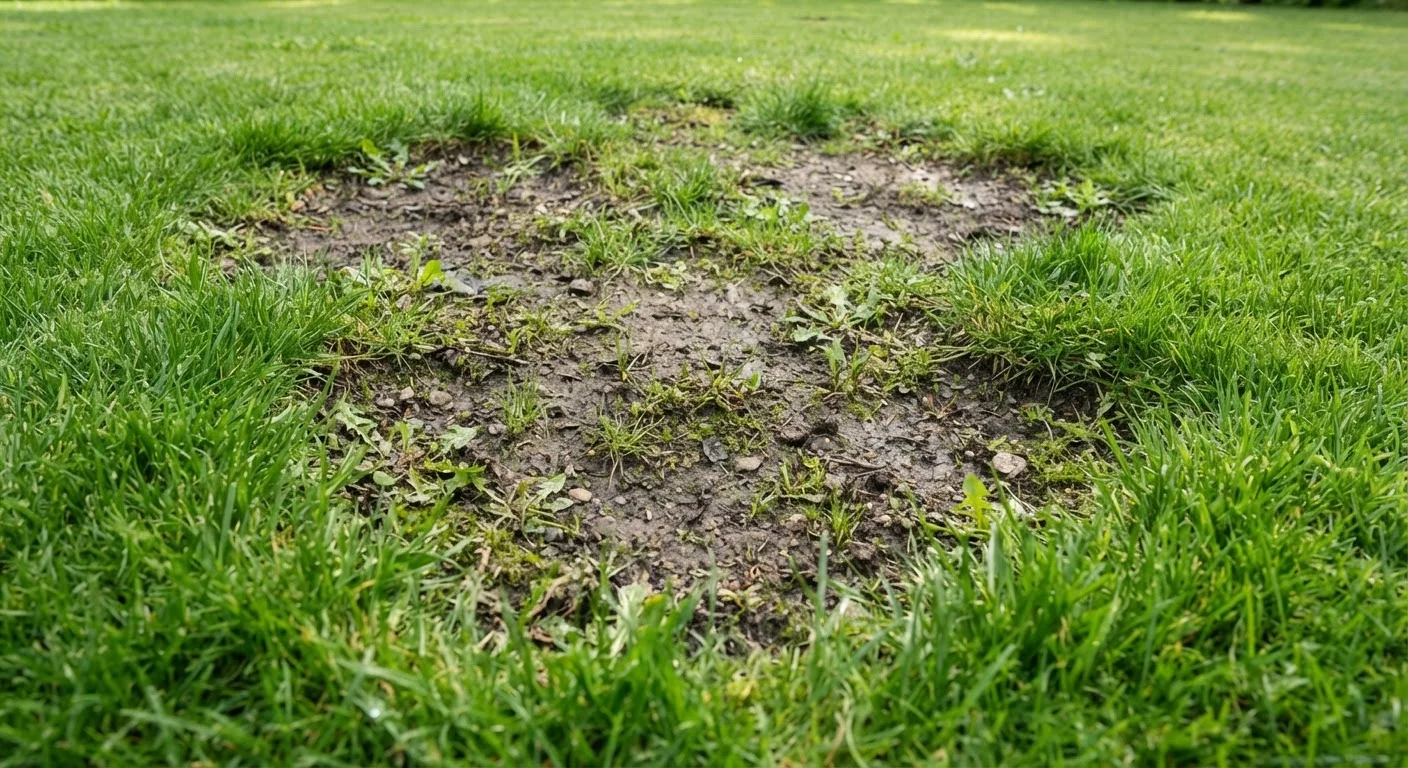
Grass roots need three things from soil - water, air, and nutrients. When soil structure, chemistry, or biology is off, roots struggle to get enough of any of them, no matter how much effort you put in at the surface. This is why two neighbors with the same grass type and the same watering schedule can have dramatically different results. See why patchy, thinning turf is so common - soil is frequently the hidden cause.
Understanding your soil isn't complicated. It just requires knowing what to look for and what the numbers mean.
What Healthy Soil Is Actually Made Of
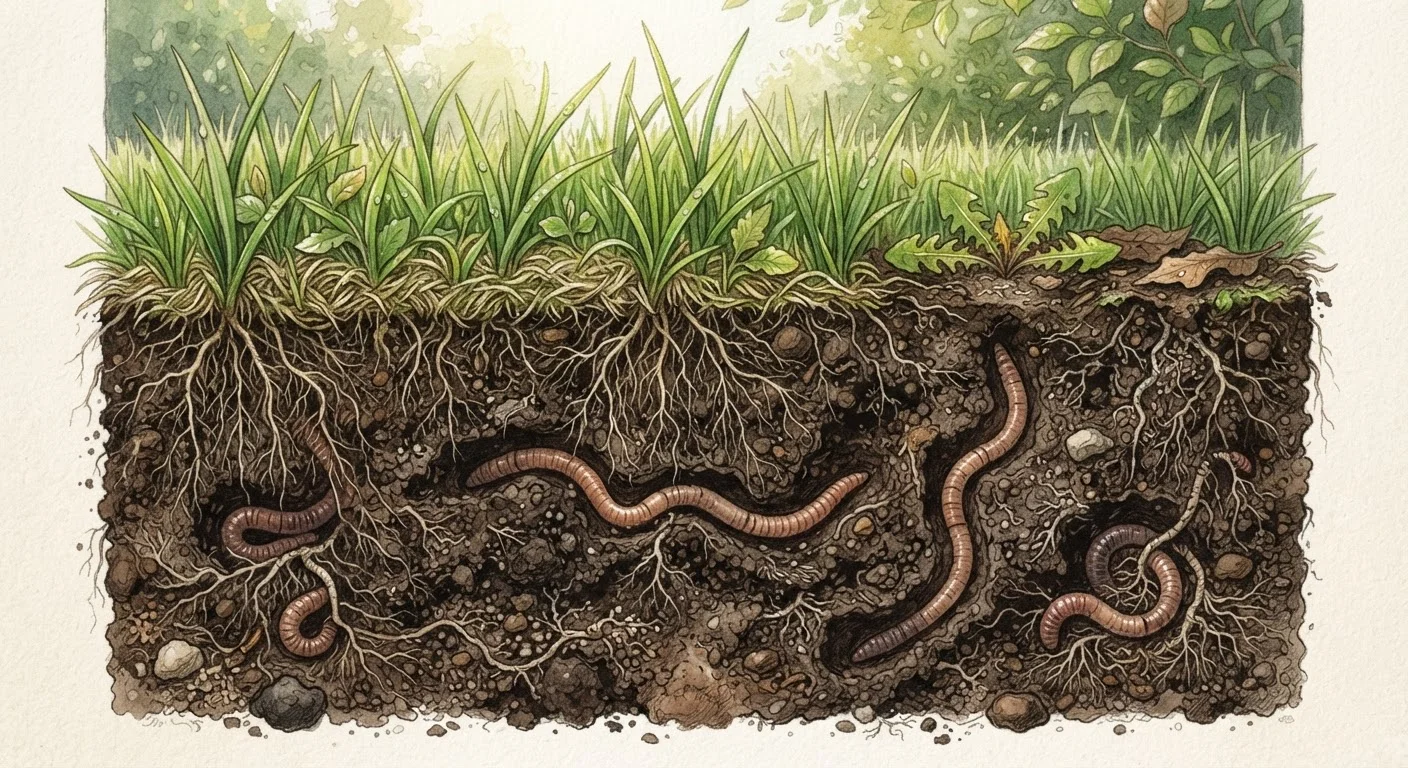
Soil is not just dirt. Healthy lawn soil is a mix of minerals, organic matter, water, air, and a living community of microorganisms - all working together.
Soil pH
A measure of how acidic or alkaline your soil is, on a scale of 0 to 14. pH directly controls whether grass roots can absorb nutrients already present in the soil.
Organic matter
Decomposed plant and animal material mixed into soil. It feeds soil microbes, improves water retention, and slowly releases nutrients available to grass roots.
Soil compaction
When soil particles are squeezed so tightly together that air, water, and roots can't move through them easily. Common in high-traffic areas and clay-heavy soils.
Macronutrients (N-P-K)
The three primary nutrients grass needs most: Nitrogen (N) for leaf growth, Phosphorus (P) for root development, and Potassium (K) for overall stress resistance.
Loam
A balanced soil texture containing roughly equal parts sand, silt, and clay. Loam drains well while retaining enough moisture and nutrients for healthy root growth.
Cation Exchange Capacity (CEC)
A measure of how well your soil holds onto positively charged nutrients so they don't wash away. Higher CEC generally means soil can store and release more nutrients over time.
In terms of texture, most lawns fall somewhere on a spectrum from sandy (drains quickly, holds few nutrients) to clay (holds water and nutrients but compacts easily) to loam (the balanced middle ground most grasses prefer). You can estimate your soil texture by wetting a small handful and working it between your fingers - clay soils feel sticky and hold their shape, sandy soils feel gritty and fall apart, and loam feels slightly crumbly but cohesive.
Organic matter - decomposed plant and animal material - is what feeds the billions of microbes, fungi, and earthworms that cycle nutrients into forms grass roots can use. Most suburban lawns have low organic matter content, which is why they respond poorly to standard inputs. As part of a comprehensive lawn care plan, building organic matter is one of the highest-leverage things you can do.
How to Read a Soil Test
A soil test is the only reliable way to know what your lawn is actually working with. Most state cooperative extension offices offer low-cost testing kits, and many garden centers carry basic home test kits. For a standard lawn, a basic test covers the most important factors.
Here's what the results typically tell you:
- pH: The scale runs from 0 (acidic) to 14 (alkaline), with 7 being neutral. Most lawn grasses thrive between 6.0 and 7.0. Outside that range, nutrients bind to soil particles and become unavailable to roots - meaning fertilizer you apply simply goes to waste.
- Nitrogen (N), Phosphorus (P), Potassium (K): These are the primary macronutrients. Your test results will show whether they're deficient, sufficient, or excessive. Excess phosphorus, in particular, can harm waterways, so avoid over-applying.
- Organic matter percentage: A reading of 3-5% is generally considered good for most lawns. Below 2% typically means the soil biology is struggling.
- Buffer pH and CEC (Cation Exchange Capacity): These tell you how well your soil holds onto nutrients and how much amendment it will take to shift pH.
Get a Representative Sample
For the most accurate soil test results, collect cores from multiple locations across your lawn rather than one single spot. Avoid sampling directly after fertilizing or heavy rain, as this can skew the readings. Your cooperative extension office can provide specific collection instructions for your region.
Collect samples from several spots across your lawn - at least 5 to 8 cores, 3 to 4 inches deep - and mix them together before sending. A single spot can be misleading.
Common Soil Problems and How to Address Them
Two problems account for the majority of underperforming lawns in American yards: compaction and pH imbalance.
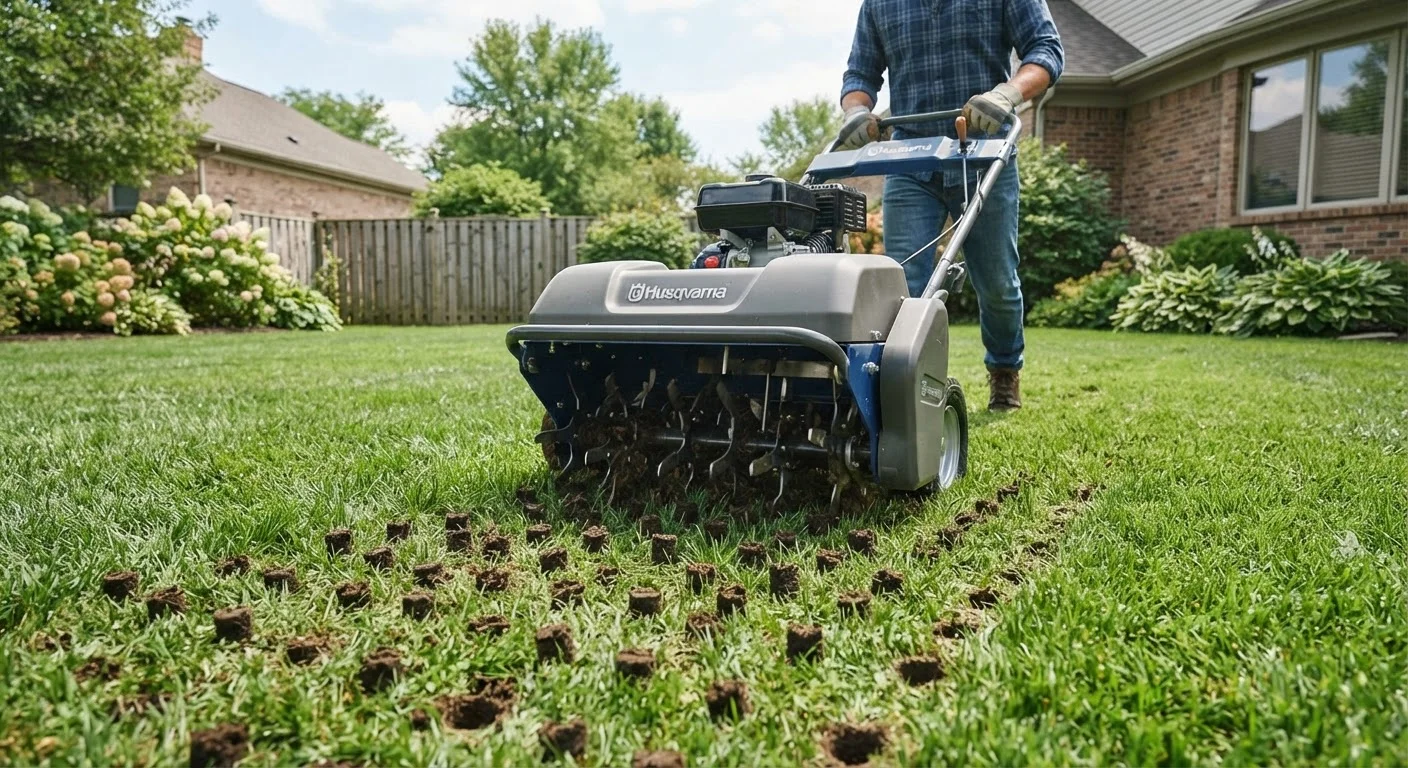
Compaction occurs when soil particles are pressed together, eliminating the pore space that roots and soil organisms need. Heavy foot traffic, clay-heavy soil, and repeated passes with heavy equipment are common causes. Grass on compacted soil grows slowly, feels hard underfoot, and struggles in both drought and heavy rain. Core aeration is the most direct remedy, mechanically removing small plugs of soil to reopen those pathways.
pH imbalance is equally common but invisible. Acidic soil (below 6.0) is common in the eastern US, particularly in regions with high rainfall. Ground limestone (lime) raises pH gradually - expect several months for meaningful change. Alkaline soil (above 7.5) is more common in arid western states and can be corrected with elemental sulfur, though this also works slowly.
Don't Guess on Amendments
Applying lime, sulfur, or extra fertilizer without a soil test is one of the most common - and costly - lawn care mistakes. Over-liming can push pH too high and create new nutrient lock-out problems. Always let your test results guide amendment rates rather than following generic bag instructions blindly.
Other issues to watch for include:
- Nutrient deficiencies: Yellowing, slow growth, or purple-tinged blades often signal specific nutrient gaps your soil test will identify.
- Poor drainage: Standing water after rain points to either compaction or subsoil problems that surface amendments alone won't fix.
- Low organic matter: Thin, pale turf that dries out quickly despite regular watering is a common symptom.
Building Better Soil Over Time
Healthy soil is built gradually, not fixed overnight. The most reliable long-term strategy is regular application of compost - either as a top dressing worked lightly into the surface, or blended into the soil before seeding. Even a quarter-inch of finished compost applied annually adds meaningful organic matter over several seasons.
Leaving grass clippings on the lawn (grasscycling) is a free and effective way to return organic matter and slow-release nitrogen to the soil. Clippings from a healthy lawn don't contribute significantly to thatch buildup, contrary to common belief.
Reducing synthetic inputs over time - not eliminating them, but calibrating them to what your soil test actually shows - protects the microbial life that makes soil productive. Beneficial bacteria and fungi are easily disrupted by over-application of certain fertilizers and fungicides.
If you're starting fresh or reseeding, understanding your soil now will save significant effort later. Our guide to grass seed vs. sod covers how your soil type should influence that decision. And before winter arrives, fall yard prep is the ideal time to apply amendments and set your soil up for a stronger spring.
The lawn you want starts underground. Get the foundation right, and the surface takes care of itself far more easily.