
Why Paper Piles Up (and Why Good Intentions Aren't Enough)
Paper clutter is one of the most persistent organization challenges in American households - not because people are disorganized, but because paper has no natural resting place. Mail arrives daily, school forms pile up, receipts spill out of wallets, and statements stack on countertops. Without a system, even the most motivated person ends up with a dining table buried under a two-week backlog.
The core problem isn't volume - it's decision fatigue. When a piece of paper arrives and you're unsure where it belongs, it gets set down temporarily. Temporary becomes permanent. That's why this guide focuses less on buying organizers and more on building a repeatable decision framework. As part of a broader approach to home organization, paper management is one piece of a larger puzzle - see the room-by-room home organization framework for how it fits into your overall home setup.
Start Small if You're Overwhelmed
If the existing pile feels too large, give yourself permission to work through it in 30-minute sessions over several days. Getting the system in place matters more than finishing in one sitting. For more strategies on starting without burnout, see decluttering without the overwhelm.
What You'll Need Before You Start
This system requires minimal supplies. Resist the urge to over-invest in containers before you know what categories work for your household.
What you will need
Inbox tray or basket
Serves as the single landing zone for all incoming mail and loose papers.
Expandable file folder or hanging file box
Holds categorized documents you need to retain, such as tax records and insurance policies.
Document shredder
Safely destroys papers containing personal or financial information before recycling.
Fireproof, waterproof storage box
Protects vital documents like passports and birth certificates from damage or loss.
Smartphone scanning app
Creates digital backups of important documents for cloud or off-site storage.
Building Your Paper Management System
Follow these steps in order. The first pass through existing clutter will take the most time - after that, the daily and weekly habits take only minutes.
Clear all existing paper into one location
Gather every loose piece of paper in your home - countertops, junk drawers, bags, bookshelves - and place it all in a single pile in one room. This consolidation step makes the problem visible and finite, which is far less overwhelming than tackling scattered stacks one at a time.
Sort every piece into three categories
Work through the pile and place each sheet into one of three groups:
- Act: Requires a response, payment, or decision (bills, invitations, forms to complete).
- File: Has no immediate action but needs to be kept as a record (tax documents, insurance policies, medical records, warranties).
- Recycle or shred: Junk mail, expired coupons, duplicates, outdated catalogs, and anything with no future value.
If you're unsure, ask yourself: "Would I need this document to prove, remember, or reference something important?" If no, it likely belongs in the recycle pile.
Set up an inbox tray for incoming mail
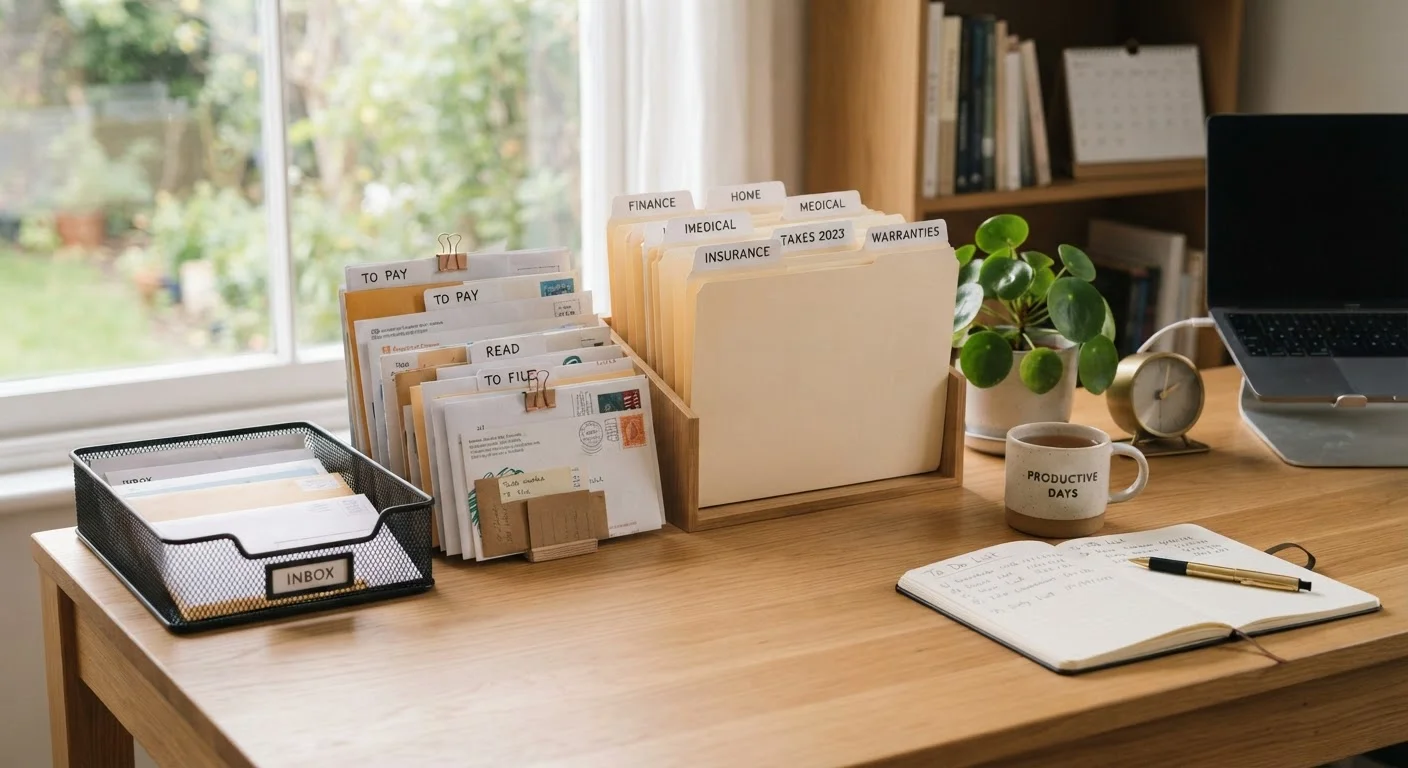
Designate a single physical inbox - a simple tray or basket near your main entry point - where all new mail and papers land the moment they enter your home. This one step prevents paper from spreading to multiple surfaces. Nothing gets opened and left on the counter; it goes directly into the inbox until your next sort session.
Create a simple filing system for documents to keep
You don't need an elaborate filing cabinet to start. A small expandable file folder or a set of hanging folders in a basic box works well for most households. Create broad categories rather than narrow ones:
- Taxes (current year and prior years)
- Insurance (health, auto, home)
- Medical records
- Home (mortgage, lease, warranties, repairs)
- Financial accounts
- Vehicle records
- Vital documents (birth certificates, passports, Social Security cards)
File documents into these categories immediately - do not create a "to file" pile, which becomes another backlog.
Handle your "Act" items immediately or schedule them
Go through your Action pile and deal with each item one of two ways: handle it now (pay the bill, RSVP, complete the form) or write the task into your calendar with a specific date and then file or discard the paper. Never leave an action item in a pile as a reminder - it will get buried. Use your calendar or a task app as the reminder system, not the paper itself.
Establish a weekly 10-minute paper review
Pick a consistent day and time each week - Sunday evening, Monday morning - to process whatever has accumulated in your inbox tray. Sort using the same three-category system. File, act, or recycle every piece before closing the session. This weekly habit is what keeps the system from reverting to chaos.
Shred Before You Recycle
Any document containing your name paired with an account number, Social Security number, date of birth, or medical information should be shredded - not simply recycled. Identity theft commonly begins with discarded paper. When in doubt, shred it. This applies to pre-approved credit card offers and explanation-of-benefits statements as well.
Maintaining the System Over Time
Setting up a filing system is only half the work. The other half is the brief, regular habit that keeps paper from accumulating again. Most households find that a single weekly review - 10 minutes on a consistent day - is enough to stay on top of incoming documents. If you skip more than two weeks, commit to a slightly longer reset session rather than letting the backlog demoralize you.
It also helps to reduce incoming paper at the source. Enrolling in paperless billing and statements for financial accounts, utilities, and insurance can significantly cut the daily mail volume. Store digital copies of critical documents - deeds, insurance policies, passports, tax returns - in a secure, backed-up location such as an encrypted cloud folder or an external hard drive kept off-site.
For households that struggle to maintain any organizing habit, the habits that keep clutter from creeping back article offers practical routines that complement this system. And if labeling your file folders feels like a rabbit hole, this guide on labeling systems helps you decide exactly when labels add value and when they don't.
Know How Long to Keep Financial Records
General guidance from accounting professionals suggests keeping tax returns and supporting documents for at least seven years, though requirements can vary based on individual circumstances. Consult a qualified tax professional or accountant to determine what retention schedule is appropriate for your situation. Never discard documents you're uncertain about without checking first.