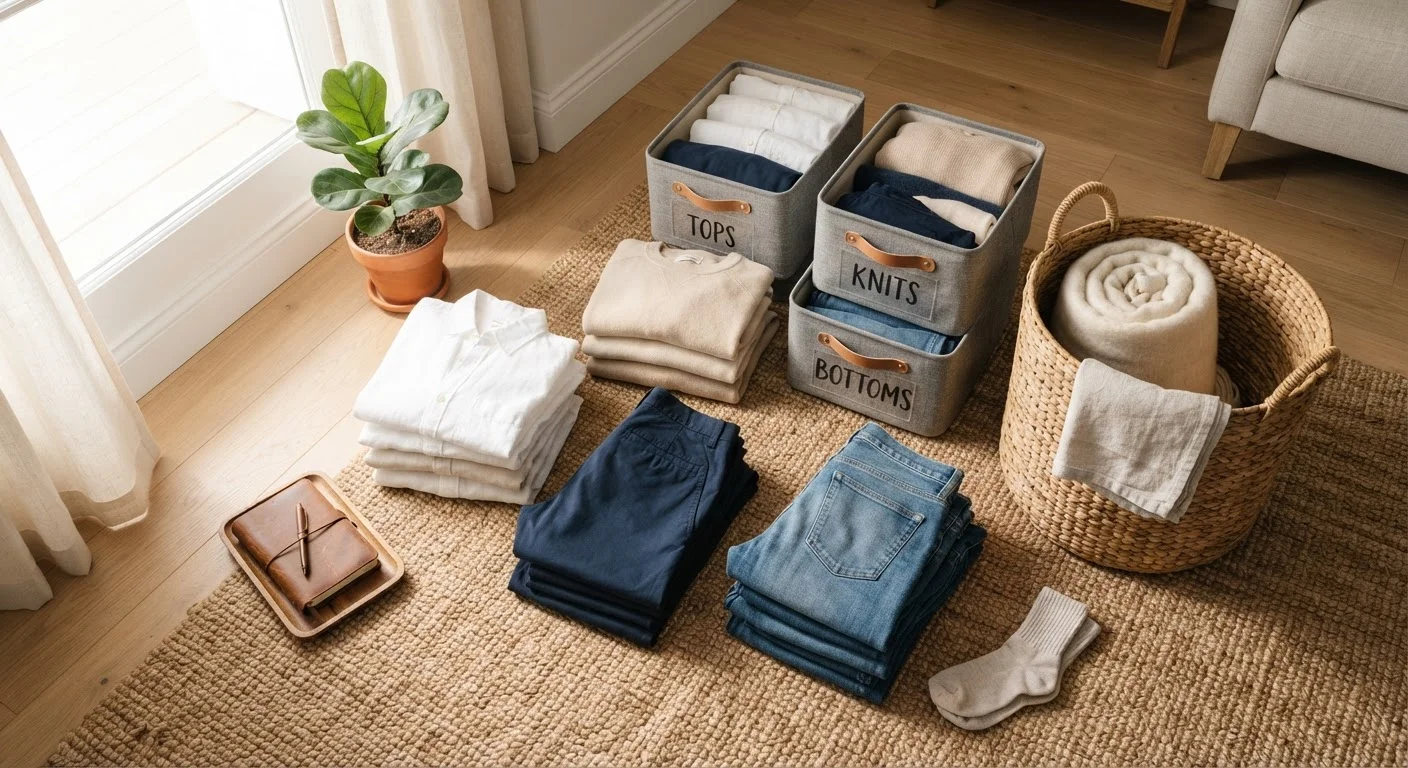
Use this checklist to reassess storage, clothing, pantry items, and household goods each season before clutter quietly builds back up.
Key Takeaways
Revisiting storage, clothing, and pantry items every few months prevents gradual clutter buildup.
A room-by-room approach makes seasonal decluttering feel manageable rather than overwhelming.
Expiration dates, seasonal rotation, and donation readiness are the core things to reassess each cycle.
Small consistent effort every season outperforms a single annual purge.
Donating, recycling, or discarding properly is as important as deciding what to keep.
Why Seasonal Reassessment Works Better Than One Big Purge
Clutter rarely arrives all at once. It accumulates in quiet increments - a returned purchase left on a shelf, pantry staples that expire unnoticed, a coat that no longer fits but stayed in the closet through two winters. By the time a space feels truly chaotic, the backlog is daunting enough that many people avoid it entirely.
A seasonal reassessment breaks that cycle. Instead of waiting until disorder becomes overwhelming, you audit each area of your home every few months when the volume is still manageable. This approach pairs naturally with the rhythm of the year: weather shifts prompt clothing swaps, holidays generate new items, and garden seasons change what tools you actually reach for. Each season gives you a built-in reason to look again.
If you've absorbed the idea that you need a big free weekend to get organized, that thinking may actually be working against you. Common organization myths often make clutter worse by raising the stakes so high that nothing happens at all. A 60-to-90-minute seasonal sweep is far more sustainable.
Use the checklist below as your repeating audit. Work through it room by room, and keep a box nearby for items to donate, a bag for recycling, and a separate pile for anything that needs repair or relocation.
Required
Sturdy donation boxes or bags
Collect items to donate so they leave your home the same day rather than sitting in a holding pile.
Required
Recycling bags
Separate paper, packaging, and eligible materials from general trash as you sort.
Optional
Labeling supplies (marker and labels)
Re-label storage bins and containers so contents are immediately clear next season.
Optional
Vacuum storage bags
Compress bulky off-season clothing and bedding to reduce storage footprint in closets or under beds.
Optional
Notepad or notes app
Track items that need replacement, repair, or follow-up so nothing falls through the cracks after the session.
Room-by-Room Seasonal Checklist
The groups below cover the areas of your home most prone to seasonal clutter drift. Work through each category in one session or spread it across a few days - consistency matters more than speed.
Clothing & Closets
Pull out all clothing for the outgoing season and evaluate each piece for fit, condition, and actual use over the past several months.Must
Set aside anything that hasn't been worn in two or more seasons for donation, resale, or discard - not a holding pile.Must
Inspect stored off-season clothing for damage, odor, or pest activity before folding it away in bins or vacuum bags.Must
Check that storage containers are labeled and that bins aren't overloaded to the point where items are difficult to retrieve.Should
Reassess shoes, bags, and accessories alongside clothing rather than treating them as a separate future project.Should
Kitchen & Pantry
Check expiration dates on all pantry staples, spices, canned goods, and condiments - discard anything past its use-by date.Must
Clear the freezer of items that are heavily freezer-burned or have been stored longer than recommended for that food type.Must
Audit small appliances and tools: if you haven't used something in two seasons, decide whether it earns its counter or cabinet space.Should
Consolidate duplicate items - extra sets of measuring cups, mismatched storage containers without lids, or multiples of the same utensil.Should
Reorganize pantry shelves so the items you use most frequently are at eye level and easy to see.Nice to have
Garage, Basement & Storage Areas
Rotate seasonal tools and equipment to accessible positions: garden tools forward in spring, snow tools forward in fall.Must
Inspect stored items for moisture damage, mold, rust, or pest signs - address any issues before returning items to storage.Must
Discard broken tools, equipment that is no longer safe to use, and supplies that have dried out or degraded.Must
Review whether stored items actually belong to your current household - inherited, gifted, or borrowed items often accumulate here.Should
Check that pathways are clear and that stored items are not blocking access to utility panels, emergency exits, or HVAC equipment.Must
Paperwork & Digital Clutter
Sort any accumulated paper piles: file documents you need to keep, shred anything containing personal information, and recycle the rest.Must
Review subscriptions, warranties, and instruction manuals - discard paperwork for items you no longer own.Should
Clear downloads folders, duplicate photos, and unused apps on devices you use regularly.Nice to have
Bathrooms & Medicine Areas
Check expiration dates on over-the-counter medications, first aid supplies, and vitamins - dispose of expired items safely through a local drug take-back program.Must
Discard opened personal care products (sunscreen, lotions, serums) that are past their period-after-opening symbol or have changed in smell or texture.Should
Consolidate duplicates and half-used products into one accessible location rather than spreading them across multiple drawers or shelves.Should
Don't Create a 'Maybe' Pile Without a Deadline
A pile of items you're unsure about is simply clutter with extra steps. If you set aside items as maybes, assign them a firm review date - no more than 30 days out. If you haven't thought about or needed those items before the deadline, they are ready to leave your home. Indefinite holding piles are one of the most common ways decluttering progress quietly reverses itself.
After completing a seasonal pass, the longer-term goal is making sure clutter doesn't quietly creep back between sessions. Daily habits like the one-in-one-out rule can extend the results of each declutter cycle significantly.
Home & Garden Editorial Team is the collective byline for our editorial team and contributor network. Articles published under this byline or an editorial pen name are researched, written, and reviewed according to our editorial standards for clarity, consistency, and independence before publication.
The content on this site is provided for informational purposes only and should not be considered a substitute for professional advice. While we strive to provide accurate and up-to-date information, we make no guarantees regarding its completeness or accuracy. Always consult a qualified professional for advice specific to your circumstances before making any decisions.