
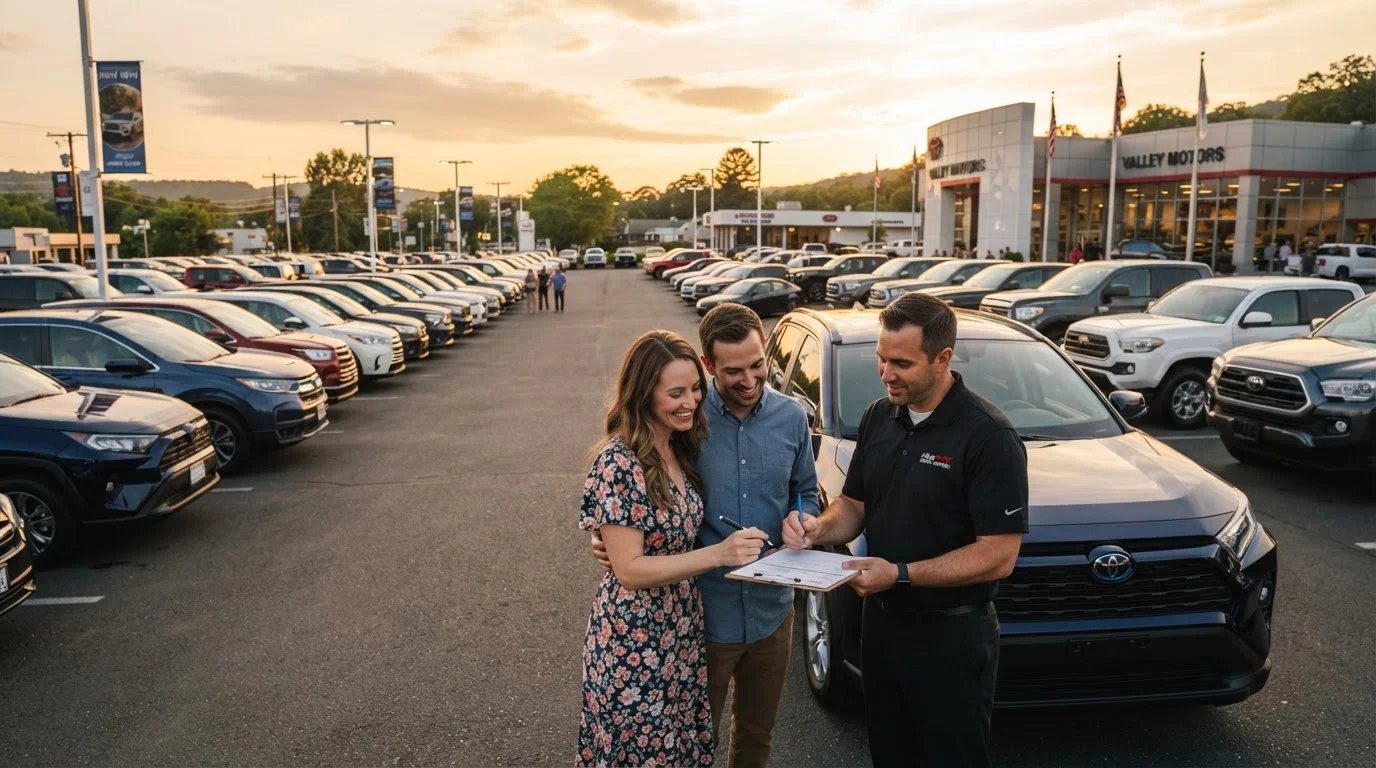
Setting Your Budget Before You Shop
The single biggest mistake car buyers make is walking into a dealership without a firm number in mind. A realistic budget starts with your all-in monthly obligation-not just a loan payment-factoring in insurance, fuel, maintenance, and registration fees. As a general guideline used by many financial planners, total vehicle costs (loan payment plus insurance) should stay within 15-20% of monthly take-home pay, though the right number depends entirely on your personal financial picture.
Determine how much you can put down, what loan term you're comfortable with, and what your credit score looks like before you set foot anywhere near a showroom. The first-time buyer's guide breaks down how credit score ranges translate into interest rate tiers-knowledge that can save you thousands over a loan's life.
Know Your Credit Score Before Shopping
Pull your free credit report at AnnualCreditReport.com and check your FICO score through your bank or card issuer before any dealership visit. A difference of 60-80 points in credit score can move your interest rate by multiple percentage points, fundamentally changing what a vehicle actually costs you.
Researching Vehicles: Narrowing the Field
Effective research collapses your options to two or three serious contenders. Start with your actual use case: daily commute miles, cargo needs, whether you'll tow anything, and how long you plan to keep the vehicle. Consumer-focused resources such as government fuel economy databases (fueleconomy.gov) and the National Highway Traffic Safety Administration (NHTSA) safety ratings provide objective, publicly available data points that aren't influenced by advertising.
When considering used vehicles, pull a vehicle history report using the VIN (vehicle identification number) and cross-reference it with mileage, ownership count, and any reported accidents. Before committing to any used car, review our used car inspection checklist for a structured walkthrough of what to examine before money changes hands.
Also be aware that popular beliefs about car buying don't always hold up. Our coverage of car buying myths dismantles assumptions-like paying cash guaranteeing the best price-that routinely cost shoppers real money.
~$48,000
Average new vehicle transaction price in the U.S.
According to Kelley Blue Book market data tracking, average new vehicle prices have remained near historic highs in recent years.
69 months
Average new-car loan term length
Experian's State of the Automotive Finance Market reports have shown average loan terms stretching well past five years, increasing total interest paid.
43%
Buyers who skip pre-approval
Consumer Financial Protection Bureau research has indicated a significant share of auto buyers never compare financing before accepting dealer terms.
Securing Financing on Your Terms
Dealer financing is convenient, but it isn't automatically competitive. Before visiting any dealership, apply for pre-approval at your bank, credit union, or an online lender. This gives you a concrete interest rate and loan amount to use as a baseline-dealers know they must at least match it to earn your financing business.
Pay close attention to the annual percentage rate (APR) and the total amount paid over the life of the loan, not just the monthly payment. Extending a loan from 48 to 72 months can lower your monthly cost while dramatically increasing what you pay overall. Manufacturer-subsidized rates (often advertised as low-APR promotions) can be genuinely competitive, but verify whether accepting them requires forgoing a cash rebate-sometimes the rebate plus outside financing wins.
This article provides general financial information only and is not personalized financial advice. Consult a licensed financial professional for guidance suited to your individual circumstances.
Inspecting and Test-Driving
No amount of online research substitutes for physically experiencing the vehicle. During a test drive, vary your conditions: highway speeds, sharp turns, hard braking, and parking. Listen for rattles, feel for steering pull, and note how the transmission shifts. Bring along any passengers who'll regularly ride with you-comfort and visibility matter for everyone in the car.
For used vehicles, a pre-purchase inspection (PPI) by an independent mechanic-not the selling dealer's shop-is one of the highest-return steps in the entire process. A thorough mechanical inspection typically costs $100-$200 and can surface problems worth thousands. The structured used car inspection guide covers what to examine inside, outside, and under the hood before committing.
Negotiating the Deal
Negotiation works best when you anchor on out-the-door price-the total you'll pay including taxes, title, documentation fees, and any dealer add-ons-rather than monthly payment. Monthly payment framing allows dealers to obscure how loan term length and add-ons affect your true cost. Arrive knowing the market value of the vehicle (published by industry sources like Kelley Blue Book or Edmunds) and what competing dealerships are offering for similar inventory.
Make a single, well-reasoned opening offer below your target and let the dealer respond. Our dedicated guide on negotiating a car price without feeling pressured walks through anchoring strategies, countering common dealer tactics, and recognizing when walking away is the right call.
Request the dealer's itemized out-the-door quote in writing via email before you visit. Dealers are far less likely to inflate doc fees or sneak in add-ons when there's a paper trail.
A written quote locks in the dealer's stated offer and gives you a document to reference if numbers change once you're in the chair.
If you have a trade-in, negotiate it as a completely separate transaction after the purchase price is agreed upon-never bundle them together in the same conversation.
Combining trade-in and purchase price negotiations allows dealers to give with one hand and take with the other, making it hard to evaluate either deal clearly.
Navigating the Finance Office and Paperwork
The finance and insurance (F&I) office is where add-on products are presented-extended warranties, GAP insurance (which covers the difference between what you owe and what your insurer pays if the vehicle is totaled), paint protection packages, and tire-and-wheel coverage. Each has legitimate uses in specific situations; none are automatically worth the price. Evaluate each on its own merits, compare costs against the standalone market, and decline anything you don't genuinely need.
Review every document line by line before signing. Verify the loan APR, term, and total financed amount match what was negotiated. Confirm that any agreed-upon dealer incentives or credits appear. Understand that once you sign and drive away, unwinding the contract is extremely difficult. For a complete list of what paperwork to expect and retain, see our guide on vehicle transaction documents.
Read Every Line Before You Sign
Finance office documents are legally binding the moment you sign. Verify the APR, loan term, total financed amount, and every add-on product listed. Do not allow time pressure or a salesperson's impatience to rush your review. If any number differs from what was verbally agreed upon, stop and ask for a corrected document.
After the Keys: Insurance and Registration
You are legally required to have at minimum the state-mandated liability insurance in place before driving the vehicle off the lot-not after you get home. If you're adding to an existing policy, call your insurer before signing. If you're purchasing a new policy, get quotes in advance so you're not scrambling at the dealership.
Registration and titling requirements vary by state. In most cases, dealers handle the initial title transfer, but you'll still need to register the vehicle and obtain plates within a specified window. Budget for registration fees, which can vary significantly depending on state, vehicle weight, and local surcharges.
Understanding your coverage options is a separate but equally important step. Our auto insurance resource hub covers the coverage types, policy structures, and questions to ask an agent. And if an accident occurs down the road, knowing what to expect helps-see how the claims process works step by step.