
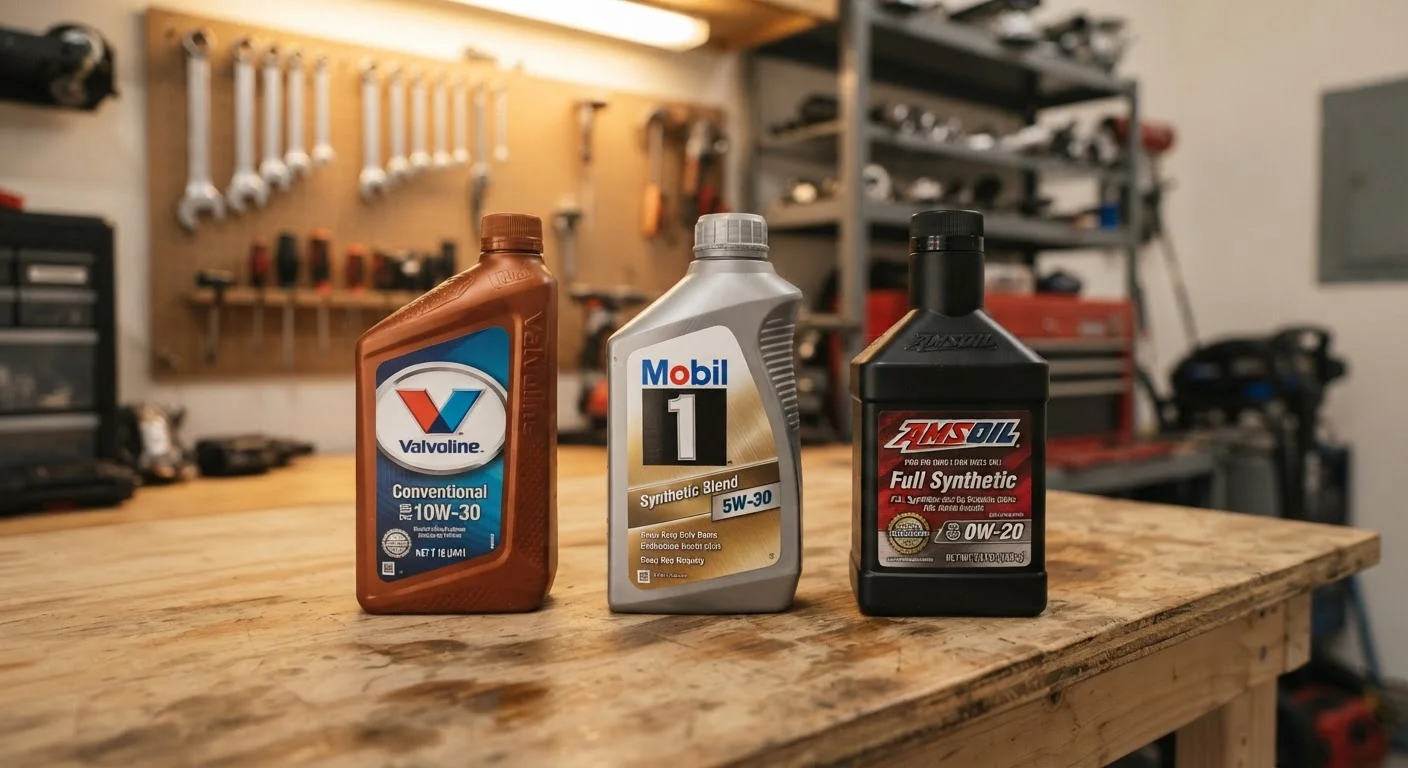
What Actually Separates These Oils
Motor oil has one core job: reduce friction between moving metal parts inside your engine while carrying away heat and contaminants. The difference between oil types isn't marketing - it's chemistry.
Conventional motor oil is refined directly from crude petroleum. The refining process removes many impurities, but the resulting molecules are still irregular in size and shape. That inconsistency affects how the oil performs under stress.
Full synthetic motor oil is manufactured through a chemical process that builds uniform, purpose-designed molecules from scratch (commonly using a base stock called polyalphaolefin, or PAO). The result is an oil with more predictable viscosity, better resistance to oxidation, and greater stability across a wide temperature range.
Synthetic blend motor oil mixes conventional base oil with synthetic base stock. It's a deliberate compromise - better performance than straight conventional, more accessible pricing than full synthetic. Blends are common factory-fill choices for light trucks and SUVs.
| Criterion | Conventional Oil | Full Synthetic Oil |
|---|---|---|
| Base stock origin | Refined crude petroleum | Chemically engineered molecules |
| Molecular consistency | Variable, irregular | Uniform, purpose-built |
| Temperature performance | Moderate range | Wide range, cold and hot |
| Oxidation resistance | Lower | Higher |
| Typical change interval | 3,000-5,000 miles | 7,500-10,000+ miles |
| Relative cost per quart | Lower | Higher |
| Common use cases | Older, simpler engines | Modern, turbo, high-performance |
Viscosity grades (like 5W-30 or 0W-20) apply to all three types and are a separate specification from oil type. Always check your owner's manual for the correct viscosity grade - one doesn't substitute for the other.
How to Know Which One Your Engine Needs
The single most reliable guide is your vehicle's owner's manual. Automakers test their engines extensively and publish specific oil requirements - ignoring those specifications can void powertrain warranties and, over time, cause measurable wear.
A few practical indicators:
- Turbocharged engines run hotter and at higher pressures than naturally aspirated engines. Most manufacturers require full synthetic for these applications.
- High-mileage vehicles (typically over 75,000 miles) may benefit from oils formulated with seal conditioners to address minor leaks and increased wear clearances - these are available in conventional, blend, and synthetic formulations.
- Severe service driving - frequent short trips, towing, stop-and-go traffic, or extreme temperatures - puts more stress on oil than highway commuting. Synthetic holds up better under those conditions.
If your vehicle was originally designed for conventional oil and you're considering switching to synthetic, it's worth discussing with a qualified mechanic, particularly for older or high-mileage engines. Synthetic oil's superior cleaning properties can loosen accumulated deposits, which may reveal pre-existing seal issues.
Mixing Oil Types: What You Should Know
Mixing conventional and synthetic oils won't immediately damage your engine - modern formulations are generally compatible. However, blending them dilutes the performance benefits of synthetic and makes it harder to track your actual change interval accurately. If you need to top off between changes, use the same type and viscosity your vehicle specifies. When in doubt, ask a qualified mechanic rather than guessing at the pump.
For a broader look at how oil fits into your overall maintenance picture, see our car fluid maintenance guide.
Change Intervals and What Happens If You Skip Them
Oil type affects how long the lubricant remains effective - and that directly determines your change interval.
Conventional oil generally requires changes every 3,000 to 5,000 miles under normal driving conditions. Full synthetic can remain effective for 7,500 to 10,000 miles or more in many vehicles, though some manufacturers specify longer intervals. Blends typically fall in between. Always use your owner's manual interval as the baseline - these numbers vary by vehicle.
~75%
U.S. new vehicles specifying synthetic oil
Industry estimates suggest the majority of new passenger vehicles sold in the U.S. now leave the factory filled with full synthetic or synthetic blend oil.
2x-3x
Longer interval vs. conventional
Full synthetic oil change intervals are commonly two to three times longer than conventional intervals, depending on the vehicle and driving conditions.
What happens when you stretch those intervals too far? Used oil accumulates acidic byproducts, loses its viscosity stability, and becomes laden with combustion particles. That degraded oil circulates through your engine rather than protecting it. The downstream consequences - sludge buildup, accelerated bearing wear, and eventually engine damage - are covered in detail in our article on what happens when you wait too long on oil changes.
If you're weighing whether to handle changes yourself or take the vehicle in, our piece on DIY oil changes and their trade-offs walks through the real-world pros and cons.
The bottom line: choosing the right oil type matters, but using it consistently and changing it on schedule matters just as much.