Your Credit Score Does More Than You Think
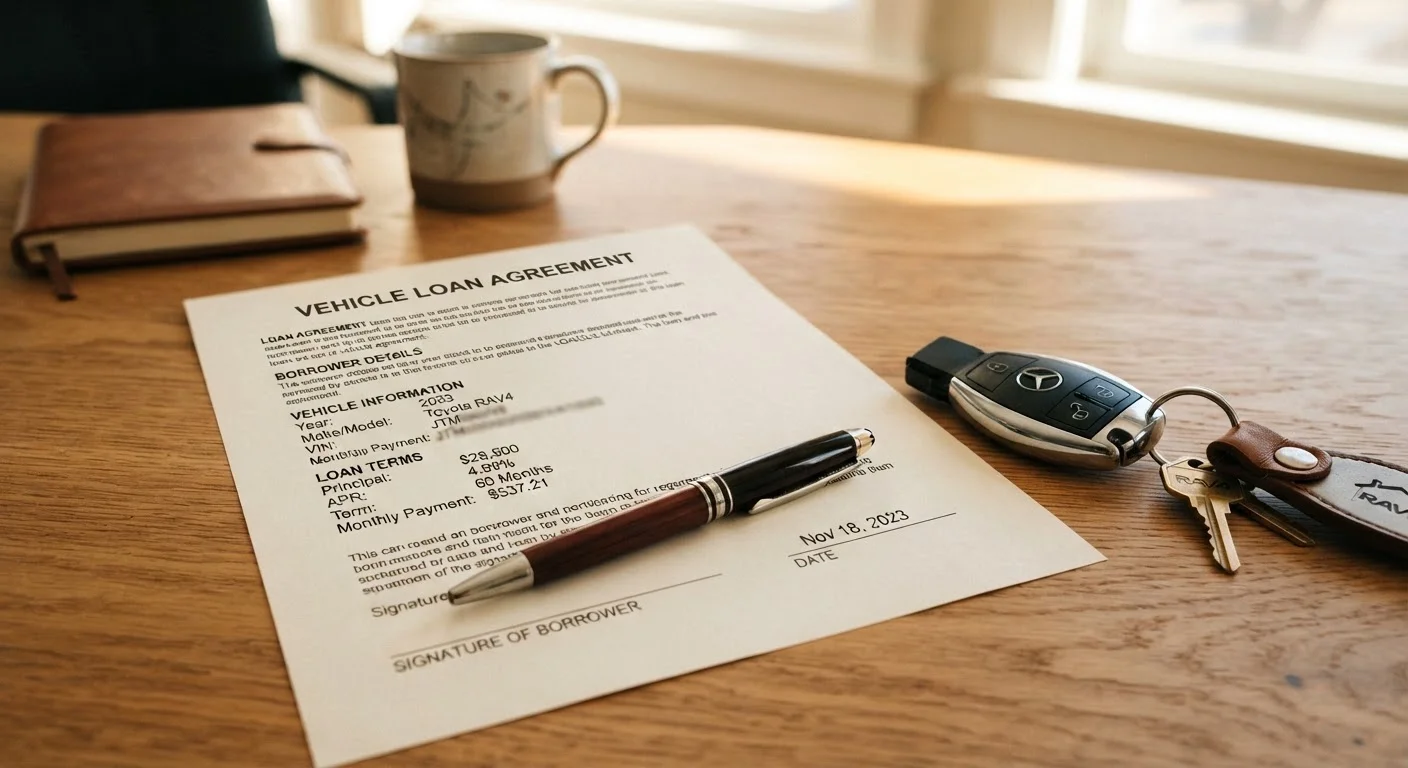
Most first-time buyers focus on which car they want. Few focus on what their credit score will cost them. Your credit score determines your APR - the interest rate attached to your loan - and even a few points difference can translate to hundreds of dollars over a loan term.
Before walking into any dealership, pull your free credit report at AnnualCreditReport.com and review it for errors. Disputing inaccuracies before you apply can sometimes improve your score enough to move you into a better rate tier. Also understand that every formal loan application triggers a hard inquiry, which can temporarily dip your score. Multiple auto loan inquiries within a short window - typically 14-45 days depending on the scoring model - are generally treated as a single inquiry, so rate-shopping with several lenders in quick succession is less damaging than people assume.
APR
Annual Percentage Rate - the yearly cost of borrowing money expressed as a percentage. A higher APR means you pay more interest over the life of the loan.
Out-the-door price
The total amount you pay to drive the car away, including the vehicle price, taxes, title, registration, and any dealer fees.
Dealer reserve
A markup that a dealership adds to the interest rate a lender offers, keeping the difference as additional profit. You may not be told about it unless you ask.
Gap insurance
Coverage that pays the difference between what you owe on your loan and what the car is worth if it's totaled or stolen. Useful when you owe more than the vehicle's current value.
Hard inquiry
A formal credit check triggered when you apply for a loan. It can temporarily lower your credit score by a few points.
Underwater (on a loan)
When you owe more on your car loan than the vehicle is currently worth - also called negative equity. This can be a problem if you want to sell or trade in the car before the loan is paid off.
The Real Cost of Car Ownership
The monthly payment is not the same as the cost of ownership. First-time buyers who budget only for their loan payment are frequently caught off guard by everything else on the list: fuel, routine maintenance, tires, registration renewal, and insurance.
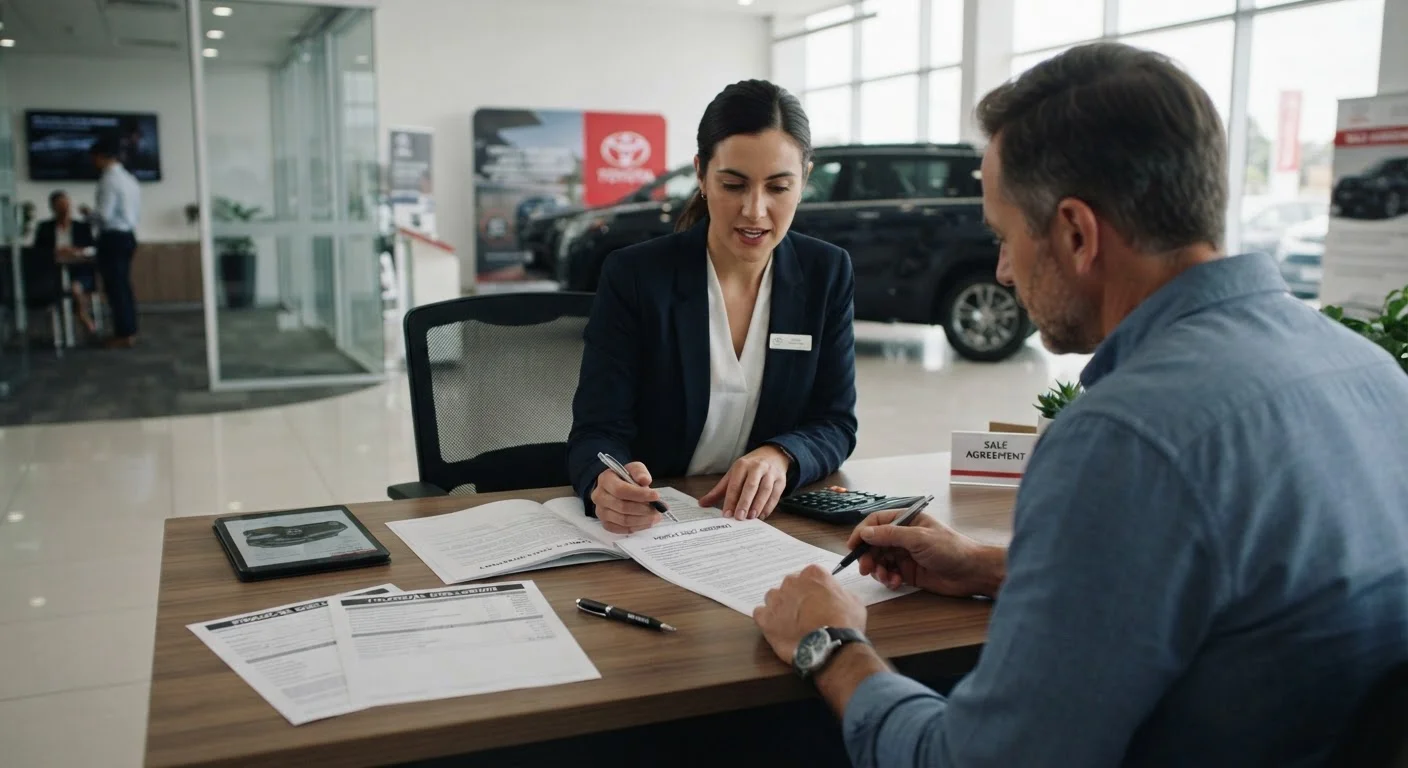
A useful framing is the out-the-door price - the total you'll actually pay at signing, including sales tax, title, registration, and any dealer fees. Ask for this number in writing early in the process. Beyond that, factor in ongoing costs: fuel expenses vary significantly by vehicle type and your commute distance, oil changes and scheduled service add up over a year, and insurance premiums for a new driver or a financed vehicle can be substantially higher than expected. See our complete car-buying walkthrough for a stage-by-stage breakdown of what to budget at each point.
Ask for the Out-the-Door Price First
Before discussing monthly payments with a dealer, always ask for the full out-the-door price in writing. Salespeople sometimes shift focus to monthly payments as a way to obscure the total cost. Knowing the full number gives you a clearer picture and a stronger negotiating position.
Loan Terms: Where First-Timers Lose the Most Money
Dealers and lenders routinely present longer loan terms - 72 or even 84 months - as a way to make an expensive vehicle fit a monthly budget. The math works in the short term, but the total interest paid over those extra years adds up significantly. A longer term also increases the chance of becoming underwater on the loan, meaning you owe more than the car is currently worth.
Get pre-approved through your bank or credit union before visiting a dealership. This gives you a concrete APR to compare against any dealer-arranged financing. Dealers can sometimes beat bank rates through manufacturer-subsidized offers, but knowing your baseline puts you in a much stronger position. For a plain-language breakdown of financing vocabulary - APR, LTV, dealer reserve, residual value - see our auto loan terms reference. And if common beliefs about the car-buying process are shaping your approach, our piece on car buying myths is worth reading first.
Insurance Is Not Optional - And It's Not Simple
Every U.S. state requires at minimum liability insurance to operate a vehicle legally. If you're financing the car, your lender will also require comprehensive and collision coverage to protect their investment. This means your insurance costs are not fully optional - and for a first-time buyer, premiums can be a genuine budget shock.
Shop for insurance before you commit to a vehicle. The make, model, trim level, and even the car's safety rating affect what you'll pay. A vehicle that seems affordable at the dealership may carry unexpectedly high insurance costs. Our guide to auto insurance basics explains coverage types in plain language so you know exactly what you're buying. For a broader look at your insurance options, the Auto Insurance hub is a useful starting point.
Don't Drive Off Without Active Insurance
You must have valid insurance coverage in place before you take possession of the vehicle - not after. If you're replacing an existing car, your current policy may extend briefly to the new vehicle, but confirm this with your insurer first. If this is your first vehicle, arrange coverage before your pickup appointment.
Questions Dealers Don't Expect You to Ask
Dealership finance offices are designed for efficiency - theirs, not yours. Add-on products like extended warranties, paint protection, gap insurance, and tire-and-wheel packages are commonly presented after you've agreed to the vehicle price, when your decision fatigue is highest. Each is negotiable, and each adds to your loan balance if financed.
A few questions worth asking before you sign anything:
- What is the out-the-door price, itemized? - Get every fee listed separately.
- What is the dealer documentation fee? - This varies widely and is sometimes negotiable.
- Is the APR the buy rate, or has it been marked up? - Dealers can add a margin above the lender's base rate, called dealer reserve.
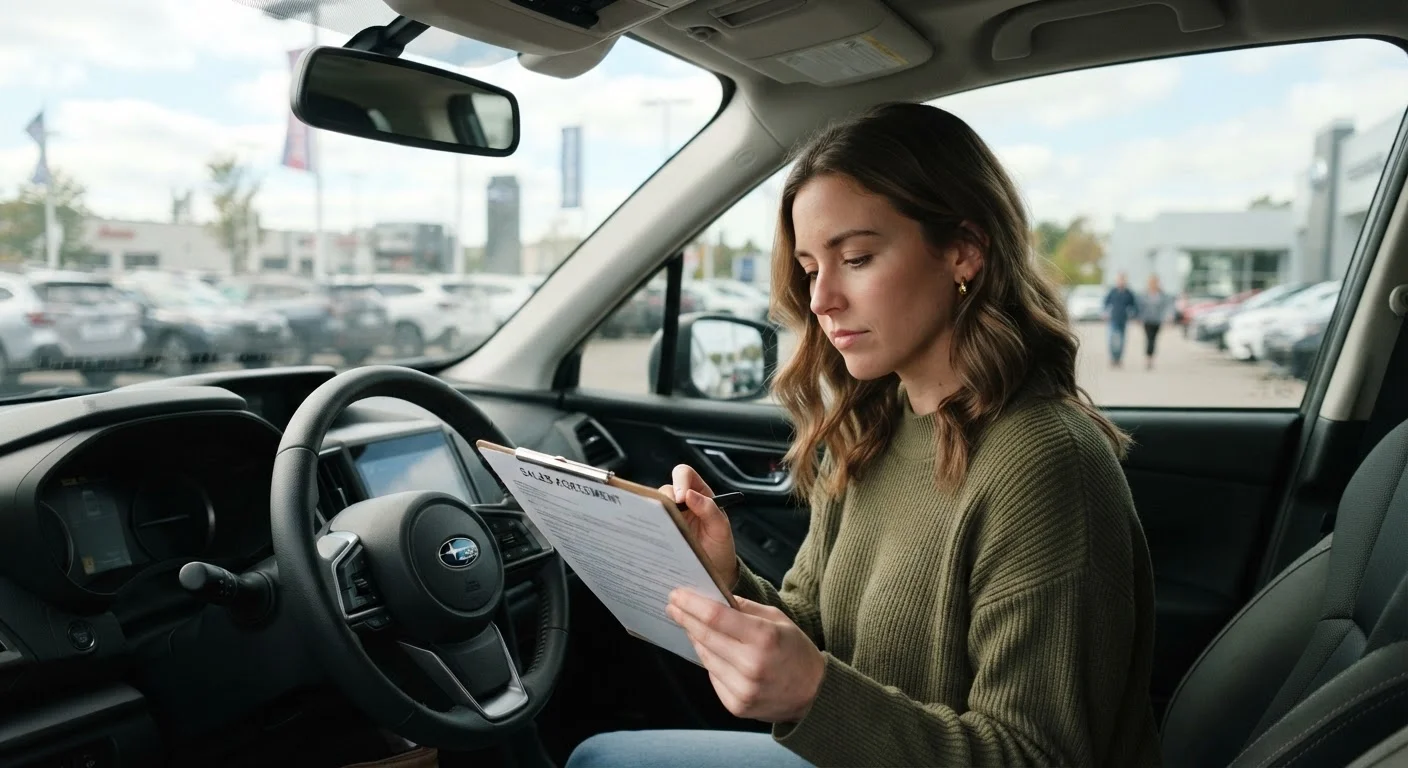
- Can I take 48 hours to review the contract? - A legitimate dealer will not pressure you to sign the same day.
Being a prepared buyer isn't adversarial - it's responsible. Dealers work with informed customers regularly, and asking clear questions signals that you're serious rather than impulsive.