Why Preparation Is Your Real Leverage
Most pressure at a dealership comes from information asymmetry-the salesperson knows the numbers better than you do. Preparation closes that gap. When you walk in knowing the invoice price, current market transaction averages, and your financing terms, the dynamic shifts. You're no longer reacting; you're directing.
Market value data is freely available through established vehicle-pricing resources. Cross-reference at least two sources for your specific trim, mileage class (for used vehicles), and ZIP code-regional supply conditions affect real transaction prices meaningfully. This groundwork typically takes an hour and is the single highest-return investment you can make before setting foot on a lot.
What you will need
Once you've secured financing pre-approval and documented your target price, gather quotes from at least two competing dealerships-by email if possible, so you have written numbers. Competing quotes are concrete and unemotional, which is exactly the tone you want to bring into negotiations.
Tools and Resources to Bring
Vehicle Pricing Reference (e.g., Edmunds TMV, KBB Fair Market Range)
Provides an independent market-value baseline so your opening offer is grounded in real data.
Pre-Approval Letter from a Bank or Credit Union
Establishes a competitive financing benchmark and reduces dependence on dealer-arranged loans.
Competitor Dealer Quotes
Creates price competition and gives you a concrete counter to any offer presented.
Notepad or Spreadsheet
Tracks the out-the-door price breakdown across visits so you can compare apples to apples.
Having these resources organized before your visit means you spend negotiation energy on the conversation, not scrambling to recall figures. Keep your target price written down and accessible-referencing a specific number out loud signals preparation and discourages low-anchor counters.
Step-by-Step Negotiation Process
Establish your target price before you arrive
Look up the invoice price (what the dealer paid the manufacturer) and the average transaction price for your target vehicle and trim. Pricing aggregators publish this data regularly. Your goal price should sit between invoice and the current market average-adjusted for local supply conditions. Write this number down. It becomes your anchor.
Get pre-approved for financing before stepping inside
Secure a pre-approval from your bank or credit union before visiting the dealership. This does two things: it sets a rate benchmark the dealer must beat to earn your financing business, and it prevents the conversation from drifting toward monthly-payment math-a common tactic used to obscure the vehicle's true total cost. See our guide on dealer vs. bank financing for a deeper look at APR markups and what questions to ask.
Open with a specific, researched offer
State your opening number clearly and calmly: "Based on current market data, I'd like to start at $X for this vehicle." Vague openings invite the dealer to control the range. A specific number signals you've done homework and makes the negotiation concrete from the first exchange. Aim slightly below your true target to leave room to move.
Counter pressure tactics with patience, not emotion
Common dealer tactics include the "let me check with my manager" delay, urgency framing ("another buyer is interested"), and payment-focused pivots. Respond by redirecting: "I appreciate that, but let's stay focused on the vehicle price." Silence is also a tool-after making a counteroffer, stop talking. The discomfort of silence often produces concessions. Also check our breakdown of car-buying myths to avoid being tripped up by common misconceptions.
Scrutinize the finance and insurance office
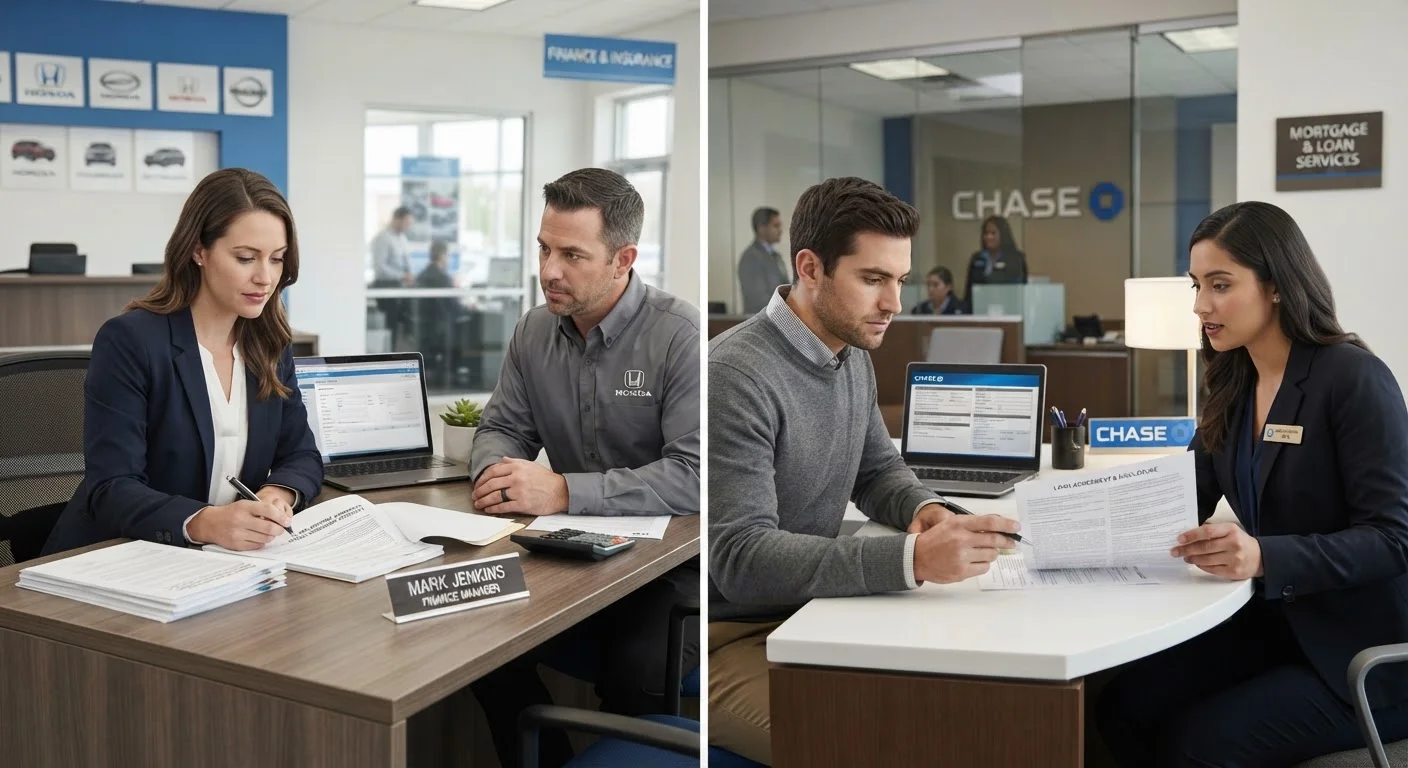
Once a vehicle price is agreed upon, the Finance & Insurance (F&I) office presents a separate opportunity to recover margin through add-ons: extended warranties, GAP insurance, paint protection, tire-and-wheel plans. Each is negotiable, and most carry significant markup. Evaluate each product individually against what you can source independently. Ask for the cost of every item in writing before agreeing to anything.
Know when-and how-to walk away
Walking away is not a bluff; it's a legitimate decision. If the gap between your researched target and the dealer's offer is material and they've stopped moving, thank them for their time and leave your contact information. A significant share of customers who walk receive a follow-up call within 24-48 hours. Having quotes from other dealerships makes this step easier and less emotional-you have somewhere concrete to go next.
Negotiate the Vehicle Before Mentioning Your Trade-In
If you have a trade-in, keep it separate from the new vehicle negotiation until a price is agreed. Dealers can use trade-in value as a variable to mask how much you're actually getting on either transaction. Nail down the purchase price first, then introduce the trade-in as a second, independent discussion. For alternatives to trading in, see our guide to private sales.
Monthly Payment Framing Hides the Real Cost
Focusing on monthly payments instead of the total vehicle price is one of the most effective ways dealers can inflate what you pay over time. A lower monthly payment achieved by stretching the loan term can cost thousands more in interest. Always calculate the full out-the-door price and total loan cost before agreeing to any payment structure.
Read Every Document Before Signing
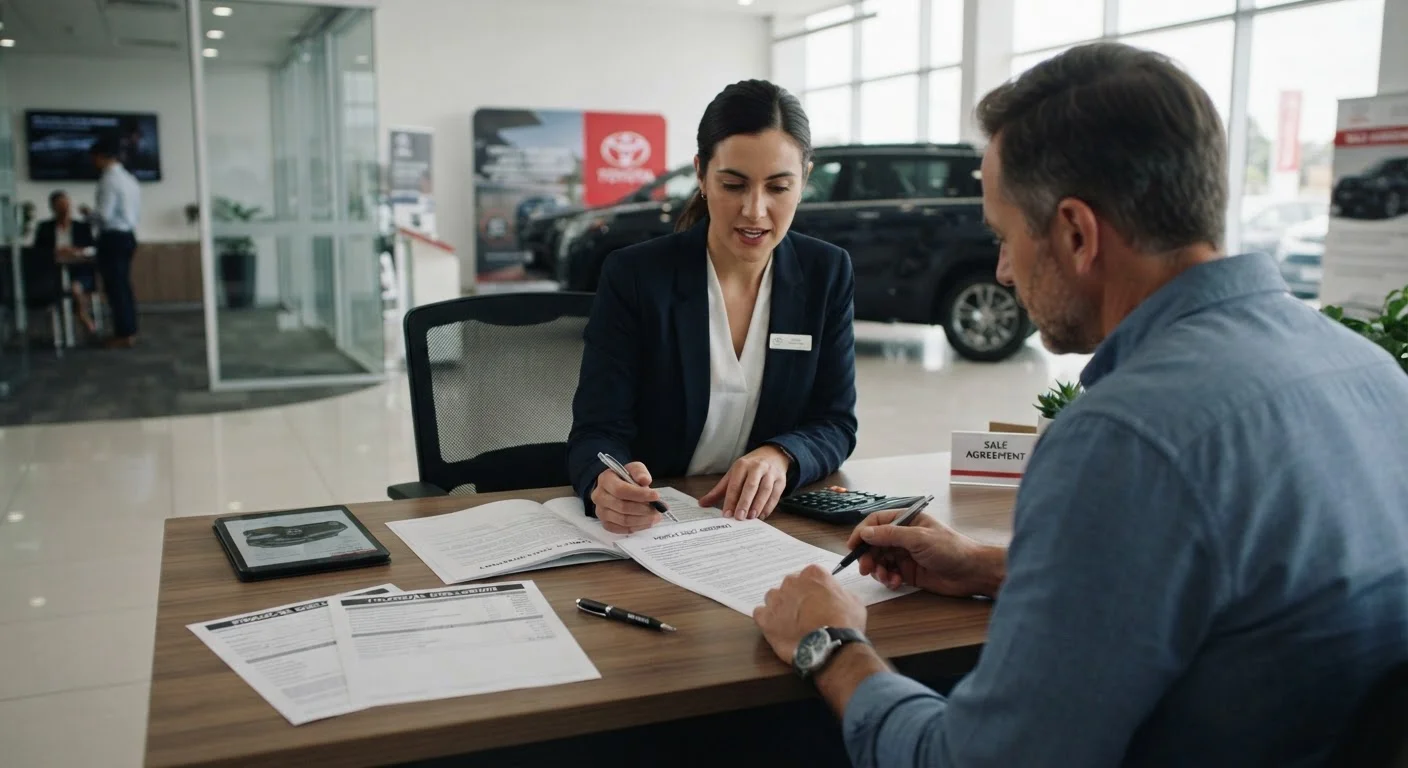
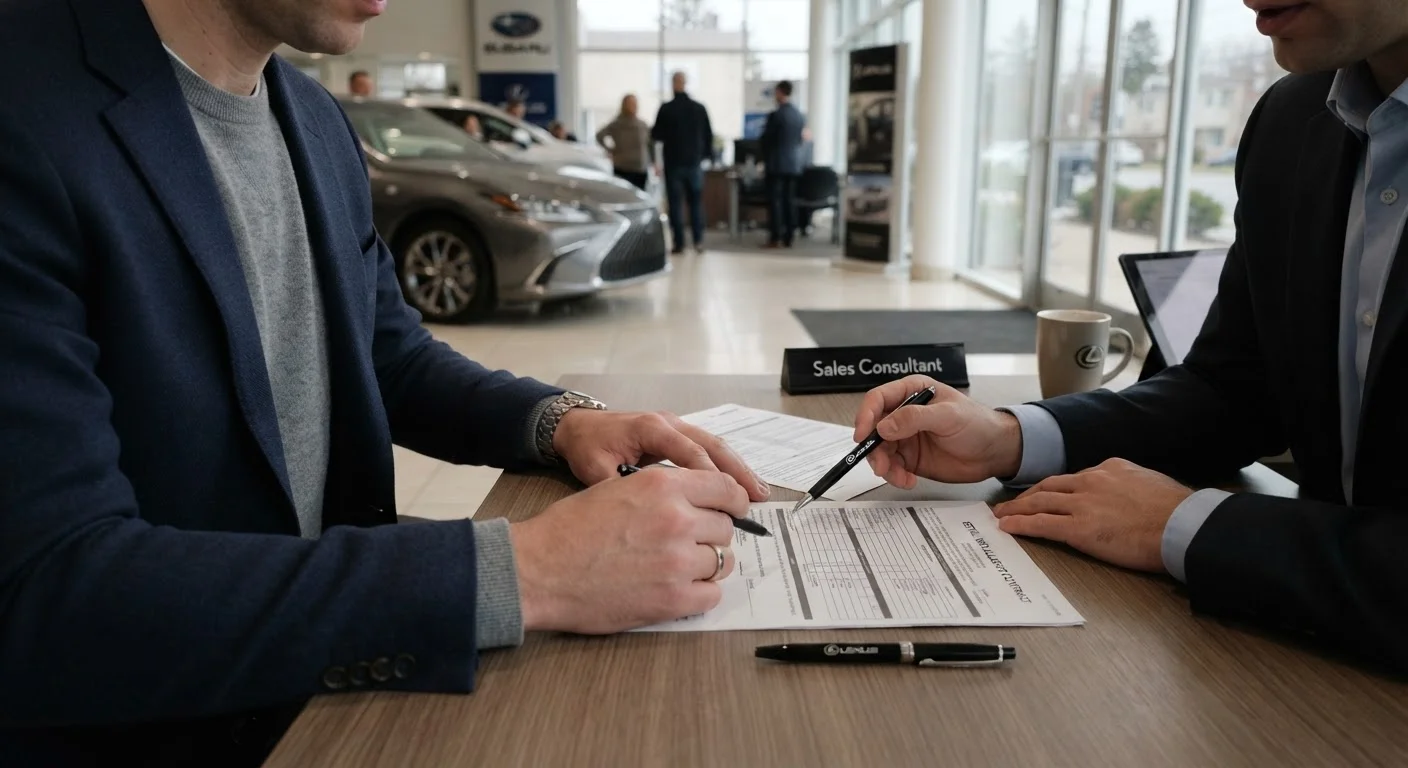
Dealership contracts can include add-ons, fees, or terms not discussed during negotiation. Do not sign under time pressure. Ask for the complete itemized contract and take the time to read it. If something appears that wasn't agreed to verbally, ask for it to be removed in writing before proceeding.
After the deal closes, consider your insurance coverage needs. A new vehicle often warrants a policy review-our guide to comparing auto insurance walks through what to evaluate beyond premium alone.
Common Mistakes That Weaken Your Position
Even well-prepared buyers can undercut themselves. The most common missteps:
- Revealing your budget ceiling. Once a dealer knows your maximum, the negotiation tends to converge there. Share your target price, not your limit.
- Falling in love with one specific vehicle. Emotional attachment is visible and exploitable. Maintain a backup option-even a competing trim or make-to preserve your willingness to walk.
- Treating fees as fixed. Documentation fees, dealer preparation charges, and add-on packages are negotiable in most states. Challenge any line item that wasn't part of the original agreement.
- Rushing to close. Same-day urgency usually benefits the seller. Most vehicles sit on lots for weeks; the timeline pressure is rarely as real as it's presented.
Understanding these patterns ahead of time lets you recognize them when they appear-and respond without escalating the tension.