Why Tread Depth Is Worth Checking Regularly
Tire tread isn't just about traction on dry pavement. Those grooves channel water away from the contact patch between your tire and the road. As tread wears down, a tire's ability to disperse water diminishes, raising the risk of hydroplaning - the condition where your tires ride on a film of water rather than gripping the surface underneath. Stopping distances increase measurably as tread depth drops, which is why worn tires are a leading factor in weather-related crashes.
Most drivers don't notice tread wear in their daily driving experience until it's already severe. Tires don't announce themselves when they become marginal - they just quietly stop performing as expected. A quick manual check every month or two, or whenever you stop for fuel on a longer trip, keeps this hazard visible.
Check All Four Tires, Not Just One
Tread wears unevenly across a vehicle's axles, and even side-to-side on a single tire. Spending 60 extra seconds checking all four wheels - at the center and both edges of each tire - gives you a complete picture. One dangerously worn tire is enough to compromise vehicle control.
Tread wear can also flag other problems early. Uneven wear patterns are one of the clearest indicators of under-inflation, over-inflation, or alignment issues - problems that accelerate tire wear and affect fuel economy. For context on how these habits compound, see maintenance habits that shorten a car's life.
U.S. Penny
Used to detect critically low tread depth at the 2/32-inch threshold.
U.S. Quarter
Used to detect tread depth at the more conservative 4/32-inch threshold - recommended for wet-weather safety.
Tread Depth Gauge
A small, inexpensive tool that gives a precise numerical reading of tread depth in 32nds of an inch.
Flashlight or Headlamp
Helps illuminate tread grooves and sidewalls when inspecting in shaded or indoor conditions.
What you will need
How to Check Your Tire Tread - Step by Step
The two-coin method has been a reliable field check for decades. It doesn't replace a precision tread depth gauge, but it gives any driver a clear go/no-go signal without any equipment purchase. Here's how to do it correctly.
Park safely and gather your coins
Pull onto a flat, level surface and engage your parking brake. You'll be crouching near the tires, so make sure the vehicle isn't at risk of rolling. Grab a penny and a quarter from your pocket or console - both should show a clear portrait on one side.
Perform the penny test for the 2/32-inch threshold
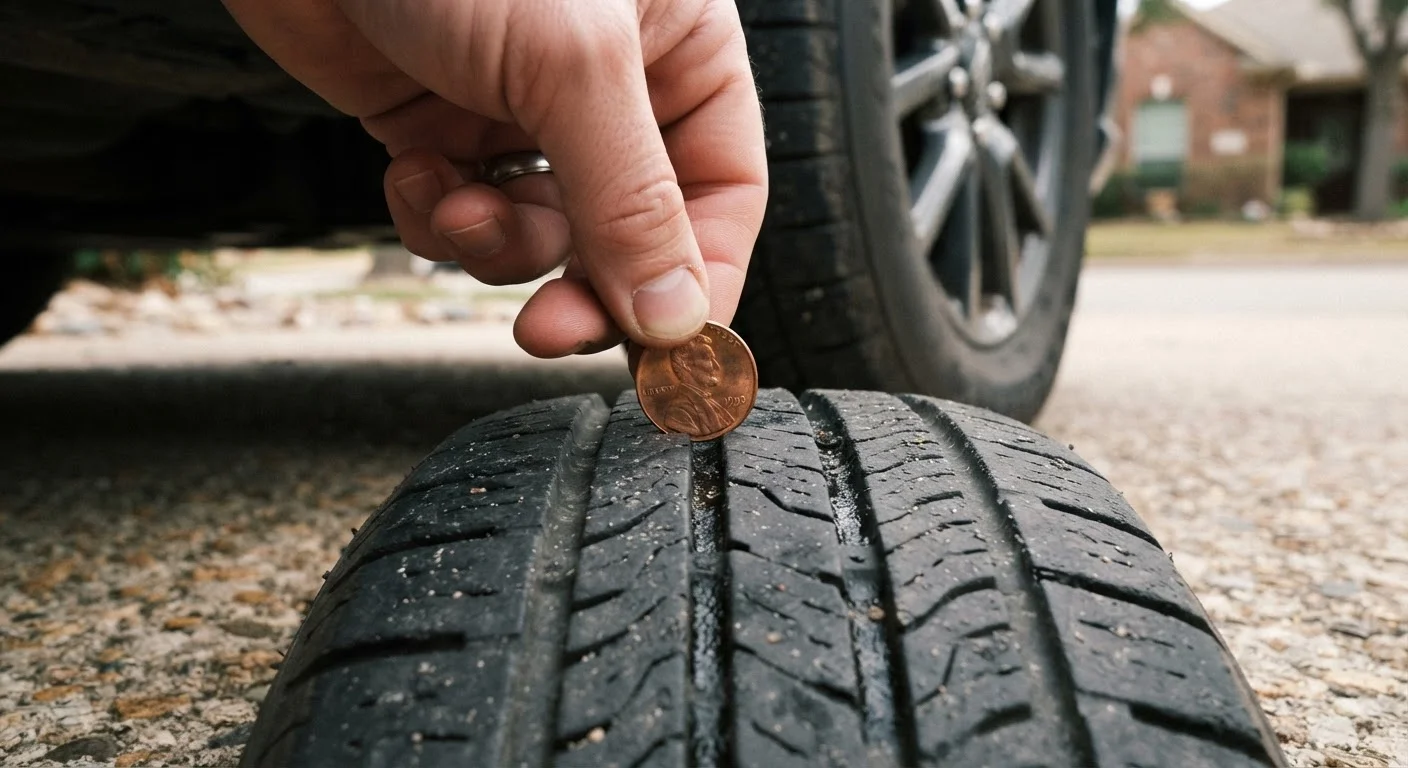
Hold the penny so Lincoln's head points downward, then insert it into a tread groove with the head going in first. If you can see the top of Lincoln's head above the tread, your tread depth is at or below 2/32 inch - the legal minimum in most states. A tire at this level should be replaced as soon as possible.
If the tread covers any part of Lincoln's head, you haven't yet hit the legal limit, but continue to the quarter test to understand your safety margin.
Perform the quarter test for the 4/32-inch threshold
Insert the quarter the same way - Washington's head pointing into the groove. If the tread reaches the top of Washington's head or beyond, you still have at least 4/32 inch of tread remaining, which is considered an adequate safety margin for most driving conditions. If the tread falls short of his head, you're in the 2/32-4/32 range: still legal, but worth budgeting for replacement soon, especially if you drive in rain or snow.
Test multiple grooves and locations across each tire
Don't stop at one spot. Test the center groove and both outer edge grooves on each tire. Tires that wear more on the edges than the center are typically under-inflated; tires worn more in the center than the edges are often over-inflated. Heavy wear on just one edge usually points to an alignment problem. Note any patterns - they tell you something beyond tread depth alone.
Inspect the sidewalls and look for wear indicators
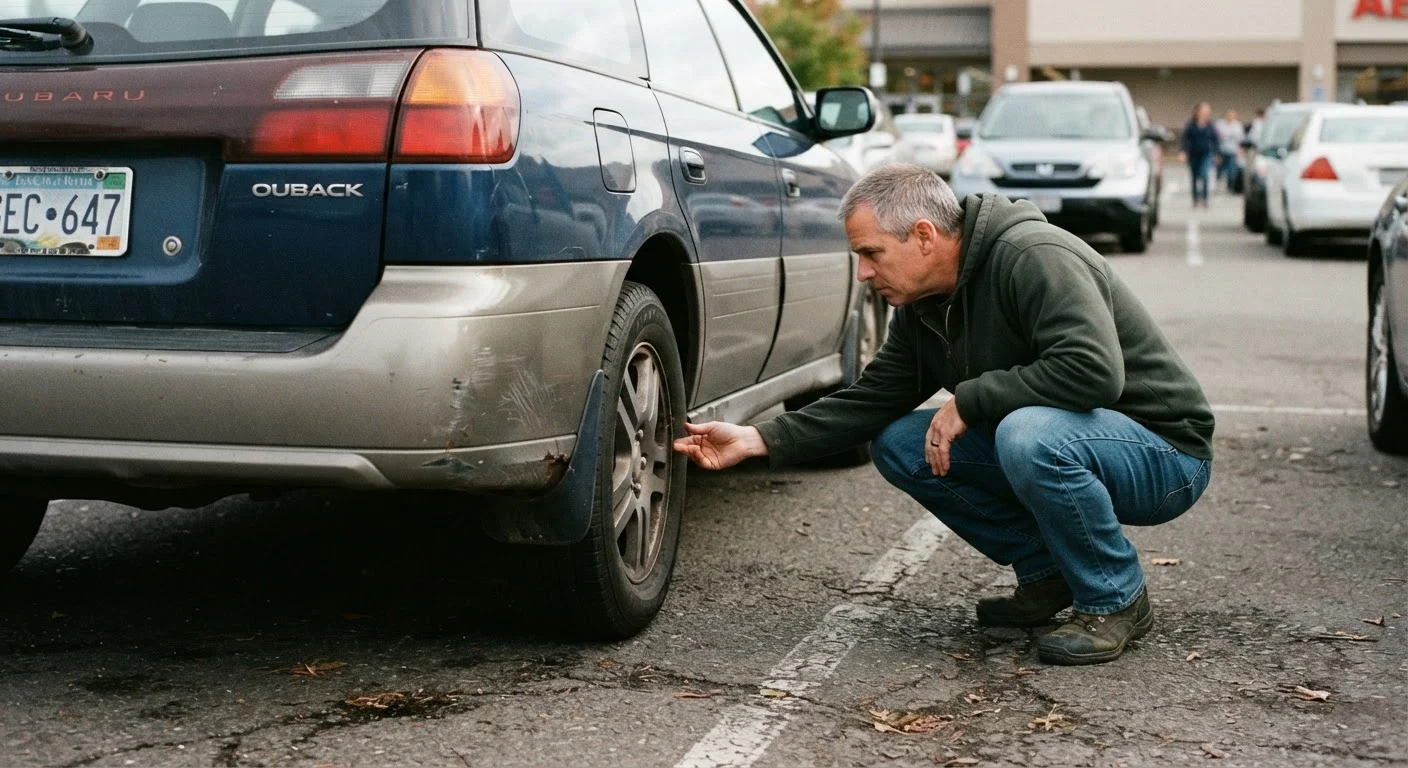
While you're down there, scan the sidewall of each tire for cracks, bulges, or embedded objects. Also look for the tread wear indicator bars - small raised bars molded into the grooves at the 2/32-inch level. When the tread surface is flush with those bars, the tire has reached the legal end of its life.
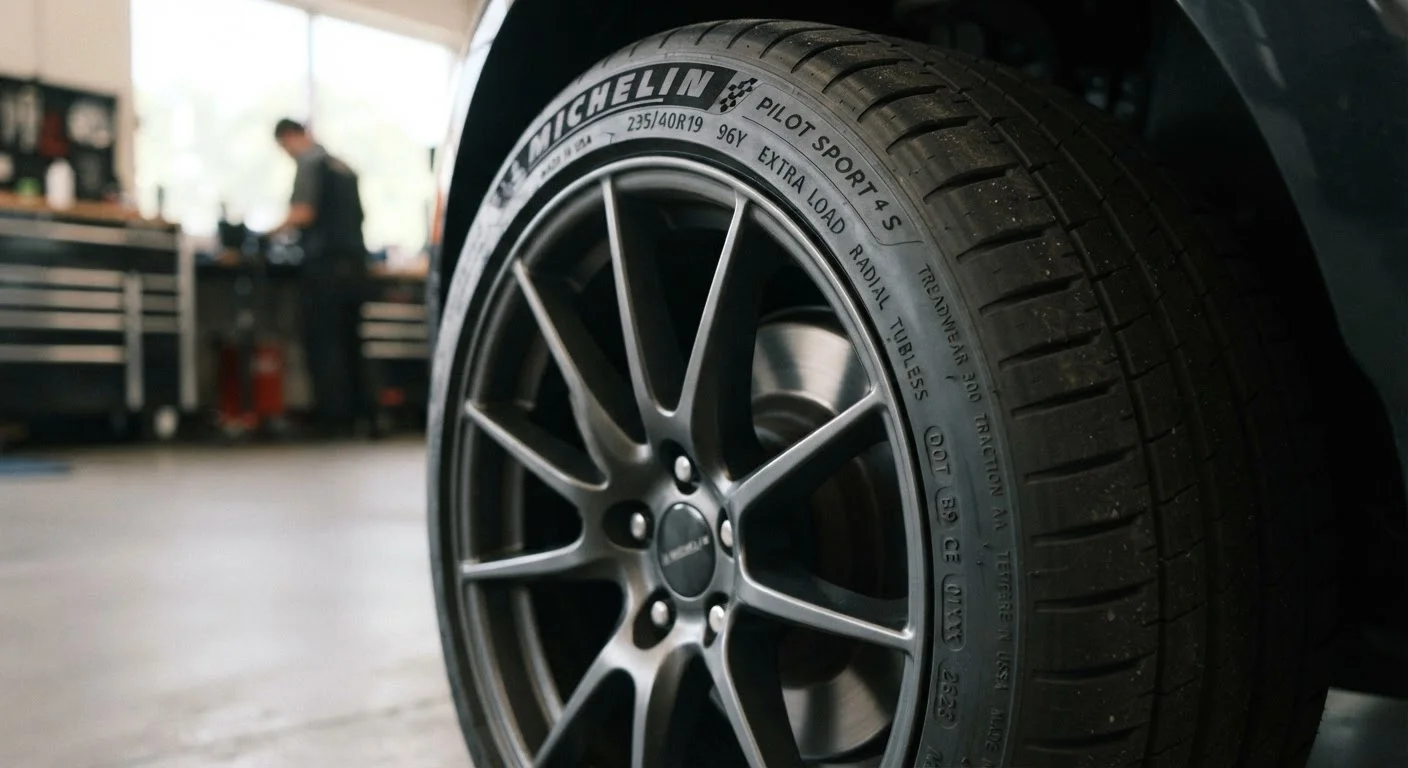
Modern tires also carry a DOT code on the sidewall. The last four digits represent the week and year of manufacture (e.g., "2319" means the 23rd week of 2019). Most manufacturers recommend replacing tires after six to ten years regardless of visible tread, because rubber compounds degrade over time.
Document what you found and decide on next steps
Take a quick note - even a phone photo - of any tire showing marginal or failing depth, unusual wear, or visible damage. This record is useful when talking to a tire technician and helps you track how quickly a tire is wearing between checks. If all four tires passed both tests and show even wear, you're in good shape; plan to recheck in 3,000-5,000 miles or at your next oil change.
Legal Minimum Is Not the Safety Threshold
Most U.S. states require tires to have at least 2/32 inch of tread before they're considered legally worn out. However, wet-road stopping distances increase significantly once tread drops below 4/32 inch. Treating 2/32 as your action point means you're already operating in a reduced-safety zone - plan to replace tires before you reach it.
If you're evaluating a used vehicle before purchase, tread depth checks are one of the most important stops on your walk-around. Our used car inspection checklist covers what else to examine before committing to a purchase.
And if a tire pressure monitoring system (TPMS) warning light has been on your dashboard, that's a related but separate issue. Low pressure accelerates uneven tread wear, so it's worth understanding what that symbol means - reading your dashboard warning lights explains the TPMS symbol and other common alerts.