Why Paperwork Makes or Breaks a Private Sale
Selling or transferring a car privately feels straightforward until a missing signature on the title delays the new owner's registration for weeks - or a seller gets a parking ticket for a vehicle they no longer own. The right documents protect both parties, establish a legal chain of ownership, and keep your name off liability you've left behind.
This checklist covers every document typically required in a U.S. private-party vehicle sale or transfer. Because requirements vary by state, treat this as your preparation framework and confirm specifics with your state's Department of Motor Vehicles (DMV) or equivalent agency before you sign anything. If you're still in the earlier stages of a transaction, our full car-buying guide walks through the entire process from research to handover.
State DMV Website
Verify the exact title transfer forms, fees, and deadlines required in your state before the transaction.
Lien Release Letter
Required from the lender if the vehicle has an outstanding loan - confirms the title is free and clear for transfer.
Bill of Sale Template
A blank, fillable form that captures the legally important details of the transaction for both parties.
Vehicle History Report Service (NMVTIS-connected)
Provides independently sourced records of accidents, title brands, and odometer readings to support the seller's disclosures.
Notary Public
Required to authenticate signatures on the bill of sale or title in states that mandate notarization for private sales.
The Core Document Checklist
Work through these groups in order. Sellers should gather documents before listing the vehicle; buyers should verify each item is present and accurate before handing over payment.
Ownership & Title Documents
Federal & State Disclosure Forms
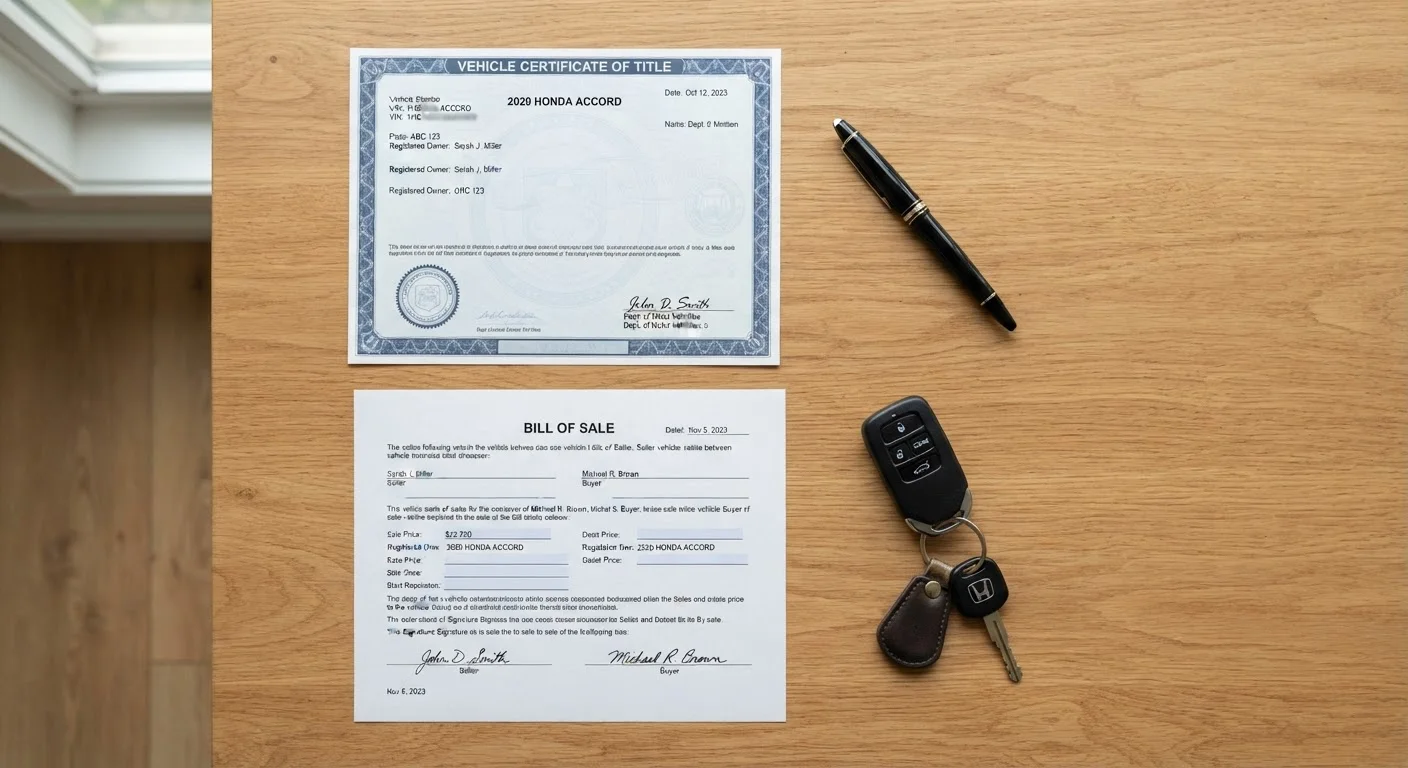
Bill of Sale
Seller Liability Protection
Supporting Records (Seller Provides, Buyer Reviews)
Open Titles Are Illegal in Most States
An "open title" - where the seller signs but leaves the buyer's name blank - may seem convenient but is illegal in the majority of U.S. states and can expose both parties to fraud liability or tax penalties. Always fill in the buyer's complete legal name at the time of the transaction, not after.
Once both parties sign, keep a photocopy or clear photo of every document for your personal records. If a dispute arises later - over a lien, an undisclosed accident, or a title error - your copies are your evidence.
After the sale, the new owner will need to handle registration and insurance promptly. Our auto insurance hub is a useful starting point for understanding coverage requirements in your state.
Common Mistakes to Avoid
Even experienced sellers trip up on a handful of recurring issues. Signing the title in the wrong field voids it in many states - read the title face carefully and follow the instructions printed on it. Leaving the buyer's name blank (sometimes called a "title jump" or open title) is illegal in most states and can create tax and liability complications for everyone in the chain.
Sellers should also avoid handing over the keys before payment clears and the bill of sale is signed. Buyers, meanwhile, should run a vehicle history report and arrange a pre-purchase inspection before the paperwork stage. Our used car inspection checklist covers exactly what to examine before you commit.
Don't Transfer the Title Before Payment Clears
Handing over a signed title before a check clears or cash is confirmed in hand leaves sellers with little legal recourse if payment falls through. Cashier's checks are generally safer than personal checks for large transactions, though even cashier's checks can be counterfeited - verify with the issuing bank when in doubt. The signed title and keys should change hands simultaneously with confirmed payment.
Finally, don't overlook your ongoing maintenance records. A complete service history adds credibility for the seller and peace of mind for the buyer. Browse our car maintenance hub for guidance on what records are worth keeping throughout ownership.