Liability Coverage: Protecting Others from Your Mistakes
Liability coverage is the foundation of virtually every auto insurance policy in the United States, and it's the one type required by law in nearly every state. But what it does - and what it doesn't - is frequently misunderstood.
Liability insurance pays for damages you cause to other people and their property when you're at fault in an accident. It breaks into two components:
- Bodily injury liability: Covers medical expenses, lost wages, and legal costs for people you injure in an accident you caused.
- Property damage liability: Pays to repair or replace another person's vehicle or property - a fence, mailbox, or storefront - that you damage.
Crucially, liability coverage does not pay to repair your own car, and it does not cover your own medical bills. It exists solely to protect others from financial harm you cause. For a broader orientation to how policies work, see our auto insurance overview.
Check Your State's Minimum Liability Limits
State-mandated minimums for liability coverage can be surprisingly low - sometimes not enough to cover a serious accident. Driving with only the state minimum could leave you personally responsible for damages that exceed your policy limits. Many insurance professionals suggest carrying limits well above the legal minimum for meaningful financial protection.
Collision Coverage: When Your Car Takes the Hit
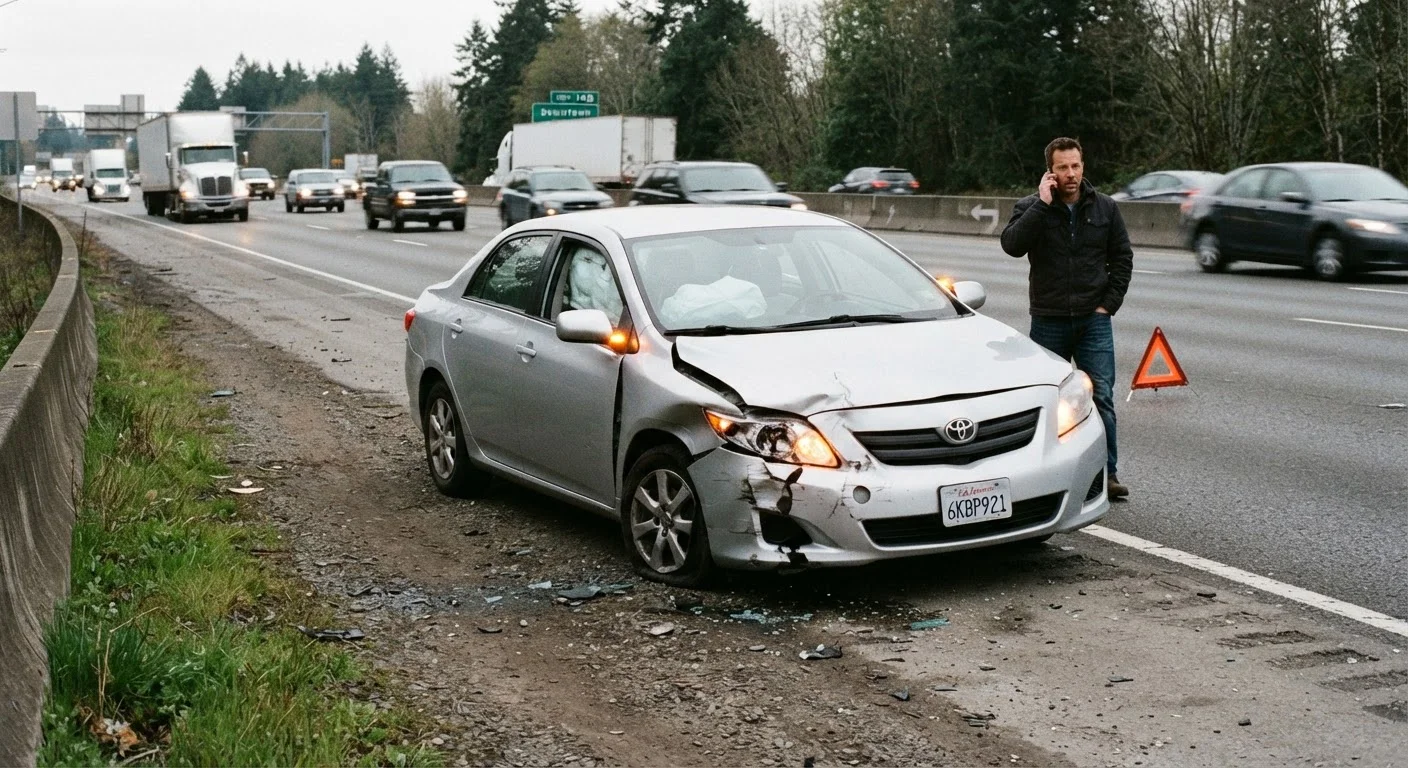
Collision coverage pays to repair or replace your own vehicle when it's damaged in a crash - whether you hit another car, a guardrail, or a tree. Unlike liability, collision applies regardless of who caused the accident.
This matters more than it might seem. If you're at fault and have no collision coverage, you're paying for your own vehicle repairs out of pocket. And even when the other driver is at fault, collecting from their liability insurer can be slow and contested. Having your own collision coverage means you can file a claim directly with your insurer and get your car repaired faster.
Collision coverage always comes with a deductible - typically ranging from $250 to $2,000 - which you pay first before insurance covers the remainder. Choosing a higher deductible lowers your premium, but increases what you owe after a claim.
~13%
Estimated uninsured drivers on U.S. roads
According to the Insurance Research Council, roughly 1 in 8 U.S. drivers was uninsured in recent years - underscoring why relying solely on another driver's liability policy can leave you exposed.
$500
Most common collision deductible chosen
Industry data consistently shows $500 as the most frequently selected collision deductible, balancing premium savings with manageable out-of-pocket costs after a claim.
~78%
Drivers carrying collision coverage
The Insurance Information Institute reports that roughly three-quarters of insured U.S. drivers carry collision coverage, reflecting its widespread use beyond just financed vehicles.
Comprehensive Coverage: Everything Else That Can Go Wrong
Comprehensive coverage handles damage to your vehicle from events that aren't collisions. Insurers call these "other than collision" perils, and the list is longer than most drivers expect:
- Theft or vandalism
- Hail, flooding, or windstorm damage
- Fire
- Falling objects (tree limbs, debris)
- Animal strikes - including hitting a deer
- Glass damage (in many policies)
Like collision, comprehensive is subject to a deductible. And like collision, it pays out the actual cash value of your vehicle - not what you paid for it originally or what it would cost to buy a comparable new one. Depreciation is factored in.
For a direct comparison of these two coverage types side by side, our collision vs. comprehensive guide goes deeper on the distinctions. If you encounter unfamiliar terms in your policy documents, the auto insurance glossary is a useful quick reference.
Actual Cash Value vs. Replacement Cost
Both collision and comprehensive pay out at your vehicle's actual cash value (ACV) - what the car is worth at the time of the loss, accounting for depreciation. This means a five-year-old vehicle won't be reimbursed at the price of a new equivalent model. If you're concerned about a gap between ACV and what you owe on a loan, gap insurance is a separate product worth exploring with your insurer.
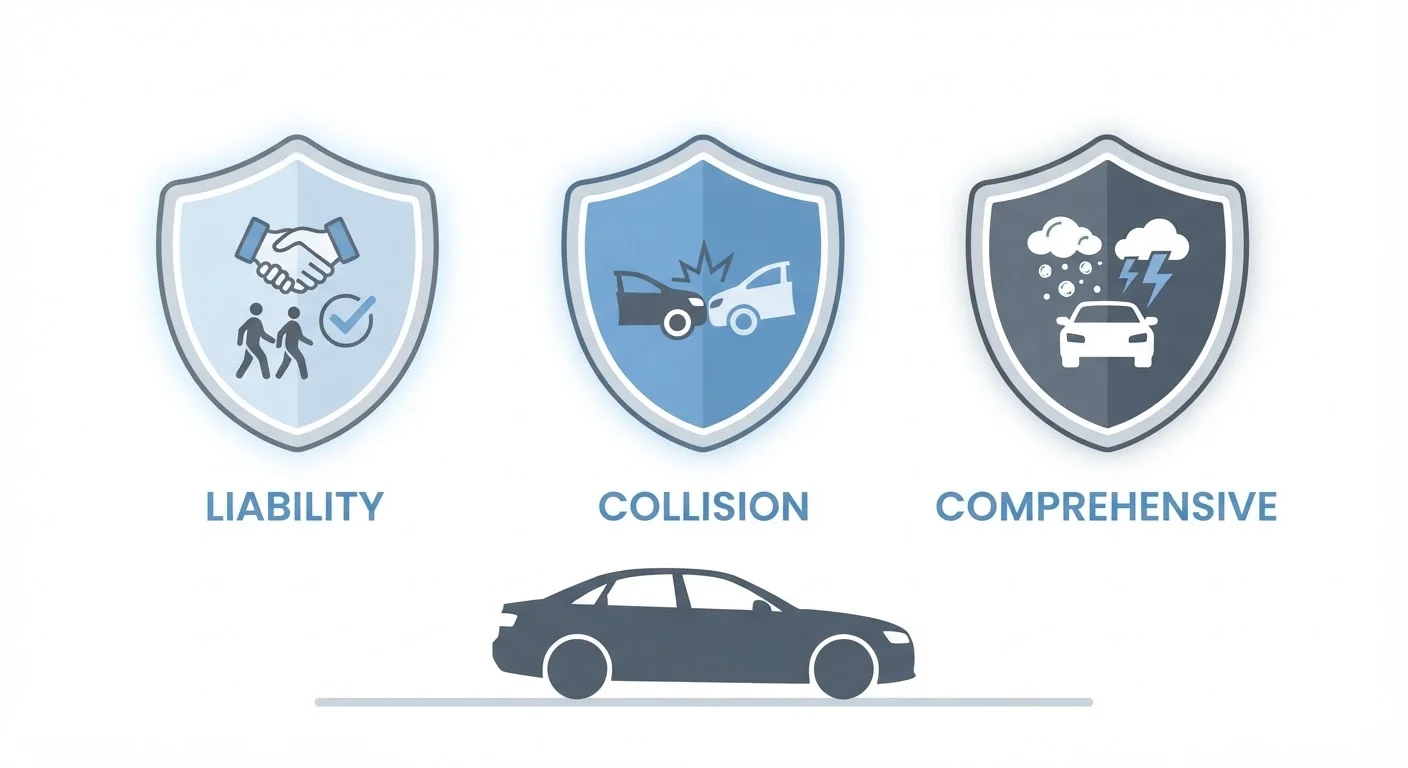
How These Three Coverages Work Together
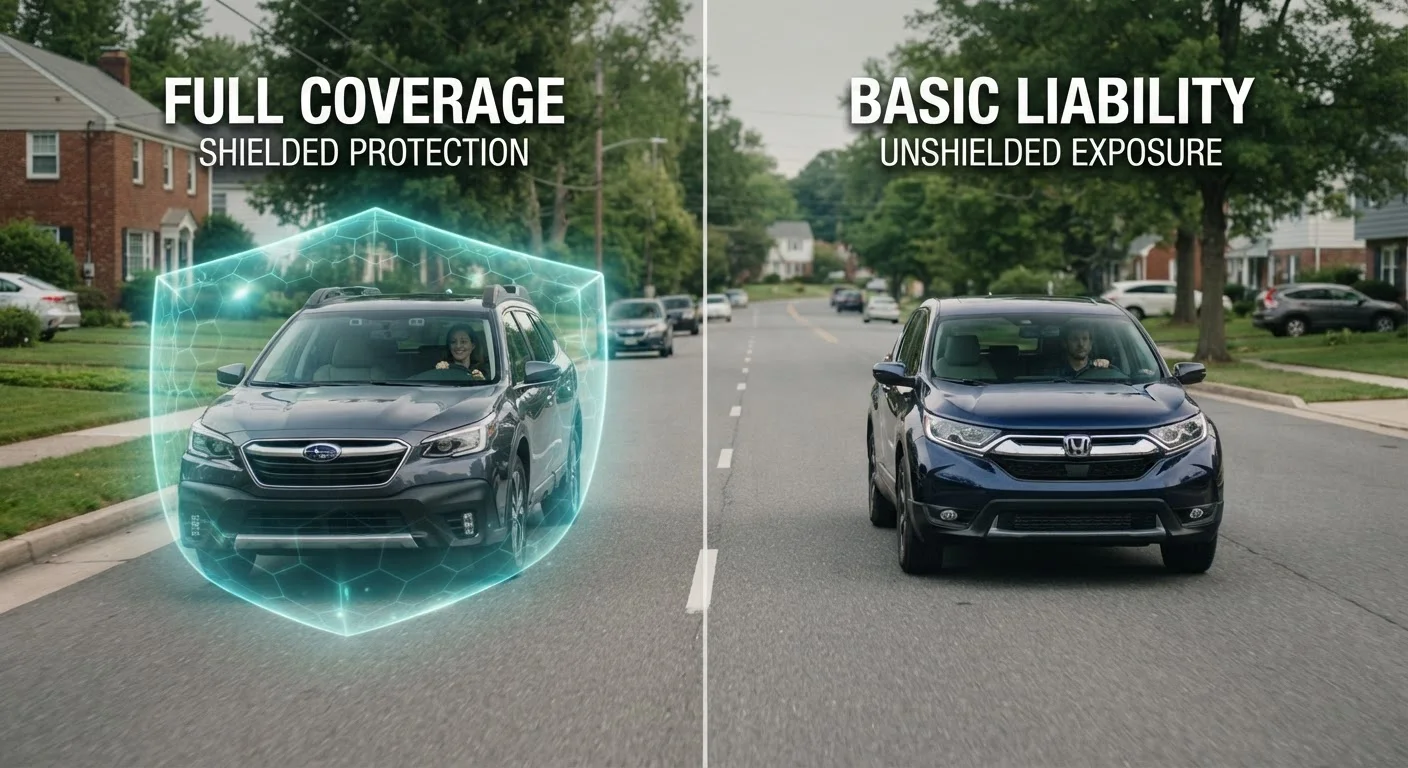
Most drivers carry all three coverage types as part of what's loosely called "full coverage" - though that phrase has no official insurance definition. Understanding which coverage responds in which scenario is the practical takeaway:
| Scenario | Coverage That Applies |
|---|---|
| You rear-end another driver | Your liability (for their damage); your collision (for your car) |
| Another driver hits you | Their liability (for your damage); your collision if you want faster resolution |
| A hailstorm dents your hood | Comprehensive |
| Your car is stolen | Comprehensive |
| You hit a deer | Comprehensive |
Notice that none of these three coverages automatically handles your own medical costs. Personal Injury Protection (PIP) or Medical Payments coverage is a separate layer entirely.
If you're weighing whether to carry collision and comprehensive at all - especially on an older, lower-value vehicle - our full coverage vs. liability-only article walks through the practical trade-offs drivers commonly consider.
This article provides general insurance education only and is not personalized insurance or legal advice. Coverage terms, limits, exclusions, and state requirements vary. Consult a licensed insurance agent and review your actual policy documents before making coverage decisions.