Why This Coverage Exists
Auto insurance is legally required in nearly every U.S. state, yet a meaningful share of drivers on the road carry no insurance at all. The Insurance Research Council has estimated that roughly 1 in 8 drivers is uninsured at any given time. Beyond that, many more carry only the state-minimum liability limits - amounts that were often set decades ago and may not reflect the real cost of a serious injury or significant vehicle damage today.
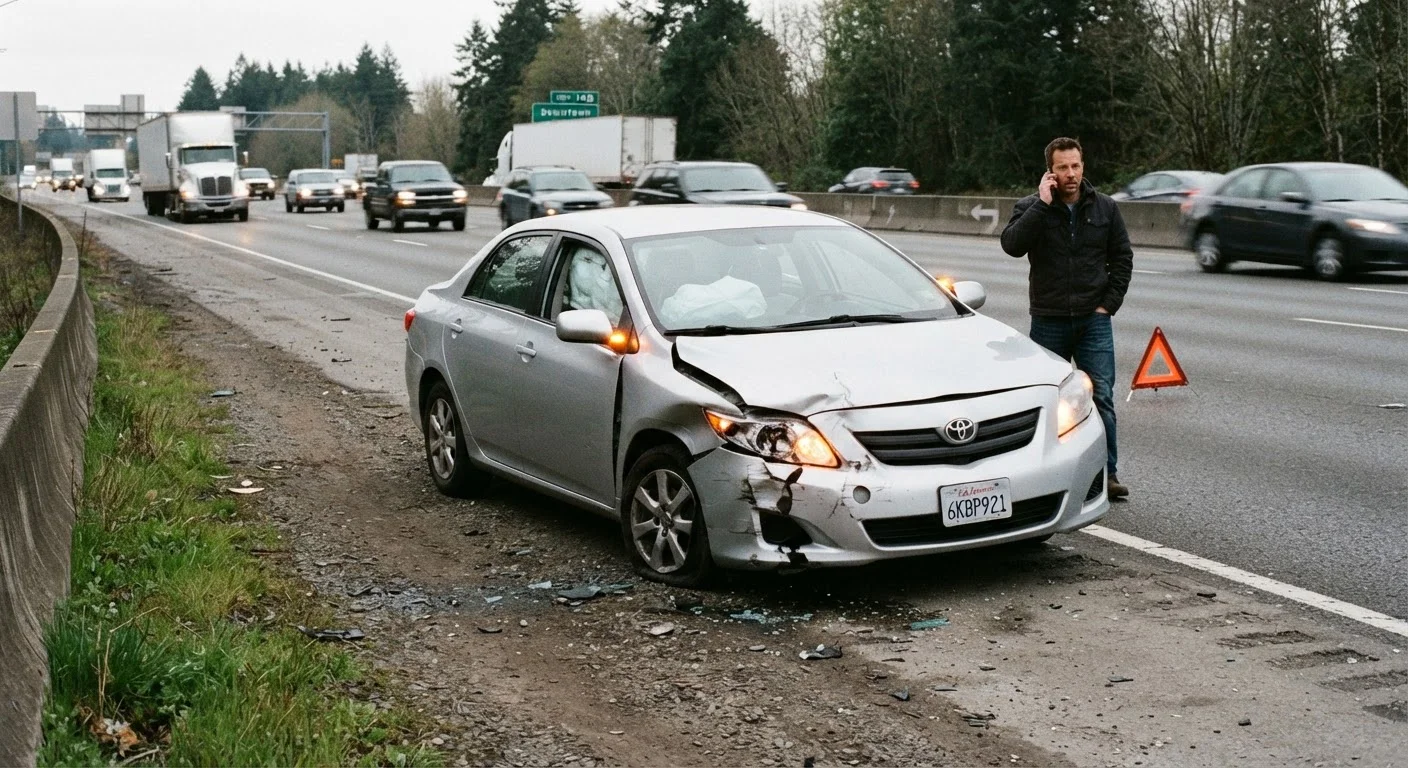
When one of those drivers causes a crash, the standard liability system breaks down. Liability insurance covers damage the at-fault driver causes to others. If that driver has none - or not enough - there's often no practical way to collect from them directly, even with a court judgment. That's the gap that uninsured and underinsured motorist coverage is designed to close.
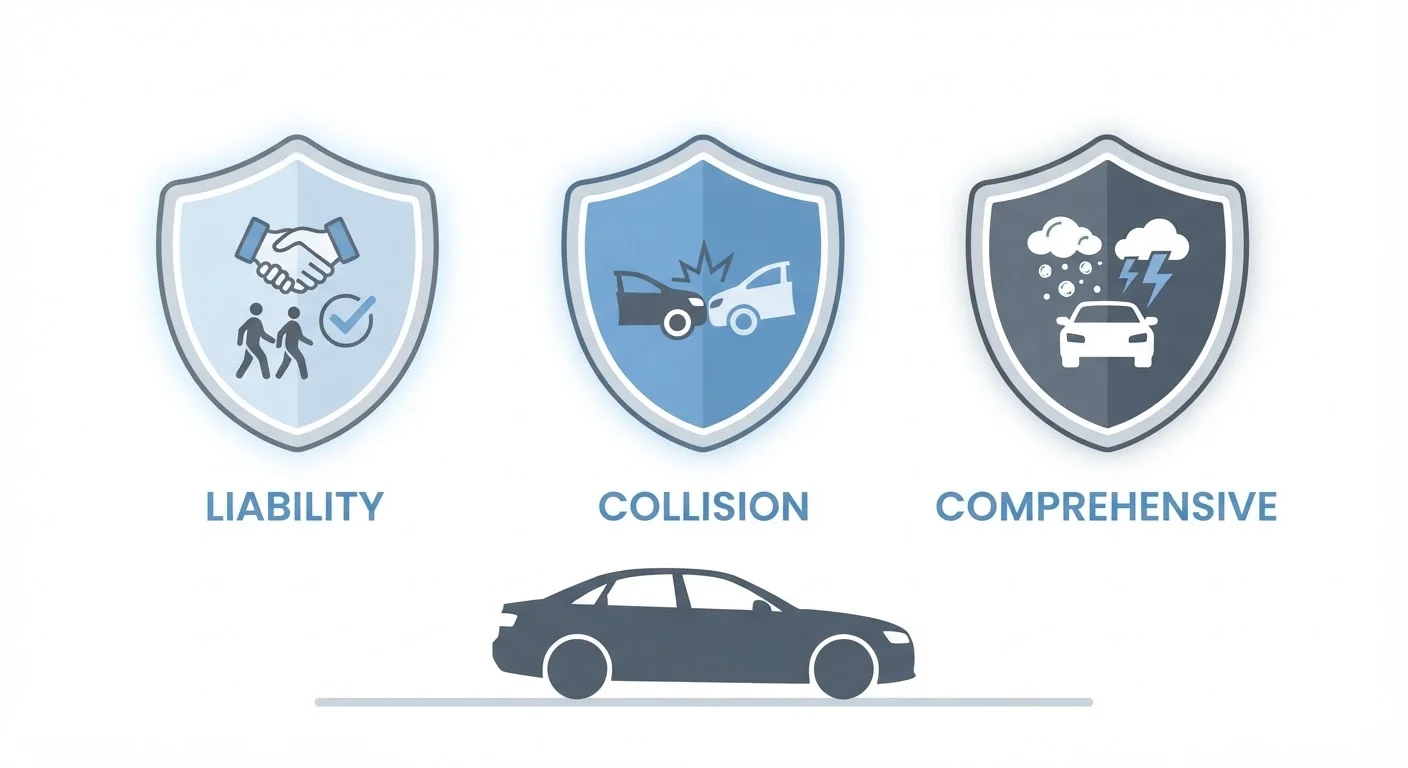
For a broader look at how liability fits into the overall picture, see what liability, collision, and comprehensive insurance each cover.
~1 in 8
Estimated share of uninsured U.S. drivers
According to the Insurance Research Council, approximately 12-13% of motorists were uninsured in recent study periods.
$25,000
Typical state minimum bodily injury limit per person
Many states set minimum liability limits at $25,000 per person - an amount that can be quickly exhausted by a single hospitalization.
22 states
States that mandate UM coverage
Roughly half of U.S. states require drivers to carry uninsured motorist coverage as a condition of legal vehicle operation; requirements vary significantly.
How UM and UIM Coverage Actually Work
Uninsured motorist (UM) coverage applies when the at-fault driver has zero liability insurance - or, in most states, when a hit-and-run driver can't be identified. Your own insurer steps in and pays for covered losses up to your UM limit, as if it were the other driver's policy.
Underinsured motorist (UIM) coverage activates when the at-fault driver has insurance, but their liability limits run out before your actual damages are fully covered. For example, if a driver with a $25,000 bodily injury limit causes $80,000 in injuries to you, your UIM coverage can cover the remaining $55,000 - up to your own UIM limit.
Both coverages come in two forms in most states:
- Bodily injury (UMBI / UIMBI): Covers medical expenses, lost income, and pain and suffering for you and your passengers.
- Property damage (UMPD / UIMPD): Covers repairs to your vehicle. Note that some states don't require UMPD, and a deductible often applies.
It's worth reviewing the auto insurance glossary if any of these terms need further clarification.
Stack UM/UIM Limits to Match Your Liability
A practical rule of thumb: set your UM and UIM limits equal to your liability limits. This way, your protection doesn't depend on whether you or the other driver is the one at fault. Review your current limits the next time your policy renews and ask your insurer what it would cost to increase them - the premium difference is often modest.
State Requirements and Your Policy Options
State laws on UM/UIM coverage fall into three broad categories: mandatory, offered-but-waivable, and unregulated. In mandatory states, you must carry at least the minimum UM/UIM limits as a condition of registering your vehicle. In offer states, insurers must present the coverage but drivers can decline it in writing. A few states impose no specific requirement at all.
Because rules change and vary by state, the safest approach is to check directly with your state's department of insurance or a licensed agent about what applies where you live.
When selecting limits, a common starting point is to match your UM/UIM limits to your liability limits. If you carry $100,000/$300,000 in liability, carrying the same in UM/UIM gives you a consistent level of protection regardless of which side of the claim you're on. That said, the right amount depends on your individual circumstances - your health coverage, assets, income, and overall risk tolerance.
Drivers who have already reduced their coverage to cut premiums should read about auto insurance mistakes that can backfire at claim time before making further adjustments.
Common Misconceptions About This Coverage
One persistent misconception is that health insurance makes UM/UIM redundant. Health insurance may cover your emergency room bill, but it generally won't compensate for lost wages, pain and suffering, or damage to your car. UM/UIM covers that broader range of losses.
Another misunderstanding is that collision coverage is a substitute. Collision pays to repair your car regardless of fault - it doesn't address medical costs, lost income, or injury-related damages at all. The two serve distinct purposes and aren't interchangeable.
Some drivers also assume that because the other driver was at fault, they can simply sue and recover. While that's technically possible, collecting a judgment against an uninsured driver with few assets is often an expensive, time-consuming process with uncertain results. UM/UIM provides a faster, more reliable recovery path through your own insurer.
For more on where driver assumptions can go wrong, see common auto insurance myths that could leave you underprotected.
This article is for general informational purposes only and does not constitute personalized insurance, legal, or financial advice. Coverage terms, requirements, and availability vary by state and insurer. Consult a licensed insurance professional and review your actual policy documents before making coverage decisions.