How Each Type Delivers Nutrients
At the most basic level, all fertilizers aim to supply three primary nutrients: nitrogen (N), phosphorus (P), and potassium (K). The fundamental difference is not what they deliver but how they deliver it.
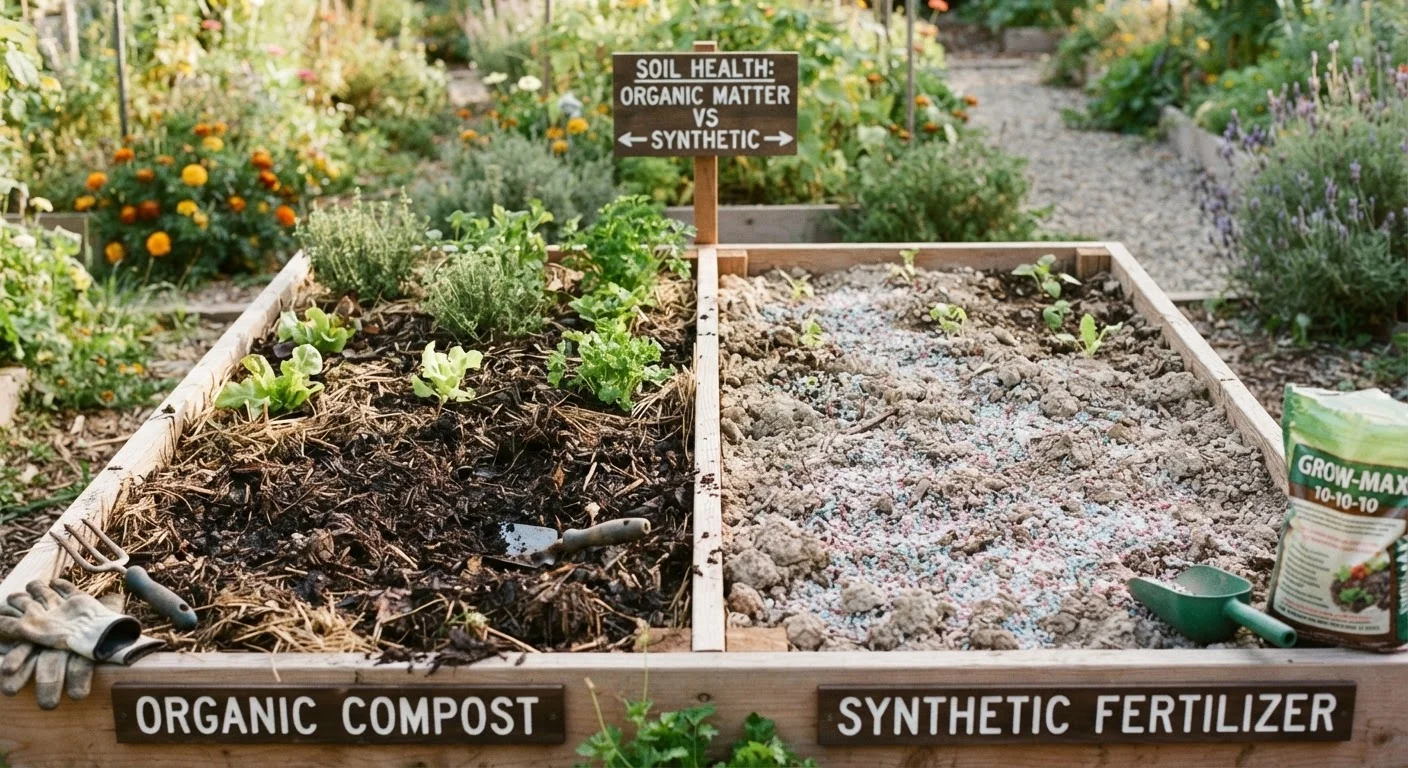
Organic fertilizers - such as composted manure, bone meal, blood meal, kelp meal, and feather meal - are derived from plant, animal, or mineral sources. Their nutrients are bound in complex organic compounds that soil microbes must break down before plant roots can absorb them. This microbial step is the key: it means nutrients become available gradually, over weeks to months, as soil conditions allow.
Synthetic fertilizers are manufactured to provide nutrients in mineral salt form, which dissolves in soil water and becomes immediately available to roots - no microbial middleman needed. This speed is their defining advantage. A nitrogen-deficient plant can show visible improvement within days of a synthetic application.
Before choosing, consider getting a soil test to understand what your lawn is actually growing in - it prevents guesswork and over-application with either fertilizer type.
Effects on Soil Over Time
This is where the two approaches diverge most significantly for home gardeners.
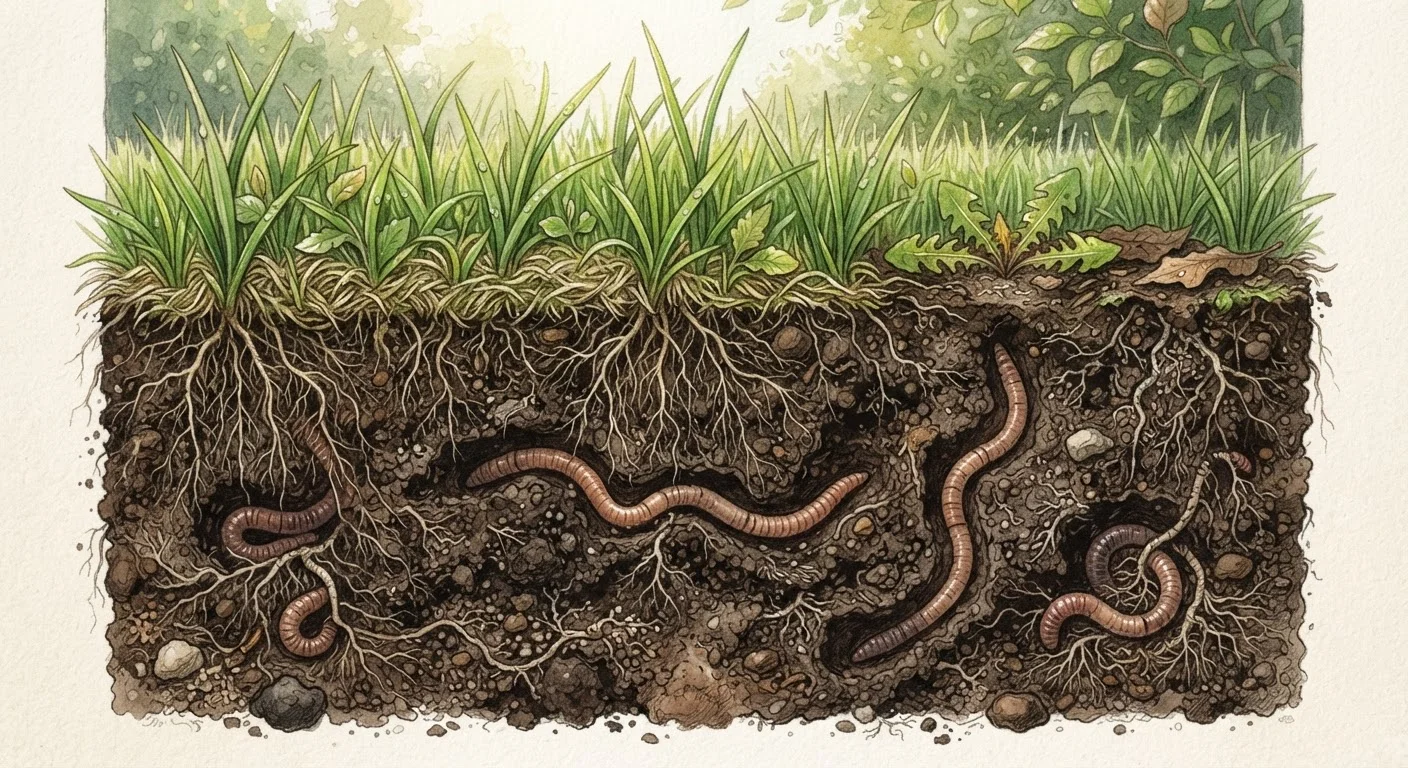
Organic inputs do more than feed plants - they feed the microbial community that makes soil function. Earthworms, bacteria, and fungi break down organic matter, improving soil structure, water retention, and aeration in the process. Over several seasons, consistent organic fertilization tends to increase organic matter content, making soil more resilient and productive.
Synthetic fertilizers, by contrast, provide no organic matter and no microbial food source. Applied over many years without offsetting inputs, they can gradually reduce soil organic matter and, in some cases, shift soil pH or salt levels in ways that stress plants and soil biology. This is not an inherent flaw - it's a management reality. Gardeners who use synthetics effectively typically pair them with organic matter additions such as compost.
Always Start With a Soil Test
Before applying any fertilizer - organic or synthetic - get a basic soil test through your local cooperative extension office. Tests typically cost under $20 and reveal pH, existing nutrient levels, and organic matter content. Fertilizing without this information risks wasting money and potentially harming plants by adding nutrients that are already adequate.
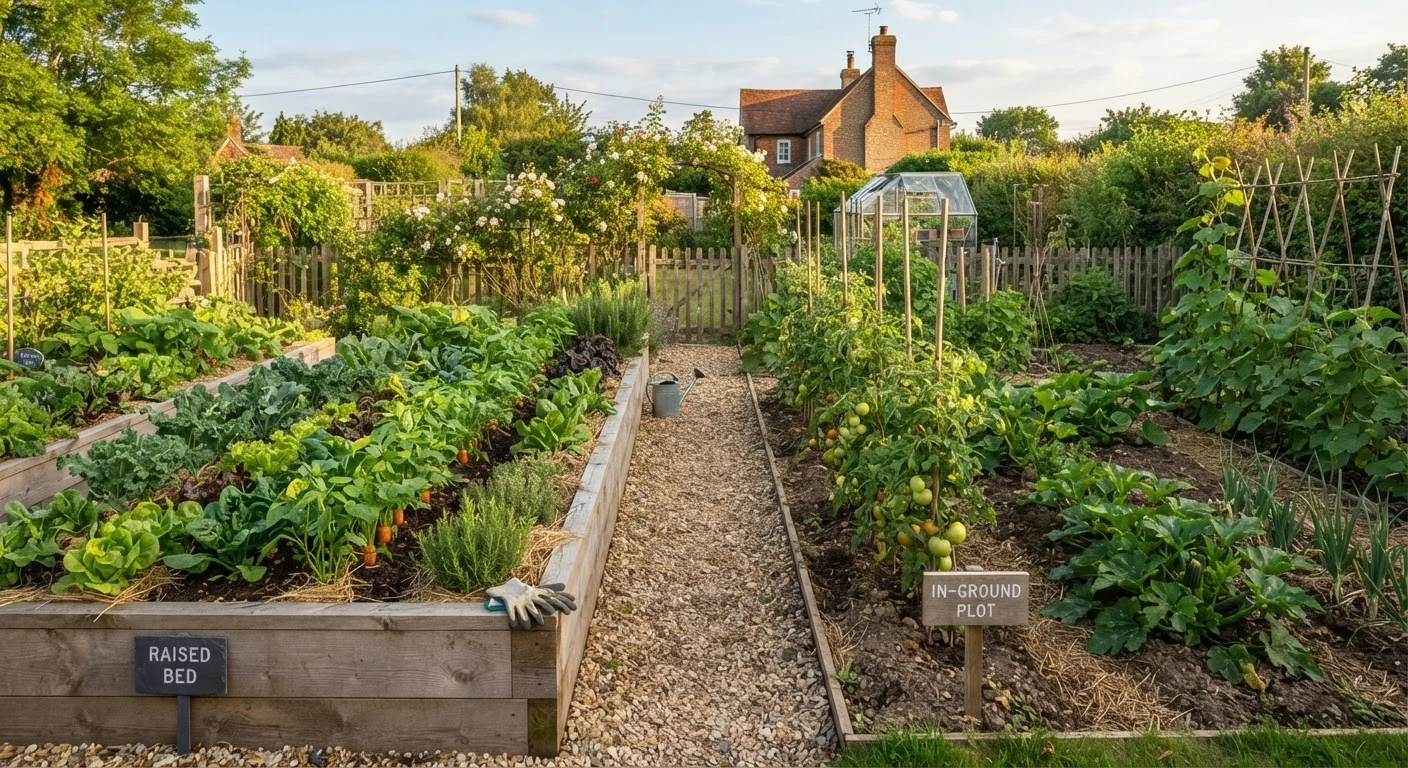
If you're gardening in raised beds or in-ground plots, the setup you choose affects how fertilizers perform - raised beds drain faster and may need more frequent organic replenishment.
Release Rate, Precision, and Risk of Burn
Organic fertilizers are inherently slow-release, which makes them forgiving. Over-applying compost or bone meal rarely causes the plant damage that excess synthetic fertilizer can. Synthetic fertilizers, especially granular or liquid forms, carry a real risk of fertilizer burn - high salt concentrations that draw moisture out of roots and scorch foliage. Timing, rate, and watering practices all matter when using them.
Synthetic fertilizers also allow precise nutrient ratios. If a soil test reveals a specific phosphorus deficiency, you can apply a targeted product and address it directly. With organic sources, the nutrient ratios are fixed by the raw material - bone meal is always high-phosphorus, blood meal is always high-nitrogen - giving you less flexibility for targeted correction.
| Organic Fertilizers | Synthetic Fertilizers | |
|---|---|---|
| Nutrient availability | Slow; weeks to months | Fast; hours to days |
| Effect on soil biology | Feeds microbial life | Minimal direct benefit |
| Burn risk | Low | Moderate to high if misapplied |
| Nutrient precision | Fixed by raw material | Highly adjustable |
| Soil organic matter | Builds over time | No contribution |
| Runoff / leaching risk | Lower | Higher, especially nitrogen |
| Best use case | Long-term soil building | Rapid deficiency correction |
Environmental Considerations
Both types carry environmental tradeoffs worth understanding. Synthetic fertilizers, particularly nitrogen, are water-soluble and can leach into groundwater or run off into waterways, contributing to nutrient pollution in streams and lakes. Organic fertilizers release nutrients more slowly, reducing runoff risk - but they are not risk-free. Manure-based products misapplied near water features can introduce pathogens and nutrients just as synthetic products can.
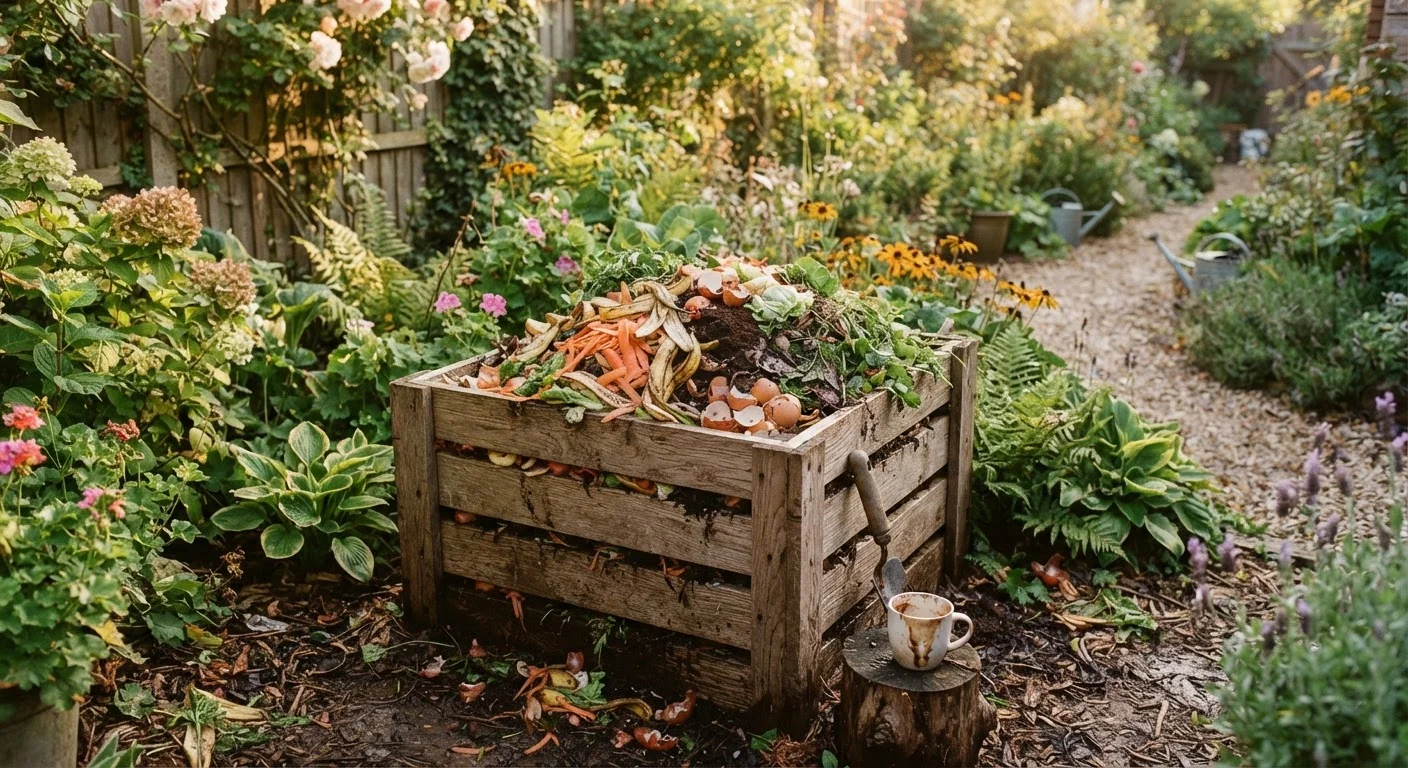
If reducing your garden's ecological footprint matters to you, pairing any fertilizer program with home composting is one of the most effective strategies available - compost reduces the total amount of purchased fertilizer you need and closes a nutrient loop at home.
For lawns specifically, the type of grass you're growing also influences fertilizer timing and frequency, so factor that into your planning.
Practical Guidance for Choosing
There is no universal winner here - context determines the better fit. Ask yourself these questions before purchasing:
- How quickly does your plant need help? Yellowing, stunted growth mid-season often warrants a fast-acting synthetic solution. Building fertility for next year favors organic inputs.
- What are your long-term soil goals? If you want a thriving, living soil over the coming years, organic matter additions and organic fertilizers are your foundation.
- Do you have children, pets, or edible plants? Some synthetic fertilizers carry label cautions about reentry intervals. Read and follow all label directions regardless of type.
- What does your soil test say? Fertilizing without a test is guesswork. A test tells you what's already sufficient and what's lacking.
Many experienced home gardeners blend approaches - using compost and organic fertilizers as the backbone of soil health, and reaching for a targeted synthetic application when a specific deficiency needs rapid correction. That pragmatic middle ground often produces the best results.