How to Use This Calendar
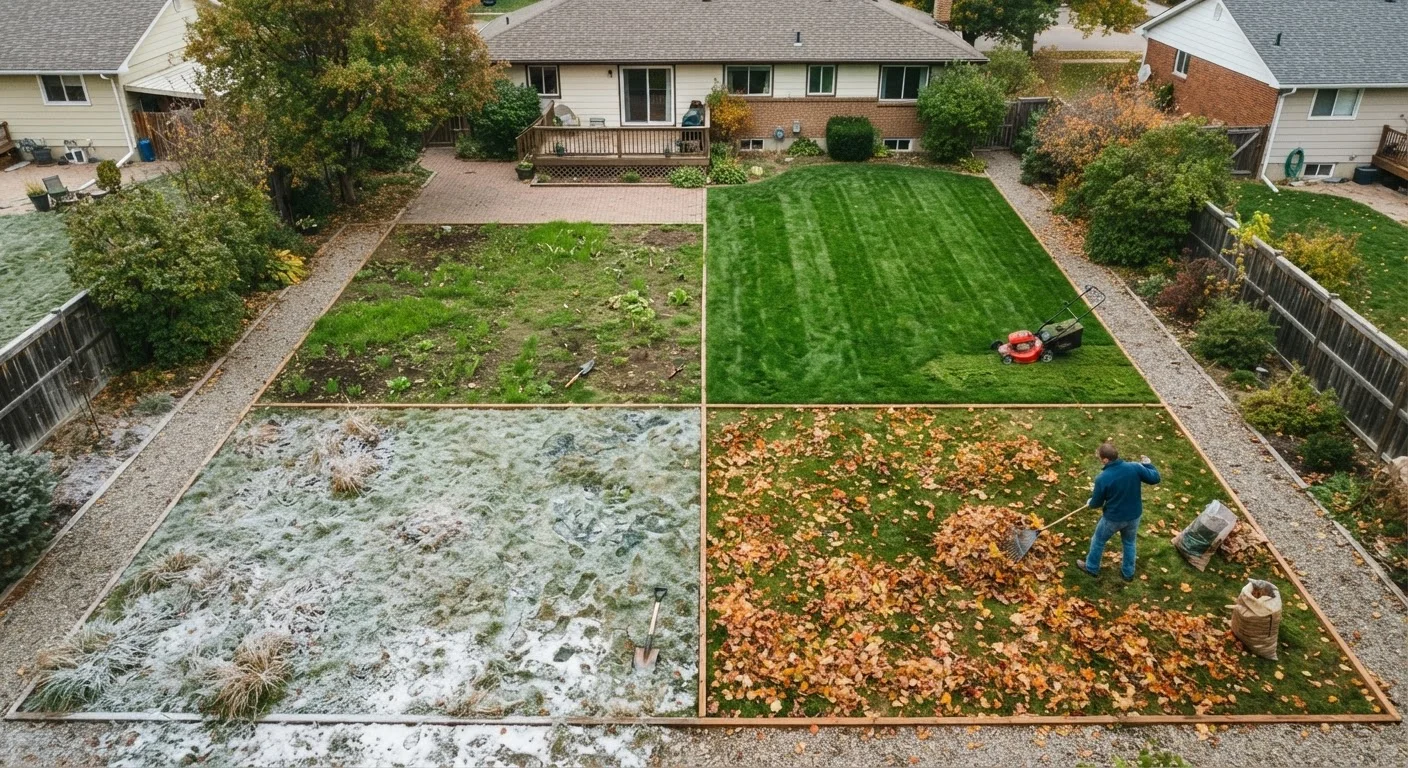
Lawn care is not a single task - it's a rhythm. The right work done at the wrong time can waste money, stress your grass, or even cause damage. This calendar organizes the most important lawn care tasks by season, with notes on regional variation, so you can plan confidently no matter where in the country you live.
Two broad grass categories shape your timing more than anything else: cool-season grasses (Kentucky bluegrass, tall fescue, perennial ryegrass) thrive in the upper two-thirds of the country, growing most actively in spring and fall. Warm-season grasses (Bermuda, zoysia, St. Augustine, centipede) dominate the South and perform best in summer heat. When you see regional guidance below, it follows this distinction. If you're unsure which type you have, check our complete lawn guide for help identifying your grass.
Cool-season grass
Grass varieties that grow most actively in the cooler temperatures of spring and fall, typically between 60°F and 75°F. Common examples include Kentucky bluegrass, tall fescue, and perennial ryegrass.
Warm-season grass
Grass varieties that thrive in heat and grow most vigorously in summer, usually between 80°F and 95°F. Common examples include Bermuda, zoysia, St. Augustine, and centipede grass.
Pre-emergent herbicide
A lawn treatment applied before weed seeds germinate to prevent them from establishing. Timing is critical - it must be applied before target weeds sprout, not after.
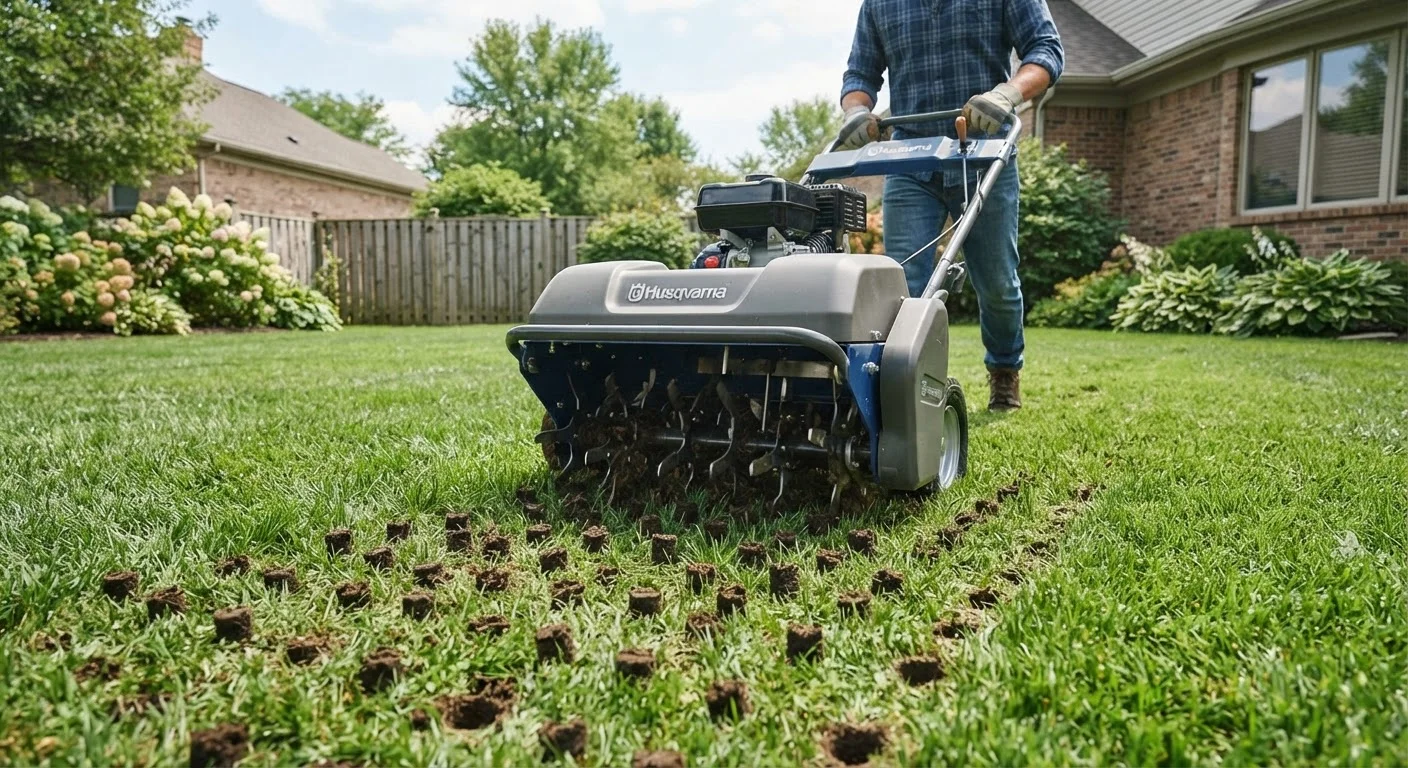
Core aeration
A mechanical process that removes small plugs of soil from the lawn to relieve compaction, improve drainage, and allow air, water, and nutrients to reach grass roots more easily.
Overseeding
The practice of spreading new grass seed over an existing lawn to thicken thin turf, fill bare spots, or introduce a more resilient grass variety without tearing up the existing lawn.
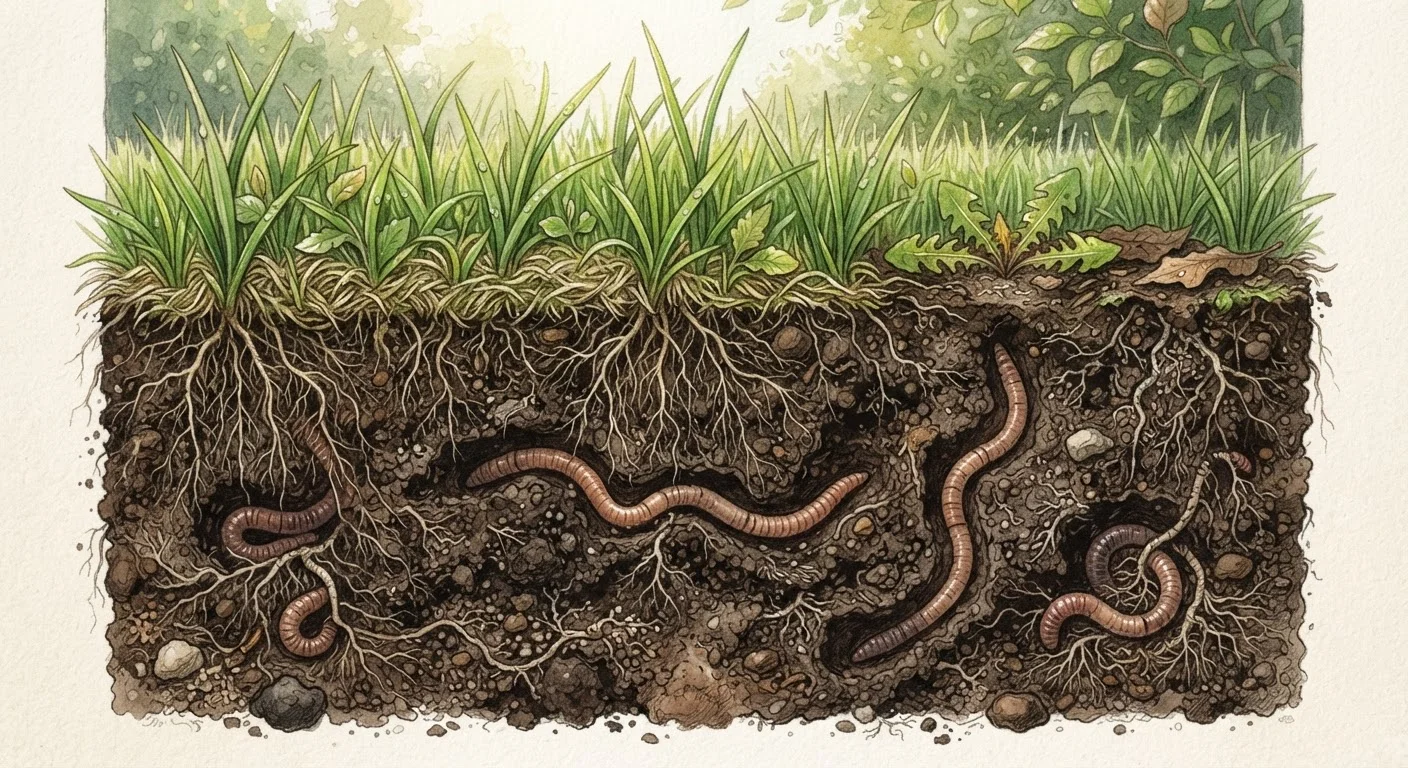
Thatch
A layer of dead and living organic matter (stems, roots, and debris) that accumulates between the soil surface and living grass blades. A thin layer is normal; thick thatch blocks water and nutrients.
Spring (March-May): Wake-Up and Foundation Work
Spring is the most active season for cool-season grasses and the green-up period for warm-season varieties.
| Best time to fertilize cool-season grass | Mid-to-late spring and early fall (University cooperative extension services, general consensus) |
| Best time to fertilize warm-season grass | Late spring through midsummer (University cooperative extension services, general consensus) |
| Ideal mowing height (cool-season, summer) | 3.5-4 inches |
| Recommended weekly water depth | Approximately 1 inch (including rainfall) |
| Optimal overseeding window (cool-season) | Early fall (September-October) |
| Pre-emergent timing trigger | Before soil reaches 55°F consistently |
- Early spring (March-April): Rake out dead thatch and debris once the ground is no longer frozen. Apply a light pre-emergent herbicide for crabgrass prevention before soil temperatures reach 55°F consistently - typically before forsythia finishes blooming in Northern states.
- Soil testing: If you haven't tested in two or more years, collect a sample now. Results guide your fertilizer and lime decisions for the whole season. See Soil Health 101 for how to read a soil test and what to do with the results.
- Fertilizing cool-season lawns: Apply a balanced, slow-release fertilizer in mid-to-late spring after three or four mowings. Avoid heavy feeding in early spring, which pushes leaf growth at the expense of root depth.
- Warm-season lawn startup (April-May in the South): Wait until night temperatures stay consistently above 60°F before applying fertilizer. Scalp-mow (cut very short) to remove winter dormancy debris and encourage lateral spread.
- Overseeding bare patches: Cool-season lawns can be spot-seeded in spring, though fall is generally more reliable for large-scale overseeding.
Summer (June-August): Stress Management
Summer is survival season for cool-season grasses and peak growth for warm-season types.
- Mowing height: Raise your mower blade. Cool-season grasses do better at 3.5-4 inches in heat; taller blades shade the soil and reduce moisture loss. Warm-season grasses tolerate shorter cuts (1-2 inches for Bermuda, up to 3 for zoysia).
- Watering: Deep, infrequent watering (roughly 1 inch per week, including rainfall) encourages deep root growth. Water early in the morning to reduce evaporation and fungal risk. Avoid frequent shallow watering, which produces shallow roots more vulnerable to drought.
- Cool-season lawns may go dormant in prolonged heat and drought - this is natural, not death. Avoid heavy fertilizing or aerating a stressed cool-season lawn in midsummer.
- Warm-season fertilizing: Continue light feedings every 6-8 weeks through midsummer. Stop fertilizing warm-season grasses after August 15 in most regions to avoid pushing tender growth before dormancy.
- Pest and disease watch: Grubs are most vulnerable in late summer. Look for irregular brown patches or spongy turf that peels up easily. Consult your local cooperative extension service for guidance specific to your region and pest type before applying any treatment.
Fall (September-November): The Most Important Season for Cool-Season Lawns
Fall is the single most productive window for improving a cool-season lawn - and it's commonly underused by homeowners.
- Aeration (September-October): Core aeration relieves soil compaction and improves water and nutrient infiltration. It's most effective when the grass is actively growing. Learn whether your lawn actually needs it with our aeration guide.
- Overseeding: The best time to overseed cool-season lawns is immediately after aeration in early fall, when soil is still warm but air temperatures have cooled. Seed-to-soil contact is critical - this is why overseeding pairs well with aeration.
- Fall fertilizing: A fall application of fertilizer (higher in potassium to support root hardening) is the most important feeding of the year for cool-season grass. Apply in late September through October.
- Warm-season wind-down: Stop fertilizing warm-season grasses once they slow growth visibly. Begin reducing mowing frequency as dormancy approaches.
- Leaf management: Don't let thick leaf layers mat over turf - they block light and promote disease. Mulch-mow light layers; remove heavy accumulations. For a full fall checklist, see Fall Yard Prep.
Winter (December-February): Rest and Preparation
In most of the country, winter means minimal active lawn care - but it's the right time to prepare for spring work.
- Cool-season lawns: Avoid walking on frozen or frost-covered turf, which can damage the crown of the grass plant. Let the lawn rest.
- Warm-season lawns in mild climates: Bermuda and other warm-season grasses in Deep South and Gulf Coast regions may stay semi-active. Light irrigation during extended dry periods may still be needed.
- Equipment maintenance: Sharpen mower blades, change engine oil, and clean or replace air filters during the off-season. Sharp blades produce a clean cut rather than tearing grass, which reduces disease entry points.
- Planning: Order grass seed, soil amendments, or pre-emergent herbicide before the spring rush. Review your soil test results if you took one in fall and plan any lime or amendment applications for early spring.
This article provides general lawn care guidance for educational purposes. Local climate, soil conditions, and grass varieties vary significantly. Consult your local cooperative extension service for region-specific recommendations tailored to your area.