
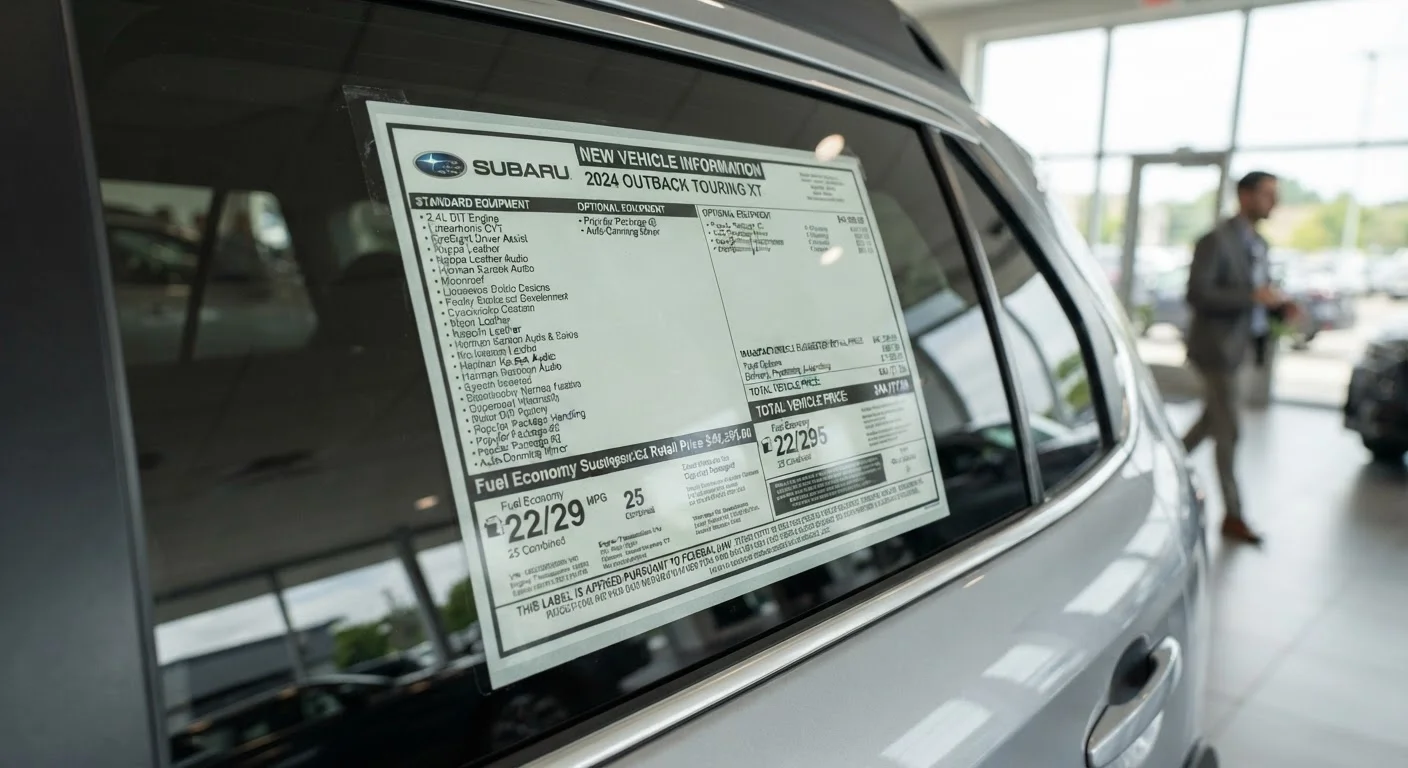
Why the Monroney Sticker Exists
Before 1958, new car pricing was largely opaque. Dealers could charge whatever they judged the market would bear, with no standardized disclosure for buyers. The Automobile Information Disclosure Act changed that by mandating a uniform label on every new vehicle - one that neither the dealer nor the manufacturer could remove before the first retail sale.
That label, the Monroney sticker, is your clearest window into a vehicle's official specifications and pricing before a dealer's sales pitch enters the equation. Knowing how to read it is a foundational skill for any new-car buyer. Think of it the way you'd approach a nutrition facts label - structured data designed to give you an honest look at what you're actually getting.
Breaking Down Each Section of the Sticker
The Monroney sticker is divided into distinct sections, each serving a specific informational purpose.
Vehicle Identification and Base Information
At the top, you'll find the make, model, trim level, and a breakdown of standard equipment included at the base price. This tells you what the manufacturer considers the baseline vehicle - before any options are added.
Optional Equipment and Packages
Below the base section, individual options and bundled packages are itemized with their added costs. This is where careful reading pays off. Each line shows exactly what was added and what it cost the dealer - giving you a clear picture of where the sticker price climbs above base MSRP.
Destination and Delivery Charge
A fixed charge for shipping the vehicle from the manufacturing plant to the dealership. This fee is set by the manufacturer and is non-negotiable - every dealer in the country pays the same amount for the same model.
Total MSRP
The sum of base price, options, and destination charge. This is the manufacturer's official suggested price - not a required selling price. Market conditions, trim popularity, and dealer discretion all influence what you'll actually pay. For a full picture of what you'll owe at signing, see our guide on why the out-the-door price is the only number that matters.
1958
Year the Monroney disclosure law took effect
The Automobile Information Disclosure Act was signed into law and established the mandatory window sticker requirement for new vehicles sold in the United States.
~5-15%
Typical range fuel economy varies from EPA estimates
According to the U.S. Department of Energy, real-world fuel economy can vary from EPA test-cycle figures depending on driving style, climate, and road conditions.
Fuel Economy Estimates
EPA city, highway, and combined mpg figures appear prominently. These come from standardized test procedures designed to make comparisons consistent across vehicles - not to replicate any individual's driving conditions. Use them to compare models, not to predict your personal fuel bill.
Safety Ratings
The sticker references crash test ratings from the National Highway Traffic Safety Administration (NHTSA) and sometimes the Insurance Institute for Highway Safety (IIHS). These independent ratings reflect standardized crash and rollover tests - a useful objective data point beyond the manufacturer's marketing.
The Dealer Addendum: What It Is and Isn't
Many vehicles arrive at a dealership with a second sticker placed alongside the Monroney - the dealer addendum. This is the dealer's own document, not a federal disclosure. It may list dealer-installed accessories (paint protection, fabric coating, nitrogen in tires), market adjustment fees, or other charges.
Identify the Stickers Before You Negotiate
Before reviewing any pricing at a dealership, physically identify which sticker is the federally required Monroney and which is the dealer addendum. The Monroney will reference the Automobile Information Disclosure Act. Any separate sticker added by the dealer is their own document - and everything on it is open to discussion.
Nothing on a dealer addendum carries the same legal standing as the Monroney. Prices listed there are negotiable, and some items may hold little practical value. Identifying the line between the mandated sticker and the dealer's addendum is a critical step - one that first-time buyers often underestimate.
Using the Monroney Sticker as a Negotiation Tool
The sticker is more than a disclosure document - it's negotiating intelligence. When you arrive at a dealership having already reviewed the sticker (many automakers publish them online by VIN), you know the exact option packages the dealer ordered and their listed costs. That transparency shifts the conversation.
Start by separating the non-negotiable items (destination charge, manufacturer-set base price components) from the areas where flexibility exists (total price relative to MSRP, dealer addendum items). Knowing the difference prevents you from wasting energy on figures that won't move.
Once you understand what's on the sticker, the next step is understanding what happens between sticker price and what you actually sign for. Taxes, registration fees, dealer documentation fees, and financing terms all layer on top - which is why it's worth understanding key auto loan terms before you sit down to negotiate. And if you're moving toward finalizing a purchase, consider reviewing your auto insurance options as part of the same planning process.
This article is for general informational purposes only and does not constitute financial, legal, or purchasing advice. Vehicle pricing, fees, and dealer practices vary by market and region. Consult applicable sources and professionals for decisions specific to your situation.