Loan Basics: The Terms That Set the Foundation
Before you walk into a finance office or compare lender offers online, you need a firm grasp of the core vocabulary. Misreading even one of these terms can cost you significantly over the life of a loan.
APR (Annual Percentage Rate)
The total yearly cost of borrowing expressed as a percentage, including both the interest rate and most lender fees. It is the most reliable number for comparing loan offers side by side.
Principal
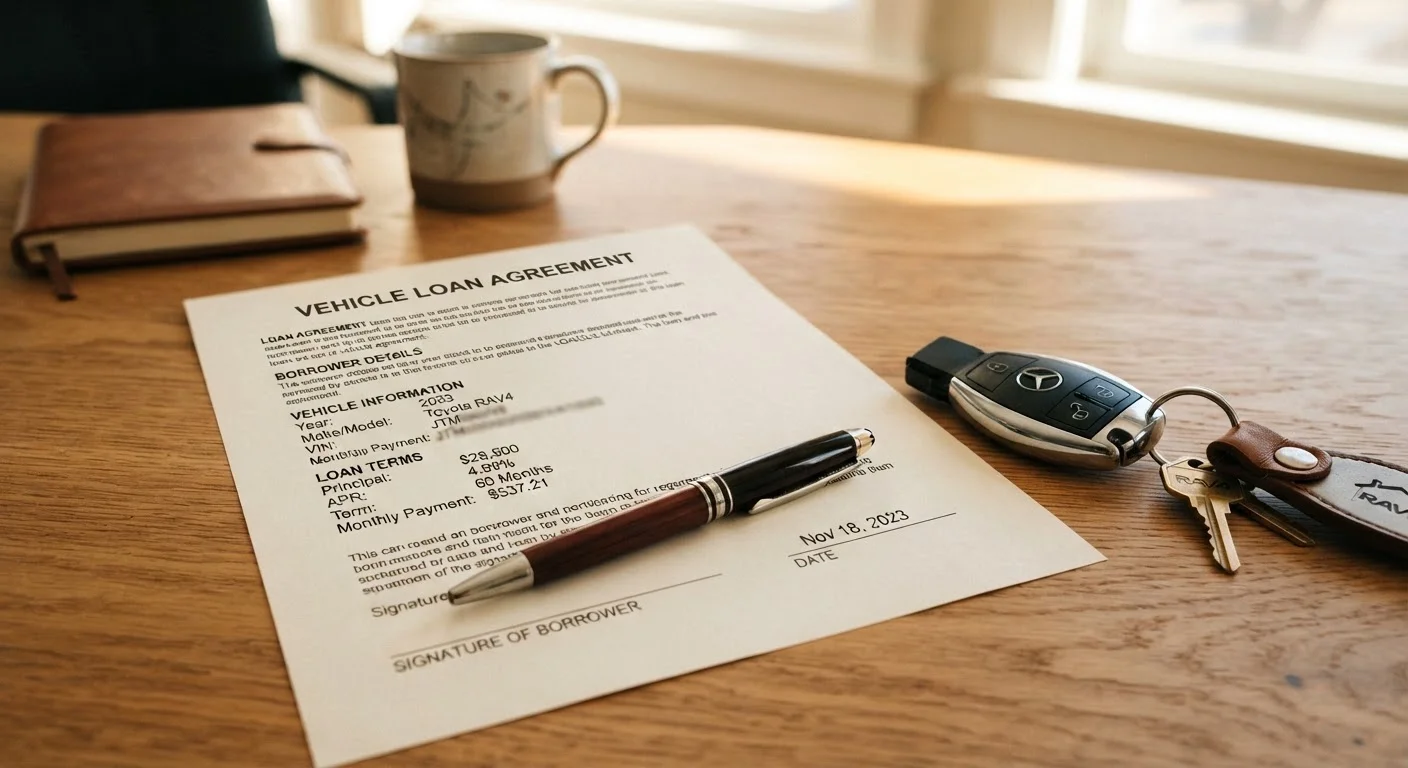
The base amount borrowed, after down payment and any trade-in credit are subtracted from the purchase price. Interest is calculated on the principal balance.
Loan Term
The agreed repayment period, usually expressed in months (e.g., 48, 60, 72). Longer terms reduce monthly payments but increase the total interest paid over the life of the loan.
LTV (Loan-to-Value)
The ratio of the loan balance to the vehicle's current market value. An LTV over 100% means you owe more than the car is worth, which is sometimes called being "underwater."
GAP Coverage
Guaranteed Asset Protection insurance that pays the difference between your remaining loan balance and the insurer's actual cash value payout if the vehicle is totaled or stolen.
Dealer Reserve
The markup a dealer adds above the lender's approved interest rate, kept as profit. It is legal but negotiable, and understanding it helps consumers seek lower-rate alternatives.
Money Factor
A small decimal figure used in lease financing to represent the cost of borrowing. Multiplying the money factor by 2,400 gives an approximate APR equivalent.
Residual Value
The projected market value of a leased vehicle at the end of the lease term, set by the leasing company. It determines both the monthly payment and the purchase buyout price.
The principal is the amount you actually borrow - not the vehicle's sticker price. Your down payment, trade-in credit, and any rebates reduce the principal before interest is calculated. The loan term (typically 24-84 months) determines how long you have to repay. Longer terms lower your monthly payment but increase total interest paid. A 72-month loan at a moderate rate can cost thousands more in interest than a 48-month loan for the same vehicle.
The APR (Annual Percentage Rate) is the most useful number for comparing loan offers because it folds in both the interest rate and most lender fees into a single annualized figure. Always compare APR across offers, not just the quoted interest rate. For first-time buyers, our guide on what first-time car buyers often underestimate covers how these numbers interact with your credit profile.
Ownership and Equity: LTV, GAP, and Depreciation
A vehicle loses value the moment it leaves the lot - and that creates a financial risk lenders and buyers both need to manage.
| Typical new-car loan terms | 24-84 months (Consumer Financial Protection Bureau, general industry range) |
| Average new-vehicle loan amount (U.S.) | Approximately $40,000 (Experian State of the Automotive Finance Market, 2023) |
| LTV threshold lenders often flag | Greater than 100% (General lending industry standard) |
| Money factor conversion to APR | Multiply by 2,400 (Standard automotive lease calculation) |
| Dealer reserve typical range | 0.5%-2.5% above buy rate (Consumer Reports and CFPB consumer guidance) |
Loan-to-Value (LTV) is the ratio of your loan balance to the vehicle's current market value. An LTV above 100% means you owe more than the car is worth - commonly called being "underwater" or "upside down." This happens most often with long loan terms and small down payments. Lenders use LTV to assess risk; a high LTV may mean a higher interest rate.
GAP coverage (Guaranteed Asset Protection) bridges the difference between your outstanding loan balance and the actual cash value an insurer pays if the car is totaled or stolen. It is often sold by dealers and lenders, but it is also available through many auto insurers - sometimes at lower cost. For a broader look at how coverage intersects with financing, see our auto insurance explainer.
Dealer Financing Terms You Should Recognize
Dealerships don't just sell vehicles - they also arrange financing, and that process has its own vocabulary designed to work in the dealer's favor if you're not prepared.
Dealer reserve (sometimes called the "dealer markup") is additional interest built into the rate the dealer quotes you, above the rate the lender actually approved. For example, a lender might approve you at 6% APR, but the dealer quotes 7.5%. The 1.5-percentage-point spread is profit shared between the dealer and lender. It is legal in most states, but negotiable - asking for the "buy rate" (the lender's actual approved rate) is a reasonable starting point.
A spot delivery occurs when a dealer allows you to drive the vehicle home before financing is fully finalized. If the dealer later fails to secure financing at the quoted terms, they may ask you to return the car or sign a new contract at worse terms - a practice sometimes called "yo-yo financing." Verify that your financing is unconditionally approved before accepting delivery.
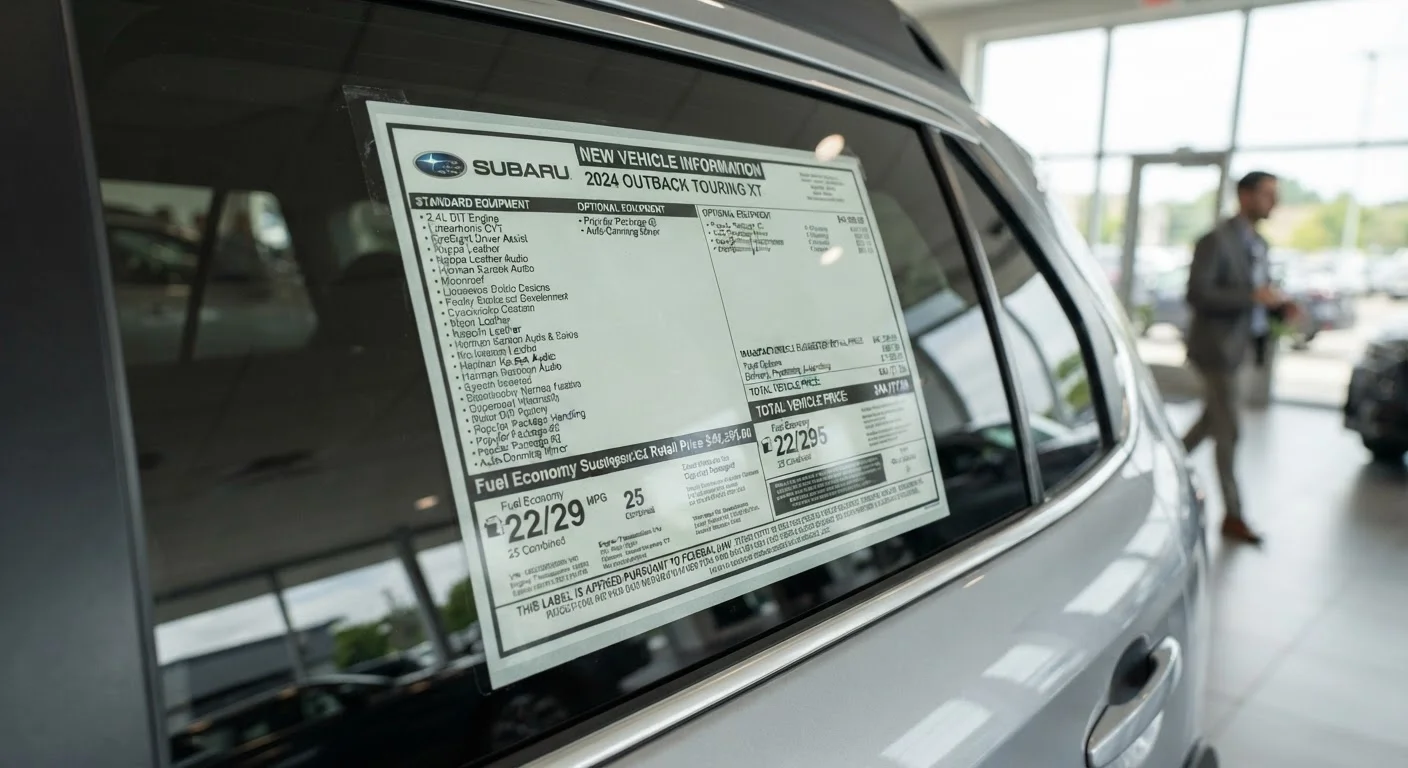
The money factor is the lease equivalent of an interest rate, expressed as a small decimal (e.g., 0.00125). Multiply it by 2,400 to convert it to an approximate APR. The residual value is the projected worth of a leased vehicle at lease-end, set by the lender. A higher residual lowers your monthly payment because you're financing less depreciation - but it also sets the buyout price if you want to purchase the vehicle at lease end. Review what the Monroney sticker actually tells you to understand how manufacturer-suggested pricing affects residual calculations.
This article provides general financial information for educational purposes and is not personalized financial or legal advice. Loan terms, rates, and regulations vary by lender, state, and individual circumstances. Consult a licensed financial professional before making financing decisions.