Why the Nutrition Facts Label Exists
The Nutrition Facts label is a federally mandated panel required on most packaged foods sold in the United States, governed by the FDA. It was first introduced in 1994 following the Nutrition Labeling and Education Act, and it received a significant update in 2016 - the most substantial revision in more than two decades. Changes included a larger calorie font, the addition of an Added Sugars line, updated serving sizes to reflect how people actually eat, and revised Daily Values for several nutrients.
The label's purpose is straightforward: to give consumers consistent, standardized nutritional information so they can compare foods and make more informed choices. It is not designed to tell you what to eat, nor does it account for individual health needs. Think of it as a reference tool - one piece of useful information among many.
If you've ever wondered why nutrition headlines seem to contradict each other, our article on why nutrition science gets complicated explores the methodological reasons behind shifting guidance.
What you will need
Reading the Label Step by Step
The steps below walk through each section of the label in the order it appears, from top to bottom. Grab any packaged item from your pantry to follow along - a can of beans, a box of cereal, or a bag of frozen vegetables all work well.
Packaged Food Item
Provides a real Nutrition Facts label to practice reading as you follow each step.
USDA FoodData Central (online database)
Allows you to look up nutrient profiles for foods that lack a printed label, such as fresh produce.
Find the Serving Size and Servings Per Container
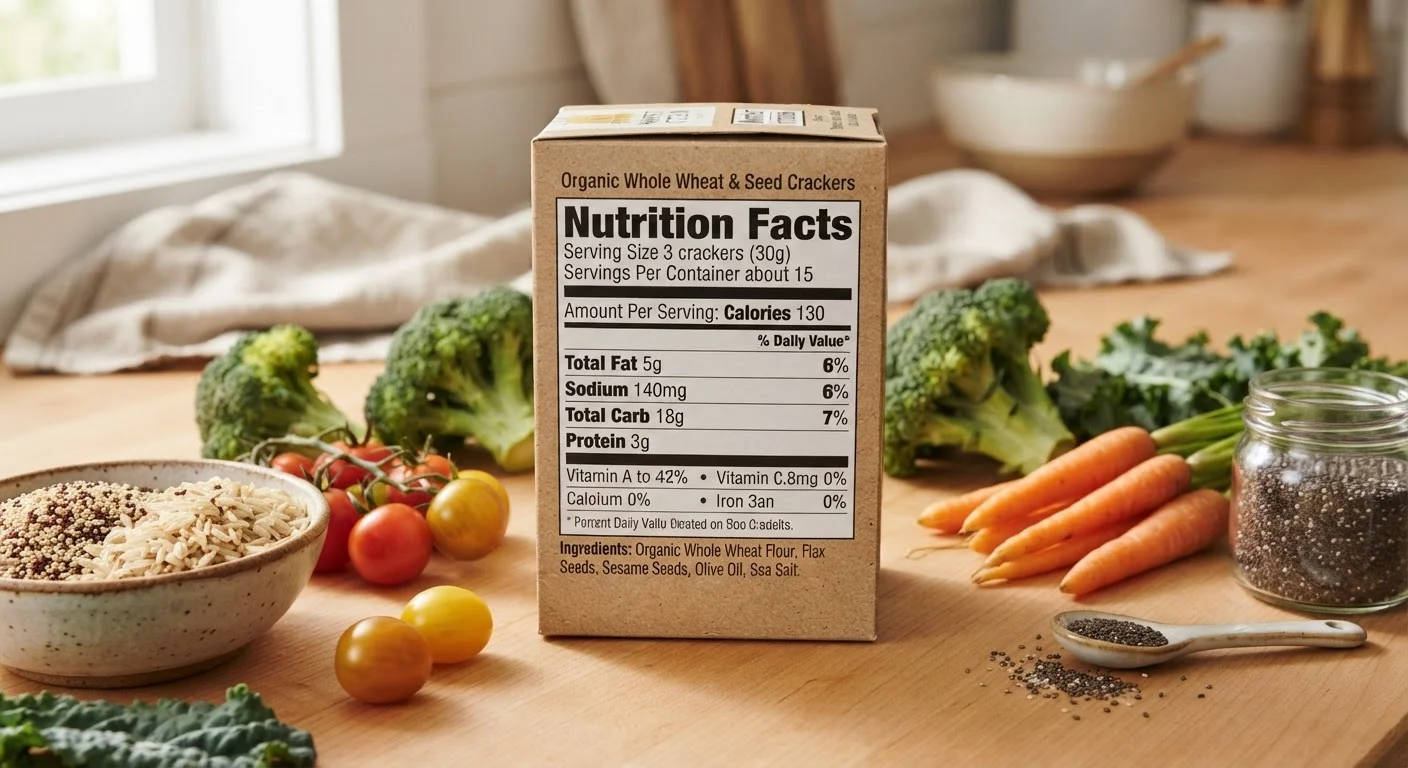
The very first line of the label states the serving size - expressed in a common household measure (e.g., 1 cup, 2 tablespoons) and a gram or milliliter equivalent in parentheses. Immediately below that is the servings per container count.
Every single number that follows - calories, fat, sodium, everything - reflects one serving, not the entire package. Establish this anchor before reading anything else.
Check the Calorie Count
The Calories line appears in large, bold type just below the serving size. This figure represents the total energy provided by one serving from all three macronutrients: carbohydrates, protein, and fat.
For broader context on what a calorie actually means and how the body uses food energy, see our plain-language explainer on energy balance.
Review the Nutrients to Limit
The next section lists nutrients that most Americans consume in excess and that are linked to health risks when overconsumed:
- Total Fat - includes saturated fat and trans fat as sub-entries. Saturated fat is listed separately because it warrants closer attention. For a deeper breakdown, our guide to dietary fat types explains the differences.
- Sodium - relevant for cardiovascular health; most adults consume well above recommended levels.
- Added Sugars - distinguished from naturally occurring sugars (like those in fruit or milk) since the 2016 FDA label update. Added sugars provide energy without additional nutrients.
Look for Nutrients to Prioritize
Below the nutrients to limit, you'll find nutrients that many Americans fall short on and that support general health:
- Dietary Fiber - supports digestive and cardiovascular health. To understand the difference between soluble and insoluble fiber, see our fiber explainer.
- Vitamin D, Calcium, Iron, and Potassium - required on labels since 2016 because deficiencies are common in the US population.
- Protein - listed in grams; no %DV is required unless a protein claim is made on the package.
Interpret the Percent Daily Values (%DV)
The right-hand column lists %DV for most nutrients. These percentages are benchmarked against a standardized 2,000-calorie-per-day reference diet established by the FDA - not a universal prescription, but a consistent baseline for comparison.
Use %DV to understand how much of a nutrient one serving contributes toward a full day's intake. A quick rule of thumb: 5% or less is low; 20% or more is high. This makes it possible to compare products side by side even when serving sizes differ slightly.
Scan the Ingredient List (Bonus Context)
The ingredient list appears directly below or beside the Nutrition Facts panel. Ingredients are listed in descending order by weight - the first ingredient is the most abundant. This list helps you identify whether a food is primarily whole-food-based or heavily processed.
For a broader look at how processing affects everyday food choices, our article on the whole foods versus processed foods spectrum provides useful context.
Watch Out for Multiple Servings Per Package
Many items that look like single-serving packages actually contain two or more servings. A bottle of juice or a bag of chips may list modest-looking numbers, but those figures apply only to one serving. Always multiply by the number of servings if you consume the whole package, or you may significantly underestimate your intake.
Labels Are a Guide, Not Medical Advice
Nutrition Facts labels are a general reference tool, not a personalized health prescription. Individual nutrient needs vary based on age, health status, activity level, and medical conditions. If you have a specific health concern - such as managing blood pressure, diabetes, or kidney disease - consult a registered dietitian or your healthcare provider before making significant dietary changes based on label data.
Once you're comfortable interpreting labels on their own, the next step is putting that knowledge to work in your broader eating patterns. Our roundup of small, evidence-backed nutrition habits offers practical ways to apply what labels tell you without overhauling your diet.
Use %DV as a Quick Comparison Tool
When comparing two similar products, focus on the %DV column rather than the raw gram or milligram amounts. A %DV of 5% or less is generally considered low for a nutrient; 20% or more is considered high. This shortcut works even when serving sizes differ slightly between products.
This article is for general informational and educational purposes only and is not a substitute for professional medical or dietary advice. If you have questions about your nutritional needs or health conditions, consult a qualified healthcare provider or registered dietitian.