What Is the Matter Standard?
Matter is an open-source smart home connectivity standard developed and maintained by the Connectivity Standards Alliance (CSA), a consortium of more than 550 technology companies. Its core promise is straightforward: a device certified for Matter should work with any Matter-compatible platform or voice assistant, regardless of which company made either product.
Before Matter, smart home interoperability was largely fragmented. A bulb designed for one ecosystem might refuse to communicate with a hub from a competing brand, forcing consumers to choose a single manufacturer's walled garden or juggle multiple apps. Matter was designed to eliminate that friction by establishing a shared application layer that all certified products speak natively.
The standard was formally released in October 2022 after years of development under its earlier working name, Project CHIP (Connected Home over IP). For a plain-language breakdown of the terminology surrounding it - including what hubs, bridges, and mesh networks actually mean - see our Connected Home Glossary.
How Matter Works Technically
Matter operates at the application layer of the network stack, meaning it defines how devices communicate rather than which radio technology they use. Under the hood, it relies on three transport protocols:
- Wi-Fi - for devices that benefit from high bandwidth or already have Wi-Fi radios, such as smart displays and video doorbells.
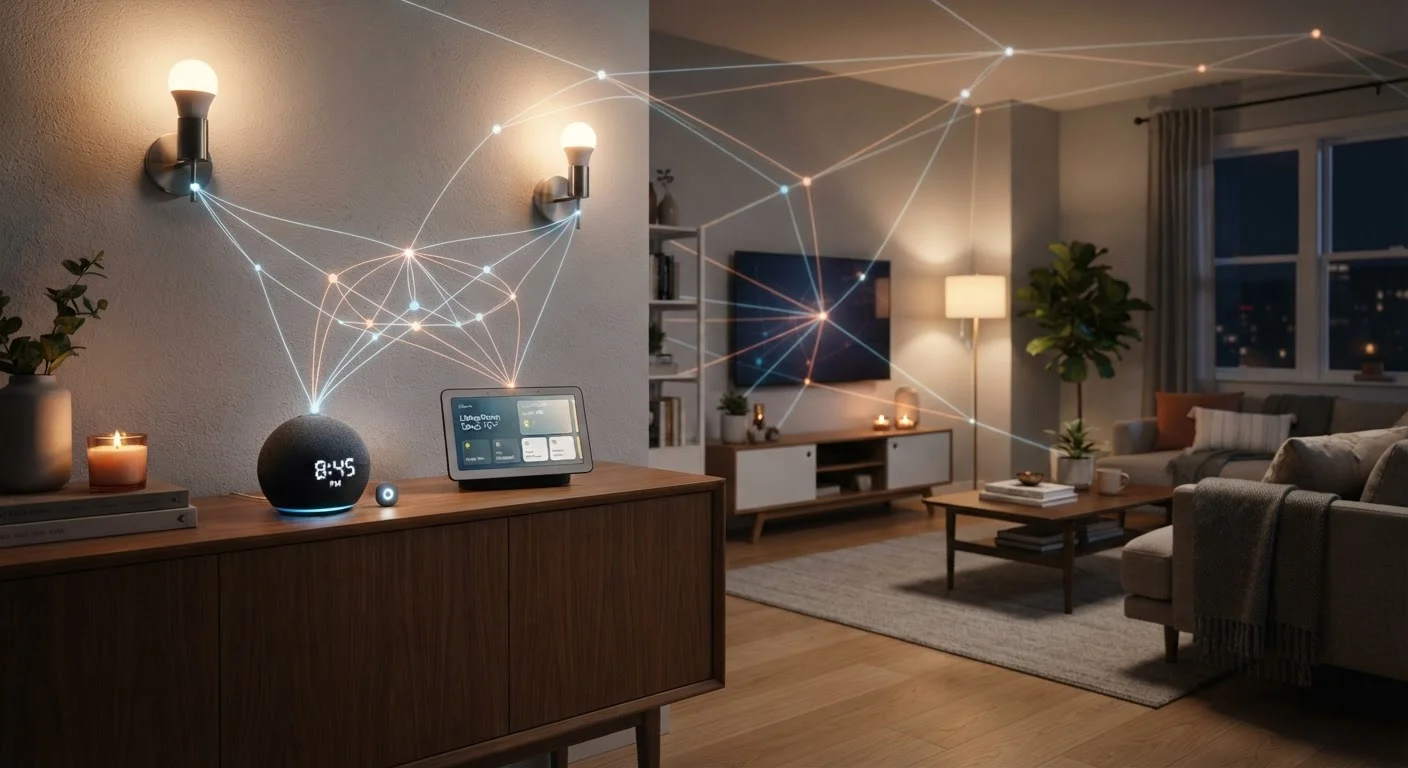
- Thread - a low-power, mesh-based IPv6 protocol suited to sensors, locks, and other battery-operated devices. Thread requires a Thread Border Router, which is built into many modern smart speakers and displays.
- Bluetooth Low Energy (BLE) - used exclusively during the initial commissioning (setup) process to pair a new device to your network.
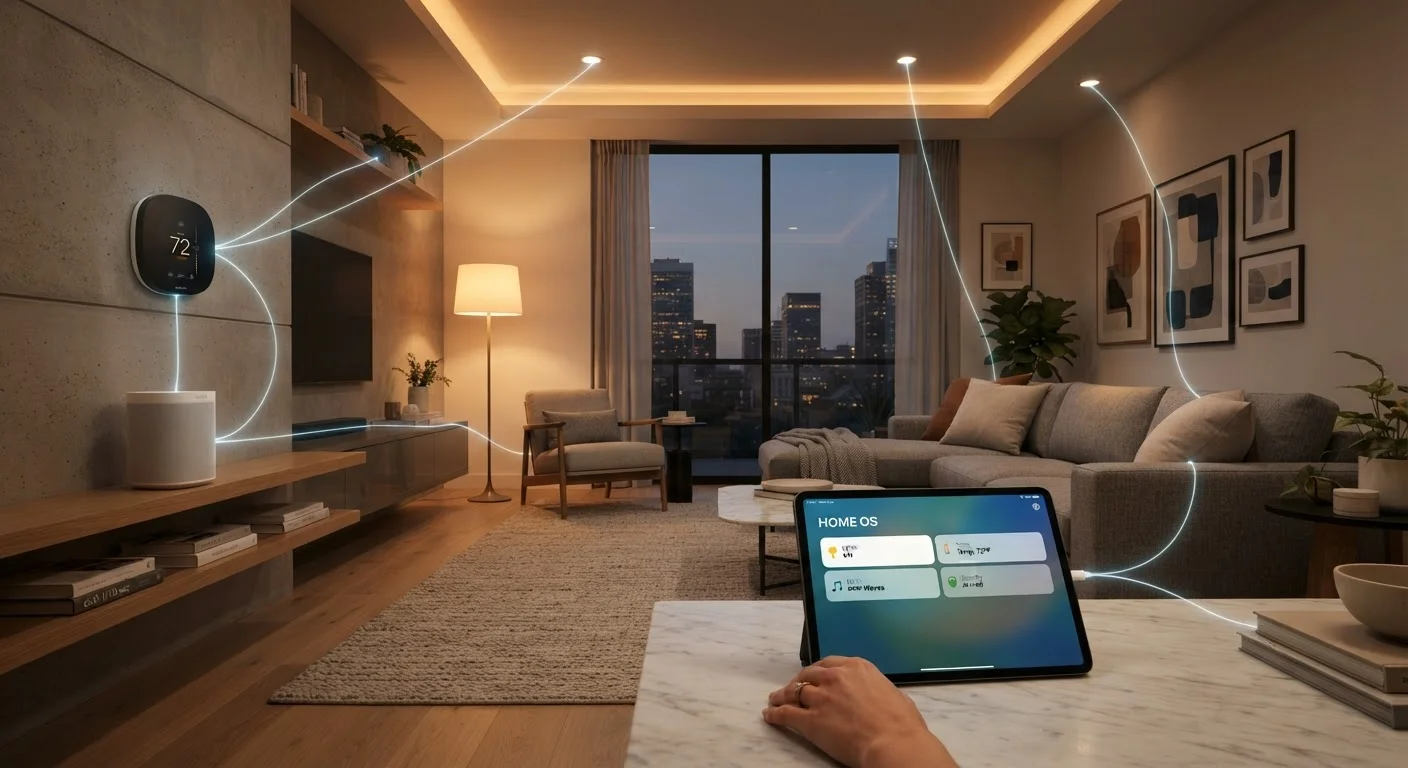
A key architectural feature is multi-admin support: a single Matter device can be added to and controlled by multiple ecosystems simultaneously. In practice, that means one smart lock could be managed through both Google Home and Apple Home at the same time without choosing one over the other.
Security is built into the specification. All Matter communications are encrypted end-to-end using TLS and device certificates issued during manufacturing, reducing the risk of spoofing. For a deeper look at how connected devices handle data more broadly, see our article on what smart devices actually collect.
When shopping for a Matter device, look for the Matter logo on the packaging and cross-reference the product on the CSA's official certified device registry before buying - a manufacturer's marketing claim is not the same as a passed certification.
The certification process involves independent testing; products can be marketed as 'Matter-ready' or 'Matter-compatible' without having completed the formal certification, which may result in limited or unreliable interoperability.
If you use Thread-based Matter devices, ensure at least one Thread Border Router is always powered and connected - losing it takes those devices offline even though your Wi-Fi remains up.
Thread is a mesh protocol that requires a Border Router to bridge between the Thread network and your IP network. Without one, Thread devices cannot be reached by your home automation platform.
Which Devices and Platforms Support Matter
As of its 1.x specification releases, Matter covers the following device categories:
- Smart lights and switches
- Smart plugs and outlets
- Door locks
- Thermostats
- Window coverings (blinds and shades)
- Sensors (temperature, humidity, occupancy, contact)
- Smoke and carbon monoxide alarms
- Media devices (TVs and streaming players, added in later spec versions)
- Robotic vacuums and energy management (added in Matter 1.3)
On the platform side, Apple Home, Google Home, Amazon Alexa, and Samsung SmartThings all support Matter as commissioners. This means their respective hubs and apps can onboard and control certified devices using a single scan of a QR code or numeric pairing code printed on the product.
Understanding how these platforms differ in approach is useful context - our guide to smart home ecosystems explains how each one is structured and where they still diverge.
550+
Member companies in the Connectivity Standards Alliance
The CSA, which governs the Matter standard, counts over 550 member organizations including major consumer electronics manufacturers.
Oct 2022
Matter 1.0 official release date
The first production-ready version of the Matter specification was published by the CSA in October 2022 after several years of collaborative development.
4 major
Smart home platforms supporting Matter commissioning
Apple Home, Google Home, Amazon Alexa, and Samsung SmartThings all function as Matter commissioners, enabling cross-platform device control.
What Matter Gets Right - and Where Gaps Remain
Matter's biggest achievement is reducing setup friction. Commissioning a certified device typically takes under two minutes and eliminates the need to create a separate manufacturer account just to operate a light switch. The local-first architecture - most commands run on your home network without a cloud round-trip - also means devices remain responsive even when the manufacturer's servers are unavailable.
However, the standard has meaningful limitations consumers should understand:
- Feature parity is not guaranteed. Matter defines a baseline set of capabilities for each device type. Manufacturer-specific features (custom scenes, proprietary energy reporting, advanced scheduling) may only be available through the brand's own app, not through a third-party Matter controller.
- Camera support is limited. Video streaming and two-way audio for security cameras were not part of the initial specification. Basic camera functionality was introduced in Matter 1.3, but full feature support across ecosystems remains a work in progress.
- Existing devices may not qualify. Matter certification requires devices to meet the current spec. Some manufacturers have issued firmware updates to bring select older products into compliance, but this is not universal. Always verify before assuming a device you already own will receive Matter support.
- Thread Border Routers add a dependency. Thread-based devices require a compatible Border Router on the network. While many recent smart speakers include one, older hubs may not.
Don't Assume Older Devices Will Get Matter
Matter certification is not retroactively applied to all existing smart home products. Manufacturers must actively pursue and pass certification for each device model. Some popular products from major brands have received Matter updates via firmware, but many have not and may never receive them. Check the manufacturer's support pages and the CSA certification database rather than assuming compatibility based on brand name alone.
Should You Factor Matter Into Your Smart Home Decisions?
If you are building a smart home from scratch or expanding an existing setup, Matter certification is worth considering as a forward-looking criterion. It reduces vendor lock-in and gives you more flexibility to change ecosystems or mix brands without discarding hardware.
That said, Matter alone should not be the only factor. The breadth of supported device categories, the quality of the controlling app, and your existing ecosystem investments all matter practically. A well-integrated proprietary ecosystem may still offer a smoother day-to-day experience than a loosely connected collection of Matter devices from different brands.
For households already invested in one platform, Matter functions more as an insurance policy than an immediate revolution - it means future purchases are less likely to strand you. For a practical sense of how different devices serve different rooms and routines, see how smart devices are used across the home.
One area every smart home owner should address regardless of standard: network security. More connected devices mean more potential entry points. Our guide on keeping connected devices secure covers practical steps to reduce exposure without requiring technical expertise.
The Matter standard is still maturing - new device categories and feature expansions arrive with each specification update. Checking the CSA's official certification database before purchasing is the most reliable way to confirm a specific product's compliance status.