What Is a Hard Inquiry?
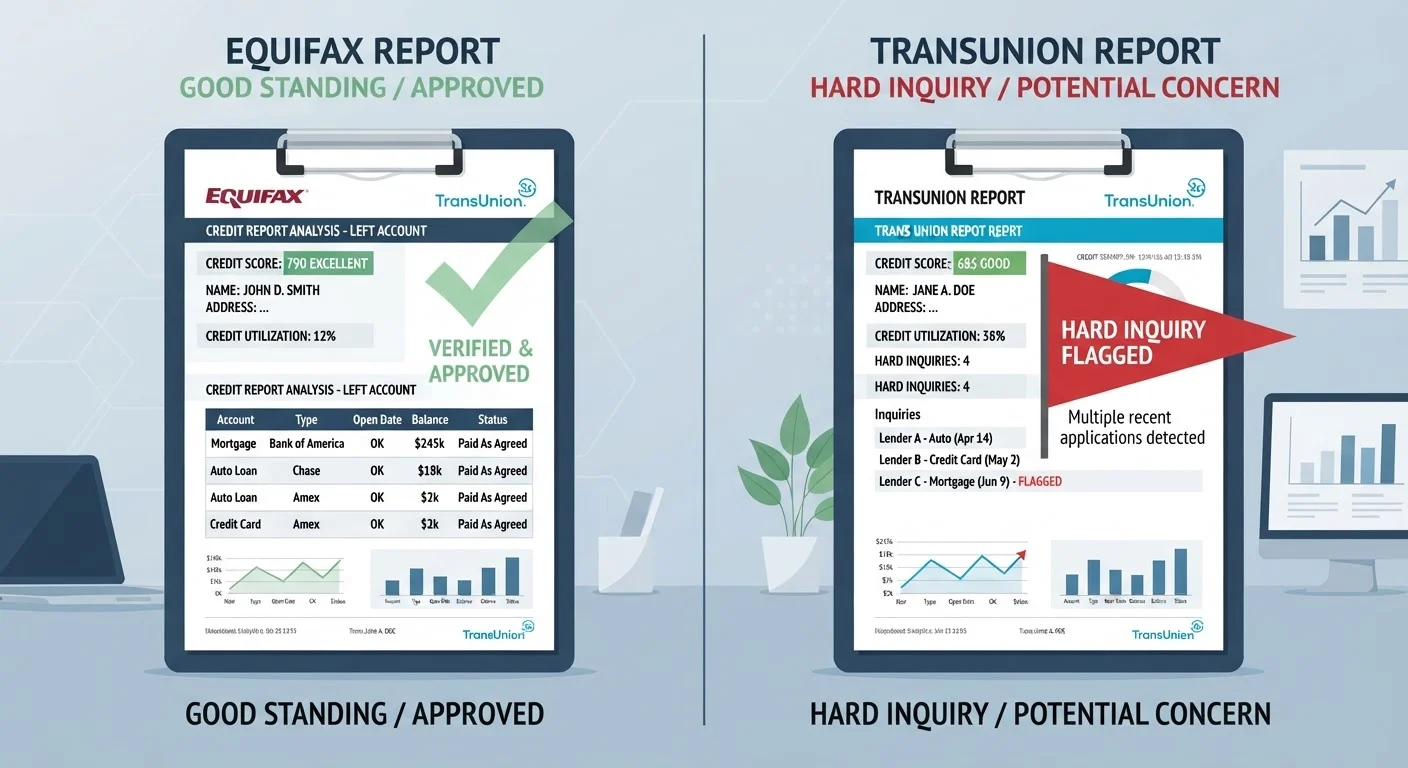
A hard inquiry (also called a hard pull) occurs when a lender, creditor, or other permissible party reviews your credit report as part of a formal application for credit. Common triggers include applying for a mortgage, auto loan, personal loan, credit card, or certain apartment rentals where the landlord uses a credit-based decision process.
Because a hard inquiry signals that you are actively seeking new credit, scoring models treat it as a mild risk signal. FICO and VantageScore - the two most widely used scoring frameworks in the United States - may reduce your score by a small number of points per hard inquiry. The exact effect depends on your overall credit profile; someone with a thin or shorter credit history typically sees a larger impact than someone with a long, well-established record.
Hard inquiries stay on your credit report for two years, though most scoring models stop factoring them after approximately twelve months. Having several hard inquiries in a short span outside of rate-shopping situations can signal credit-seeking behavior that lenders view less favorably. Before submitting any formal application, it can help to review your credit standing - see our credit health checklist for a practical pre-application review.
Use Pre-Qualification to Shop Without Risk
Many lenders and card issuers offer pre-qualification tools that use soft inquiries to give you a sense of your approval odds. These checks won't affect your score, so you can compare offers freely. Only move to a formal application - which triggers a hard inquiry - once you've identified the option that fits your needs.
What Is a Soft Inquiry?
A soft inquiry (or soft pull) happens when your credit is accessed for a reason that is not tied to a direct lending decision on a new account you initiated. Crucially, soft inquiries are not visible to lenders reviewing your file and have zero effect on your credit score.
Common soft inquiry scenarios include:
- Checking your own credit report or score through any source
- Pre-qualification or pre-approval checks initiated by lenders or card issuers
- Employer background checks (with your consent)
- Insurance companies checking credit for underwriting purposes in some states
- Existing creditors periodically reviewing your account (account management reviews)
One of the most persistent credit myths is that checking your own score hurts it. It does not - ever. Our article on credit score myths covers this and several other misunderstandings that may be holding consumers back.
| Hard Inquiry | Soft Inquiry | |
|---|---|---|
| Triggered by | Formal credit application you initiate | Pre-approvals, self-checks, background checks |
| Affects credit score? | Yes, temporarily | No - never |
| Visible to lenders? | Yes, on your credit report | No, not visible to other lenders |
| Stays on report how long? | Up to 2 years | Typically up to 2 years (score-invisible) |
| Typical score impact | Usually fewer than 5 points per inquiry | Zero points - no impact |
| Common examples | Mortgage, auto loan, credit card applications | Credit monitoring, employer checks, pre-qualification |
Rate Shopping: When Multiple Hard Inquiries Count as One
If you're shopping for a mortgage, auto loan, or student loan, you may worry that getting quotes from multiple lenders will stack up hard inquiries and significantly damage your score. In practice, scoring models account for this. Both FICO and VantageScore apply a rate-shopping window - a period during which multiple hard inquiries for the same loan type are grouped and treated as a single inquiry.
The length of this window varies by scoring model and version, but generally falls between 14 and 45 days. To take advantage of this protection, aim to collect all your loan quotes within that concentrated period rather than spreading applications over several months.
This grouping typically applies to mortgage, auto, and student loan inquiries - not credit cards. Each credit card application generally generates its own separate hard inquiry.
For a deeper look at how your overall credit report is structured and where inquiries appear, see our guide on the anatomy of a credit report.
Managing Inquiries and Protecting Your Score
Hard inquiries are a normal part of financial life, and their individual impact is generally modest - often fewer than five points per inquiry for most consumers. That said, a few smart habits can help you minimize unnecessary hits.
- Apply selectively: Only submit formal credit applications when you're genuinely ready to move forward. Browsing pre-qualification offers, which use soft pulls, lets you gauge eligibility without commitment.
- Time applications strategically: If you anticipate a major loan application (like a mortgage), avoid opening new credit accounts in the months before, since multiple recent inquiries may raise lender concerns independent of their scoring effect.
- Monitor your report regularly: If you spot a hard inquiry you don't recognize, it could indicate an error or unauthorized activity. Our guide to disputing credit report errors outlines how to formally challenge inaccuracies with the bureaus.
Credit inquiries are just one piece of the scoring picture. Factors like payment history and credit utilization carry significantly more weight. Keeping those in good shape means the occasional hard inquiry from a legitimate application is unlikely to cause lasting damage.
This article is for general informational and educational purposes only and does not constitute personalized financial or credit advice. Consult a qualified financial professional for guidance specific to your situation.