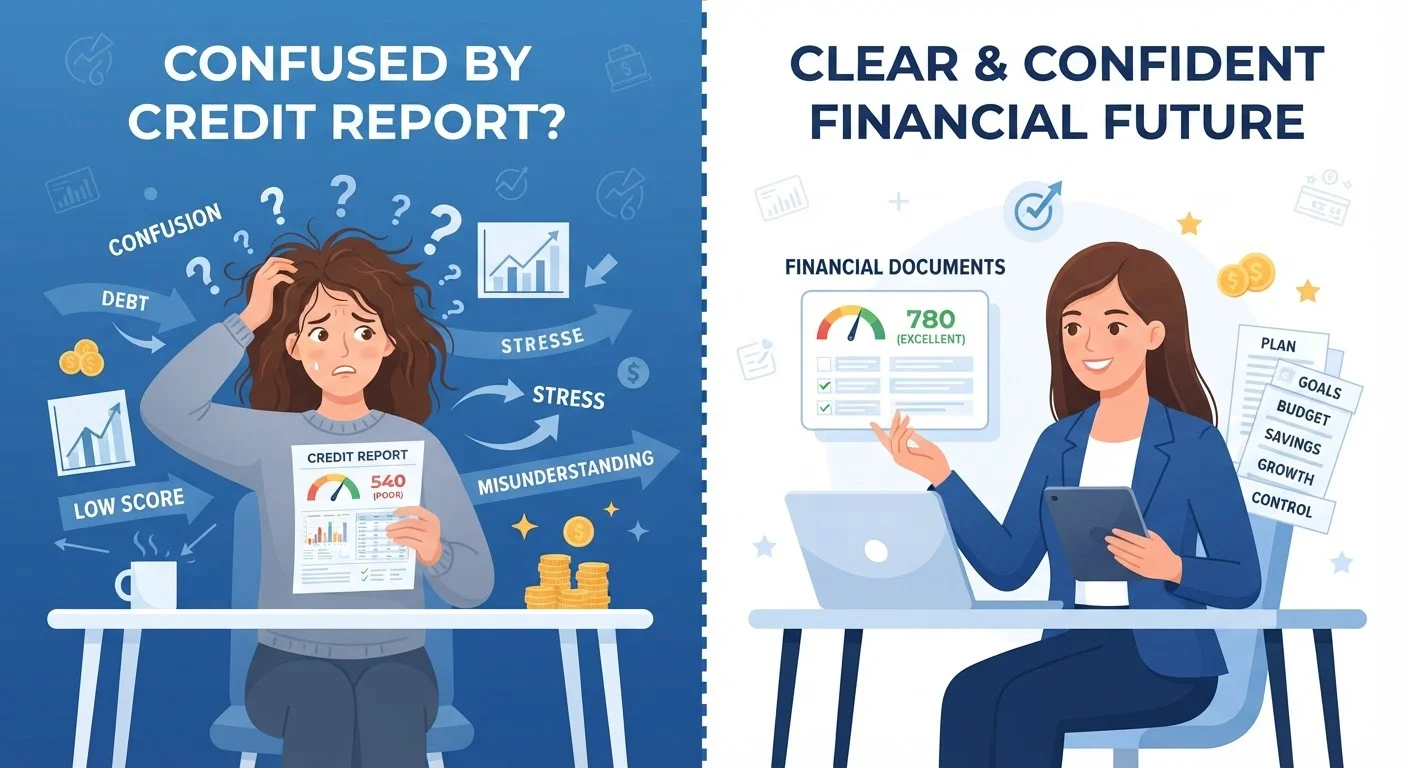

Why Your Credit Report Is More Than a Score
Most people focus on their credit score - that three-digit number lenders use to evaluate risk. But the score is actually a summary derived from your full credit report. The report itself is the source document, and understanding how it's organized gives you the power to spot errors, understand what's dragging your profile down, and take targeted action.
Under federal law, you're entitled to a free credit report from each of the three major bureaus - Equifax, Experian, and TransUnion - through AnnualCreditReport.com. Each bureau may show slightly different information depending on which lenders report to them, but all three follow a similar structure with five core sections.
This guide walks through each section in plain language so you know exactly what you're looking at - and what it means for your financial life. For a deeper dive into what doesn't affect your score, see our breakdown of common credit score myths.
| Number of major credit bureaus in the U.S. | 3 (Equifax, Experian, TransUnion) (Consumer Financial Protection Bureau) |
| Free reports available per bureau per year | At least 1 (via AnnualCreditReport.com) (Federal Trade Commission) |
| How long most negative items stay on a report | 7 years (Fair Credit Reporting Act (FCRA)) |
| How long a Chapter 7 bankruptcy remains | Up to 10 years (Fair Credit Reporting Act (FCRA)) |
| Hard inquiry score impact duration | Approximately 12 months (General industry guidance; varies by scoring model) |
The Five Sections of a Credit Report
1. Personal Information
This section contains identifying details: your name (including variations or former names), current and previous addresses, date of birth, Social Security number, and sometimes employment information. This data does not affect your credit score - it's used only for identity verification. However, reviewing it matters: unfamiliar addresses or name variations can signal a data error or identity theft.
2. Account History (Trade Lines)
This is the largest and most credit-score-influential section. Every credit account you've opened - credit cards, auto loans, mortgages, student loans - appears here as a trade line. Each entry shows the lender's name, account type, date opened, credit limit or loan amount, current balance, payment history, and account status (open, closed, in good standing, or delinquent).
Payment history alone accounts for a significant portion of your credit score under most scoring models, making this section critical to review carefully for inaccuracies.
3. Public Records
This section historically included bankruptcies, civil judgments, and tax liens. As of changes made by the major bureaus, most civil judgments and tax liens have been removed from credit reports due to accuracy concerns. Bankruptcies, however, remain and can stay on your report for 7 to 10 years depending on the type filed. A public record entry is a serious negative mark that lenders weigh heavily.
4. Inquiries
Every time someone accesses your credit report, it generates an inquiry. There are two types: hard inquiries, which occur when you apply for credit and can slightly lower your score temporarily, and soft inquiries, which happen when you check your own report or a lender pre-screens you - these have no impact on your score. Hard inquiries typically stay on your report for two years but only affect your score for about one year.
Trade Line
A record of a credit account on your credit report, including its type, balance, limit, and payment history. Each account from each creditor appears as its own trade line.
Hard Inquiry
A credit check triggered when you apply for new credit. It is recorded on your report and may temporarily lower your credit score by a small amount.
Soft Inquiry
A credit check that does not affect your score. Examples include checking your own credit report and pre-approval screenings initiated by lenders.
Delinquency
A missed or late payment on a credit account. Delinquencies are reported to credit bureaus and can negatively affect your credit score.
Collections Account
An entry added when an unpaid debt is transferred from the original creditor to a collections agency. It appears separately from the original account and is a significant negative mark.
Fair Credit Reporting Act (FCRA)
A federal law that regulates how credit bureaus collect, maintain, and share consumer credit information and gives consumers the right to dispute inaccurate information.
5. Collections
If a debt goes unpaid and the original creditor sells or transfers it to a collections agency, a separate collections entry appears on your report. This is distinct from the original account entry and can significantly damage your score. Collection accounts generally remain for seven years from the date of the original delinquency.
How to Use This Knowledge Practically
Reviewing your credit report isn't just a passive exercise - it's a financial health check. Look for accounts you don't recognize (a possible sign of fraud or error), incorrect payment statuses, duplicate entries, or debts past their reporting window that are still appearing.
If you find an error, you have the right to dispute it directly with the reporting bureau in writing. The bureau is generally required to investigate and respond within 30 days under the Fair Credit Reporting Act (FCRA).
Once you understand your report's current state, you'll be better positioned to prepare for major financial moves. Our credit health checklist walks you through the specific steps to take before applying for a loan.
This article is for general informational and educational purposes only and does not constitute personalized financial or legal advice. Consult a licensed financial professional or credit counselor for guidance specific to your situation.