
Why Credit Report Errors Matter More Than You Think
Your credit report influences whether you get approved for a mortgage, an auto loan, a rental apartment, or even certain jobs. An error - something as routine as a misspelled name paired with a stranger's debt - can quietly drag your credit score down and cost you real money in higher interest rates or outright denials.
According to the Federal Trade Commission, studies have found that a significant share of consumers have at least one error on a credit report from a major bureau. The good news: under the Fair Credit Reporting Act (FCRA), you have a legal right to dispute inaccurate or incomplete information, and the bureaus are required to investigate.
Before you begin, it helps to understand what you're looking at. Learn what each section of your credit report actually means so you can spot irregularities with confidence.
Check All Three Reports, Not Just One
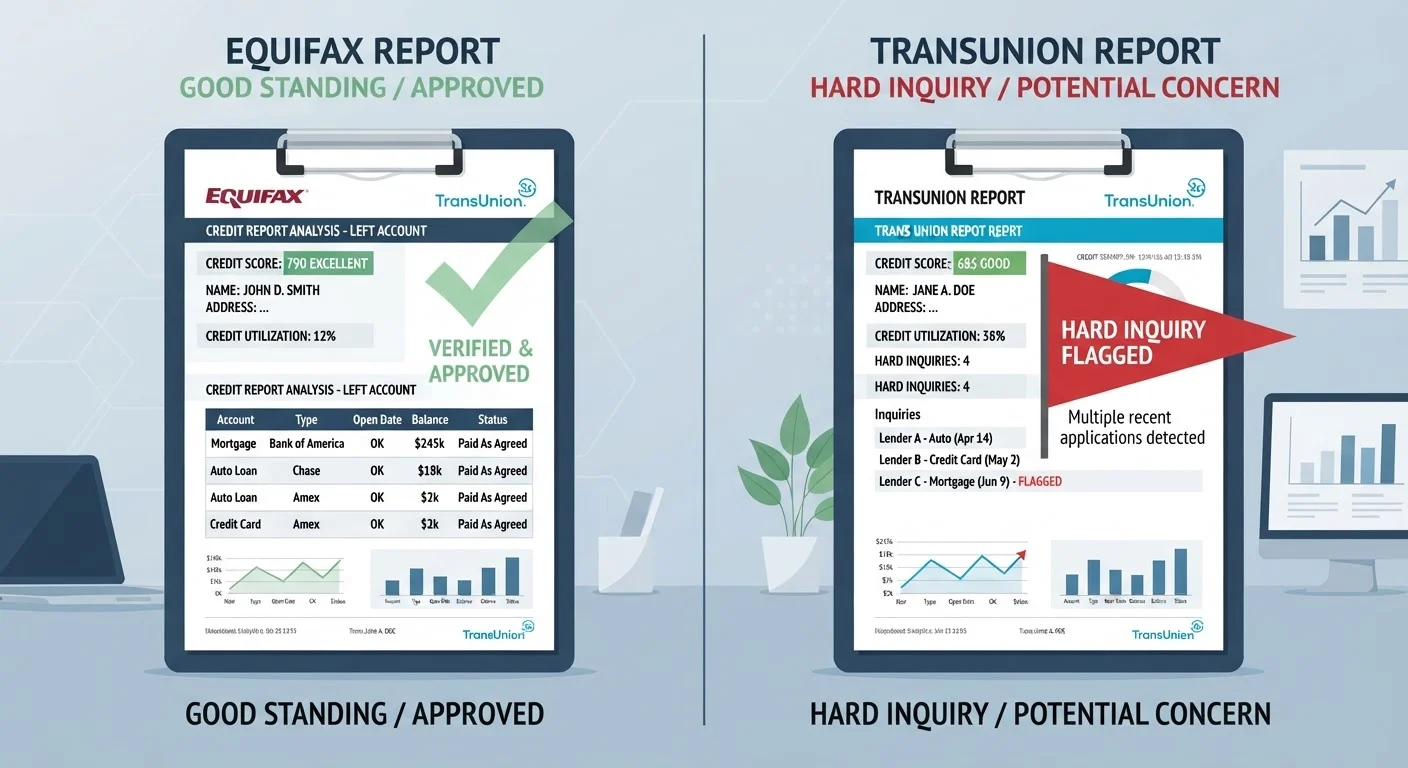
Each credit bureau maintains its own database, and creditors don't always report to all three. An error that appears on your TransUnion report may not show up on Equifax or Experian - and vice versa. Make it a habit to review all three reports before making any major financial decision.
What Counts as a Disputable Error
Not every unflattering item on your report is an error - a legitimate late payment stays on your report whether you like it or not. Focus your dispute energy on genuinely inaccurate or unverifiable information, such as:
- Accounts you never opened - possible sign of identity theft or a mixed file (your data merged with another consumer's)
- Incorrect payment status - an on-time payment listed as 30 or 60 days late
- Wrong account balances or credit limits
- Duplicate accounts - the same debt listed more than once
- Outdated negative items - most negative information must be removed after seven years (bankruptcies after ten)
- Incorrect personal information - wrong address, Social Security number, or date of birth
If you notice unfamiliar hard inquiries, those can also be disputed. Understand how hard vs. soft inquiries affect your score before deciding whether to act.
How to File Your Dispute
Follow these steps methodically. Keeping records at every stage protects you if the process takes longer than expected.
What you will need
Pull your credit reports from all three bureaus
Visit AnnualCreditReport.com - the only federally mandated free source - and download or print your reports from Equifax, Experian, and TransUnion. Review each one separately; an error may appear on one bureau's report but not the others.
Identify and document the specific errors
Circle or highlight every item that looks inaccurate, unfamiliar, or outdated. For each flagged item, note the account name, account number, the bureau reporting it, and exactly what you believe is wrong. Gather any documents that support your claim - bank statements, payment receipts, letters from creditors.
Choose your dispute method
Each bureau accepts disputes through three channels:
- Online: Fastest, but gives you less control over your documentation trail.
- By mail: Slowest, but creates a verifiable paper record - the recommended approach for complex or identity-theft-related errors.
- By phone: Convenient for simple factual corrections, but follow up in writing.
Dispute directly with the bureau reporting the error - not a third-party service.
Write a clear, concise dispute letter (if mailing)
Your letter should include:
- Your full name, address, and date of birth
- The specific item you are disputing (account name, number, and what is incorrect)
- A brief, factual explanation of why the information is wrong
- A list of enclosed supporting documents
- A request that the item be corrected or removed
Send copies of documents - never originals. Each bureau publishes a dispute mailing address on its website.
Track the investigation timeline
Under the FCRA, bureaus generally have 30 days to investigate after receiving your dispute (45 days if you submit additional information during the investigation period). Keep a log of when you submitted each dispute and check your mail or email for a response within that window.
Review the outcome and repeat for other bureaus
Once you receive the bureau's decision, review the updated report section carefully. If an error was corrected at one bureau, file a separate dispute with the other two if the same error appears there - corrections do not transfer automatically between bureaus.
Once the investigation closes, the bureau must provide you with written results. If an item is corrected or deleted, you can request that the bureau notify anyone who received your report in the past six months.
If you're preparing your credit profile ahead of a loan application, run through this credit health checklist to spot any remaining red flags.
Be Wary of Credit Repair Companies
For-profit credit repair companies cannot do anything for you that you cannot do yourself for free. Some charge significant fees and make promises they cannot legally keep - no one can guarantee the removal of accurate, verifiable negative information. The dispute process described here is the same process those companies use on your behalf.
What Happens After You Dispute
The bureau forwards your dispute to the data furnisher - the lender, collection agency, or other entity that reported the information. The furnisher must review its records and report back. If the item cannot be verified, it must be corrected or removed. If the bureau sides with the furnisher, the item stays, but you have options:
- Add a consumer statement - a brief note (up to 100 words) attached to your report explaining your position. Lenders can see it.
- Dispute directly with the furnisher - you can send a dispute letter to the original creditor or collector, not just the bureau.
- File a complaint - the Consumer Financial Protection Bureau (CFPB) and your state attorney general's office accept complaints about credit reporting issues.
- Consult a consumer law attorney - if errors persist and cause demonstrable harm, the FCRA allows consumers to seek legal remedies.
Correcting errors is often one piece of a larger credit-rebuilding journey. If your report shows the aftermath of a financial hardship, see our guide to rebuilding credit after a setback for a practical path forward.
This article is for general informational and educational purposes only and does not constitute personalized financial, legal, or credit counseling advice. For guidance specific to your situation, consider consulting a qualified financial adviser, credit counselor, or consumer law attorney.