
Why Preparation Matters Before You Apply
Applying for a loan without reviewing your credit first is a bit like showing up to a job interview without looking at your resume. Lenders evaluate your creditworthiness quickly and systematically - and surprises on your credit report become their concerns, not just yours. A denial can itself trigger a hard inquiry that temporarily lowers your score, making the next application slightly harder.
The good news: most of the factors lenders look at are things you can assess - and often improve - before you ever fill out an application. This checklist walks you through the key areas to examine so you can walk into the process with a clear picture of where you stand.
For a deeper look at how lenders' credit checks affect your score, see how hard and soft inquiries work. And if you're concerned your overall debt load may be a bigger issue than just your score, signs your debt is becoming unmanageable is worth a read before you proceed.
This Is General Information, Not Financial Advice
The guidance in this checklist is educational in nature and is not a substitute for personalized financial advice. Your specific credit situation, loan eligibility, and the best course of action for your circumstances will vary. Consider consulting a licensed financial professional before making significant borrowing decisions.
How to Work Through This Checklist
Work through each group in order. The first two groups - pulling your reports and knowing your score - are the foundation. Everything else builds on that information. Set aside 30 to 60 minutes, a quiet space, and access to your financial documents.
AnnualCreditReport.com
The federally authorized source for requesting one free credit report from each of the three major bureaus.
Credit bureau dispute portals (Equifax, Experian, TransUnion)
Used to file formal disputes for any inaccurate or unrecognized information found on your reports.
Free credit score service (bank, credit union, or bureau)
Provides your current credit score along with the key factors affecting it.
Basic spreadsheet or calculator
Helps you manually calculate your credit utilization ratio and debt-to-income ratio.
If you discover errors in your reports, begin the dispute process immediately - do not wait until just before your application. The process for disputing credit report errors involves submitting documentation to the bureaus and tracking the outcome, which takes time.
Start the Dispute Process Early
Correcting errors on your credit report is not instant. Bureau investigations can take up to 30-45 days, and some disputes require follow-up. If you find inaccuracies, begin the dispute process at least two to three months before you plan to apply for a loan so corrections have time to be reflected in your report and score.
Rate Shopping Has a Window
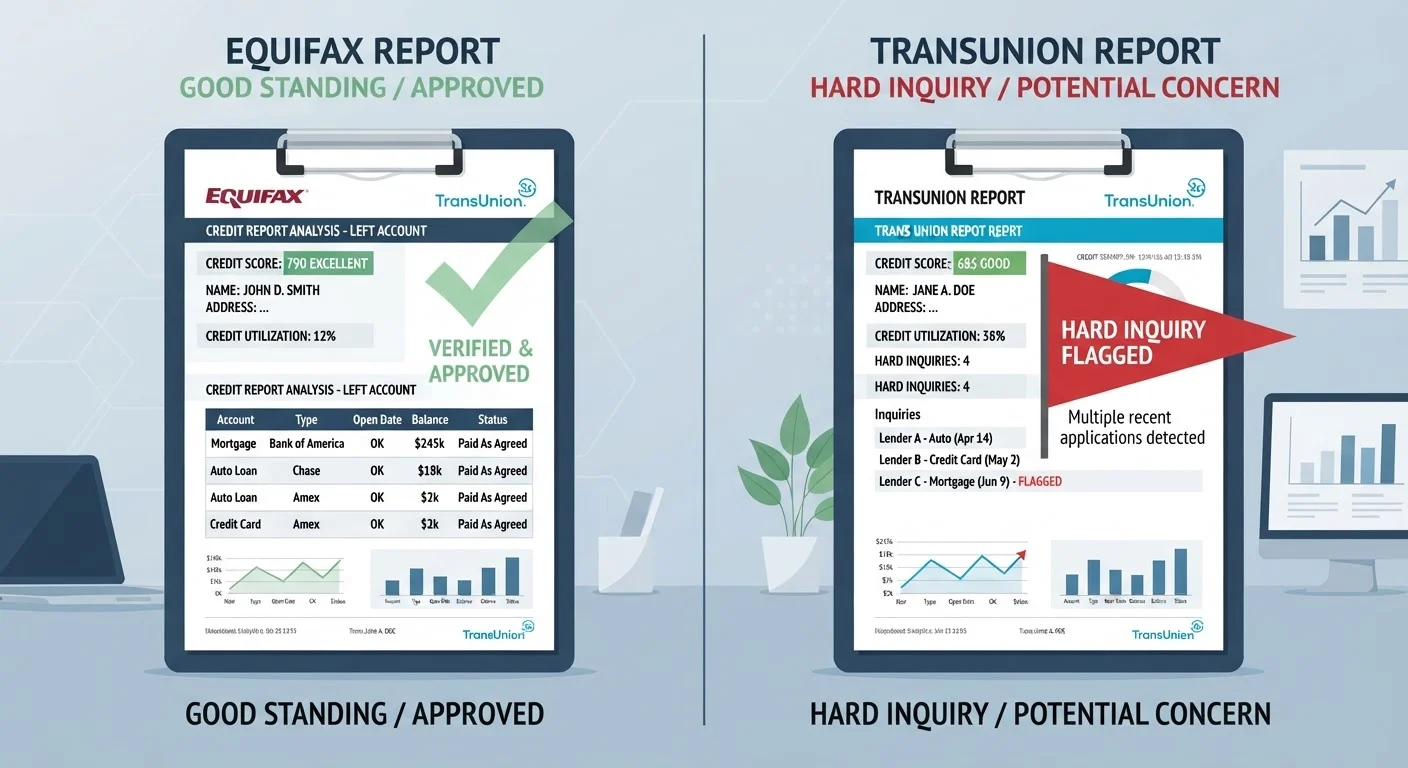
When comparing loan offers, multiple hard inquiries for the same loan type within a short period (typically 14-45 days, depending on the scoring model) are often treated as a single inquiry. However, applying for multiple different types of credit - a car loan, a credit card, and a personal loan - simultaneously does not receive this protection and can meaningfully impact your score.
Once you have worked through the checklist, you will have a clear snapshot: your current score, any red flags that need attention, your utilization and DTI ratios, and the documents you'll need to gather. That preparation puts you in the strongest possible position when you're ready to apply.
Pull and Review Your Credit Reports
Know Your Credit Score
Assess Your Payment History
Evaluate Your Debt Load
Manage Inquiries and New Credit
Gather Supporting Documentation
This article is for general informational and educational purposes only and does not constitute personalized financial, credit, or legal advice. Individual results will vary based on your specific financial situation. Consult a licensed financial professional for guidance tailored to your circumstances.