Why Utilization Carries So Much Weight
Of all the factors that shape your credit score, credit utilization is one of the most immediate and controllable. Under the FICO scoring model, the "amounts owed" category - which is dominated by credit utilization - accounts for approximately 30% of your score, second only to payment history.
The underlying logic is straightforward from a lender's perspective: someone who consistently uses a large share of their available credit may be financially stretched, raising the perceived risk of lending to them. Conversely, a borrower who keeps balances low relative to their limits signals discipline and financial breathing room.
Understanding this dynamic matters especially when you're preparing for a major financial move. See our credit health checklist for a full picture of what lenders review before approving a loan.
~30%
Share of FICO score tied to amounts owed
According to FICO's published scoring criteria, the "amounts owed" category - heavily weighted toward credit utilization - represents approximately 30% of the base FICO score calculation.
<10%
Utilization rate of highest-scoring consumers
FICO data on high-achieving scorers consistently shows that those with scores above 800 typically maintain very low revolving utilization, often in the single digits.
30%
Widely cited utilization threshold to stay below
Financial educators and credit counselors commonly recommend keeping individual and total credit card utilization below 30% to avoid noticeable score impacts, though lower is generally better.
The Reporting Gap That Catches People Off Guard
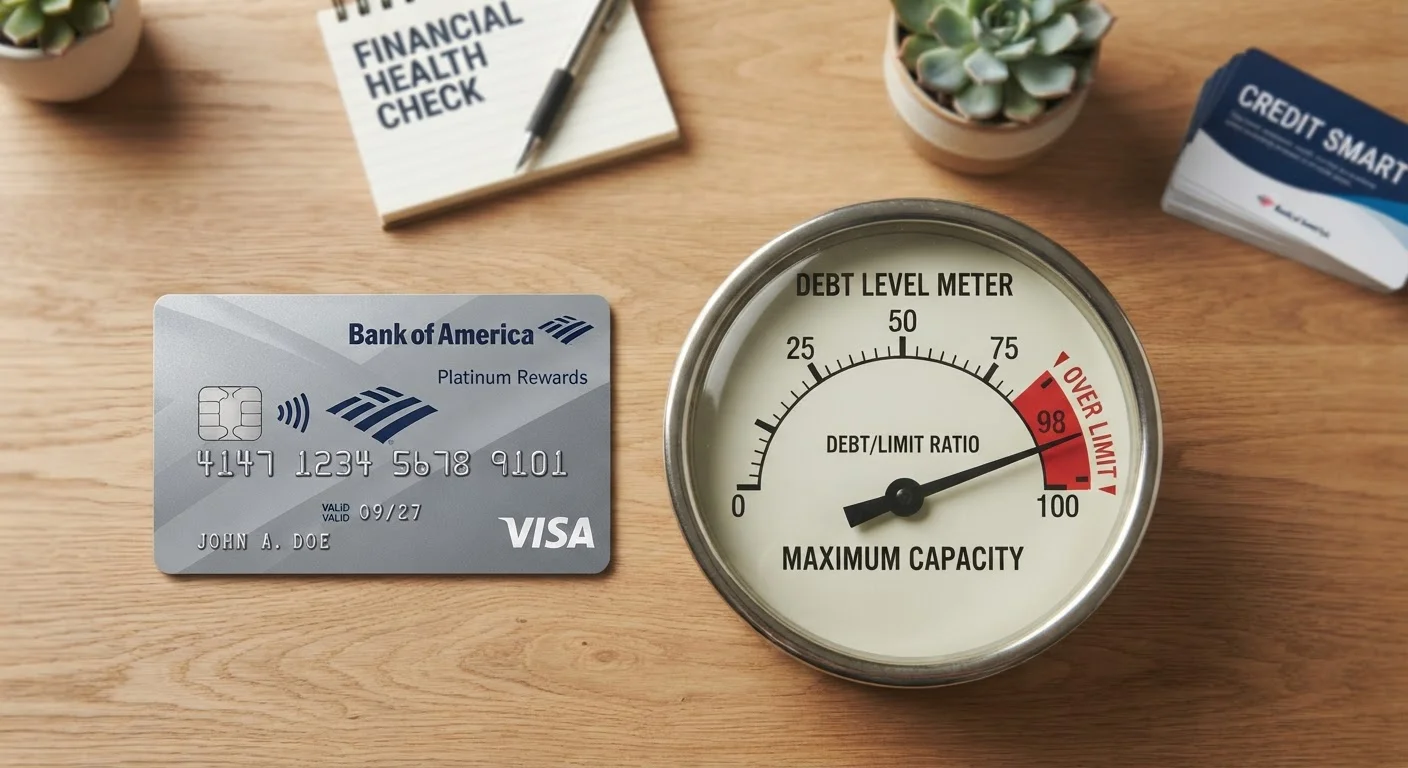
Here's where many consumers are surprised: your credit score doesn't know whether you paid your bill in full. It only sees the balance that your card issuer reported to the credit bureaus - and that report usually happens on your statement closing date, which is before your payment due date.
So if you spend $900 on a card with a $1,000 limit, your utilization hits 90% the moment that balance is reported - even if you then pay every cent when the bill arrives. For the purposes of that scoring cycle, you've already registered as a high-utilization borrower.
This surprises many people who believe that responsible payment behavior fully shields them. Paying in full is unquestionably the right financial move - it prevents interest charges and keeps you out of debt. But it's a separate event from what scoring models measure in any given month.
Time Your Payments Strategically
Check your credit card account online to find your statement closing date - this is typically when your issuer reports your balance to the bureaus. Making a payment a few days before that date, rather than waiting for the due date, can significantly lower the balance that gets reported. You don't have to change your spending habits; just shift when you pay.
How to Manage Utilization Proactively
The good news is that utilization is one of the most responsive credit factors - changes show up relatively quickly as new balances are reported. There are a few practical approaches worth understanding:
- Pay before your statement closes. If you make a payment (or multiple payments) before your closing date, your issuer reports a lower balance to the bureaus. This is sometimes called "paying early" and can meaningfully reduce your reported utilization without requiring you to spend less.
- Spread spending across cards. Rather than concentrating charges on one card and pushing it toward its limit, distributing spending keeps per-card utilization lower across the board.
- Request a credit limit increase thoughtfully. A higher limit reduces your utilization ratio if spending stays constant. Be aware this may involve a hard inquiry - for more on how those differ from soft pulls, see our article on hard vs. soft inquiries.
- Avoid closing unused cards unnecessarily. Open cards contribute available credit to your ratio. Removing them shrinks your total limit and can push utilization up.
It's also worth dispelling a persistent myth: you do not need to carry a balance month to month to build credit. Paying in full is both financially sound and perfectly compatible with healthy credit scores. For more on this and other misunderstandings, our piece on credit score myths breaks them down clearly.
Utilization in Context: One Piece of a Larger Picture
No single credit factor operates in isolation. A high-utilization month won't permanently damage your score the way a missed payment might, because utilization resets with each new reporting cycle. That said, consistently running high balances - even if you pay them down - creates a pattern that lenders can see over time.
Your broader financial habits also interconnect with utilization in subtle ways. For instance, making only minimum payments keeps your reported balance high for longer, compounding the utilization problem while also increasing the total interest you pay. Our article on why minimum payments cost more than you think explains the real math behind that pattern.
Managing utilization well is fundamentally about awareness of timing and available credit - not about spending less or living more restrictively. Once you understand how and when balances are reported, you can make small adjustments that have a meaningful impact on how your credit profile looks to lenders.
This article is for general informational and educational purposes only and does not constitute personalized financial or credit advice. Consult a qualified financial professional for guidance specific to your situation.