What Makes a Plant 'Native' - and Why It Matters
The word "native" gets used loosely in garden centers, but it has a precise ecological meaning. A plant is considered native to a region if it evolved there over millennia, adapting to local soils, hydrology, seasonal temperature swings, and the organisms it grew alongside. It wasn't introduced by humans, intentionally or accidentally.
This distinction matters because native plants and local wildlife developed interdependencies over vast stretches of time. Many native insects - including specialist bee species and certain moth and butterfly larvae - can only feed on specific plant genera. When those plants disappear from the landscape, the insects that depend on them follow. Entomologist Douglas Tallamy's research has highlighted how native oaks alone support hundreds of caterpillar species compared to the handful supported by many common ornamental trees, illustrating how plant choices ripple through an entire food web.
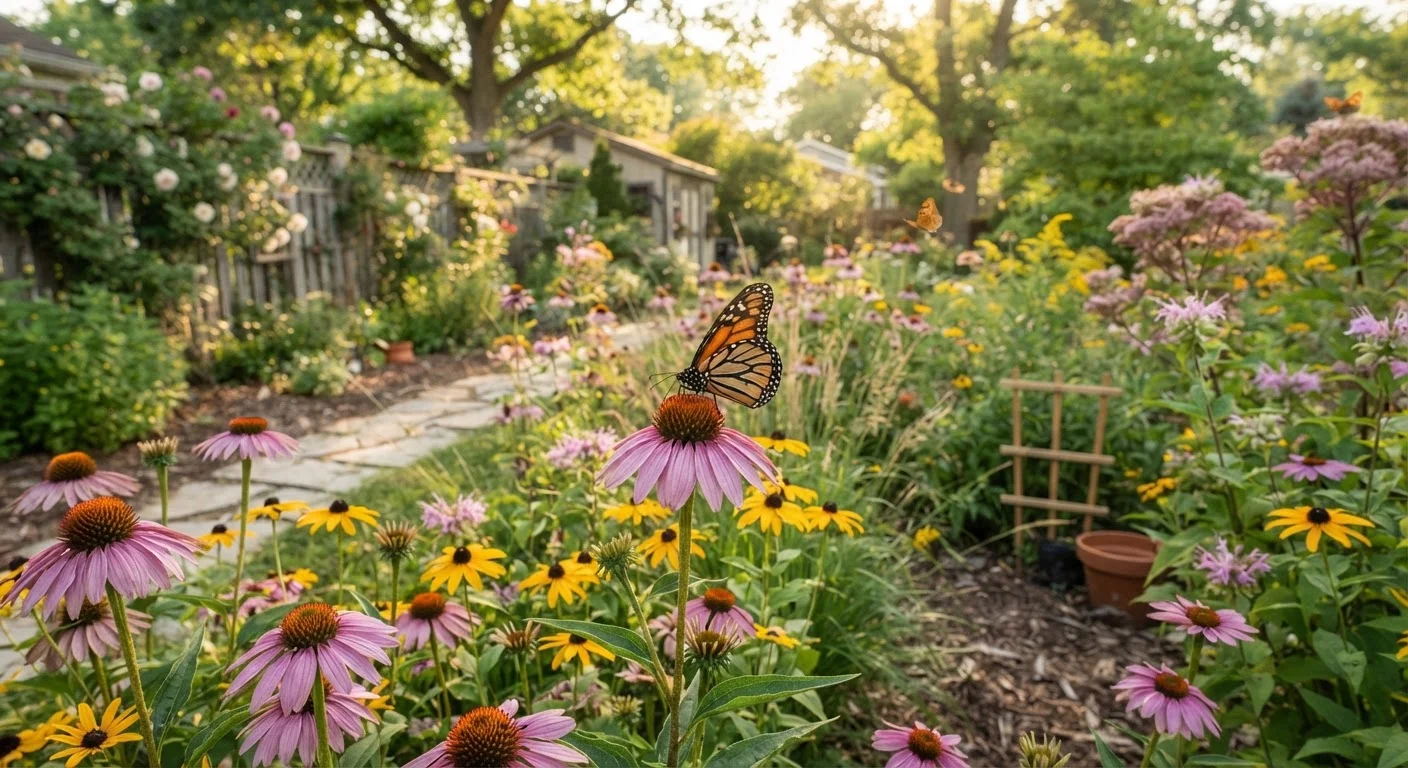
Importantly, "native" is always geographic. Echinacea purpurea (purple coneflower) is native to the eastern and central US but not to the Pacific Northwest. Before planting, it's worth verifying which species are genuinely native to your ecoregion rather than just to the country broadly.
Cultivars vs. Straight Species
Many native plants sold in nurseries are cultivated varieties (cultivars) bred for specific flower colors, compact size, or extended bloom. While some cultivars retain ecological function, others may produce less pollen or altered flower structures that reduce their value to specialist insects. Where possible, choosing straight species - plants not selectively bred from the original - tends to offer the greatest wildlife benefit.
The Practical Benefits for Your Yard
Beyond ecological value, native plants offer tangible advantages for everyday homeowners. Because they evolved to thrive in local conditions, established natives generally require less supplemental watering, fewer soil amendments, and little or no synthetic fertilizer compared to many non-native ornamentals. This translates to lower maintenance time and reduced input costs over the life of the garden.
Native deep-rooted plants - such as prairie grasses and native wildflowers - also improve soil structure and can reduce stormwater runoff by allowing water to infiltrate more effectively than compacted turf. This can be particularly beneficial in regions prone to heavy summer rain events.
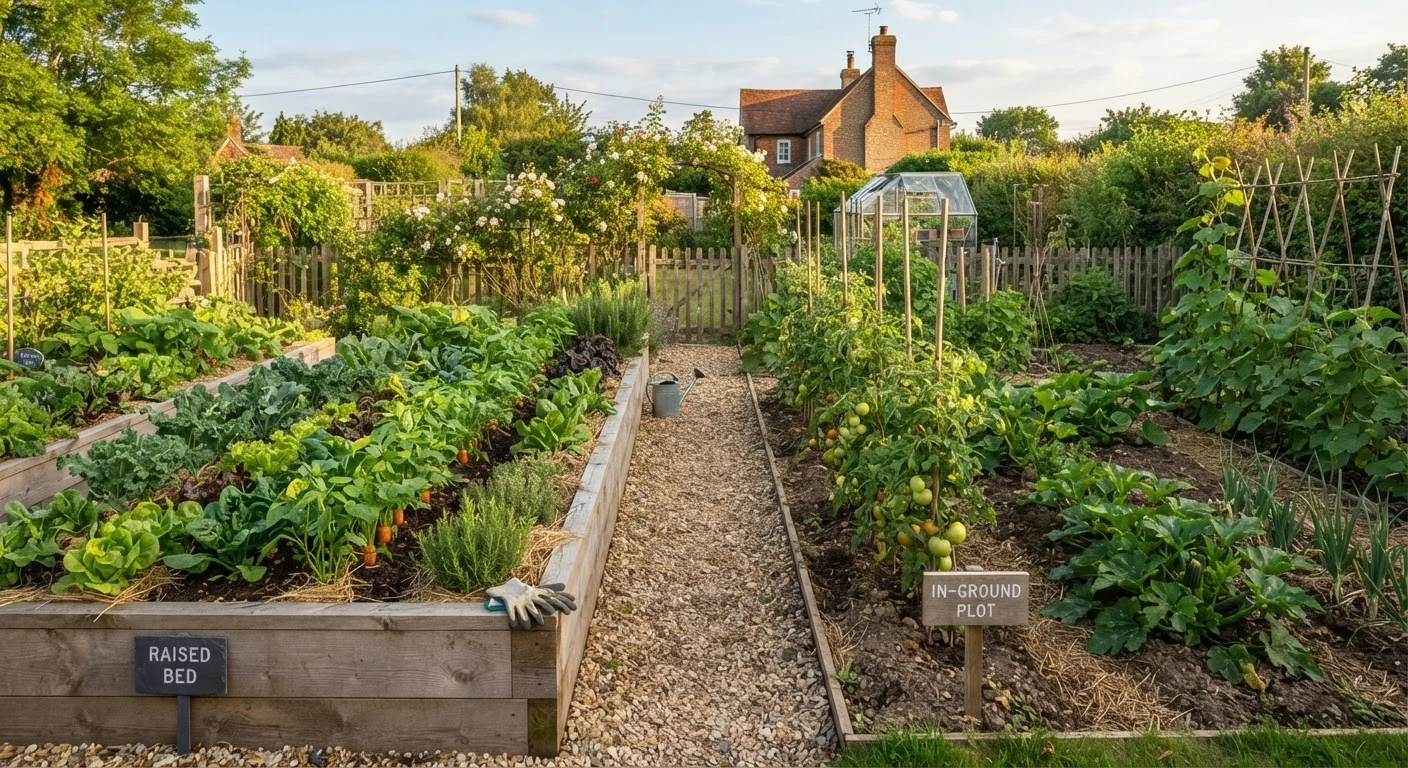
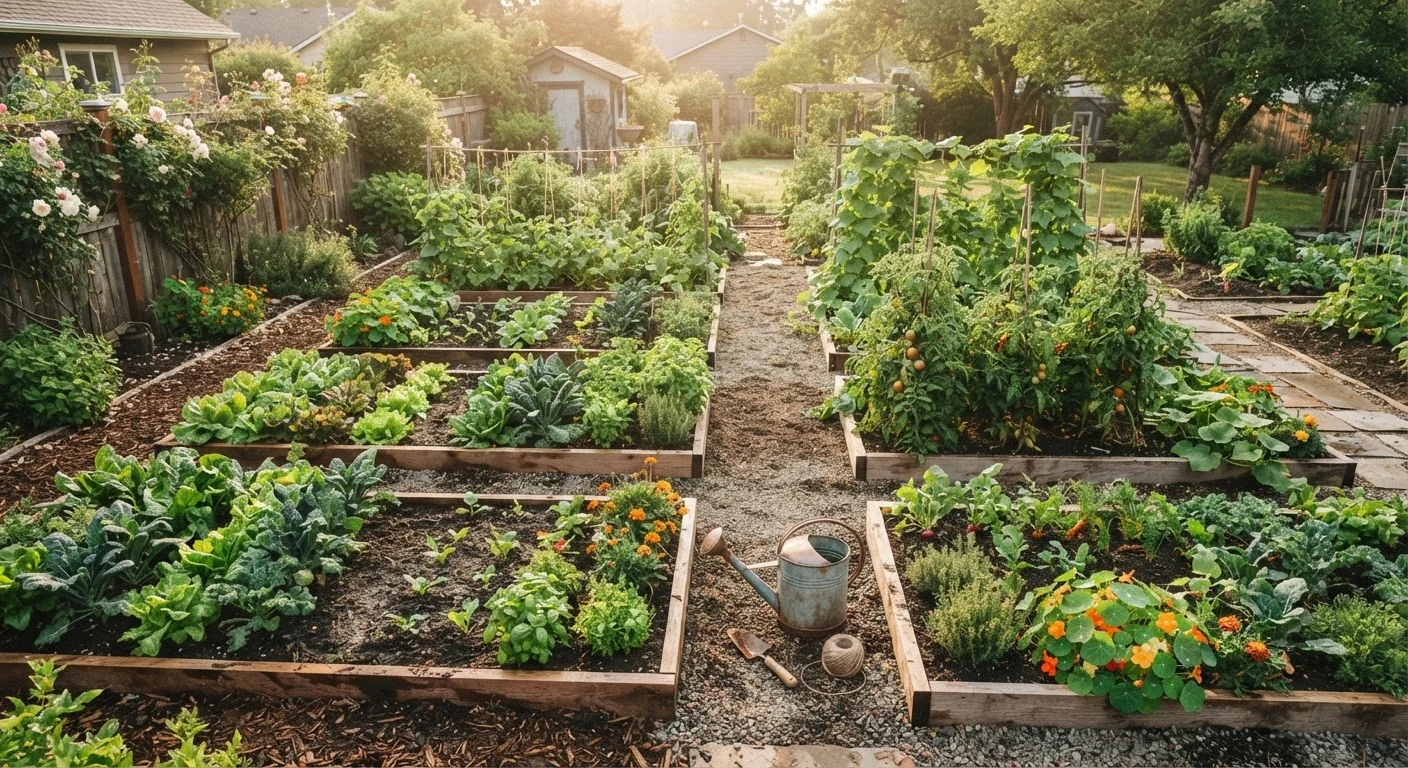
If you're weighing different garden setups, our guide to raised beds vs. in-ground gardens covers how soil conditions and space constraints affect planting decisions - relevant context when introducing natives into an existing yard.
4,000+
Native bee species in North America
According to the USDA Agricultural Research Service, North America hosts over 4,000 native bee species, many of which depend on specific native plant genera for pollen.
70%
Of US freshwater use attributed to landscape irrigation
The US Environmental Protection Agency estimates that landscape irrigation accounts for roughly 30-70% of residential water use, a figure native plantings can substantially reduce over time.
500+
Caterpillar species supported by native oaks
Research by entomologist Douglas Tallamy found that native oak trees support over 500 caterpillar species, compared to only a handful supported by many common non-native ornamental trees.
How Native Plants Support Local Ecosystems
Native plants sit at the base of local food webs. They produce leaves, nectar, pollen, seeds, and fruit that wildlife has evolved to recognize and use. Non-native plants, even well-intentioned ones, often fail to provide these resources in a biologically useful form.
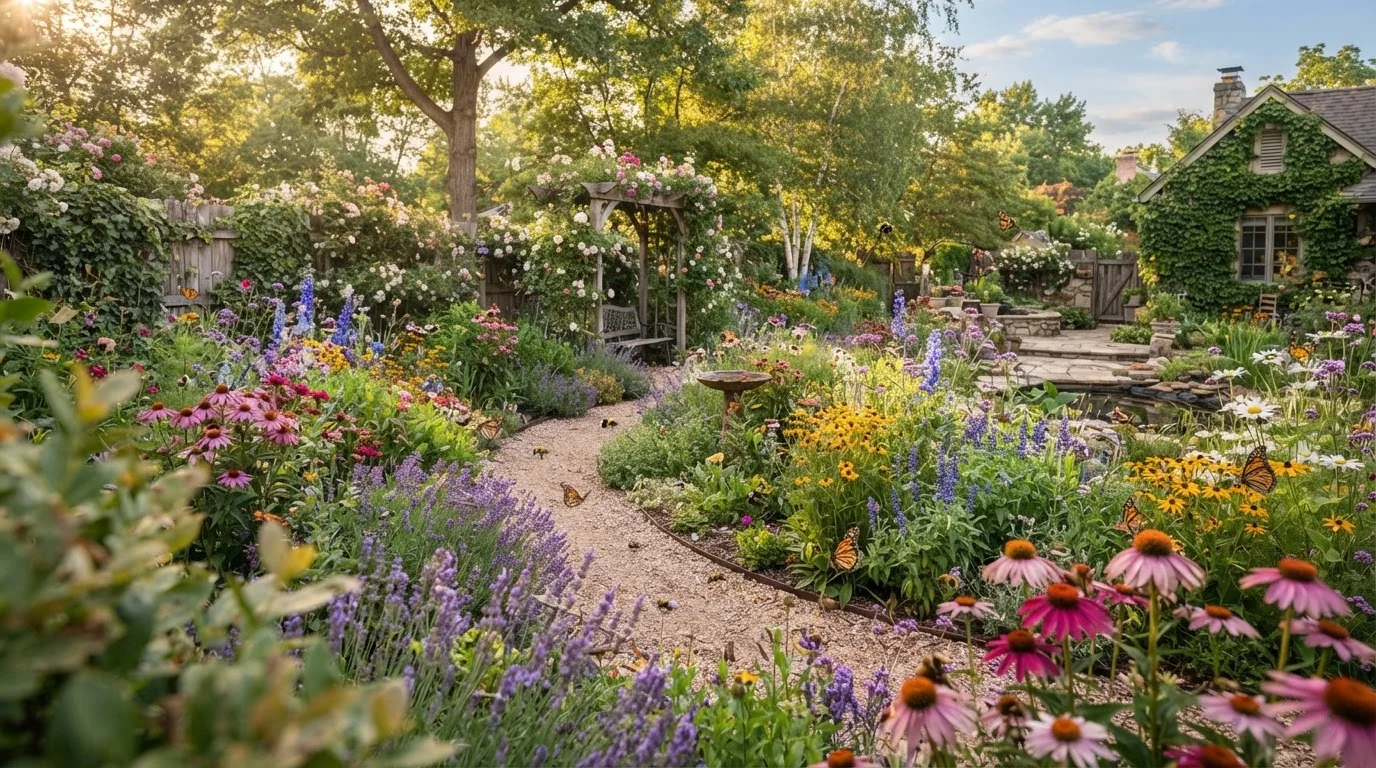
Pollinators are the most visible beneficiaries. Native bees - there are over 4,000 species in North America - are frequently more efficient pollinators of native plants than European honeybees because of co-evolved flower shapes and bloom timing. To go deeper on supporting pollinators, see our guide to designing a pollinator garden.
Birds also benefit substantially. Many songbirds feed insects to their nestlings, and those insects depend on native host plants. A yard with a strong native plant foundation tends to attract more bird diversity than a conventionally landscaped yard, even in suburban settings.
“Bringing nature home doesn't mean letting your yard go wild. It means making deliberate choices about which plants you include - choices that allow your property to function as habitat rather than simply as decoration.”
— Douglas Tallamy, Professor of Entomology and Wildlife Ecology, University of Delaware
Getting Started: Choosing and Planting Natives
The most important first step is researching which species are native to your specific region. Your state's cooperative extension service - typically associated with a land-grant university - is a reliable, free resource. The USDA PLANTS Database also allows you to search by state and county.
When selecting plants, consider the conditions of your actual yard: sun exposure, soil drainage, and moisture levels. Native plants are adapted to their native region's conditions broadly, but individual species have preferences. A native wetland sedge won't thrive in a dry, rocky slope - and vice versa.
Start with a manageable patch rather than a full yard overhaul. Even replacing a strip of lawn with native groundcovers or adding a small pollinator bed makes a genuine contribution. Our article on common garden myths is worth reading alongside this - some popular advice about soil preparation and establishment actually works against native plantings.
Finally, source plants from reputable native nurseries rather than big-box garden centers, which sometimes mislabel plants or sell cultivars that have reduced ecological value compared to straight species.
Start Small and Build Over Time
You don't need to overhaul your entire yard to make a difference. Begin with one 4-by-8-foot native plant bed in a sunny spot and observe how it performs through one full growing season. Seeing what thrives - and what attracts wildlife - gives you practical knowledge before scaling up, and keeps the project manageable for beginners.