The Real Cost of Not Keeping Records
Most drivers think of maintenance records as paperwork busywork - something dealers care about, not them. But a missing service history costs real money. When it comes time to sell, buyers and dealers discount vehicles with no documentation because they're buying uncertainty. A car with a verifiable record of oil changes, tire rotations, and brake work is a known quantity; one without it is a gamble.
Beyond resale, poor documentation creates friction at the shop. Without records, a mechanic diagnosing a rough idle or transmission shudder is working in the dark. They may repeat diagnostic steps that a previous technician already completed - costing you time and labor charges. Your records are their starting point.
See our guide to habits that shorten a car's life for a look at how neglected documentation often signals neglected maintenance overall.
What Belongs in a Maintenance Record
A useful record doesn't need to be elaborate. The core elements are date, mileage, service performed, parts used or replaced, and the shop or technician who did the work. For DIY services, note where you purchased parts and which products you used.
Prioritize documenting these categories:
- Fluid services - oil changes, transmission fluid, coolant flushes
- Wear items - tires, brakes, belts, filters
- Inspections and diagnostics - any time a code was pulled or a technician assessed the vehicle
- Repairs - parts replaced, including warranty or recall work
- Scheduled maintenance - 30k/60k/90k service milestones
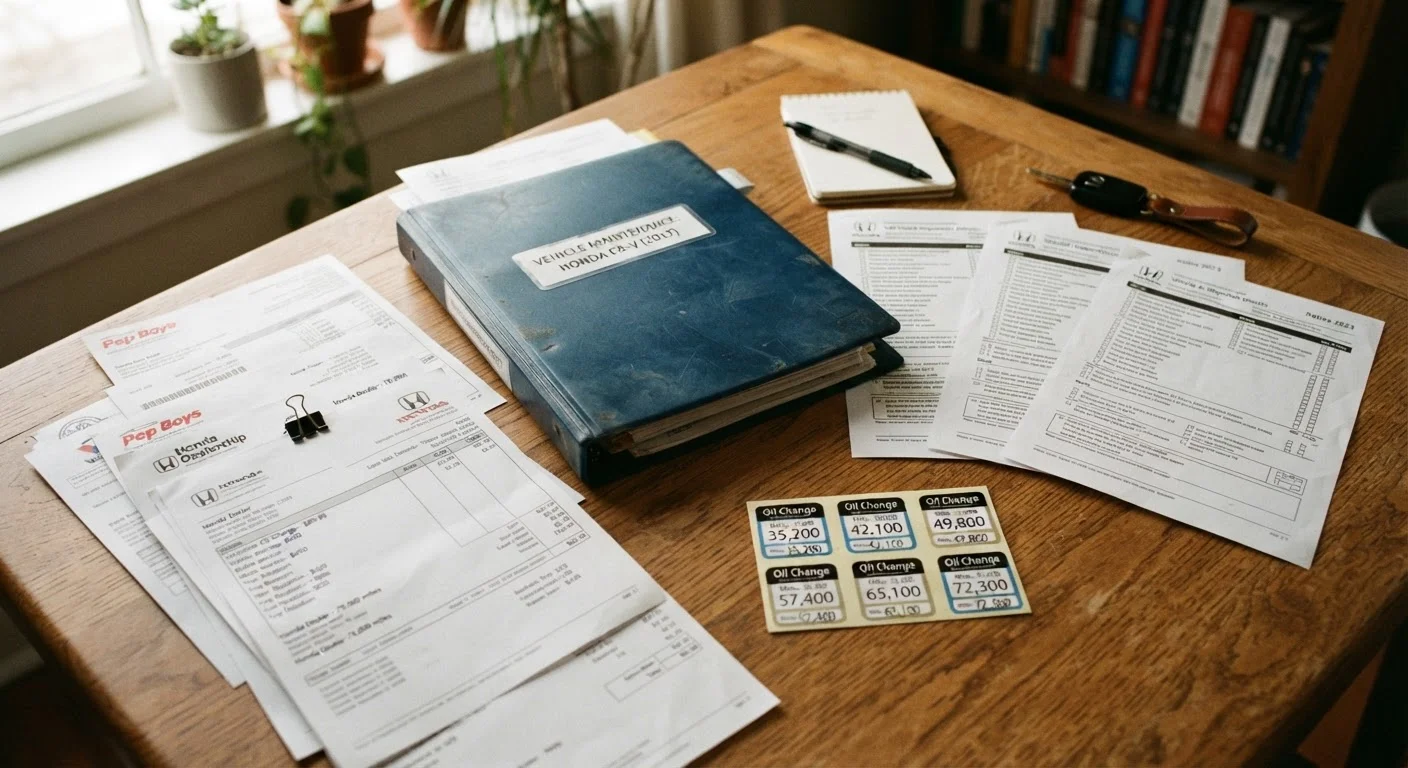
Receipts are ideal, but a handwritten logbook entry for a DIY oil change still counts. The goal is a continuous, timestamped narrative of how the vehicle has been treated.
How to Build and Maintain Your System
The system that gets used is the right system. Some drivers prefer a dedicated folder in the glove box where every receipt gets stuffed immediately after service. Others scan documents and keep a digital folder organized by year. Several automakers and third-party apps allow you to log service records tied to your VIN, which follows the vehicle if you use a connected platform.
Whatever format you choose, the discipline is the same: record it at the time of service, not six months later from memory. A missed oil change entry doesn't mean the service didn't happen - but you can't prove it, and that ambiguity matters during warranty disputes or resale negotiations.
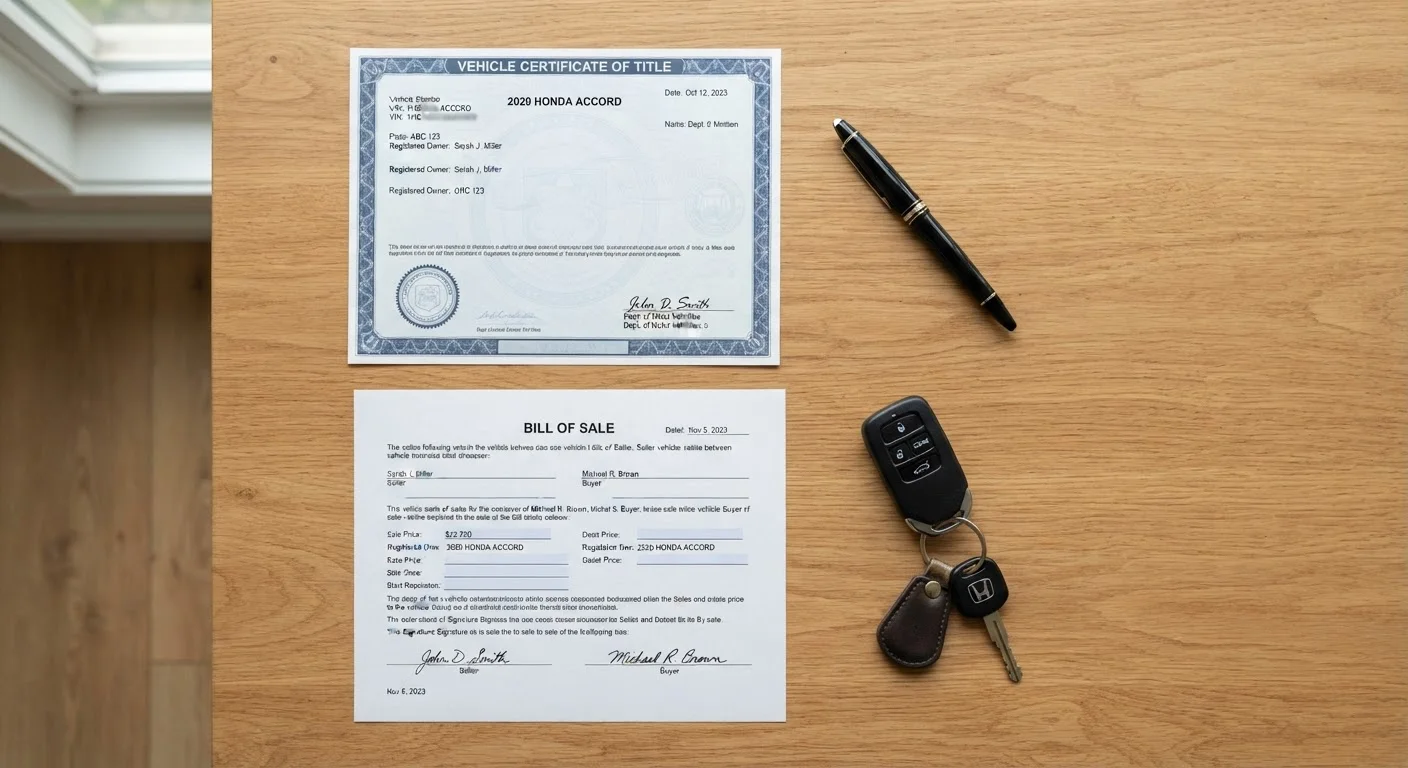
When you eventually sell the vehicle, these records become part of your sales package. Our guide to documents needed for vehicle sales and transfers covers the full paperwork picture - maintenance records sit alongside title, odometer disclosure, and bill of sale as proof of responsible ownership.
Records, Warranties, and Disputes
If your vehicle is under a manufacturer or extended warranty, maintenance records can be the difference between a covered repair and a denied claim. Warranty agreements typically require that the vehicle be serviced according to the manufacturer's recommended schedule. If a powertrain issue arises and you can't demonstrate that oil changes happened on schedule, the manufacturer or warranty provider may argue - sometimes successfully - that the damage resulted from neglect rather than a defect.
This doesn't mean a single missed service automatically voids your coverage, but documented gaps give them grounds to push back. Receipts from any ASE-certified shop or your own logged DIY records are generally acceptable - the key is having something concrete to present.
For broader context on responsible vehicle ownership and the buying and selling process, a well-maintained record file is one of the clearest signals you can send to any buyer, dealer, or claims adjuster.
This article is for general informational purposes only and does not constitute legal, financial, or warranty advice. Warranty terms vary by manufacturer and provider - consult your owner's manual and warranty documentation for the specific requirements that apply to your vehicle.