
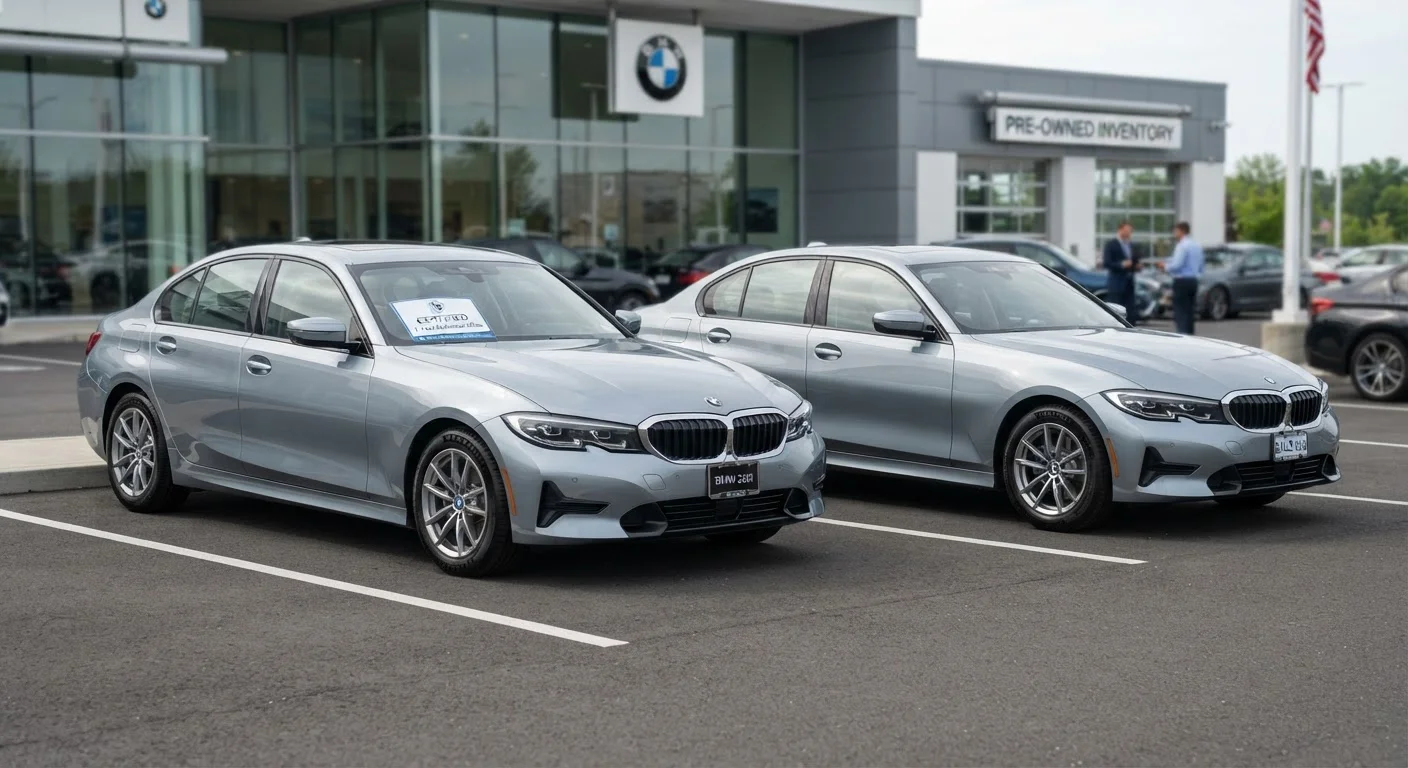
What Makes a Vehicle "Certified Pre-Owned"
The term Certified Pre-Owned is not a vague marketing label - at least not when it comes from a franchised dealership selling the brand it represents. Manufacturer-sponsored CPO programs set specific eligibility criteria a vehicle must meet before it can carry that designation. Typical requirements include a maximum age (commonly five to six model years), a mileage ceiling (often around 60,000-80,000 miles), a clean title history, and a passing grade on a multi-point inspection that can cover 100 or more checkpoints.
When a vehicle clears those hurdles, the manufacturer backs it with a factory warranty - typically an extension of the original powertrain coverage, sometimes accompanied by a short-term bumper-to-bumper component. That warranty is honored at any authorized dealership for that brand, which is meaningfully different from a dealer's own limited guarantee.
Third-party CPO programs also exist - sold by independent dealers or used-car chains - but these are not manufacturer-backed. Their inspection standards and warranty terms vary considerably, so it pays to read the actual documentation rather than relying on the badge alone.
| Criterion | Certified Pre-Owned | Standard Used |
|---|---|---|
| Inspection requirement | Manufacturer-defined multi-point inspection | None required; varies by seller |
| Warranty | Factory-backed, transferable warranty | As-is or limited dealer warranty |
| Age/mileage eligibility | Capped (typically ≤6 yrs, ≤80K miles) | No restrictions |
| Price premium | Higher - certification adds cost | Lower entry price |
| Title history requirement | Clean title required | Any title history possible |
| Manufacturer financing incentives | Often available | Generally not available |
| Buyer due diligence needed | Reduced, but still recommended | Essential |
What "Standard Used" Actually Means
A standard used vehicle carries no uniform definition or required vetting process. It may have been traded in yesterday with a full service history, or it may have changed hands a dozen times with gaps no one can explain. In most private-party sales - and many dealer sales - vehicles are sold as-is, meaning the seller makes no warranty about condition and accepts no liability for problems discovered after the transaction closes.
Some franchise and independent dealers do offer limited warranties on non-certified used vehicles, but the terms are set by the dealer, not a manufacturer, and coverage is generally narrower. Always get any dealer warranty in writing and understand what it does and does not cover before signing.
The variability in the standard used category is exactly why independent due diligence matters so much. A pre-purchase checklist and a vehicle history report don't replicate a CPO program, but together they give buyers a much clearer picture of what they're actually buying.
"Certified" Without Manufacturer Backing
Not every vehicle wearing a "certified" label is backed by the original manufacturer. Independent dealers sometimes offer their own in-house certification programs with varying inspection depth and warranty terms. Before assuming any certification carries the same weight as a factory-sponsored program, ask the dealer specifically: Is this a manufacturer CPO program or a dealer program? Request the written inspection report and warranty terms to evaluate what coverage actually exists.
The Real Cost Trade-Off
CPO vehicles command a price premium over comparable non-certified used cars. How much depends on the brand, the model, and current market conditions - but the gap can range from a few hundred to a few thousand dollars. Whether that premium is worth it depends on what you're actually getting in return.
Consider the warranty coverage in dollar terms. If a CPO warranty covers the powertrain for three additional years and you're financing the vehicle, the protection can be meaningful - powertrain repairs can run into thousands of dollars. On the other hand, if the vehicle is at the outer edge of CPO eligibility (high mileage, near the age cutoff), the remaining warranty window may be shorter than it first appears.
100+
Inspection points in typical CPO programs
Most major automaker CPO programs require vehicles to pass inspections covering 100 or more mechanical, safety, and cosmetic checkpoints before certification.
~$1,000-$3,000
Estimated CPO price premium over comparable non-certified
Industry observers generally estimate CPO vehicles carry a premium in this range versus non-certified equivalents, though figures vary by brand and market conditions.
There's also financing to consider. Manufacturer captive lenders - the financing arms of automakers - sometimes offer promotional rates on CPO vehicles that are not available on standard used vehicles. If you're financing, compare the effective total cost of each path, not just the sticker price. A professional pre-purchase inspection on a standard used vehicle, by contrast, typically costs $100-$200 and can surface issues before they become your problem.
What CPO Doesn't Cover - and Why It Still Matters
Even a fully certified vehicle has limits worth understanding. Most CPO warranties exclude wear items - tires, brake pads, wiper blades - as well as cosmetic damage and anything the inspection flags as a pre-existing condition. If the inspection report shows a known issue and the dealer corrects it before certification, you're fine. If the report notes a condition the program allows to pass, that item typically falls outside warranty coverage.
CPO status also doesn't guarantee a vehicle is accident-free or that every service interval was honored. Title branding (salvage, flood, lemon law buyback) disqualifies most vehicles from manufacturer CPO programs, but a vehicle can have undisclosed minor accidents and still pass. This is why reviewing the full inspection checklist provided by the dealer - not just the summary - and pulling an independent vehicle history report remains good practice regardless of certification status.
In short, CPO is a meaningful upgrade over a bare as-is used-car sale, but it is not a substitute for an informed buyer doing their own homework.