
Why Spotting Debt Trouble Early Matters
Debt doesn't usually become unmanageable overnight. It tends to build gradually - an extra card opened here, a deferred payment there - until the warning signs are hard to ignore. The earlier you recognize those signals, the more options you have. Waiting until you've missed multiple payments or exhausted all available credit leaves far fewer paths forward.
The six warning signs below aren't meant to cause alarm. They're meant to give you a clear-eyed framework for evaluating your own situation, so you can act while you still have room to maneuver.
This Is General Information, Not Financial Advice
The guidance in this article is educational and intended for general audiences. Everyone's financial situation is different. If you're experiencing significant debt stress or struggling to meet payments, consider speaking with a nonprofit credit counselor or a licensed financial professional who can assess your specific circumstances.
Six Signs Your Debt May Be Getting Out of Hand
Your debt-to-income ratio is climbing past 43%
Your debt-to-income (DTI) ratio compares your total monthly debt payments to your gross monthly income. To calculate it, add up every minimum payment you owe each month - credit cards, auto loans, student loans, mortgage - and divide that total by your gross monthly income. A result expressed as a percentage is your DTI.
A DTI below 36% is generally considered healthy. Above 43%, many lenders consider a borrower at elevated risk, and you may find it difficult to qualify for new credit on reasonable terms. More importantly, a high DTI means a large share of your paycheck is already spoken for before you cover food, utilities, or emergencies. If yours is creeping upward, that trend deserves serious attention.
When more than 43 cents of every dollar you earn goes to debt payments, financial flexibility shrinks fast.
You're only making minimum payments - every month
Minimum payments are designed to keep your account in good standing, not to help you get out of debt efficiently. If you're consistently only able to pay the minimum on credit cards, you're likely paying a substantial portion toward interest rather than principal. On a high-interest card, this can mean years of payments with relatively little reduction in what you actually owe.
Making minimums occasionally during a tight month is normal. Doing it month after month because there's nothing left is a different situation - it signals that your debt obligations may have grown beyond what your income can comfortably support.
Consistently making only minimum payments means interest may be outpacing your progress on the actual balance.
You're borrowing to cover basic living expenses
Using a credit card or loan to pay for groceries, rent, gas, or utility bills - not as a convenience, but because there's no cash available - is one of the clearest signs that debt has become unsustainable. When borrowing is necessary to meet basic needs, it typically creates a cycle: the new charge adds to your balance, which increases your minimum payment, which leaves even less cash for next month's essentials.
If this pattern has appeared even once or twice, it warrants an honest look at your budget and overall debt picture. Understanding how budgeting fundamentals work can help you identify where cash flow is breaking down.
Reaching for a credit card to buy groceries because you're out of cash is a sign the debt cycle may be closing in.
You've missed or been late on payments
A single late payment can trigger a late fee and a penalty interest rate. Multiple missed payments are reported to credit bureaus and can significantly lower your credit score - making future borrowing more expensive or unavailable when you genuinely need it. They can also trigger default provisions in some loan agreements.
Missing payments is often not just a budgeting lapse; it's a signal that the total payment burden exceeds what your monthly cash flow can reliably support. If you've missed payments on any obligation - credit card, auto loan, or otherwise - that's a concrete indicator worth acting on, not ignoring.
Missed payments don't just cost fees - they can set off a chain reaction that makes debt harder to manage going forward.
You have no financial cushion left
An emergency fund exists to absorb unexpected costs - a medical bill, a car repair, a job disruption - without forcing you into new debt. When debt payments have consumed so much of your income that you have little or nothing in savings, you're one unexpected expense away from a financial crisis that could push your debt load even higher.
If you're unable to set aside even a small amount each month because minimum payments are consuming your surplus, that's a structural problem. It's also worth noting that lenders evaluating you for a mortgage will scrutinize exactly this kind of financial resilience - the financial readiness checklist for home buyers outlines how savings and debt levels interact in that context.
No emergency savings combined with heavy debt payments means a single surprise expense can push you deeper into debt.
You feel anxious or avoidant about your finances
Persistent anxiety about money, avoiding opening bills, or feeling unable to face your account balances are behavioral signals that deserve the same attention as the financial ones. These responses can delay action and allow problems to grow. While this article isn't a substitute for professional mental health support, recognizing financial avoidance as a symptom - not a character flaw - is a meaningful first step.
Debt stress is common and well-documented. Confronting it by getting an honest picture of what you owe, to whom, and at what interest rate is typically the starting point for regaining control. Reviewing the differences between secured and unsecured debt can help clarify what your obligations actually mean if you fall behind.
Avoiding your bills is a warning sign in itself - avoidance lets debt problems compound in silence.
Know Your Options Before Things Escalate
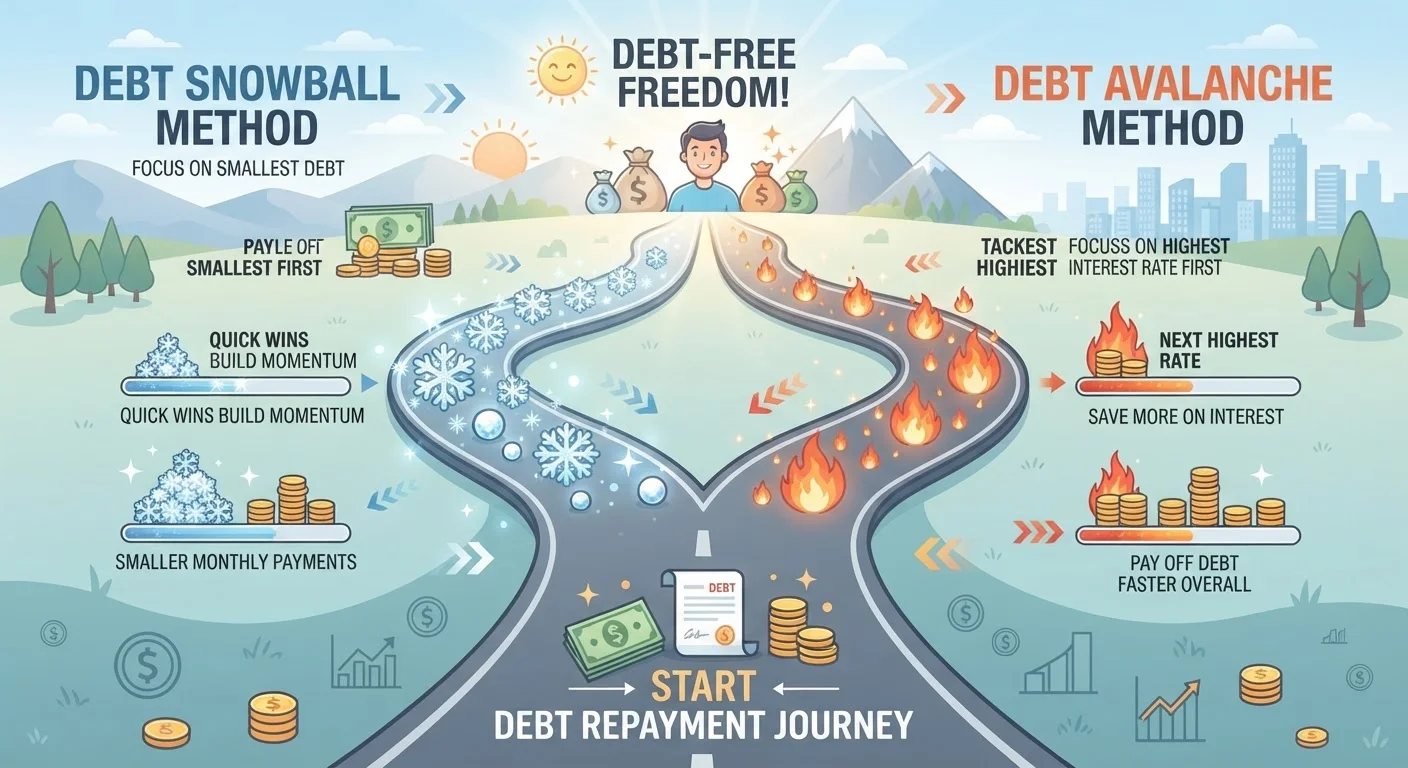
If you recognize two or more of these warning signs, it's worth exploring structured repayment strategies before the situation worsens. The debt avalanche and debt snowball methods are two structured approaches worth understanding. Debt consolidation is another option - though it has trade-offs worth reviewing carefully.
What to Do If You Recognize These Signs
Recognizing a warning sign is the beginning of a solution, not a verdict. Start by getting a complete picture: list every debt you carry, its balance, interest rate, and minimum payment. That inventory alone often clarifies what needs the most attention first.
From there, your next step depends on how many signs apply and how severe each is. For some people, a restructured budget and a disciplined repayment strategy is enough. For others - particularly those who are missing payments or borrowing for necessities - speaking with a nonprofit credit counselor can provide guidance tailored to the specifics of their situation. You can also review how debt consolidation works and when it makes sense as one potential tool, keeping in mind it works better for some situations than others.
Before applying for any new credit as part of a repayment strategy, it's also useful to understand where your credit currently stands - the credit health checklist walks through what lenders look at and what you can address ahead of time.
This article is for general informational and educational purposes only and does not constitute personalized financial, legal, or credit advice. Consult a qualified financial professional for guidance specific to your situation.