The Case for Doing It Yourself
The appeal of changing your own oil is straightforward: you cut out labor costs, choose exactly which oil goes into your engine, and develop a closer relationship with your vehicle's condition. For many drivers, those are real and meaningful advantages.
Genuine cost savings per service interval
Drivers typically save $20-$50 per oil change compared to a full-service shop, assuming they already own the necessary tools. Over several years and multiple vehicles, that adds up to real money.
Full control over oil grade and filter brand
You can verify that the oil weight matches your owner's manual spec and choose the filter without relying on a shop's inventory. For high-mileage or performance vehicles where spec precision matters, this control has practical value.
Forces a hands-on inspection of the undercarriage
Getting under the vehicle creates a natural opportunity to spot leaks, worn bushings, or other developing issues early - before they become roadside emergencies.
Builds mechanical familiarity with your own car
Drivers who perform basic maintenance tend to be more attuned to changes in their vehicle's behavior, which can lead to earlier diagnosis of unrelated problems.
One underappreciated benefit is the visual inspection that naturally happens during a DIY change. When you're underneath the car, you're in a position to notice a leaking CV boot, low brake fluid, or a rusting exhaust hanger - things a quick shop visit might not catch. Think of it as a rolling health check, not just a fluid swap. For more on why staying consistent with oil changes matters regardless of who does them, see what delayed oil changes actually do to an engine.
The Real Downsides Most Guides Skip Over
The Internet is full of tutorials that make DIY oil changes look frictionless. In practice, several friction points don't show up in those videos.
Upfront tool investment erodes early savings
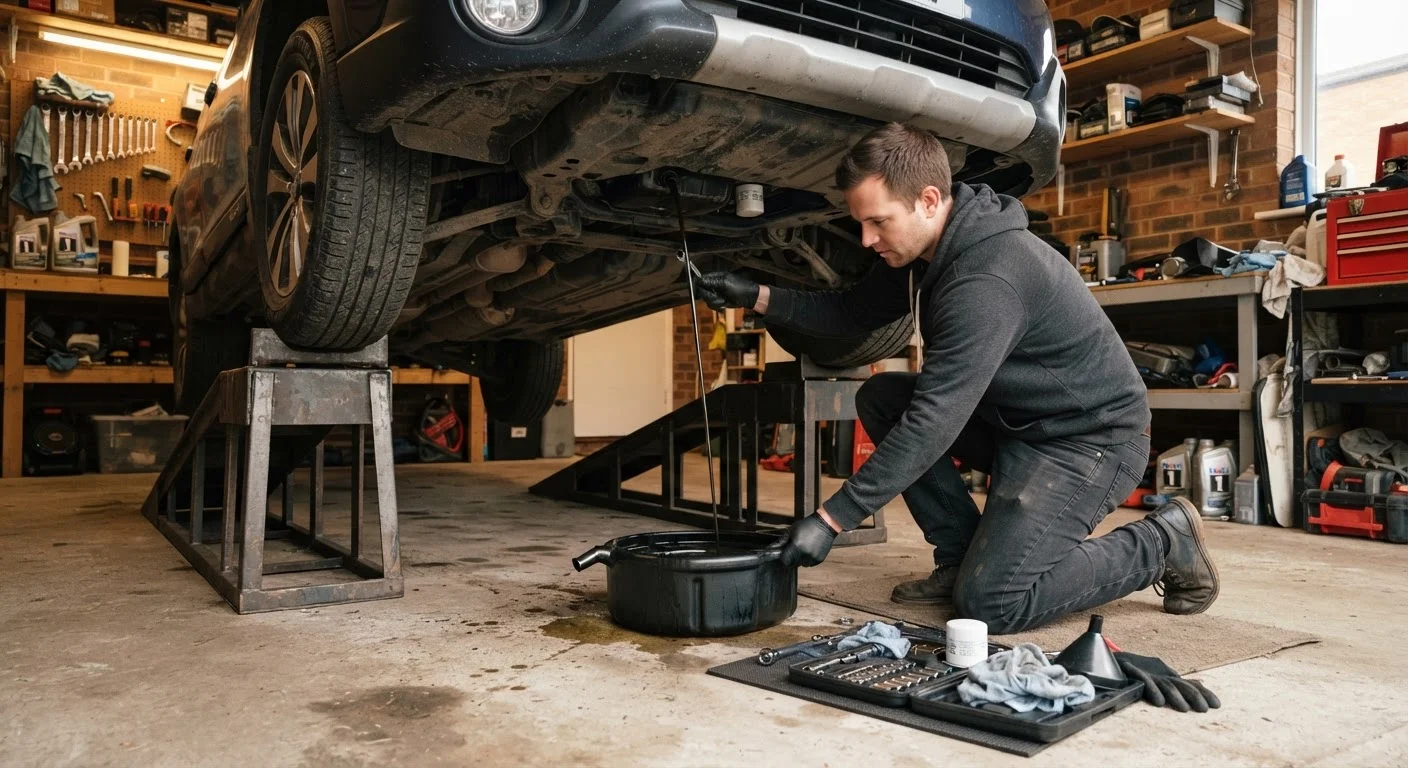
Ramps or a jack, drain pan, filter wrench, and funnel can cost $60-$120 before you buy a drop of oil. The savings math doesn't favor DIY until those costs are spread across several changes.
Used oil disposal is legally required and logistically awkward
All U.S. states classify used motor oil as hazardous waste. Improper disposal is illegal, and the need to store and transport it to a recycling point is a recurring hassle many first-timers don't anticipate.
A single mistake can cause serious engine damage
Using the wrong oil viscosity, failing to seat the drain plug correctly, or installing the filter without removing the old O-ring are errors that can result in oil leaks or, in worst cases, catastrophic engine failure.
No automatic service record for resale purposes
Shops generate receipts and digital records automatically. DIY changes require disciplined self-documentation, and incomplete records can reduce buyer confidence or dealership appraisal values.
Requires adequate workspace and safe vehicle support
Working under a vehicle that isn't properly supported on jack stands or quality ramps is a serious safety risk. Many drivers don't have a flat, stable surface appropriate for this work.
Time cost is often underestimated
Between gathering supplies, draining and refilling, cleanup, and a disposal run, a DIY oil change can consume 60-90 minutes - often more than a shop appointment for drivers without an established routine.
When to Skip DIY Entirely
Some vehicles make DIY oil changes impractical by design. Certain models require removing undertray panels to access the drain plug, or have filters positioned in ways that make mess almost unavoidable. If your owner's manual requires a specialty filter tool or an unusual oil specification, check what those components cost at retail before assuming DIY will save money. A quick look at a model-specific forum will usually tell you what you're in for.
If you're still working through how to decide which car maintenance tasks belong in your driveway versus a shop bay, the broader framework in this DIY vs. hiring-out decision guide applies directly to auto work as well.
What the Numbers Actually Look Like
Cost comparisons between DIY and shop oil changes are often oversimplified. The savings are real but narrower than advertised once you account for startup costs.
$20-$50
Typical savings per DIY oil change vs. shop
Based on general comparison of retail oil and filter prices versus average full-service shop labor charges in the U.S., excluding initial tool investment.
~1.3 billion
Gallons of used oil generated annually in the U.S.
According to the U.S. Environmental Protection Agency, used motor oil from vehicles is one of the largest single sources of oil pollution in American waterways when improperly disposed of.
60-90 min
Realistic time for a first-time DIY oil change
Industry estimates and consumer reports suggest first-timers typically spend significantly longer than the 20-minute figure often cited in tutorial videos, once setup and cleanup are included.
A basic set of ramps or a floor jack, an oil drain pan, a filter wrench, and a funnel can run $60-$120 upfront - costs that take several changes to recoup. If your vehicle requires a synthetic blend or full synthetic oil (as most modern engines do), the per-change materials cost rises further. Once your tool investment is amortized, the math improves meaningfully. But for someone who changes their oil twice a year and doesn't own any equipment, the break-even point may be further out than expected.
The Disposal Problem Nobody Mentions at the Parts Counter
Used motor oil is classified as hazardous waste in all U.S. states. Pouring it down a drain, into a storm sewer, or onto the ground is illegal and genuinely harmful to waterways. Yet disposal logistics rarely come up in the enthusiasm around DIY savings.
Most auto parts retailers accept used oil for recycling at no charge - typically up to five gallons per visit. That system works well once you know about it and plan for it. The snag is storage: you need a sealed, leak-proof container to transport the old oil, and it has to stay somewhere between drain and drop-off. For apartment dwellers or anyone without dedicated garage space, that's a real friction point. This is one of the more common reasons drivers who try DIY once don't continue.
Service Records and Resale Considerations
When it's time to sell or trade a vehicle, documented maintenance history carries weight with private buyers and can influence dealership appraisals. Shop-performed services generate a paper trail automatically - receipts, digital records, sometimes a sticker on your windshield.
DIY services require you to maintain your own records: date, mileage, oil brand and weight, filter part number. Most people intend to keep these records and don't. If you're the type to log this information diligently, you can present a credible history. If you're not, you may be handing a prospective buyer or dealer a reason to discount their offer. This isn't an argument against DIY - it's a prompt to build the habit if you go that route.