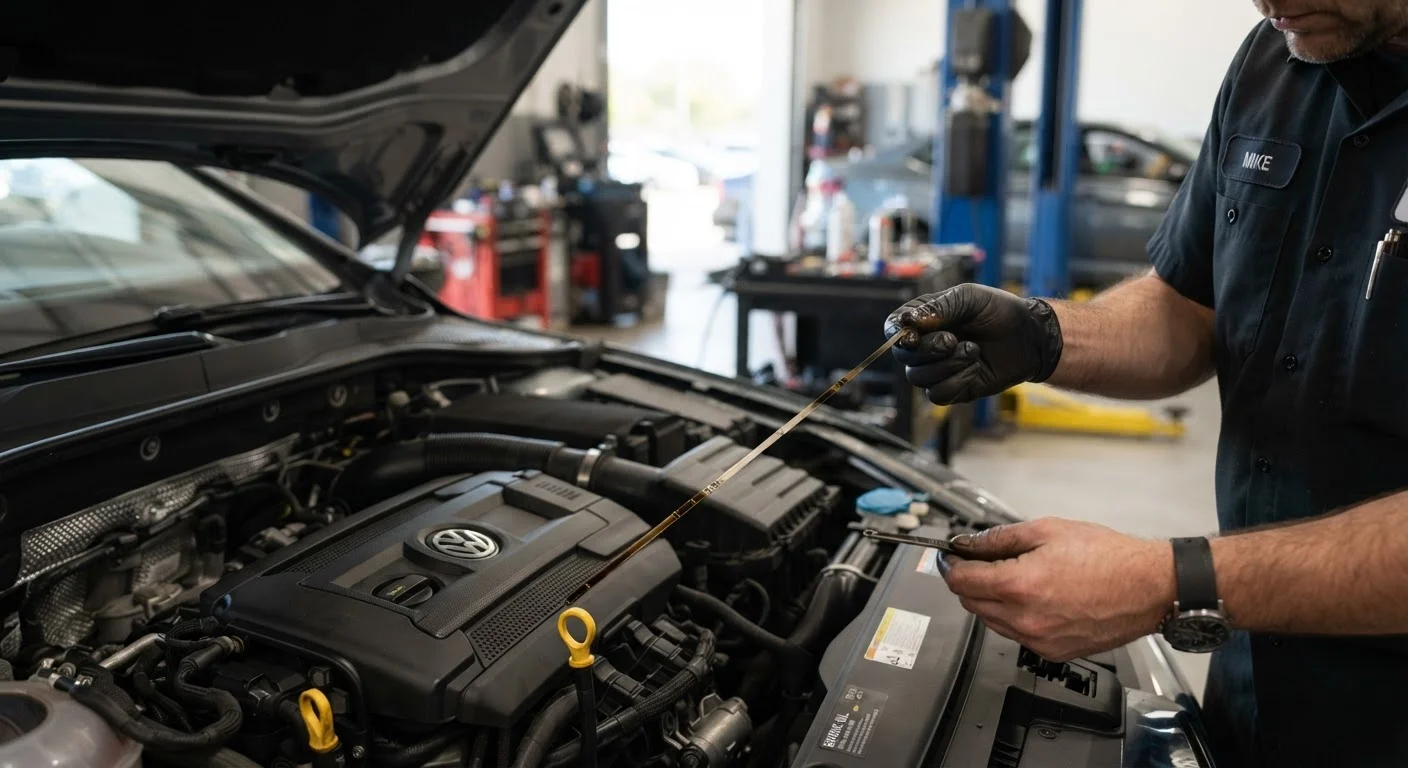
What Engine Oil Actually Does
Engine oil performs four critical jobs simultaneously: it lubricates metal surfaces to minimize friction, carries heat away from high-temperature components, suspends and transports combustion debris to the filter, and coats parts to prevent corrosion. Without effective oil, internal engine temperatures spike, metal contacts metal directly, and wear accelerates at a rate no repair budget can comfortably absorb.
What makes oil effective is not just the base fluid - it's a precisely engineered package of additives. Anti-wear agents, detergents, dispersants, and viscosity modifiers all work together. These additives get consumed through normal use, which is why oil has a finite service life regardless of how it looks on the dipstick. See our guide to car fluid maintenance for a broader look at how each fluid in your vehicle ages.
The Degradation Timeline: What's Happening Mile by Mile
In the early miles after an oil change, fresh oil forms a consistent film across bearing surfaces, cylinder walls, and camshaft lobes. As mileage accumulates, heat causes the base oil to oxidize - it thickens, becomes more acidic, and loses its ability to flow quickly through narrow oil passages on cold starts.
Combustion blowby - the gases that escape past piston rings - introduces water vapor, fuel residue, and acidic compounds into the crankcase. The oil's detergent package works to neutralize these contaminants, but that capacity is finite. Once the additives are depleted, the oil can no longer protect adequately, even if the engine's oil life monitor hasn't reached zero yet.
~$5,000+
Average cost of engine replacement on a mid-size vehicle
Industry repair estimates consistently place full engine replacements well above $4,000-$6,000 in labor and parts - a stark contrast to a routine oil change.
5,000-10,000 mi
Typical modern oil change interval range
Most current manufacturer recommendations fall within this window, with the specific interval depending on oil type and driving conditions outlined in the owner's manual.
40%
Engine wear reduction attributed to proper lubrication
Engineering research consistently identifies inadequate lubrication as a primary driver of premature engine wear, underscoring the direct link between oil quality and component longevity.
The transition from "working hard" to "failing" doesn't announce itself with a warning light. By the time you notice symptoms - engine noise, sluggish startups, a burning smell - damage is often already underway.
Sludge: The Most Damaging Consequence of Neglect
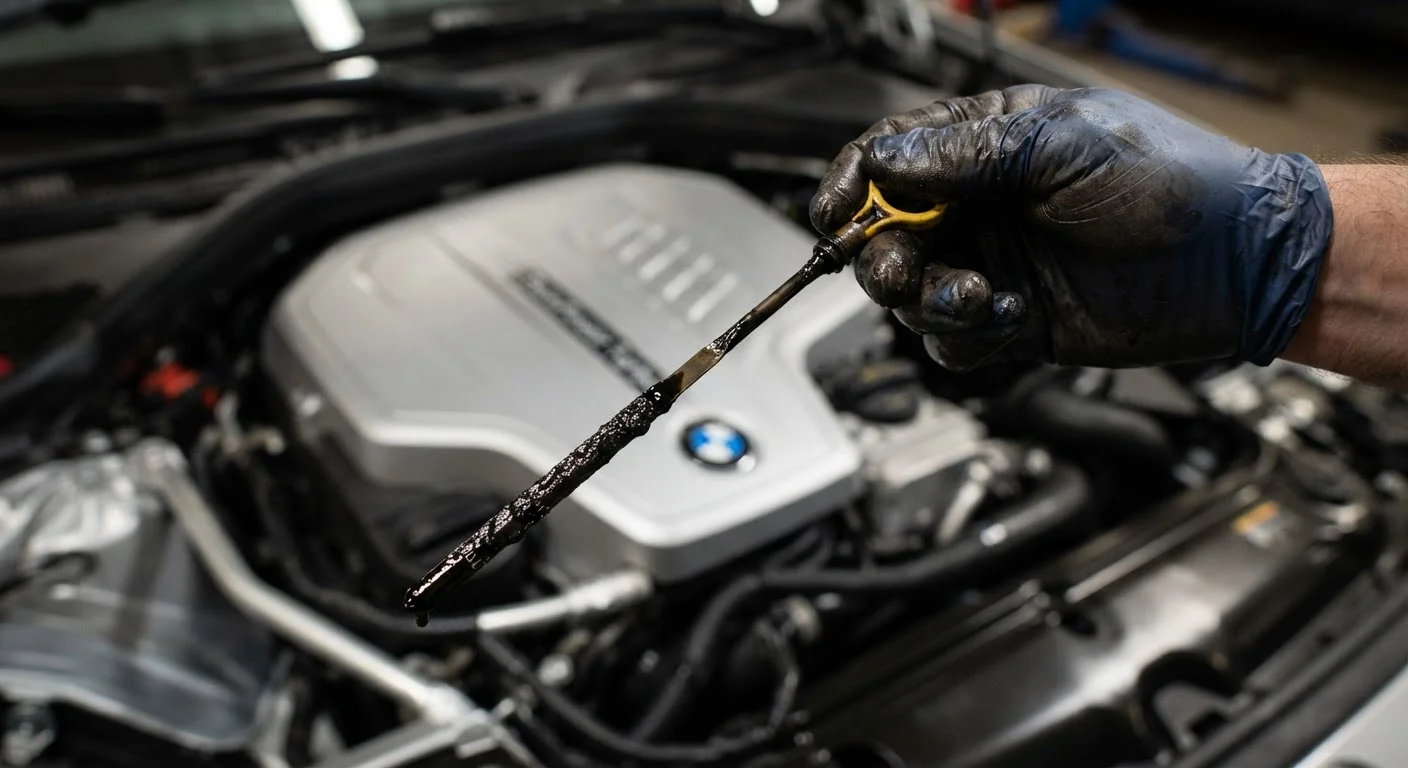
Engine sludge is what happens when heavily oxidized oil, combustion byproducts, and moisture combine into a gel-like deposit. It collects in the lowest-flow areas first: the valve cover, oil pan, and the narrow passages that feed rocker arms and timing chain tensioners. Once sludge narrows an oil passage, downstream components run oil-starved even when the oil level reads full.
Sludge damage is often irreversible without engine disassembly. In some cases, targeted engine flushes can help dissolve early-stage deposits, but severe sludge typically means a rebuild or replacement - costs that run well into the thousands. The maintenance required to prevent sludge is far simpler: consistent oil changes on schedule. For a full picture of your vehicle's service milestones, our maintenance schedule explainer breaks down what each interval actually requires.
Watch for These Early Warning Signs
Increased engine noise, especially a ticking or knocking at startup, can indicate oil starvation or sludge buildup. A burning oil smell, darkening exhaust smoke, or an oil pressure warning light are signals to stop driving and investigate immediately. Don't wait for a scheduled service if these appear - have the vehicle inspected by a qualified mechanic promptly.
How Long Is Too Long? Finding the Right Interval
The old rule of thumb - change oil every 3,000 miles - is outdated for most modern vehicles. Current manufacturer recommendations typically fall between 5,000 and 10,000 miles depending on whether the engine uses conventional or full synthetic oil. Some vehicles with specific engineering and synthetic oil can extend further, though this varies by design.
The most reliable source is your vehicle's owner's manual, which often lists both a standard and a severe-use interval. Oil life monitoring systems, now common on many vehicles, use algorithms to estimate remaining oil life based on driving patterns - a useful tool, but one that works best when combined with a time-based check rather than used as the sole trigger.
If you're weighing the do-it-yourself route, our breakdown of DIY oil changes covers the trade-offs honestly. And if you're unsure which type of oil your engine actually needs, engine oil types decoded explains the differences between conventional, synthetic, and blend options.