
Your car is always communicating - are you listening?
Modern vehicles are precision systems with hundreds of interacting components. When something starts to fail, the car almost always signals it before the problem becomes critical. Those signals come as unfamiliar sounds, unexpected smells, changes in how the vehicle handles, or fluids where there shouldn't be any. The challenge for most drivers is knowing which signals to act on immediately and which to monitor.
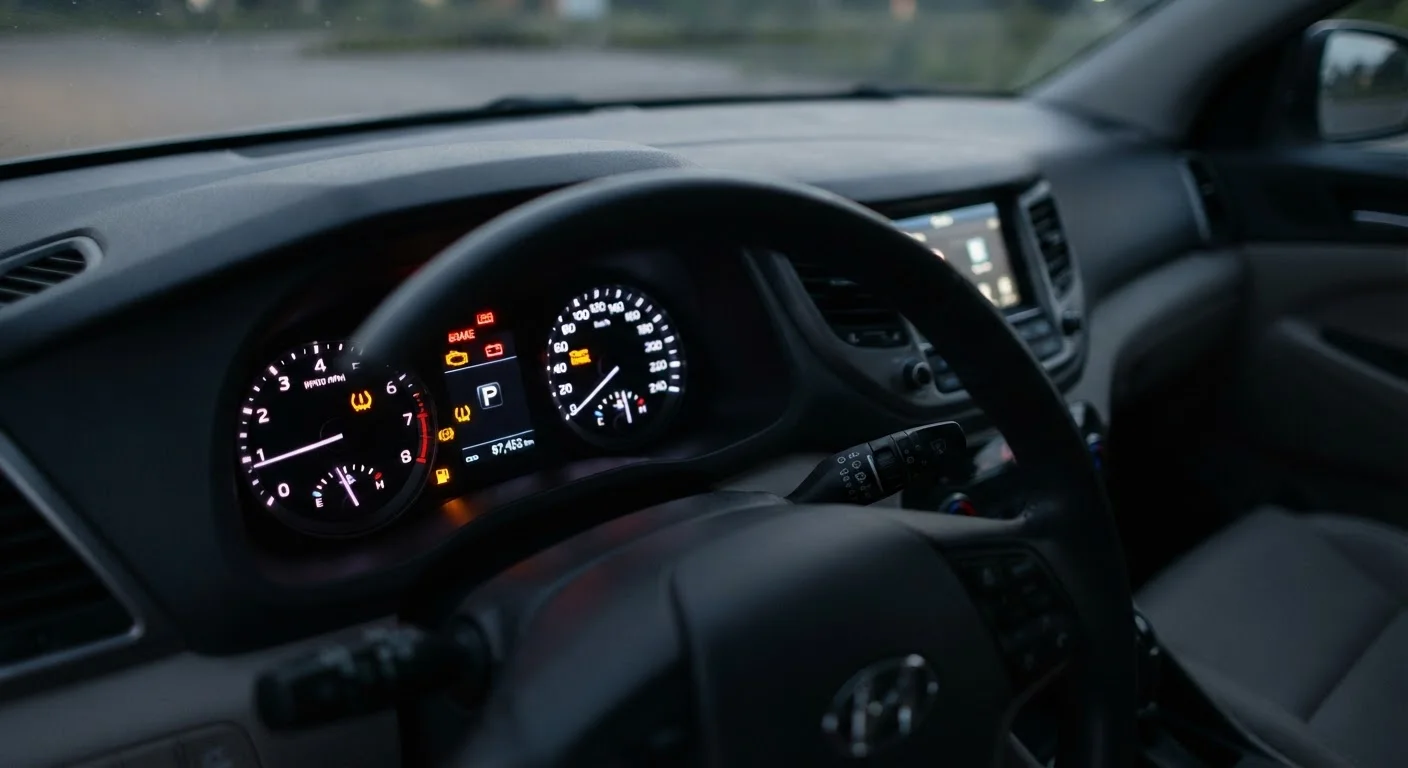
This guide covers seven of the most common and meaningful symptoms - what they tend to indicate, and what your next step should be. None of this replaces a proper diagnosis from a qualified technician, but it gives you the knowledge to recognize when something is off and describe it accurately. Dashboard warning lights are part of the same early-warning system - but many problems announce themselves through feel and sound before any light appears on the gauge cluster.
Keep a simple symptom log
When something feels or sounds off, note it briefly: what you heard or felt, when it happens (cold start, highway speed, braking), and how often. Even a few notes on your phone give a mechanic a faster diagnostic starting point than 'it just feels weird.' The more specific you can be, the less time - and potentially money - gets spent narrowing down the cause.
Seven symptoms worth knowing
Burning smell from the engine bay or cabin
A sharp burning odor - whether it smells like rubber, oil, or something electrical - is one of the most direct signals a car can send. Burning rubber near the engine may indicate a slipping belt or a hose pressed against a hot component. An acrid, electrical smell often points to overheating wiring or a failing component. A burning oil smell can mean oil is dripping onto the exhaust manifold.
None of these smells are normal operating conditions. Pull over safely when it is practical to do so and let the engine cool before investigating. Have a mechanic inspect the source before driving further - continuing to drive can turn a minor issue into a major failure.
A burning smell is never just a quirk - it signals heat where it shouldn't be.
Squealing, grinding, or pulsing when you brake
Brake systems are designed with wear indicators - small metal tabs that scrape against the rotor to create a high-pitched squeal when pads wear thin. That sound is intentional: it means your pads need replacement soon. Ignore it long enough and the squeal graduates to grinding, which typically means metal-on-metal contact and potential rotor damage - a significantly more expensive repair.
A pulsing sensation in the brake pedal often indicates warped rotors. Pulling to one side under braking can suggest uneven pad wear or a stuck caliper. Brake problems directly affect your ability to stop safely, so these symptoms warrant a professional inspection without delay.
Brake squealing is a designed warning - grinding means the warning has already been ignored.
Vibration or shimmy in the steering wheel
Some steering wheel vibration is normal at specific speeds due to road surface. But a persistent shimmy - especially one that starts at highway speeds or worsens under braking - typically points to wheel balance issues, worn suspension components, or warped rotors. A vibration that appears only when turning may suggest a worn CV joint or tie rod end.
Steering feel is your most direct connection to what the front wheels are doing. Changes in that feedback - new vibrations, looseness, or pulling - are worth tracking and describing accurately to your mechanic. Dashboard warning lights sometimes accompany these issues, but often they don't - the steering itself is the signal.
Steering vibration is your car's most direct message about wheel and suspension health.
Fluid puddles under a parked car
A small water puddle under the front of the car after running the air conditioning is normal condensation. Almost anything else warrants attention. Engine oil is dark and slick. Coolant is often greenish, pinkish, or orange and has a slightly sweet smell. Transmission fluid is typically reddish. Brake fluid is clear to light yellow and slippery.
The location of the puddle gives clues about the source. Front-center puddles may indicate power steering or coolant. Rear puddles can suggest differential or axle seals. Ignoring leaks accelerates wear on related systems - some of the most damaging habits drivers have involve letting small leaks go unchecked for too long.
Every fluid has a color and smell - learning to read them tells you which system needs help.
Engine hesitation, rough idle, or stalling
If your engine stumbles when accelerating, runs roughly at a stop, or stalls unexpectedly, the fuel or ignition system is the usual starting point. Worn spark plugs, a clogged fuel injector, a failing mass airflow sensor, or a vacuum leak can all produce these symptoms. Modern vehicles will often set a diagnostic trouble code before the driver notices anything - so a check engine light alongside rough running is a paired signal worth taking seriously.
Rough idle that disappears once the engine warms up may point to a different cause than one that persists all the time. Log when and how often it happens - that context helps a technician diagnose faster.
An engine that stumbles or stalls is telling you its fuel or ignition system needs attention.
Knocking or ticking sounds from the engine
A rhythmic ticking on cold starts that fades as the engine warms is often low oil pressure until the oil circulates - usually harmless if brief, but worth monitoring oil level regularly. A ticking that persists at operating temperature can indicate a worn valve train component or insufficient lubrication. A deeper knocking - sometimes described as a rod knock - is more serious and often signals internal engine wear that requires professional evaluation promptly.
Engine sounds are easiest to describe when you note their rhythm (steady vs. intermittent), their pitch (high tick vs. low knock), and when they occur (idle, acceleration, deceleration). That description dramatically narrows the diagnostic possibilities for a mechanic.
The rhythm and pitch of an engine knock tells a mechanic almost as much as a scan tool.
Car drifts or pulls to one side
A vehicle that tracks straight on a level road without driver correction is properly aligned. One that consistently drifts left or right without input usually has a tire pressure imbalance, alignment issue, or uneven brake wear. If the pull is sudden or appears after hitting a pothole or curb, a bent wheel or damaged suspension component is a realistic possibility.
Alignment problems accelerate tire wear unevenly - you may notice one edge of a front tire wearing faster than the other. Catching this early through regular tire inspections, especially before seasonal changes, preserves tire life and fuel efficiency. The seasonal car care checklist is a practical place to build this habit.
A car that drifts without input is rarely a road problem - it's usually an alignment or tire issue.
When to stop driving immediately
Some symptoms - sudden loss of braking power, steam from under the hood, a strong burning smell accompanied by smoke, or a loss of steering control - require pulling over safely and stopping the vehicle rather than driving to a shop. Continuing to drive can cause additional damage or create a safety hazard. In those situations, contact roadside assistance or a tow service.
Acting early almost always costs less
The consistent pattern across all these symptoms is that early attention is cheaper than delayed action. A brake pad replacement costs a fraction of a rotor replacement. Topping up and identifying a coolant leak costs far less than repairing an overheated engine. Small leaks, mild vibrations, and intermittent noises rarely resolve on their own - they tend to grow.
Building awareness of your car's normal behavior - how it sounds, how it idles, how the steering feels - is what makes abnormal conditions obvious. Pair that awareness with regular seasonal checks and you've built a reliable early-warning system of your own. For a closer look at the habits that quietly accelerate vehicle wear over time, see these overlooked maintenance mistakes that many drivers don't realize they're making.