The Basic Mechanics: How a Deductible Works
When you file a claim under your collision or comprehensive coverage, your deductible is the first amount subtracted from what your insurer pays. If hail causes $1,800 in damage and your comprehensive deductible is $500, your insurer's check covers $1,300 - you handle the rest directly with the repair shop.
This per-claim structure is an important distinction. Auto deductibles are not cumulative the way health insurance deductibles often are. Each covered loss restarts the equation. Two separate fender-benders in the same calendar year each trigger their own $500 (or whatever amount you've chosen) deductible - there is no cap on how many times that figure applies.
Liability coverage - the portion that pays for damage or injury you cause to someone else - carries no deductible at all. Deductibles are a feature of the coverages that protect your own vehicle.
The Trade-Off: Premium vs. Out-of-Pocket Risk
The deductible you select directly influences your premium - the amount you pay each month or each policy period to keep coverage active. In general, choosing a higher deductible reduces your premium, while a lower deductible means you pay more up front in premiums to reduce your exposure when a claim arises.
$500-$1,000
Most common collision deductible range for U.S. drivers
Industry surveys consistently show the majority of policyholders select deductibles in this range, balancing premium savings with manageable out-of-pocket exposure.
~15-30%
Estimated premium reduction from doubling your deductible
The Insurance Information Institute notes that increasing a deductible from $200 to $500 may reduce collision and comprehensive premiums by 15-30%, though actual savings vary by insurer and driver profile.
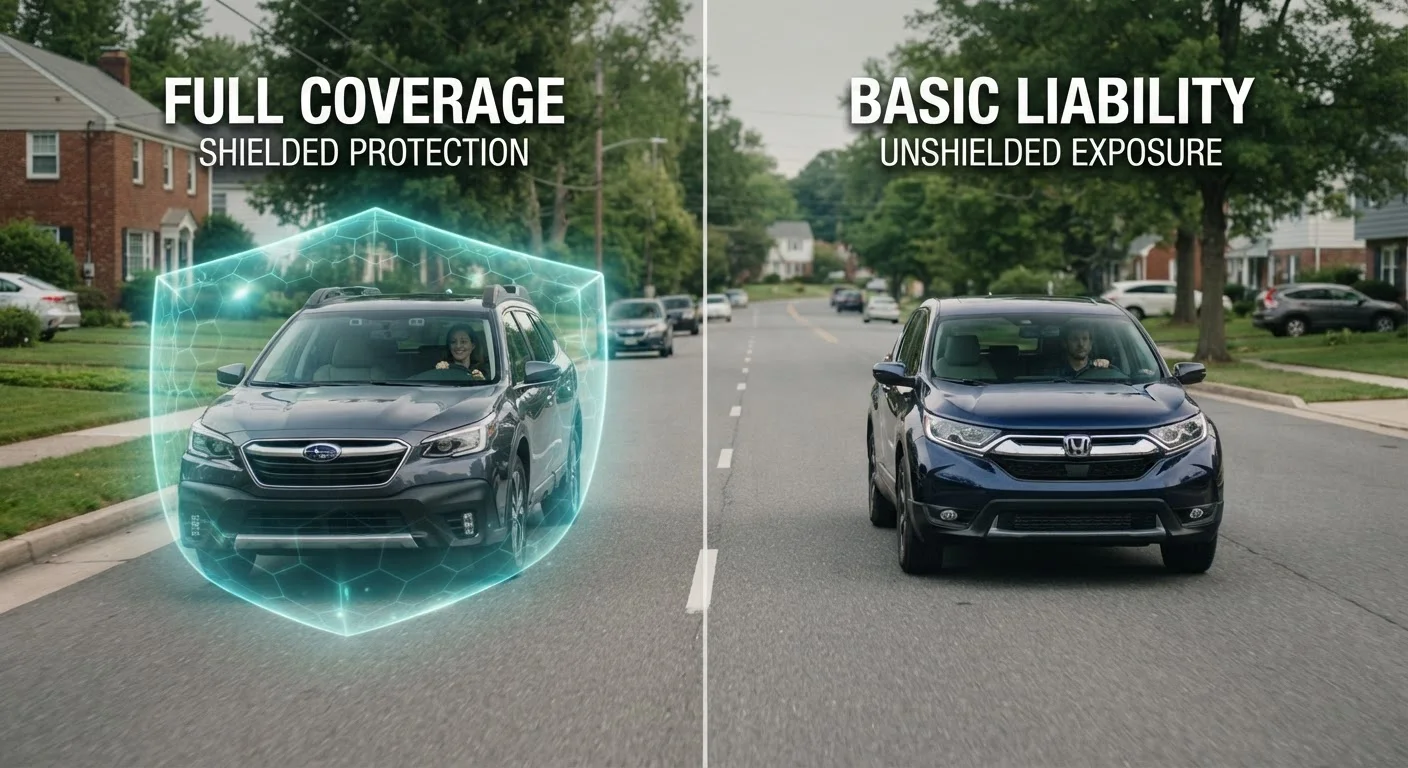
The logic from an insurer's perspective is straightforward: a higher deductible means you absorb more of the smaller losses yourself, which reduces the insurer's payout frequency. That reduced exposure translates into a lower premium for you. Understanding this relationship is also central to the broader question of how much coverage makes sense - covered in our guide on full coverage vs. liability-only.
The risk sits on the other side of the ledger. If you select a $1,500 deductible to cut your premium but don't have $1,500 readily accessible, you may find yourself unable to get your car repaired after an accident. Choosing a deductible that fits your actual financial cushion is more important than chasing a lower monthly payment.
When Filing a Claim Doesn't Make Financial Sense
Not every covered incident warrants a claim. If the repair estimate is close to - or below - your deductible, filing accomplishes little financially and creates a claims record that could influence your future premium. Some insurers track claim frequency even when individual payouts are small.
Get a Repair Estimate Before Filing
Before submitting a claim for minor damage, get a written repair estimate from a shop first. If the estimate is close to your deductible, you'll have real numbers to weigh rather than guessing. Most shops will provide a written estimate at no charge, and it puts you in a much stronger position to decide whether filing is worth it.
A useful rule of thumb: if the damage is less than your deductible plus any anticipated premium increase over the next few years, paying out of pocket is often the more economical path. This doesn't mean avoiding claims for serious damage - that's exactly what insurance is for. But a small parking-lot scrape may not clear that threshold.
For a full look at how claims affect your policy costs, see our article on common auto insurance mistakes that can backfire at claim time.
Matching Your Deductible to Your Vehicle's Value
Your vehicle's market value sets a ceiling on what any claim can pay out. Insurers won't pay more than a vehicle is worth, and they subtract your deductible before issuing a settlement. If a car is worth $4,000 and you carry a $2,000 deductible, your maximum realistic payout after a total loss is $2,000 - which may not justify the premium you're paying for comprehensive and collision coverage.
As vehicles age and depreciate, it's worth periodically recalculating whether your current deductible still makes sense given the vehicle's value. Your deductible is just one of several factors shaping what you pay - for a broader picture, see factors that influence your auto insurance premium.
This article provides general information about auto insurance concepts and is not a substitute for personalized advice. Coverage terms, deductibles, and premium impacts vary by insurer, policy, and state. Consult a licensed insurance agent or adviser to evaluate your specific situation before making coverage decisions.