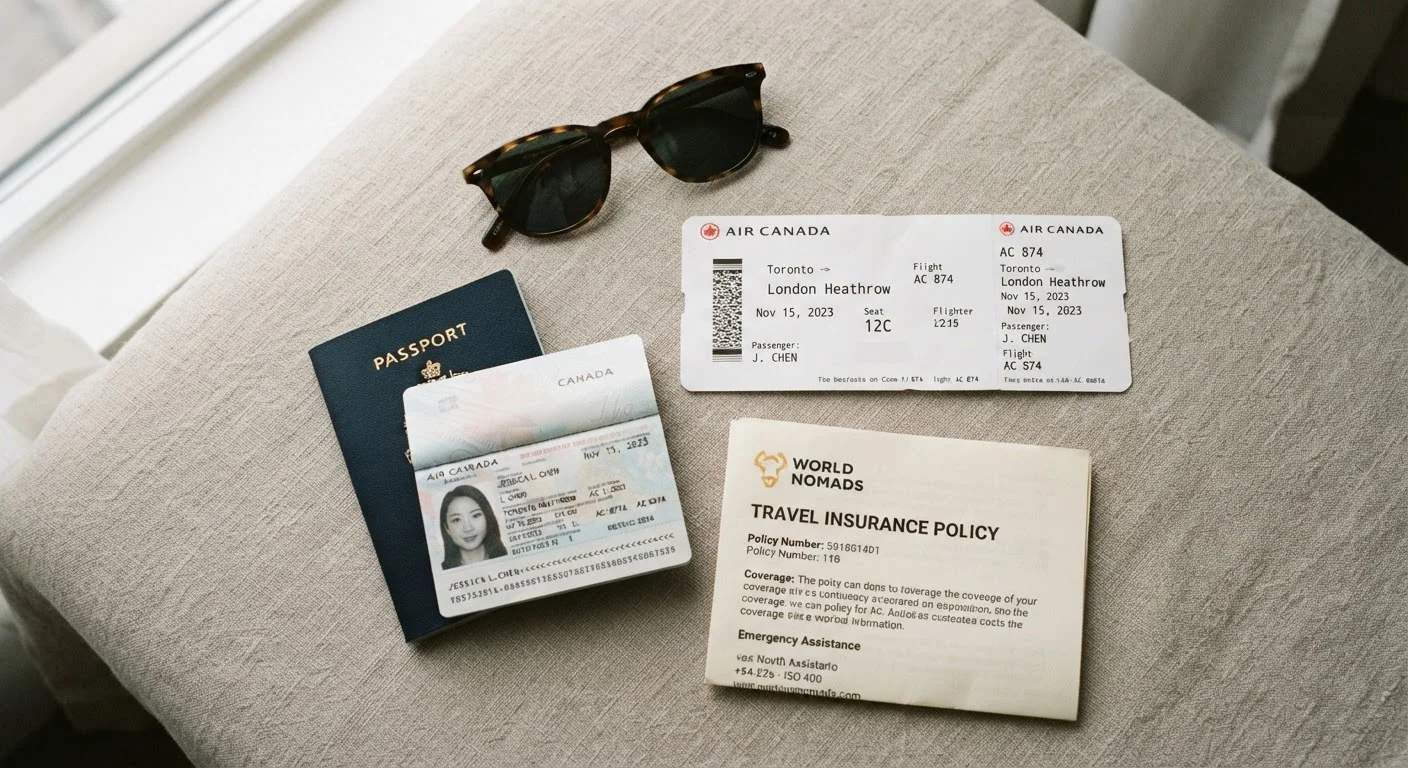

What Travel Insurance Is - and What It Isn't
Travel insurance is a contract: you pay a premium, and in exchange the insurer agrees to reimburse you for certain financial losses that arise from specific, covered events. The operative word is specific. Travel insurance is not a blanket safety net - it's a set of defined protections with defined limits.
Most standard travel insurance plans bundle several coverage types together, including trip cancellation and interruption, emergency medical benefits, medical evacuation, baggage loss or delay, and travel delay reimbursement. Each of these has its own sub-limits, conditions, and exclusions. A plan that advertises $50,000 in medical coverage might cap emergency dental at $500 and require hospital admission before covering anything at all.
It's also worth understanding what travel insurance does not do. It won't compensate you for missing a flight because you were running late. It won't cover losses from events that were already foreseeable when you purchased the policy - a hurricane that was already named and tracked before your purchase date, for example, is typically excluded. Just as with other forms of insurance, understanding the exclusions is as important as understanding what's listed as covered. For a parallel look at how exclusions and limits work in another context, see how auto insurance policies are structured.
The Coverage Types That Matter Most
Trip Cancellation and Interruption: This is what most people think of first. If you have to cancel before departure - or cut a trip short - due to a covered reason, the policy reimburses your prepaid, non-refundable costs. Covered reasons are listed explicitly: serious illness or injury, death of a family member, jury duty, job loss (in some plans), severe weather at the destination, and others. Anything not on the list is not covered.
Emergency Medical and Dental: For U.S. travelers heading abroad, this is often the most practically important coverage. U.S. health insurance plans rarely cover overseas care, and out-of-pocket hospital costs in foreign countries can reach tens of thousands of dollars quickly.
Emergency Medical Evacuation: If you're seriously ill or injured in a remote location or a country without adequate medical facilities, evacuation to an appropriate hospital - or back to the U.S. - can cost $50,000 to $200,000 or more. Evacuation coverage is a strong argument for purchasing travel insurance on any significant international trip.
$50K-$200K+
Typical cost of international medical evacuation
Medical evacuation costs vary widely by origin, destination, and required medical equipment; the U.S. State Department notes that such costs can reach hundreds of thousands of dollars in some cases.
4%-10%
Typical travel insurance premium as % of trip cost
Industry sources and insurance educators generally cite this range as standard, with age and destination being the primary cost drivers.
~40%
U.S. travelers who purchase travel insurance
Surveys conducted by the U.S. Travel Insurance Association have found that a significant portion of American travelers purchase travel protection, though awareness of policy details remains low.
Baggage and Personal Effects: Coverage for lost, stolen, or damaged luggage typically has per-item limits and often excludes electronics, jewelry, and other valuables at standard rates. Delay benefits (for bags that arrive late) usually cover reasonable emergency purchases like clothing.
Travel Delay: If your trip is delayed beyond a set number of hours due to a covered cause (mechanical failure, weather), the policy may reimburse meals and accommodation costs up to a daily cap.
For a granular breakdown of what standard policies include and exclude line by line, see what travel insurance actually covers.
When Coverage Is Worth Considering - and When It May Not Be
Travel insurance makes the most financial sense when the cost of a potential loss significantly exceeds the cost of the premium. A $300 domestic weekend trip with a refundable hotel probably doesn't justify an additional $40-60 in insurance. A $8,000 international honeymoon with non-refundable flights, tours, and hotel deposits presents a very different calculation.
Buy Early to Maximize Protection
Purchasing travel insurance shortly after your first trip payment - ideally within 14 to 21 days - unlocks time-sensitive benefits that disappear if you wait. These include pre-existing medical condition waivers and the ability to cancel for reasons that may become 'foreseeable' (like an approaching storm) if you delay. Earlier purchase also means more days of cancellation coverage before departure.
Key scenarios where travel insurance is commonly worth considering:
- International travel - especially to destinations where your domestic health insurance won't apply
- Trips with large non-refundable deposits - cruises, group tours, and international flights are frequently non-refundable
- Travel with older or medically vulnerable travelers - higher risk of illness or hospitalization increases the value of medical and evacuation coverage
- Adventure or remote travel - destinations far from advanced medical facilities raise evacuation costs dramatically
On the other hand, if your credit card already includes trip delay reimbursement and baggage protection, and your trip is largely refundable, the case for a full standalone policy is weaker. Review what your card covers carefully before assuming it provides meaningful protection - card benefits often have narrow eligibility conditions.
How to Actually Use a Travel Insurance Policy
Purchasing a policy is only the first step. Using it effectively requires a few key practices:
- Read the policy document - not just the marketing summary. The full policy includes definitions, exclusions, and claims procedures that the summary page omits.
- Keep all documentation. Claims require proof: receipts, medical records, airline delay confirmations, police reports for theft. Without documentation, claims are routinely denied.
- Notify the insurer promptly. Many policies require you to contact them within a set window - sometimes 24 to 72 hours - of a covered event. Late reporting can void a claim.
- Understand the reimbursement model. Most travel insurance is reimbursement-based: you pay out of pocket first, then file a claim. Medical emergencies abroad may require a significant upfront payment unless the insurer offers direct billing.
Travel insurance sits alongside other types of insurance that reward careful reading and proactive management. The same diligence that applies to evaluating coverage limits and exclusions in auto insurance applies here: price is only one part of the equation.
This article is for general informational purposes only. Coverage terms, exclusions, and costs vary by insurer, plan, and state of purchase. Verify all policy details directly with a licensed insurance provider before purchasing. This is not personalized insurance or financial advice.