Why Ground Transportation Deserves Advance Planning
Landing at a major U.S. airport and improvising your exit is one of the most reliable ways to add unnecessary time and expense to a trip. Ground transportation at airports like LAX, O'Hare, JFK, and Hartsfield-Jackson isn't one-size-fits-all - each facility has distinct pickup zones, fee structures, and transit connections that reward travelers who look them up before they land.
This reference covers the main categories of airport ground transport so you know what to expect regardless of which airport you're arriving at. For a broader view of how transportation fits into the full trip-planning process, see The Complete Traveler's Reference.
The Main Options at a Glance
Rideshare Apps
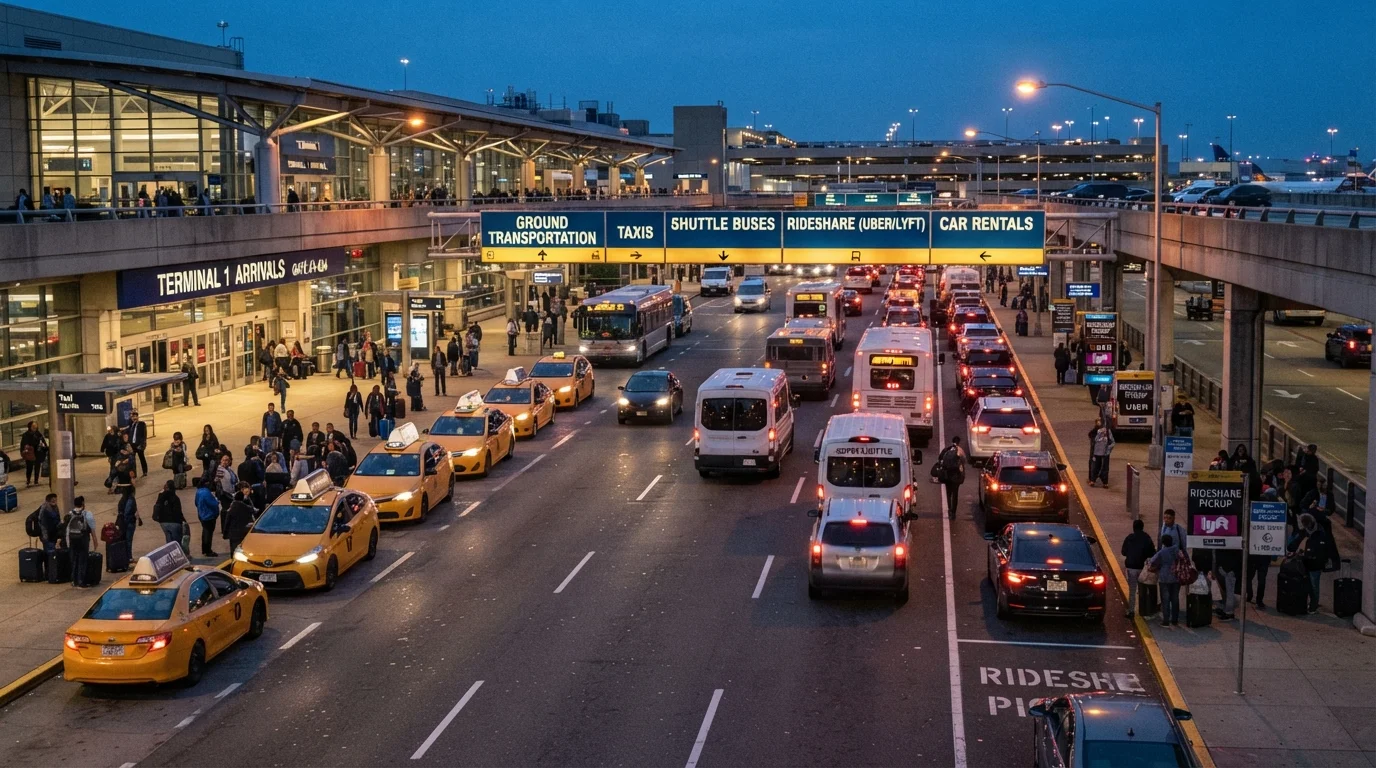
Rideshare services operate from designated pickup zones - never curbside at arrivals. At large airports these zones may be in a separate garage or on a different level entirely. Follow in-app directions rather than airport signage, which often lags behind layout changes. Surge pricing is common during peak hours and after delayed flights arrive in clusters.
Taxis
Metered taxis queue at regulated taxi stands outside baggage claim. Fares are set or metered by local ordinance, making the price predictable if you check the published rates for that airport beforehand. No app or pre-booking is required, which is useful when your phone battery is low or connectivity is limited.
Airport Shuttles
Shared-ride shuttles collect multiple passengers heading toward the same general area and make several stops. They are typically less expensive than a private ride but take longer. Advance reservation is often recommended, especially for early-morning or late-night arrivals.
Rail and Transit Connections
Several major airports connect directly to city rail networks: BART serves SFO, the Blue Line reaches LAX's Aviation/LAX station (with a people mover link), the AirTrain feeds into NYC's subway at JFK and Newark, and the CTA Blue Line runs directly into O'Hare. Rail options usually offer the most predictable travel times during rush hour. Navigating public transit in an unfamiliar city covers how to load a transit card and read unfamiliar maps once you're in town.
Rental Cars
Most major airports consolidate rental car facilities in a separate Consolidated Rental Car Center (ConRAC) reached by a free shuttle or automated people mover from the terminal. Factor in shuttle wait time when planning pickup - it can add 20-30 minutes at larger airports.
ConRAC
Consolidated Rental Car Center - a shared facility at many major airports that houses multiple rental car companies under one roof, typically reached by a free shuttle or automated people mover from the terminal.
Surge pricing
A dynamic pricing model used by rideshare apps that raises fares during periods of high demand, such as when many flights land simultaneously or during rush hour.
Shared-ride shuttle
A van or small bus service that transports multiple passengers traveling to the same general destination area, making several stops along a route rather than going directly to one address.
People mover
An automated, driverless transit vehicle - typically a tram or light rail - that connects airport terminals or links terminals to a remote facility like a rental car center or remote parking garage.
AirTrain
A brand name used for the automated rail links at JFK and Newark Liberty airports that connect terminals to subway and NJ Transit rail stations, enabling onward travel into New York City.
Practical Tips for Smoother Arrivals
Download the airport map before you land. Most major airports publish interactive terminal maps on their websites. Knowing whether rideshare pickup is in a separate garage or on Level 5 of the parking structure prevents unnecessary wandering with heavy luggage.
Compare published flat-rate fares. Cities including New York and Washington D.C. publish flat taxi rates from their major airports to downtown zones. These rates are publicly available and protect you from meter surprises on congested routes.
Verify drop-off versus pickup zones. At airports like LAX, the rideshare pickup zone shifted to a remote lot served by a dedicated lane - the drop-off area and pickup area are not the same place. Confirm current pickup logistics in the app before leaving baggage claim.
Account for connection time when planning ground transport. If you have a tight connection at a hub airport, ground transport between terminals matters. Understanding layovers and connections explains how minimum connection times are calculated and when they can go wrong.
International arrivals: build in extra time. Customs and baggage claim can add 45-90 minutes after landing. If someone is picking you up, coordinate via the flight's actual arrival plus a realistic customs buffer. Our international arrival checklist walks through what to expect step by step.
Transportation availability, pricing, and pickup zone locations are subject to change. Always verify current details with the airport's official website and your chosen transportation provider before travel.