Why Smartwatch Myths Spread So Easily
Smartwatches have become everyday accessories for tens of millions of Americans, and health tracking is the headline feature driving many purchases. The marketing language around these devices - phrases like "medical-grade" or "clinically validated" - can blur the line between a consumer gadget and an actual medical instrument. That ambiguity, combined with how personally meaningful health data feels, creates fertile ground for misconceptions to take hold.
Understanding what these devices genuinely measure - and where they fall short - helps you get real value from your wearable while avoiding decisions that should be left to a qualified healthcare provider. For a deeper baseline, see our guide on what consumer health gadgets can and can't do.
Myth
My smartwatch gives me an accurate calorie burn count I can trust for diet planning.
Fact
Consumer wearables typically carry a 20-40% margin of error on calorie estimates, making them useful for rough trends but unreliable for precise tracking.
Calorie calculations on wearables combine step counts, heart rate, device-stored demographic data (age, weight, height), and proprietary algorithms. Each variable introduces its own error. Research published in peer-reviewed journals has repeatedly found that even the most accurate consumer devices diverge meaningfully from lab-measured energy expenditure. Using the number as a precise target - especially to "earn" extra food - can undermine rather than support health goals.
Myth
The heart rate monitor on my wrist is as accurate as a chest strap or clinical ECG.
Fact
Optical (PPG) wrist sensors are reasonably accurate at rest, but accuracy drops during high-intensity exercise, cold conditions, or when the watch fits loosely.
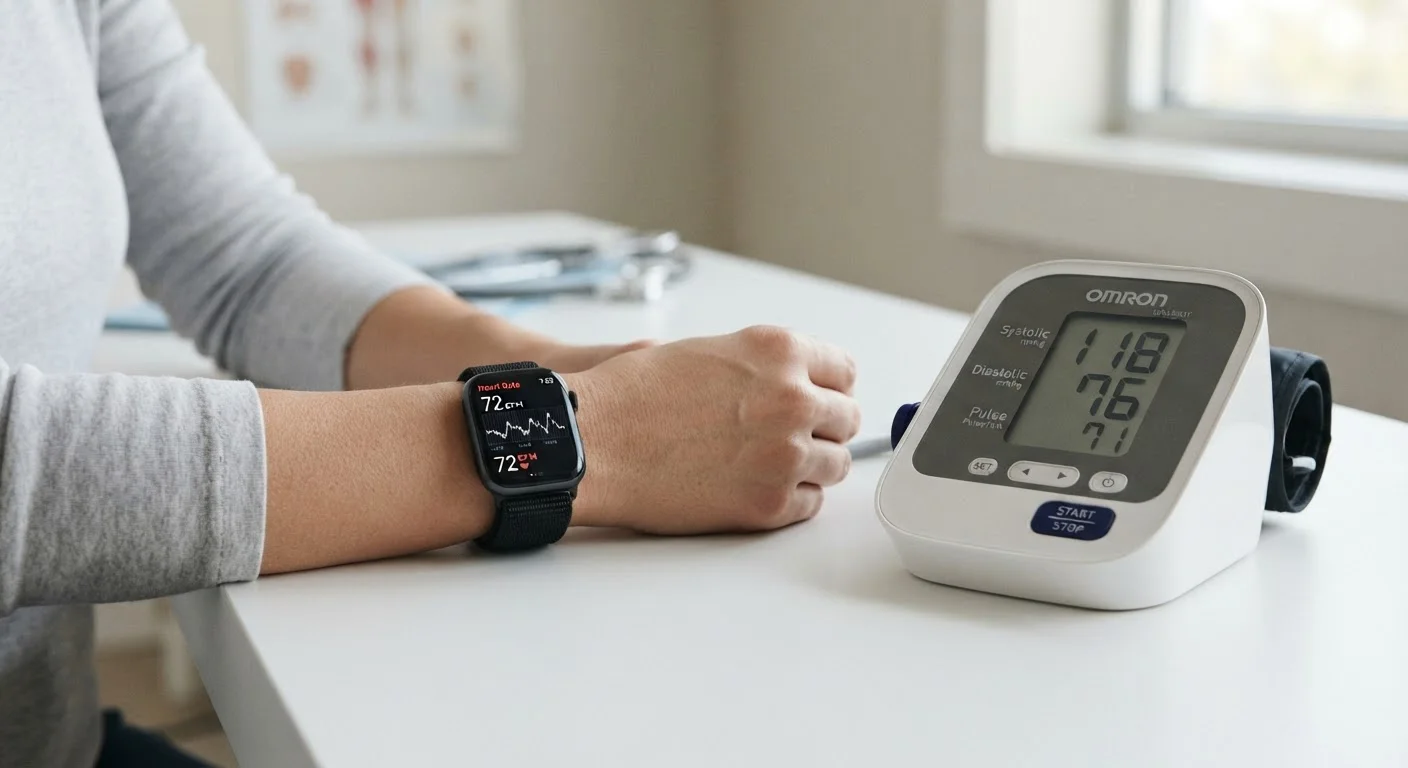
Photoplethysmography (PPG) - the green-light sensor on the back of most smartwatches - measures blood volume changes at the wrist. It works well for resting heart rate trends, but motion artifacts, skin tone variation, and wrist position all affect readings. A dedicated chest-strap heart rate monitor provides meaningfully better real-time accuracy during exercise. Clinical ECGs, meanwhile, measure electrical signals directly from the heart - a fundamentally different and more precise method.
Myth
If my smartwatch has an ECG feature, it's giving me a clinical-quality electrocardiogram.
Fact
FDA-cleared single-lead ECG features can detect atrial fibrillation signals, but they capture far less information than the 12-lead ECG used in clinical settings.
Some smartwatches carry genuine FDA clearance for their ECG functionality - that regulatory status is real. However, a wrist-based single-lead ECG captures one electrical perspective of heart activity, while a clinical 12-lead ECG captures twelve. The wearable version is appropriate for flagging potential atrial fibrillation (AFib) episodes; it is not a replacement for cardiology evaluation. A positive or negative result from your watch should prompt a conversation with a healthcare provider, not a self-diagnosis.
[important_callout]Myth
Sleep tracking tells me exactly how much deep sleep and REM sleep I'm getting.
Fact
Consumer sleep tracking infers sleep stages from movement and heart rate variability - it does not directly measure brain activity the way a clinical sleep study does.
A polysomnography sleep study measures brain waves (EEG), eye movement, muscle activity, and breathing simultaneously. Smartwatches use accelerometers and heart rate data to estimate when you're asleep and attempt to classify stages. Published validation studies show that consumer devices classify light vs. deep sleep with modest accuracy, and individual nights can diverge significantly from ground truth. The trend over many nights is more informative than any single night's breakdown.
Myth
Wearing a smartwatch continuously means I'm being constantly monitored for heart problems.
Fact
Most smartwatches run passive heart rate checks at intervals and only activate ECG features on demand - they are not continuous cardiac monitors.
Passive heart rate sampling typically happens every few minutes, not continuously. ECG readings require the user to actively initiate a reading (usually by touching a sensor). This means brief arrhythmia episodes could easily occur between readings without being captured. Patients who genuinely need continuous cardiac monitoring are prescribed dedicated medical-grade Holter monitors or implantable loop recorders - very different tools from consumer wearables.
Using Your Wearable Wisely
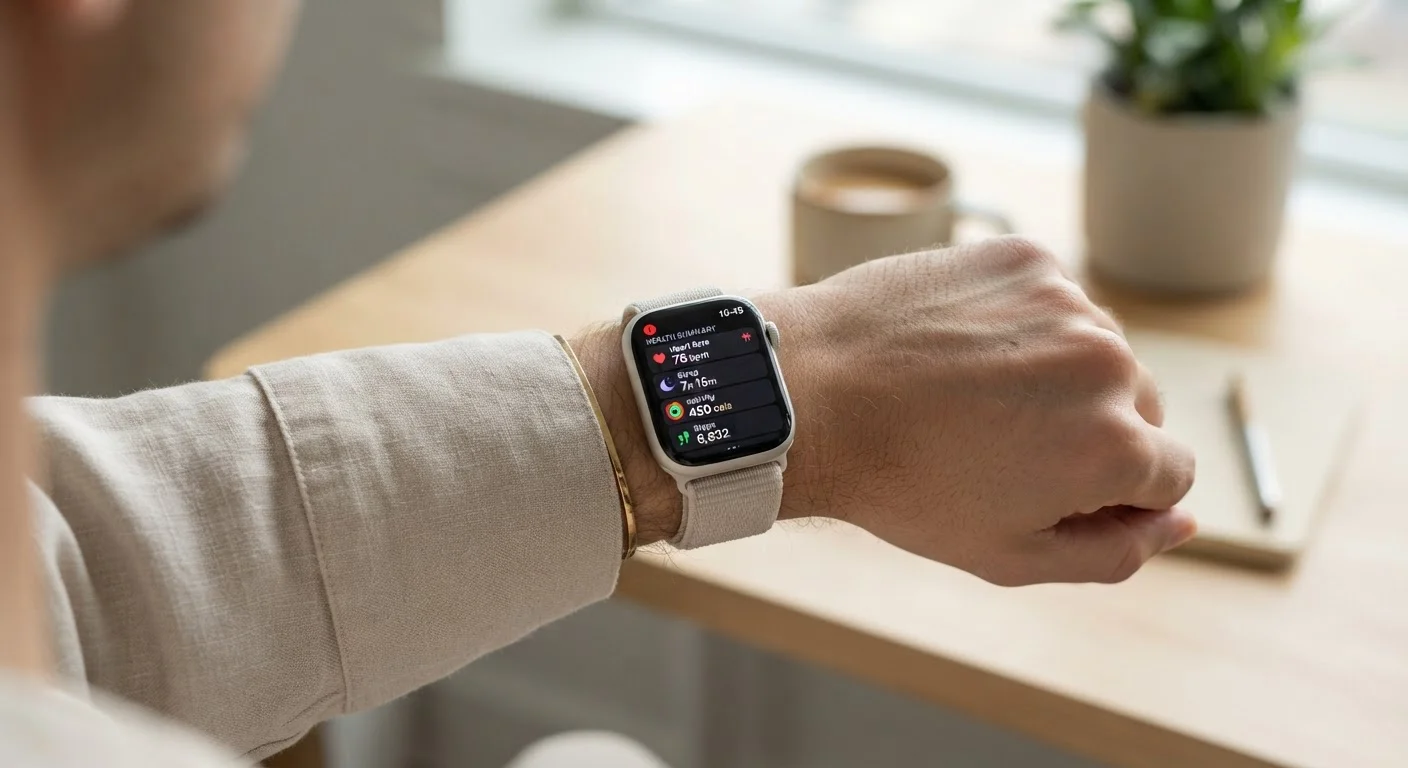
None of the limitations above mean smartwatches are useless health tools. Trend data - your resting heart rate over weeks, your step consistency, your sleep duration patterns - is genuinely actionable. The key is framing the device as a behavioral mirror rather than a diagnostic instrument.
~30%
Typical calorie estimate error range
Multiple independent validation studies have found consumer wearable calorie estimates deviating roughly 20-40% from lab-measured values on average.
1 in 4
Adults who own a smartwatch or fitness tracker
Pew Research Center surveys have consistently found wearable ownership among roughly one-quarter of U.S. adults, underscoring the scale of the misconception risk.
If your device flags something that concerns you - an unusually high resting heart rate, irregular rhythm notifications, or persistent low sleep scores - treat that as a prompt to consult a clinician, not a diagnosis in itself. Misreading body signals is already common without adding device noise to the mix; our article on common misreadings of your own body signals explores how that confusion happens. Wearables can also raise data-privacy questions worth examining - what data connected devices actually collect is a useful starting point.
This article is for general informational purposes only and does not constitute medical advice. Always consult a qualified healthcare professional for any health concerns or before making decisions based on wearable data.