
Why We Misread Our Own Bodies
The human body communicates constantly - through sensations, cravings, energy shifts, and mood changes. But interpreting those signals accurately is harder than it sounds. Our brains rely on mental shortcuts, past experiences, and context to label physical feelings, and those shortcuts are frequently wrong.
Research in the field of interoception - the ability to sense what's happening inside the body - suggests that many people have a surprisingly limited ability to accurately identify their own internal states. This isn't a personal failing; it's a feature of how the nervous system works. Signals overlap, emotions color perception, and cultural habits (like eating on a schedule rather than in response to hunger) can gradually erode our ability to notice what we actually need.
Understanding where these misreadings commonly occur can help you respond to your body more accurately - and make choices that genuinely address the underlying signal. As always, if you're experiencing persistent or unusual physical symptoms, consult a qualified healthcare professional rather than self-diagnosing.
The Most Common Signal Mix-Ups
These are some of the most frequent ways people misinterpret what their bodies are telling them - and what the signal often means instead.
Mistaking thirst for hunger and eating when the body actually needs water.
Why it happens: The hypothalamus regulates both hunger and thirst, and the sensations it produces can feel almost identical - a vague discomfort or restlessness that's easy to label as a craving for food.
Labeling the physical arousal of anxiety as a sign that something is dangerously wrong.
Why it happens: Anxiety and excitement produce nearly identical physiological responses - elevated heart rate, heightened alertness, muscle tension - and the label we attach often depends on context and past experience rather than the sensation itself.
Assuming persistent fatigue is a symptom of depression rather than a physical deficit.
Why it happens: Fatigue and low mood share surface-level similarities - low motivation, reduced energy, difficulty concentrating - so it's natural to conflate them. But fatigue has many documented physical contributors, including poor sleep quality, iron deficiency, dehydration, and thyroid function.
Interpreting digestive discomfort as purely a food-related issue when stress is the cause.
Why it happens: The gut and brain are deeply connected via the enteric nervous system - sometimes called the gut-brain axis. Stress and emotional distress can cause very real gastrointestinal symptoms, but many people reach for dietary explanations first because that feels more tangible.
Reading emotional numbness as a sign of being calm or fine.
Why it happens: When the nervous system is overwhelmed, it can shift into a low-arousal, disconnected state that superficially resembles calm. People may interpret the absence of acute distress as evidence they've resolved an issue.
For a deeper look at how physical sensations can reflect emotional states you might not recognize as stress, see our article on signs your body may be carrying chronic stress.
Building Better Body Literacy
Improving your ability to read internal signals accurately is a learnable skill - researchers sometimes call it interoceptive awareness. It doesn't require special tools or techniques, though structured practices like mindfulness and breath awareness have shown promise in clinical research for improving it.
~30%
Adults who regularly confuse hunger and thirst
Research published in the journal Physiology & Behavior has indicated that a significant portion of adults have difficulty reliably distinguishing hunger from thirst signals.
2 in 3
People who underestimate stress-related physical symptoms
Surveys by the American Psychological Association have consistently found that a majority of adults do not connect physical complaints like headaches or fatigue to stress.
Simple habits can make a meaningful difference. Before reaching for food, pause and ask whether you've had water recently. When you feel a rush of nerves before a challenge, notice that the physical experience is almost identical to excitement - because physiologically, it largely is. When you feel persistently low, consider whether your sleep, movement, or nutrition patterns have shifted before assuming the worst.
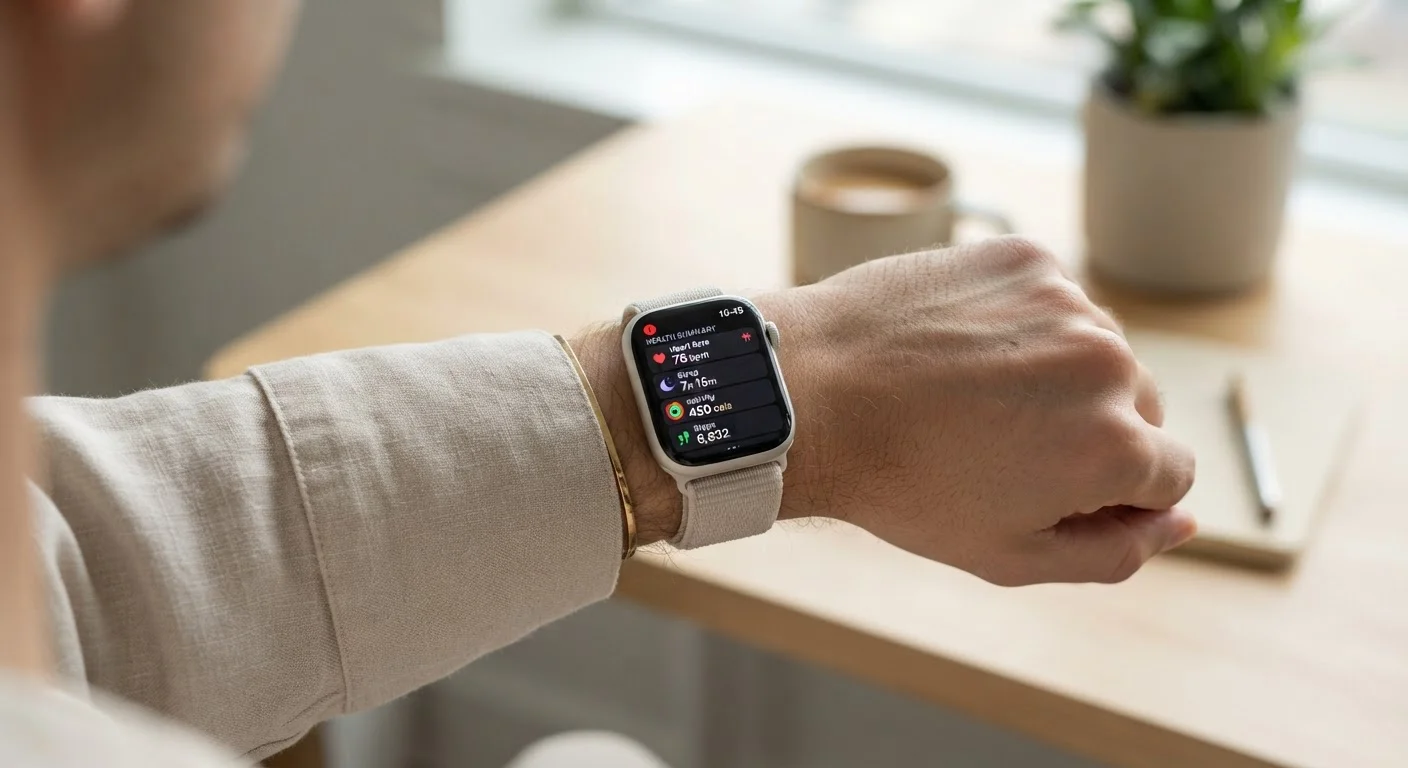
It's also worth noting that wearable devices can offer data points, but they interpret signals too - and with their own limitations. Our coverage of common myths about smartwatches and health tracking explores where consumer devices genuinely help and where they fall short.
Understanding how your body uses energy is another part of the picture. Our explainer on energy balance in plain terms can help you separate real hunger cues from habit-driven eating.
Finally, not all repetitive thinking is harmful - but some patterns do drain the body as well as the mind. If you find yourself caught in loops of anxious or critical thought, the distinction explored in rumination vs. reflection may be useful context.
This article is for general informational and educational purposes only and is not a substitute for professional medical advice, diagnosis, or treatment. Always consult a qualified healthcare provider with questions about your health or any symptoms you are experiencing.