
The Real Cost Comparison
The most common mistake in this debate is comparing a monthly rent payment directly to a mortgage payment. That comparison omits most of what homeownership actually costs.
Buyers typically need a down payment of 3% to 20% of the purchase price, plus closing costs averaging 2% to 5% of the loan amount. Once in the home, owners are responsible for property taxes, homeowner's insurance, HOA fees where applicable, and all maintenance and repairs - expenses that commonly add 1% to 2% of the home's value annually. Renters, by contrast, face a predictable monthly payment with most major repair costs absorbed by the landlord.
That said, rent payments build no equity. Every dollar paid goes to the landlord. Homeowners, over time, build ownership stake - though how quickly depends on the loan structure, the local market, and how long they stay. For a closer look at how mortgage structure affects long-term cost, see our analysis of fixed-rate vs. adjustable-rate mortgages.
| Renting | Buying | |
|---|---|---|
| Upfront costs | Security deposit (1-2 months rent) | Down payment plus 2-5% closing costs |
| Monthly cost predictability | Predictable; subject to renewal increases | Fixed-rate mortgage stable; taxes/insurance can rise |
| Equity building | None | Grows over time with payments and appreciation |
| Flexibility to relocate | High; lease end or notice period | Low; selling takes months and carries transaction costs |
| Maintenance responsibility | Landlord typically covers major repairs | Owner responsible for all costs |
| Customization | Limited by lease terms | Full control within local regulations |
| Market risk exposure | Low; move when lease ends | Significant if property values decline |
Flexibility vs. Stability
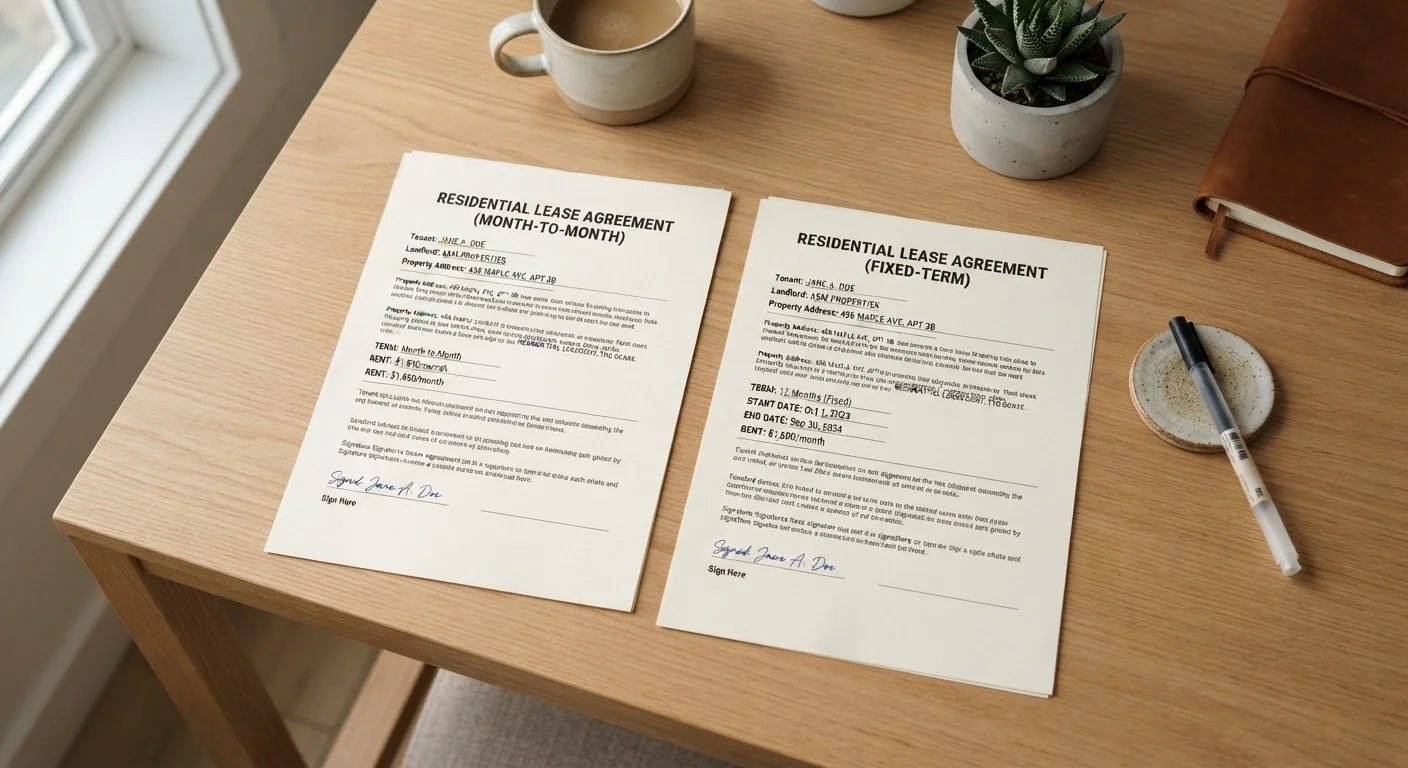
Renting affords a level of mobility that ownership simply cannot match. If your job changes, your family grows, or your neighborhood shifts, a lease can be ended - sometimes with as little as 30 days' notice depending on the agreement. For context on how lease structure affects that flexibility, our guide on month-to-month vs. fixed-term leases covers the key trade-offs in detail.
Homeownership, conversely, creates roots - literally and financially. Selling a home typically takes weeks to months and involves transaction costs of 6% to 10% of the sale price when agent commissions, closing costs, and preparation expenses are factored in. Owners who need to move quickly can face real financial loss if the market is unfavorable or if they haven't held the property long enough to recover purchase costs.
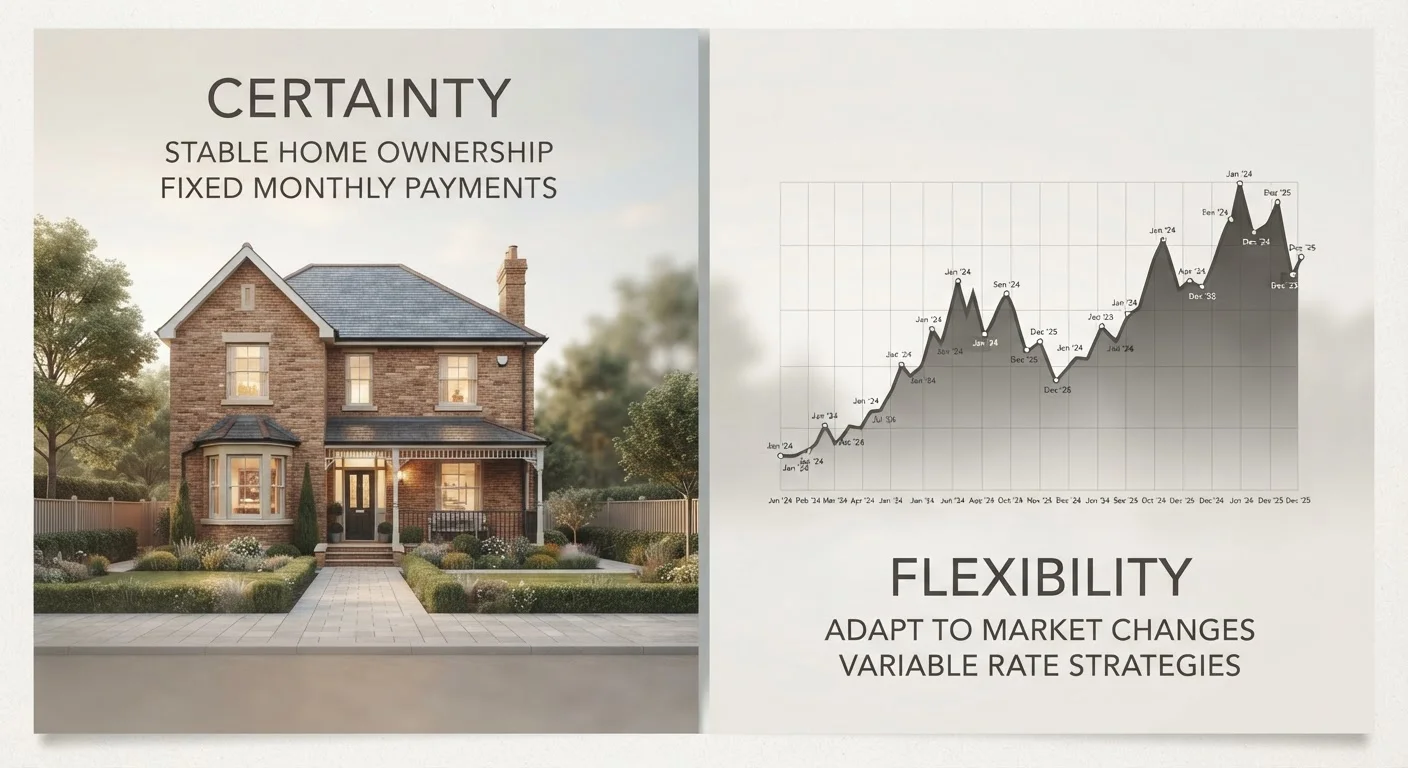
Stability, however, has its own value. Fixed-rate mortgage payments don't rise with market rents, and owners have control over their living space - renovating, keeping pets, or landscaping as they choose - without landlord approval.
Use the Break-Even Test Before Deciding
Before committing to a purchase, estimate how many years it would take to recover your buying costs through equity growth and avoided rent. If you expect to move within five years, renting often makes stronger financial sense regardless of market conditions. Online break-even calculators can help you run this math with your specific numbers.
Long-Term Wealth and Market Realities
Homeownership is frequently described as a wealth-building tool, and historically, home values have trended upward over long periods in many U.S. markets. But real estate does not appreciate uniformly - outcomes vary dramatically by location, purchase timing, and holding period. The housing market in a given city can shift significantly within a few years, making generalizations unreliable.
Renters who invest the difference between their rent and what a comparable mortgage would cost may build comparable or superior wealth, depending on investment returns and market conditions. This calculation requires discipline and a realistic assessment of actual costs on both sides.
The break-even point - the time needed to recoup buying costs through equity and appreciation - commonly ranges from five to ten years depending on the market. Buyers who move before that threshold may come out behind financially. For a deeper financial comparison, our article on the realistic financial comparison of renting vs. buying offers a grounded, numbers-driven look at both sides.
This article is for general informational purposes only and does not constitute financial, legal, or real estate advice. Readers should consult a qualified professional regarding their individual circumstances.