How Each Lease Type Works
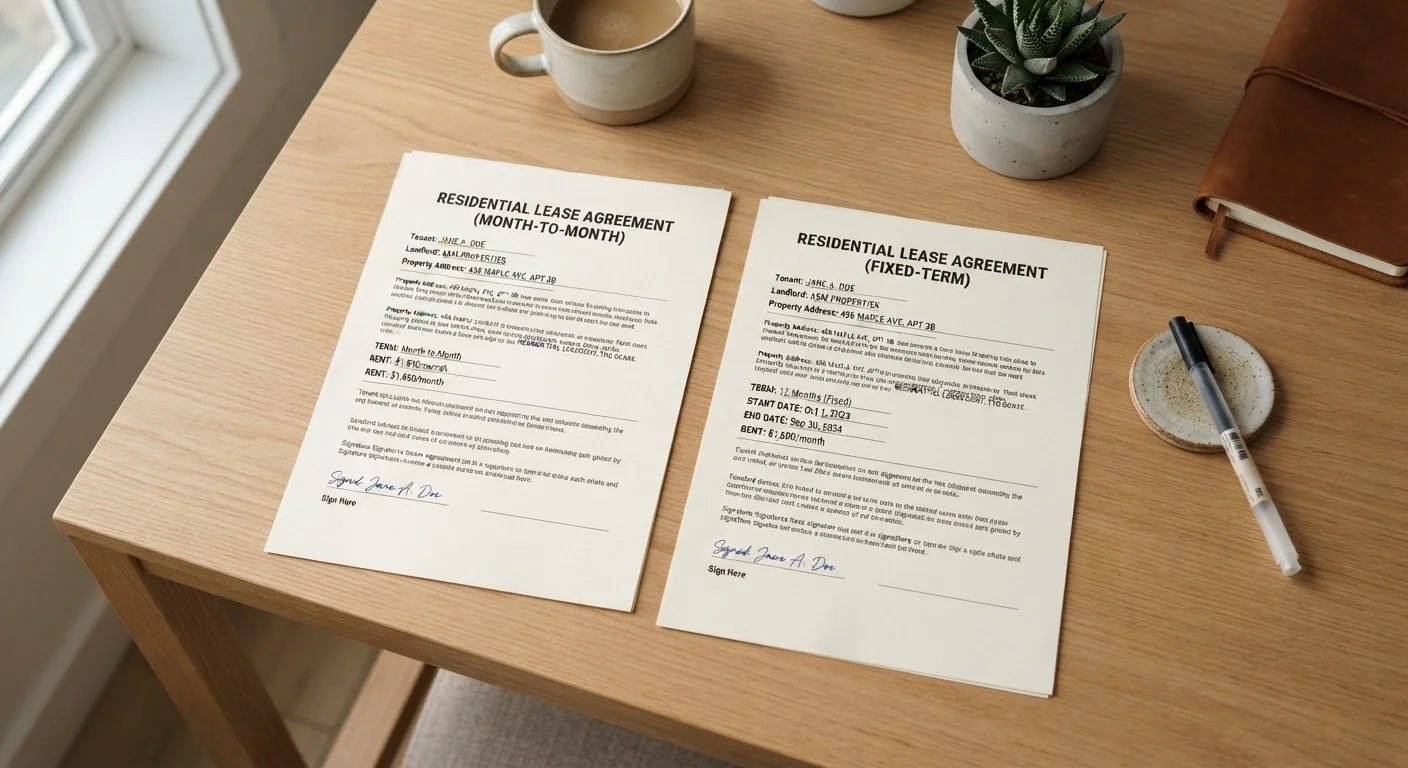
A month-to-month lease is a rental agreement that renews automatically each month until either party gives notice to end it. Most states require 30 days' notice from either the tenant or landlord, though some jurisdictions require more - always check local laws. This arrangement offers genuine flexibility: if your job changes, your family grows, or a better apartment opens up, you're not contractually tied down for months on end.
A fixed-term lease - most commonly 12 months, though 6- and 18-month terms exist - binds both parties for a defined period. The landlord generally cannot raise your rent or ask you to leave before the term ends (barring lease violations), and you are expected to fulfill the full term. If you leave early, most leases include an early-termination clause that can require you to pay remaining rent, a penalty fee, or both.
Before signing either type, review the fine print carefully. Our guide on common lease clauses that cause problems later covers provisions that frequently catch tenants off guard.
| Criterion | Month-to-Month Lease | Fixed-Term Lease |
|---|---|---|
| Typical duration | Renews monthly, no set end date | 6, 12, or 18 months (fixed) |
| Rent stability | Can increase with proper notice | Locked in for the full term |
| Flexibility to move | High - 30 days' notice typically required | Low - early exit triggers penalties |
| Monthly rent cost | Often higher than fixed-term rates | Generally lower and predictable |
| Landlord termination risk | Can end tenancy with proper notice | Cannot end mid-term without cause |
| Best market condition | Stable or falling rental markets | Rising or competitive rental markets |
The Real Trade-Offs: Flexibility vs. Stability
Month-to-month tenants pay a premium for freedom. Landlords charge higher monthly rent - sometimes 10-20% above comparable fixed-term rates - to offset the uncertainty of an unpredictable vacancy. On the flip side, you can give notice and be out within weeks, which is genuinely valuable if your circumstances change quickly.
Fixed-term leases shift leverage toward the tenant in one critical way: rent is locked in for the duration. In a rising rental market, that protection has real monetary value. However, the exit costs if your plans change can be substantial. Some landlords are open to early-termination negotiations - especially if the rental market is strong and they can re-rent quickly - but that's not guaranteed. Our article on lease renewals and negotiating with your landlord explains when and how to approach those conversations.
~30 days
Typical notice required to exit a month-to-month lease
Most U.S. states set 30 days as the minimum notice period, though some require 60 days depending on tenancy length.
12 months
Most common fixed-term lease length in the U.S.
Annual leases are the standard offering from most residential landlords across the country.
It's also worth understanding where rental agreements fit in the broader housing picture. If you're weighing whether to rent at all, our analysis of renting vs. buying lays out the full financial and lifestyle comparison.
Which Lease Is Right for Your Situation?
There's no universally correct answer - the right lease depends on your life stage, financial position, and local market conditions. A few questions can help clarify the decision:
- How long do you realistically plan to stay? If you're confident you'll be in one place for 12 months or more, a fixed-term lease saves money and provides stability. If your horizon is uncertain, month-to-month is worth the higher cost.
- How competitive is the local rental market? In tight markets, landlords may not offer month-to-month at all, or may price it significantly higher. Understanding local housing market conditions helps you know what to expect.
- What are your early-exit options? Before signing a fixed-term lease, read the early-termination clause. Some states have tenant-friendly laws that limit what landlords can charge; others do not.
Both lease structures are legal, common, and legitimate - choosing between them is about matching the agreement to your personal circumstances. Approach the decision with the same analytical care you'd bring to any major financial commitment. If significant financial decisions are attached to your rental situation, consulting a qualified financial adviser or tenant rights attorney for guidance specific to your state is always a reasonable step.
This article is for general informational purposes only and does not constitute legal or financial advice. Lease laws vary by state and locality - consult a qualified professional for guidance specific to your situation.
State Laws Govern Your Lease Rights
Tenant protections - including required notice periods, early-termination limits, and rent-increase rules - vary significantly by state and, in some cases, by city or county. For example, several states require landlords to give longer notice to long-term month-to-month tenants. Before signing any rental agreement, review your state's landlord-tenant statutes or consult a local tenant rights organization for accurate, jurisdiction-specific guidance.